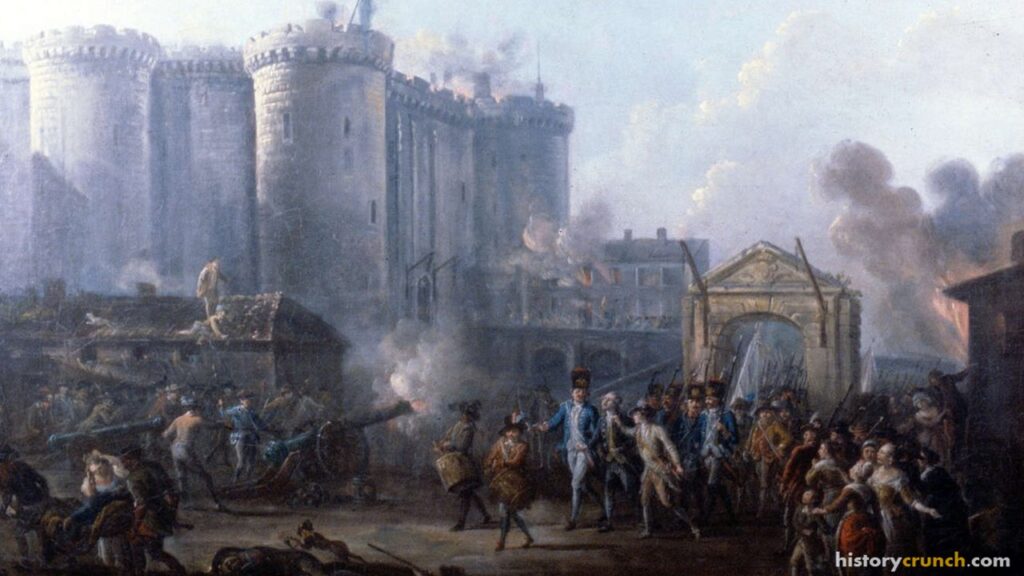
The Storming of the Bastille occurred on July 14th, 1789, when a crowd of Parisians attacked the Bastille prison. The French people stormed and dismantled the Bastille in response to growing tensions around the absolute monarchy of Louis XVI, as well as a growing economic crisis in France. In fact, the Storming of the Bastille is often considered to be the beginning of the French Revolution and inspired widespread uprisings across France. Today, Bastille Day is celebrated as France’s national holiday, honoring the fight for liberty and justice.
What Was the Bastille?
The Bastille was a large medieval fortress in Paris that later became a state prison used by the French monarchy to imprison French citizens. Though it held few prisoners by the late 18th century, it was widely seen as a symbol of royal tyrannyCruel and unfair use of power by a ruler against the people they govern. and oppression.
The Bastille was originally built in the late 14th century during the reign of King Charles V of France. It was built as a fortress to defend the eastern entrance of Paris against English attacks during the events of the Hundred Years’ War. However, in the centuries that followed, the Bastille switched from a military stronghold into a state prison used by the French absolute monarchyA system of government where a king or queen holds total power over the country with no limits..
By the 17th and 18th centuries, the Bastille had become a symbol of royal authority and oppression. For instance, it was often used to imprison political opponents, writers, and others held without trial under royal orders. Although it could hold around 50 prisoners, by the time of the Storming of the Bastille in 1789, it housed only 7. Regardless, its use as a tool of repressionUsing force or authority to control and silence people, preventing them from acting freely. made it a hated symbol of the monarchy’s authority.
 FactsthatCrunch
The lettre de cachet system allowed the French crown to imprison anyone in the Bastille without a trial, a charge, or a set release date.
Storming of the Bastille – Summary
A major event in the French Revolution was the Storming of the Bastille. In general, it was the first major act of violence in the French Revolution by the revolutionaries against Louis XVI and the French Monarchy. As such, historians consider the storming of the Bastille to be the ‘spark’ of the French Revolution and the event that started France down the violent path towards revolt.
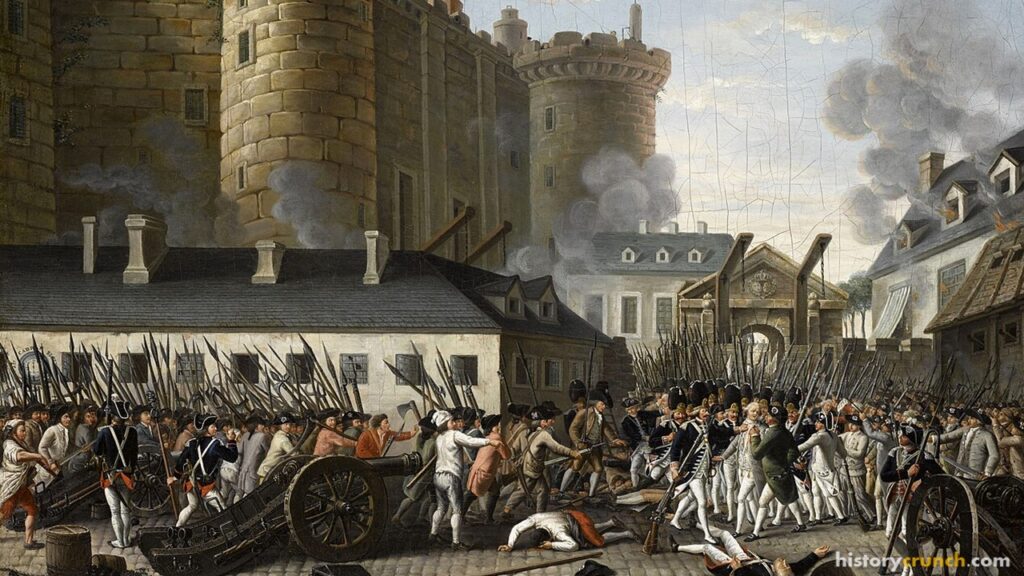
In the summer of 1789, bread and other foods were scarce all over Paris. Talk of revolution filled the air as a financial crisis gripped the country. At Versailles, representatives of France’s classes, called the Three Estates, had been meeting since May to find solutions to the economic problems that troubled France. But in Paris, many poor citizens focused their anger toward the government on the Bastille, a prison fortress in Paris. For many the Bastille symbolized the King’s absolute authority. On July 14th, 1789, a Paris mob stormed the Bastille, in search of large quantities of arms and ammunition that they believed were stored at the fortress. Also, they hoped to free prisoners at the Bastille, as it was traditionally a fortress in which political prisoners were held. However, at the time of the attack the Bastille was nearly empty of prisoners with only 7 being held.
The Bastille was defended by 82 InvalidesSoldiers who had been injured and could no longer fight in the field, assigned to garrison duty. (soldiers who had been injured and could no longer fight in the field) and 32 Grenadiers. The commander at the time was Bernard-Rene de Launay. The crowd of Parisians numbered around one thousand and demanded the surrender of the Bastille and the removal of the arms and ammunition within. As the mob grew the undefended outer drawbridge offered an opportunity for the crowd to enter the courtyard of the Bastille. De Launay offered to surrender the Bastille if he and his troops would be allowed to leave unharmed, but the crowd replied, “No surrender! Lower the bridge!” Realizing that his troops could not defend the Bastille, de Launay ordered the second drawbridge lowered. The mob swarmed into the inner courtyard of the Bastille armed with axes. The crowd ran to the prison cells and freed the 7 inmates.
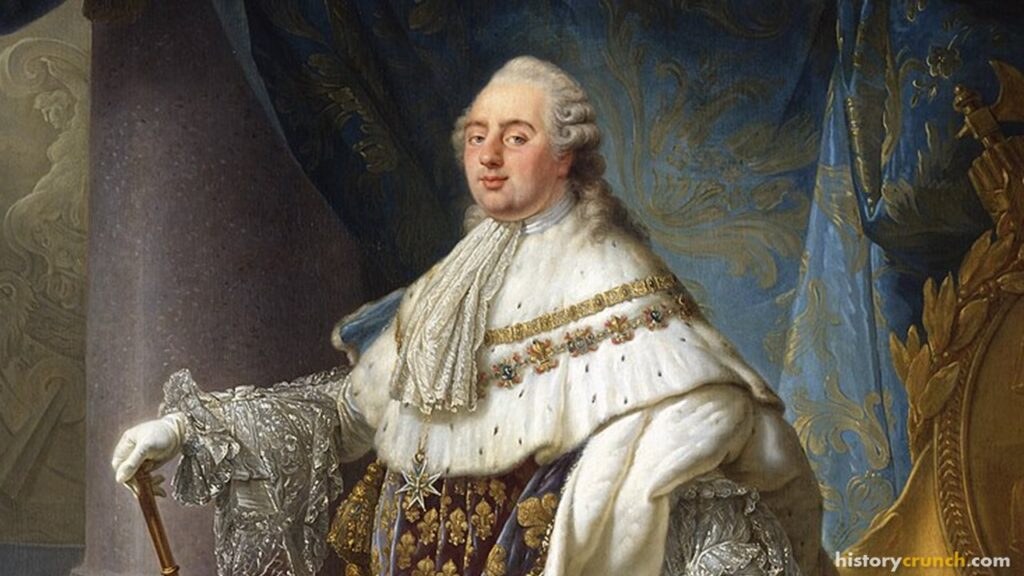
De Launay was grabbed and dragged through the streets by the crazed mob. He was horribly beaten by the mob and eventually beheaded. His head was then fixed on a pikeA long pole used as a weapon, sometimes used to display the heads of enemies in public. and carried through the streets. Several other guards were killed as well, while others managed to survive the incident. To the common people in Paris, the Bastille symbolized the tyranny of the absolute monarchy in France. The fall of the Bastille signaled the beginning of the French Revolution and the role that individual citizens would play during the events of the revolution. In the diary of Louis XVI for the day of the storming of the Bastille, July 14th, 1789, he only wrote “nothing” which was a reference to his day of hunting.
 FactsthatCrunch
Storming of the Bastille – Significance
The Storming of the Bastille on July 14th, 1789, was a highly significant event in the French Revolution. For example, historians generally consider it to be the ‘spark’ of the French Revolution, in the sense that it caused the revolution to continue and intensify. In fact, the Storming of the Bastille inspired revolutionary movements across France and united people from different social classes in the cause for liberty and equality.
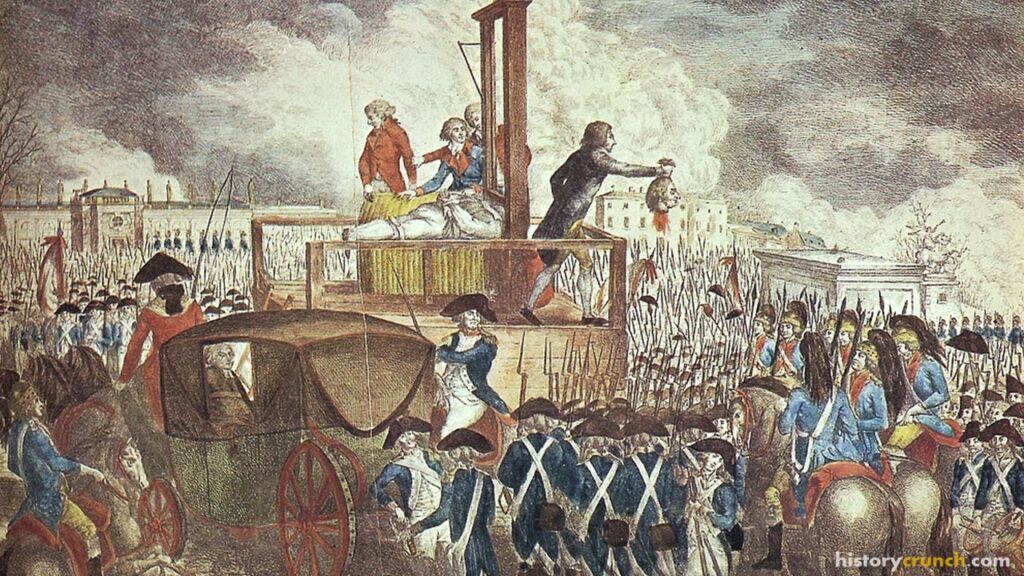
The Storming of the Bastille was also significant because it symbolized the end of the absolute monarchy in France. For instance, the Storming of the Bastille highlighted the shifting political order in France, as the country transitioned from an absolute monarchy to a republicA form of government where citizens hold power and elect leaders rather than being ruled by a king..
 FactsthatCrunch
Tap each impact to read what it led to.
French Revolution timeline · 1789 – 1799
Key Vocabulary
Absolute monarchy
Tyranny
Invalides
Pike
Repression
Republic
Frequently Asked Questions
When did the Storming of the Bastille happen?
The Storming of the Bastille happened on July 14th, 1789, in Paris, France. A crowd of about one thousand Parisians attacked the fortress prison during a food and money crisis. The event is now honored each year as Bastille Day, France’s national holiday.
Why did the people attack the Bastille?
The people attacked the Bastille to seize the arms and gunpowder they believed were stored inside. They also hoped to free political prisoners held there without trial. To many poor Parisians, the fortress stood for the harsh power of King Louis XVI and the absolute monarchy.
How many prisoners were in the Bastille in 1789?
Only 7 prisoners were held in the Bastille at the time of the attack. The fortress could hold around 50 people, so it was nearly empty. Even so, its history as a tool of royal control made it a hated symbol of tyranny.
What happened to the commander of the Bastille?
Bernard-Rene de Launay, the commander, was seized by the mob after the fortress fell. He was dragged through the streets, badly beaten, and then beheaded. His head was placed on a pike and carried through Paris, and several guards were also killed.
Why is the Storming of the Bastille important?
The Storming of the Bastille is often called the “spark” that began the French Revolution. It was the first major act of violence by revolutionaries against the monarchy. The event inspired uprisings across France and pointed toward the end of the absolute monarchy.
Cite This Article
To cite this article as a source, use one of the formats below.
MLA: Beck, Elias. “Storming of the Bastille: A Detailed Summary.” HistoryCrunch, 21 September 2026, https://historycrunch.com/storming-of-the-bastille/.
APA: Beck, E. (2026). Storming of the Bastille: A Detailed Summary. HistoryCrunch. https://historycrunch.com/storming-of-the-bastille/
Chicago: Beck, Elias. “Storming of the Bastille: A Detailed Summary.” HistoryCrunch. September 21, 2026. https://historycrunch.com/storming-of-the-bastille/
Sources
- Liberty, Equality, Fraternity (revolution.chnm.org), George Mason
- Jeremy D. Popkin, A New World Begins: The History of the French Revolution.
- Peter McPhee, Liberty or Death: The French Revolution.
- William Doyle, The Oxford History of the French Revolution.