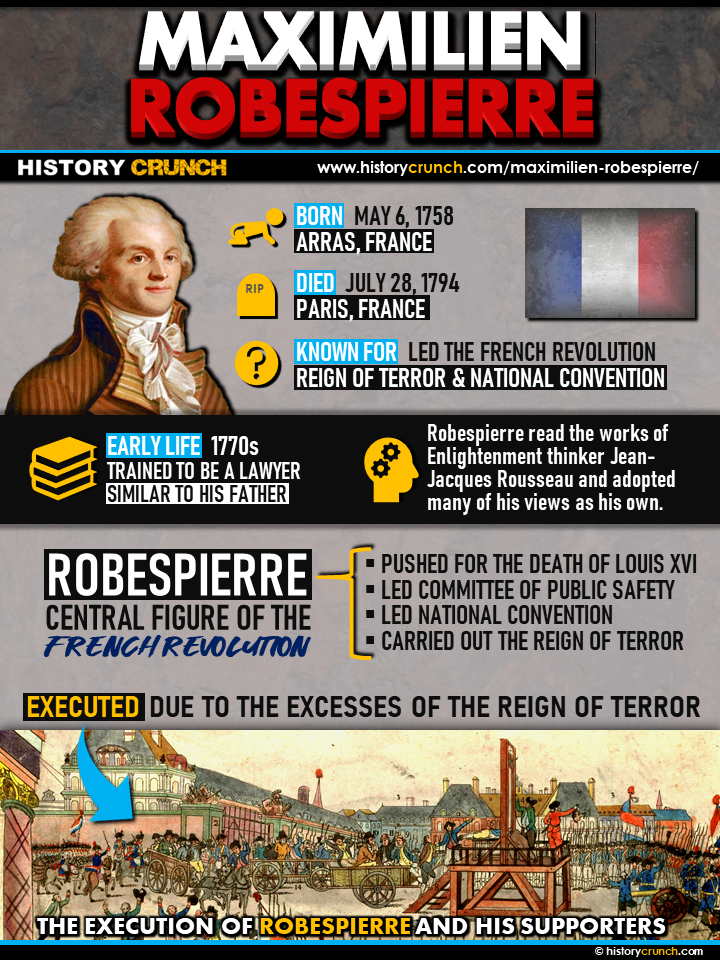
Maximilien Robespierre was a key figure and leader of the French Revolution. Known for his strong support of equality, justice, and the rights of the common people, he helped lead the revolution as a key member of the Jacobin ClubAn anti-royalist political organization that Robespierre joined during the French Revolution.. Also, he notably led the Committee of Public Safety during the events of the Reign of Terror. Under his leadership, thousands were executed by guillotineA device used to execute people by beheading, used widely during the French Revolution. as perceived enemies of the revolution. Eventually, Robespierre’s increasing power and harsh policies led to his arrest and execution in 1794, ending the most violent phase of the French Revolution.
Maximilien Robespierre – Early Life
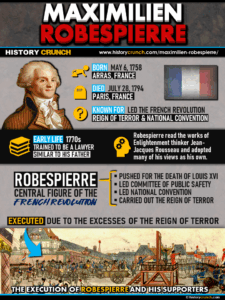
Maximilien Robespierre was born on May 6th, 1758 in Arras, Artois, France. Robespierre was the oldest of four children. His mother died in July of 1764 due to complications related to childbirth and his father, François de Robespierre, left the children to travel Europe. Maximilien and his brother were raised by their maternal grandparents, while his sisters were raised by their paternal aunts.
Showing promise from an early age, Robespierre trained to be a lawyer, just as his father had been. While in school, he was exposed to the new ideas of the Age of Enlightenment and read the works of several Enlightenment thinkers. In particular, Robespierre read the works of Jean-Jacques Rousseau and adopted many of his views as his own. For example, Robespierre believed that the people of France were more well-equipped to handle the issues facing the country than the absolute monarchy.

Maximilien Robespierre – French Revolution
A key attribute of Robespierre throughout his life was his conviction to his principles. This characteristic would gain him the nickname of the “IncorruptibleA nickname showing others saw him as someone who never abandoned his beliefs or could be bribed.” as he was viewed as unwavering in his ideals. Eventually, he would play a pivotal role in the events of the French Revolution.
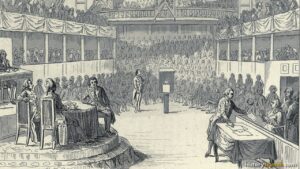
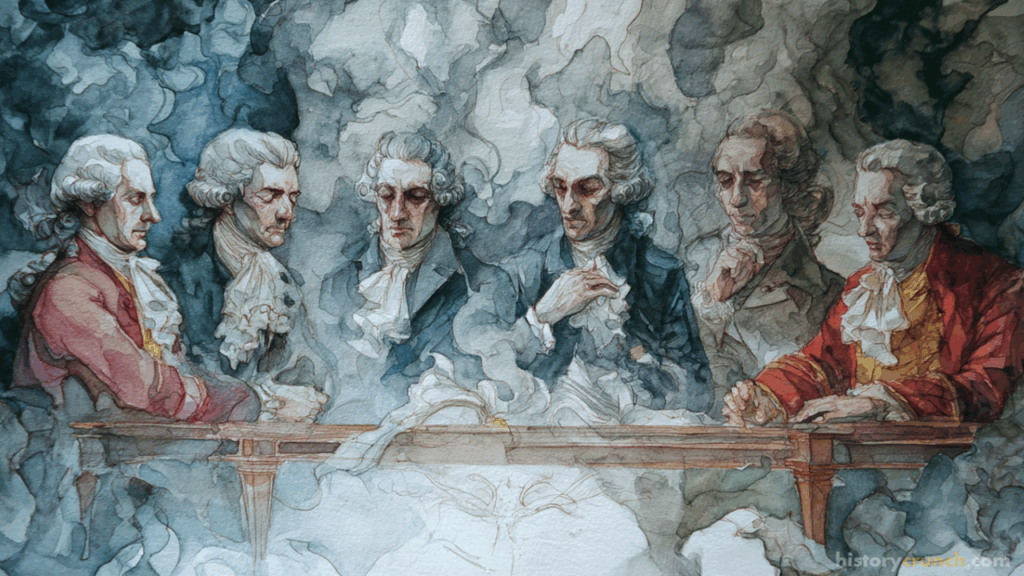
The first major event of the revolution was when Louis XVI called the Estates-General in May of 1789. Robespierre was elected a representative of the third estate and helped establish the National Assembly and would often speak of his ideals of liberty to the members of the assembly. His speeches would go on to have an impact on the principles of the Declaration of the Rights of Man and of the Citizen.
Following the end of the National Assembly, Robespierre joined the famous Jacobin Club, which was an anti-royalist organization during the French Revolution. As well, he began working as a public prosecutor in Paris. Throughout 1792, he fought against the principles of the newly created Legislative Assembly, including a proposed war against Austria. He argued that the revolution must focus on fighting internal strife rather than wars against neighboring countries.
After the Legislative Assembly dissolved and made way for the more radical National Convention, Robespierre left his position as public prosecutor and was elected first deputy for Paris to the National Convention. The convention moved quickly to put Louis XVI on trial. Louis XVI was charged with treason due to his attempt to flee the country and was convicted. Robespierre commented that “Louis must die so the nation may live.” Louis XVI’s punishment was death and on January 21st, 1793, he was executed by guillotine.
Maximilien Robespierre – Rise and Fall
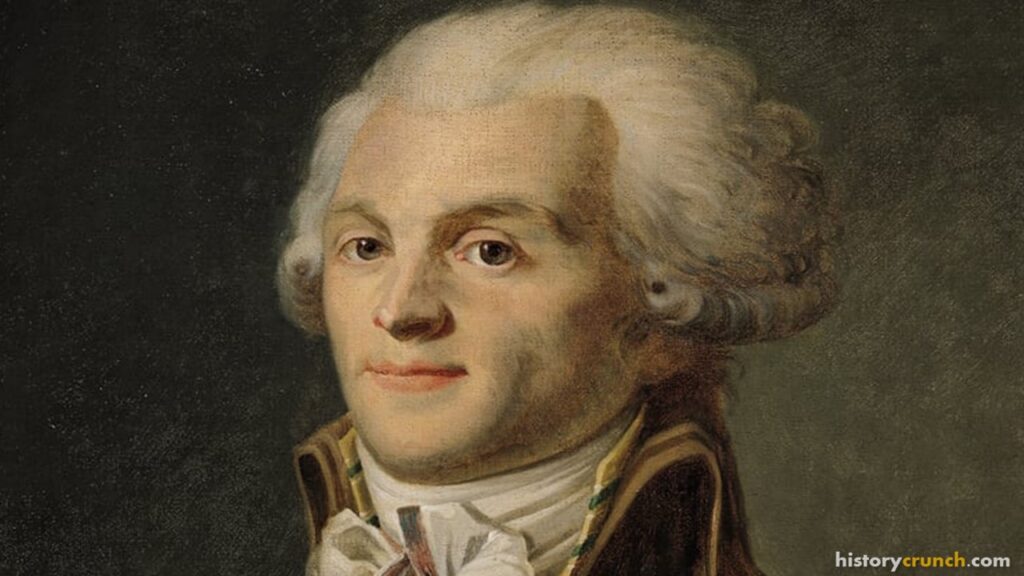
Soon, Robespierre began his own rise to power within the revolution. He was the head of the Committee of Public Safety, which was the executive committee of the National Convention, and would become well known for its role in carrying out the Reign of Terror. For many months throughout 1794, Robespierre battled against other revolutionaries in the National Convention by questioning each of their loyalties towards the revolution. For example, he accused many people of being domestic threats to the continuation of the revolution. It is during this time that many prominent revolutionaries within the National Convention were guillotined for their perceived betrayal to the revolution and Robespierre maneuvered his way to the head of the convention. For example, when Georges Danton, a leading revolutionary, called for an end to the Reign of TerrorA violent phase of the French Revolution when thousands were executed as enemies of the revolution. he was the next to face the guillotine. Finally, on June 4th, 1794, Robespierre was elected the president of the National Convention.
Robespierre then declared a new religion called the Supreme Being and carried out a series of celebrations based around the new faith. On June 8th, 1794, Robespierre oversaw the Supreme Being Festival in Paris that would be celebrated based on a new calendar. Some members of the National Convention and Committee of Public SafetyThe executive committee of the National Convention that oversaw the Reign of Terror and mass executions. were visibly upset with the celebration and the actions of Robespierre. In fact, Robespierre had begun to make many enemies within the revolution after he claimed to have a list of people that were enemies of the state. By threatening to release the names, he angered others who began to work against him and accuse him of acting like a dictator.
FactsthatCrunchIn what order did Robespierre rise to lead the National Convention?
Maximilien Robespierre – Execution
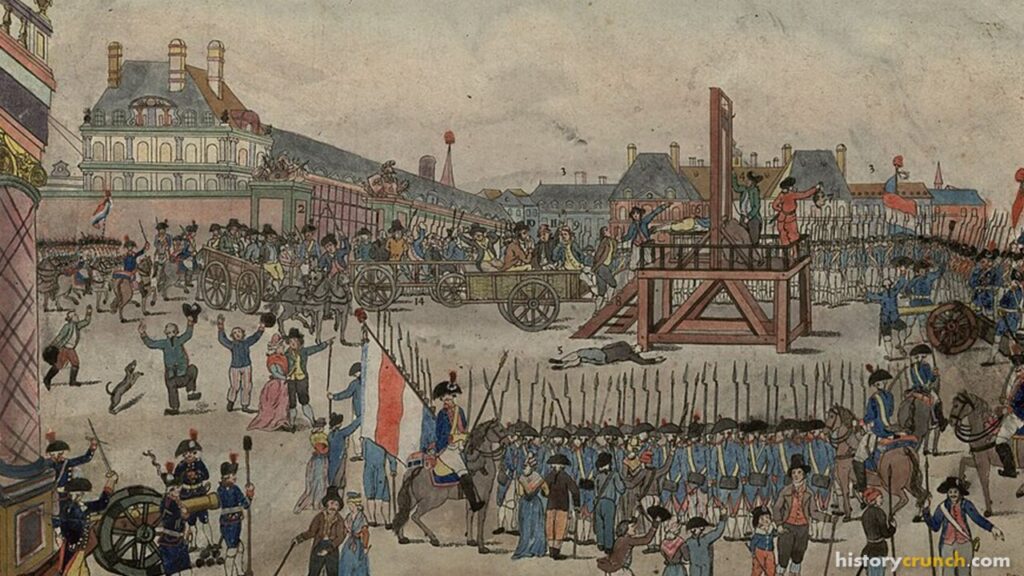
Based on his actions and threats the National Convention voted to arrest Robespierre. On July 27th, 1794, soldiers stormed into where he was staying. As the soldiers arrived, he attempted to commit suicide by gunshot to the head, but was instead only injured in the jaw, shattering it. For the rest of the day, Robespierre was held captive until he was guillotined without a trial the next afternoon. With his death, the fear and paranoia of the revolutionaries ended and the Reign of Terror was over. After the execution of Robespierre and the excess of the Reign of Terror, the National Convention was replaced by the Directory in 1795.
 FactsthatCrunch
On July 28th, 1794, during the French Revolution, soldiers sent by the National Convention stormed the building where Maximilien Robespierre was being held in Paris. Robespierre had already tried to shoot himself in the head with a pistol, but the shot only shattered his jaw, leaving him badly wounded but alive. He lay injured and in custody as the convention prepared to decide his fate.
Maximilien Robespierre – Significance
As stated above, Maximilien Robespierre was a central figure in the French Revolution and played a key role in several important moments. For instance, he played a significant role in the Committee of Public Safety, where he sought to defend the revolution by implementing radical measures against perceived enemies. Furthermore, his policies, particularly during the Reign of Terror, led to widespread executions as he believed that extreme measures were necessary to purify and preserve the revolution. As such, many historians view Robespierre as responsible for many of the excesses and violence of the revolution. He helped to create a climate of fear and paranoia throughout France, which caused significant harm to French society.
For instance, while Robespierre’s leadership helped shape a more equal French society, it ultimately came at the cost of severe political repression and public fear. His fall from power and subsequent execution in 1794 underscored the dangers of absolute authority and the volatility of revolutionary politics. Today, Robespierre remains a symbol of the revolutionary era in France, combining both the drive for social change and the dangers of ideological extremism.
FactsthatCrunchTap each impact to read what it led to.
Maximilien Robespierre – Infographic
French Revolution timeline · 1789 – 1799
Key Vocabulary
Incorruptible
Estates-General
Jacobin Club
Committee of Public Safety
Reign of Terror
Guillotine
Directory
Frequently Asked Questions
Why was Maximilien Robespierre called “the Incorruptible”?
Robespierre earned the nickname “the Incorruptible” because he was seen as unwavering in his ideals. Throughout his life he stayed firmly loyal to his principles of equality and justice. This reputation helped him gain trust and power during the French Revolution.
What was Robespierre’s role in the Reign of Terror?
Robespierre led the Committee of Public Safety, which carried out the Reign of Terror. Under his leadership, thousands of people were executed by guillotine as perceived enemies of the revolution. He believed that extreme measures were needed to protect and purify the revolution.
How did Robespierre die?
Robespierre was executed by guillotine on July 28th, 1794, without a trial. The day before, soldiers stormed his location after the National Convention voted to arrest him. He tried to kill himself with a gunshot but only shattered his jaw before he was captured.
What was the Cult of the Supreme Being?
The Supreme Being was a new religion that Robespierre declared during his rise to power. He held a large festival for the faith in Paris on June 8th, 1794. Many members of the National Convention were upset by the celebration and turned against him.
Why do historians view Robespierre as controversial?
Robespierre is controversial because he supported both social change and violent repression. His policies helped shape a more equal French society but also created a climate of fear and paranoia. Many historians hold him responsible for the excesses and violence of the Reign of Terror.
Cite This Article
To cite this article as a source, use one of the formats below.
MLA: Beck, Elias. “Maximilien Robespierre: A Detailed Biography.” HistoryCrunch, 22 September 2026, https://historycrunch.com/maximilien-robespierre/.
APA: Beck, E. (2026). Maximilien Robespierre: A Detailed Biography. HistoryCrunch. https://historycrunch.com/maximilien-robespierre/
Chicago: Beck, Elias. “Maximilien Robespierre: A Detailed Biography.” HistoryCrunch. September 22, 2026. https://historycrunch.com/maximilien-robespierre/
Sources
- Jeremy D. Popkin, A New World Begins: The History of the French Revolution.
- Fordham Modern History Sourcebook
- William Doyle, The Oxford History of the French Revolution.
- Peter McPhee, Liberty or Death: The French Revolution.