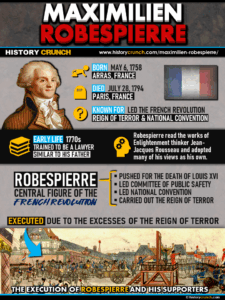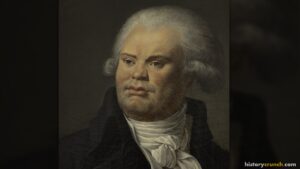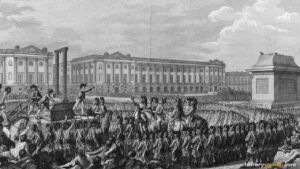
The Declaration of the Rights of Man and of the Citizen, adopted in 1789 during the French Revolution, proclaimed that all men are born free and equal in rights. It emphasized individual liberties, such as freedom of speech, religion, and the right to participate in government. Inspired by ideals from the Age of Enlightenment, the declaration became an important document for France and the French Revolution.
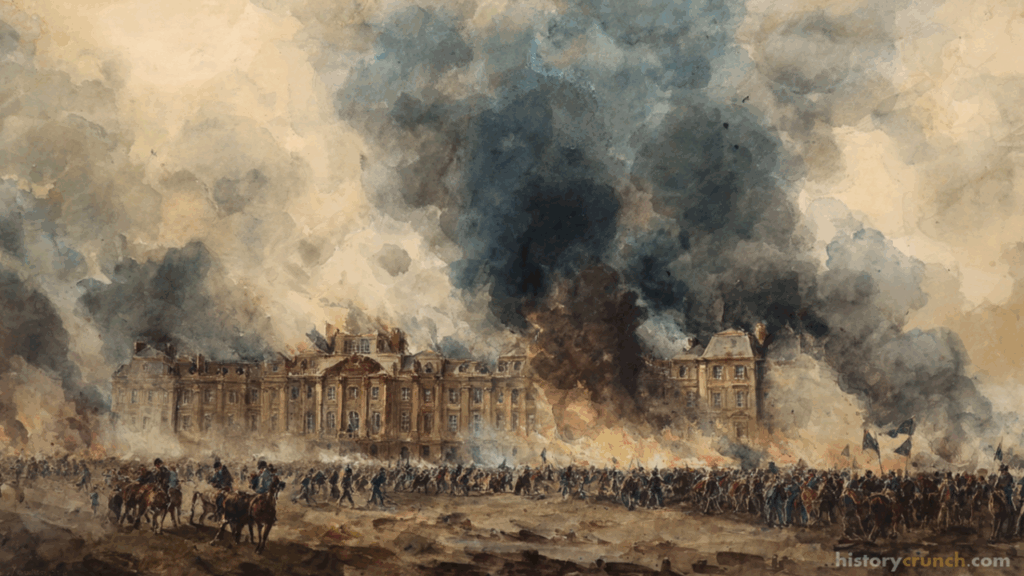

Declaration of the Rights of Man and of the Citizen – Significance
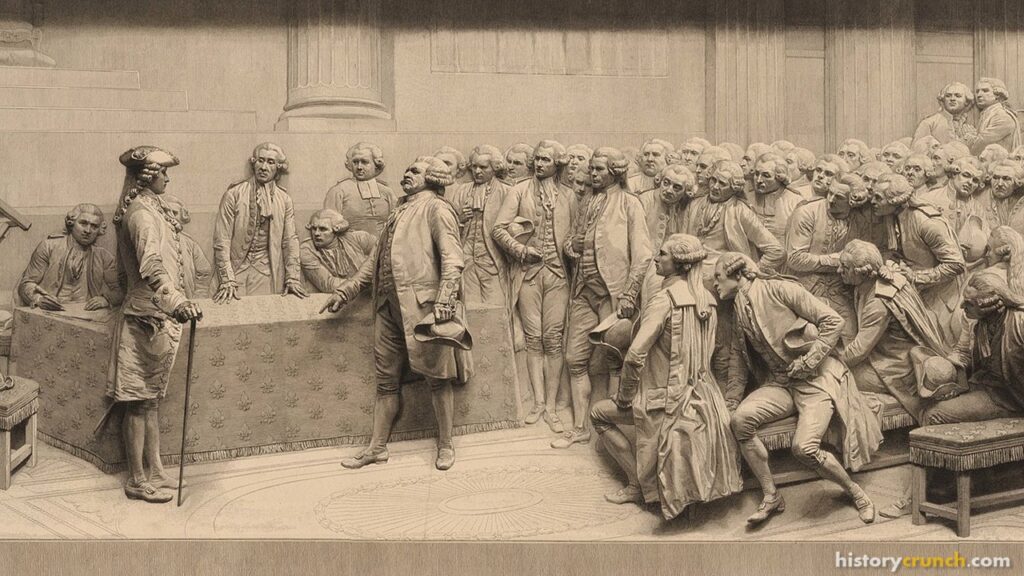
On August 26th, 1789, the National Assembly adopted the Declaration of the Rights of Man and of the Citizen. The Declaration was written by Marquis de Lafayette, a French military officer who fought in the American Revolution and was inspired by the ideals of liberty expressed by Thomas Jefferson in the Declaration of Independence. The Declaration of the Rights of Man and of the Citizen was vitally important to the French Revolution because it directly challenged the authority of Louis XVI. For example, the Declaration of the Rights of Man and of the Citizen set out a series of individual rights protected by law. Today, many historians view the Declaration of the Rights of Man and of the Citizen as an important document in both the history of the French Revolution and the history of democracy and individual rights in the world. The text of the declaration follows below.
 FactsthatCrunch
What was the main reason the Marquis de Lafayette was inspired to write the Declaration of the Rights of Man and of the Citizen?
Declaration of the Rights of Man and of the Citizen – Full Text
The representatives of the French people, organized as a National Assembly, believing that the ignorance, neglect, or contempt of the rights of man are the sole cause of public calamities and of the corruption of governments, have determined to set forth in a solemn declaration the natural, unalienableRights that cannot be taken away or given up by any government or person., and sacred rights of man, in order that this declaration, being constantly before all the members of the Social body, shall remind them continually of their rights and duties; in order that the acts of the legislative power, as well as those of the executive power, may be compared at any moment with the objects and purposes of all political institutions and may thus be more respected, and, lastly, in order that the grievances of the citizens, based hereafter upon simple and incontestable principles, shall tend to the maintenance of the constitution and redound to the happiness of all.
Therefore the National Assembly recognizes and proclaims, in the presence and under the auspices of the Supreme Being, the following rights of man and of the citizen:
Articles:
- Men are born and remain free and equal in rights. Social distinctions may be founded only upon the general good.
- The aim of all political association is the preservation of the natural and imprescriptibleRights that cannot be taken away by law or lost over time, no matter what. rights of man. These rights are liberty, property, security, and resistance to oppression.
- The principle of all sovereigntySupreme political power or authority to govern a country or nation. resides essentially in the nation. No body nor individual may exercise any authority which does not proceed directly from the nation.
- Liberty consists in the freedom to do everything which injures no one else; hence the exercise of the natural rights of each man has no limits except those which assure to the other members of the society the enjoyment of the same rights. These limits can only be determined by law.
- Law can only prohibit such actions as are hurtful to society. Nothing may be prevented which is not forbidden by law, and no one may be forced to do anything not provided for by law.
- Law is the expression of the general will. Every citizen has a right to participate personally, or through his representative, in its foundation. It must be the same for all, whether it protects or punishes. All citizens, being equal in the eyes of the law, are equally eligible to all dignities and to all public positions and occupations, according to their abilities, and without distinction except that of their virtues and talents.
- No person shall be accused, arrested, or imprisoned except in the cases and according to the forms prescribed by law. Any one soliciting, transmitting, executing, or causing to be executed, any arbitraryAn order or action based on personal whim rather than law or fair rules. order, shall be punished. But any citizen summoned or arrested in virtue of the law shall submit without delay, as resistance constitutes an offense.
- The law shall provide for such punishments only as are strictly and obviously necessary, and no one shall suffer punishment except it be legally inflicted in virtue of a law passed and promulgatedOfficially announced or made known to the public by an authority. before the commission of the offense.
- As all persons are held innocent until they shall have been declared guilty, if arrest shall be deemed indispensable, all harshness not essential to the securing of the prisoner’s person shall be severely repressed by law.
- No one shall be disquieted on account of his opinions, including his religious views, provided their manifestation does not disturb the public order established by law.
- The free communication of ideas and opinions is one of the most precious of the rights of man. Every citizen may, accordingly, speak, write, and print with freedom, but shall be responsible for such abuses of this freedom as shall be defined by law.
- The security of the rights of man and of the citizen requires public military forces. These forces are, therefore, established for the good of all and not for the personal advantage of those to whom they shall be intrusted.
- A common contribution is essential for the maintenance of the public forces and for the cost of administration. This should be equitablyDistributed or done in a way that is fair and just to everyone involved. distributed among all the citizens in proportion to their means.
- All the citizens have a right to decide, either personally or by their representatives, as to the necessity of the public contribution; to grant this freely; to know to what uses it is put; and to fix the proportion, the mode of assessment and of collection and the duration of the taxes.
- Society has the right to require of every public agent an account of his administration.
- A society in which the observance of the law is not assured, nor the separation of powers defined, has no constitution at all.
- Since property is an inviolable and sacred right, no one shall be deprived thereof except where public necessity, legally determined, shall clearly demand it, and then only on condition that the owner shall have been previously and equitably indemnifiedPaid back or compensated for a loss or damage caused by someone else..
FactsthatCrunchMen are born and remain free and equal in rights. Social distinctions may be founded only upon the general good.
This opening article of the Declaration of the Rights of Man became the rallying idea that revolutionary leaders used to turn the public against the old order and the authority of Louis XVI.
French Revolution timeline · 1789 – 1799
Key Vocabulary
Unalienable
Sovereignty
Imprescriptible
Arbitrary
Promulgated
Equitably
Indemnified
Frequently Asked Questions
When was the Declaration of the Rights of Man and of the Citizen adopted?
The National Assembly adopted the Declaration on August 26th, 1789. This happened during the early months of the French Revolution. The National Assembly was the first revolutionary government of that period.
Who wrote the Declaration of the Rights of Man and of the Citizen?
The Marquis de Lafayette wrote the Declaration. He was a French military officer who had fought in the American Revolution. His work was shaped by the ideas of liberty that Thomas Jefferson expressed in the Declaration of Independence.
What rights did the Declaration protect?
The Declaration listed liberty, property, security, and resistance to oppression as natural rights. It also protected freedom of speech, freedom of religion, and the right to take part in government. These rights were meant to apply to all citizens equally under the law.
Why was the Declaration important to the French Revolution?
The Declaration was important because it directly challenged the authority of King Louis XVI. It stated that power came from the nation, not from a king. This idea helped move France away from absolute monarchy.
What ideas inspired the Declaration of the Rights of Man and of the Citizen?
The Declaration was inspired by the ideals of the Age of Enlightenment. Enlightenment thinkers argued that all people held natural rights and that government should protect them. These beliefs shaped the document’s focus on liberty and equality.
Why do historians view the Declaration as significant today?
Historians see the Declaration as a key document in the history of democracy and individual rights. It set out rights protected by law rather than granted by a ruler. Its ideas influenced later movements for freedom around the world.
Cite This Article
To cite this article as a source, use one of the formats below.
MLA: Beck, Elias. “Declaration of the Rights of Man and of the Citizen: A Detailed Summary.” HistoryCrunch, 22 September 2026, https://historycrunch.com/declaration-of-the-rights-of-man-and-of-the-citizen/.
APA: Beck, E. (2026). Declaration of the Rights of Man and of the Citizen: A Detailed Summary. HistoryCrunch. https://historycrunch.com/declaration-of-the-rights-of-man-and-of-the-citizen/
Chicago: Beck, Elias. “Declaration of the Rights of Man and of the Citizen: A Detailed Summary.” HistoryCrunch. September 22, 2026. https://historycrunch.com/declaration-of-the-rights-of-man-and-of-the-citizen/
Sources
- Peter McPhee, Liberty or Death: The French Revolution.
- Fordham Modern History Sourcebook
- William Doyle, The Oxford History of the French Revolution.
- Jeremy D. Popkin, A New World Begins: The History of the French Revolution.