Jean-Paul Marat was a physician, writer, and political journalist whose newspaper and speeches pushed the French Revolution in a more extreme direction, especially during its most violent years. In particular, he is remembered for his newspaper L’Ami du Peuple, which means “The Friend of the People,” and for his assassination in 1793.
 FactsthatCrunch
Marat used his newspaper L'Ami du Peuple, meaning 'The Friend of the People,' to spread radical ideas across Paris and push the French Revolution toward more extreme action against nobles, royal officials, and moderate republicans. His writing gave a strong political voice to the sans-culottes, the working-class supporters of the Revolution, and his death made him a martyr whose image was immortalized in Jacques-Louis David's famous painting The Death of Marat.
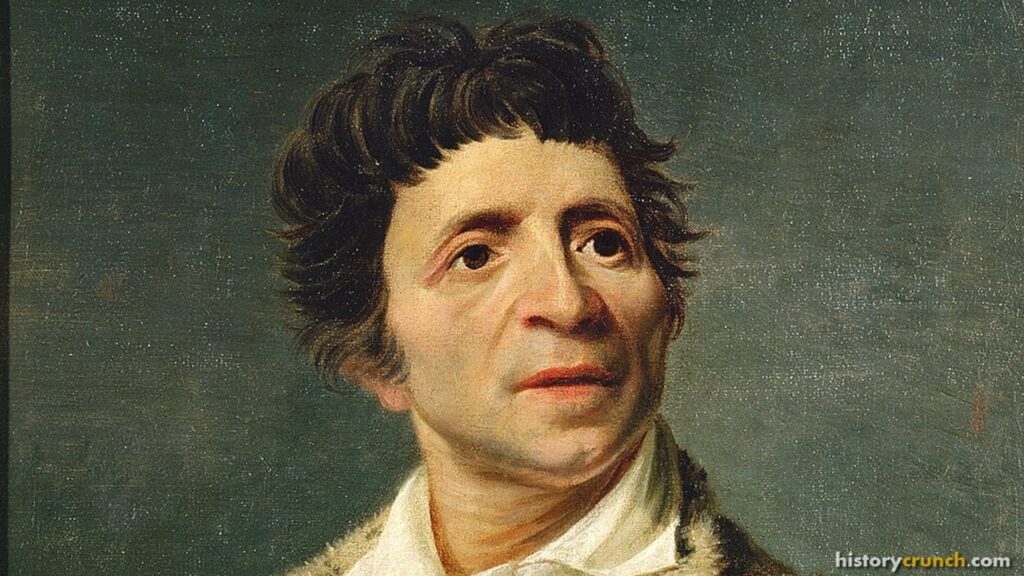
Jean-Paul Marat: Early Life
Jean-Paul Marat was born on May 24th, 1743, in Boudry, in the Principality of Neuchâtel, now in Switzerland. Before becoming a revolutionary figure, he built a career in medicine and science. He spent time in Britain and later became known as a doctor in London, England, while also writing on scientific and philosophical subjects.
Marat later returned to France in 1777 and served as a physician to the ‘comte d’Artois’, who later became King Charles X of France. The comte d’Artois was a French noble title meaning “Count of Artois.” During these years, he also wrote books and essays, including political works that criticized despotismA system of government where one ruler holds total, unchecked power over everyone else. and unequal power. Therefore, before the Revolution began, Marat had already developed a strong distrust of privilege and aristocratic authority.
FactsthatCrunchWhat fields did Jean-Paul Marat work in before the French Revolution began in 1789?
Jean-Paul Marat – Rise During the French Revolution
When the French Revolution began in 1789, Marat turned away from science and medicine and moved fully into politics. He published pamphlets such as Offrande à la patrie, which means “Offering to the Nation,” and soon became a fierce defender of the common people. This mattered because Marat quickly became one of the loudest revolutionary voices calling for deeper political change.
A major turning point came in September of 1789, when Marat began publishing his newspaper L’Ami du Peuple, which means “The Friend of the People.” Through it, he attacked royal officials, nobles, and moderate revolutionaries, often warning that enemies of the Revolution were plotting against the people. As such, his newspaper helped spread radical ideas in Paris, France, and made him both popular and feared.
Marat’s language was often harsh and extreme. He supported strong action against those he saw as traitors, and he believed the Revolution could only survive through vigilance and force. In fact, this gave him enormous influence among many ordinary Parisians, especially the sans-culottesRadical working-class supporters of the French Revolution, mainly ordinary Parisians., who were radical working-class supporters of the Revolution. At the same time, it also gave him many powerful enemies.
FactsthatCrunchTap each impact to read what it led to.
Jean-Paul Marat – Revolutionary Politics
As the Revolution became more intense, Marat moved from journalism into formal politics. In September of 1792, he was elected as one of the deputiesElected representatives chosen to serve in a governing assembly. from Paris, France, to the National Convention, which was the assembly that ruled France after the monarchy was overthrown. He became associated with the MontagnardsThe more radical political faction inside the National Convention, also called ‘the Mountain.’, or “the Mountain,” which was the more radical faction in the Convention.
Marat became especially important during the struggle between the Montagnards and the Girondins. The GirondinsThe more moderate republican faction in the National Convention, opponents of Marat’s radical group. were more moderate republicans, while Marat and his allies pushed for harsher action against internal enemies. He openly supported the trial and execution of Louis XVI, and his radical writing helped increase pressure on political opponents. Therefore, Marat played an important role in pushing the Revolution toward a more violent and uncompromising stage.
Marat was also a deeply controversial figure even in his own time. Supporters saw him as a defender of the poor and a man willing to speak hard truths. Critics, however, saw him as dangerous and inflammatoryLanguage or behavior that deliberately stirs up anger and strong emotion in an audience. because he often encouraged severe punishment for opponents. This is significant because Marat’s career shows how revolutionary politics in France had become increasingly polarized by 1792 and 1793.
Jean-Paul Marat – Assassination
Marat’s life ended suddenly on July 13th, 1793, in Paris, France. Because he suffered from a serious skin disease, he often worked while sitting in a medicinal bath. On that day, Charlotte Corday, a woman connected to the Girondin cause, gained entry to his room by claiming she had important information. She then stabbed him to death while he was in the bath.
His assassination quickly became one of the most famous murders of the French Revolution. Many radicals treated Marat as a martyrA person who is honored and remembered because they died for a cause others believed in., and the painter Jacques-Louis David immortalized him in the painting The Death of Marat. This was important because Marat’s death was turned into revolutionary symbolism, and his image became even more powerful after he was gone.
FactsthatCrunchOn July 13th, 1793, in Paris, France, Charlotte Corday entered Jean-Paul Marat's room during the French Revolution and stabbed him to death while he sat in his medicinal bath. Marat had been one of the loudest radical voices in the National Convention, and his newspaper L'Ami du Peuple had made him both beloved by the sans-culottes and feared by his enemies. Now he was dead, and the radical Montagnards who had rallied around him faced the question of what his death would mean for the Revolution.
Jean-Paul Marat – Significance
Jean-Paul Marat was significant because he helped radicalize the French Revolution through his journalism, political activism, and attacks on perceived enemies. He gave voice to some of the angriest and most extreme demands of the Paris crowd, and he became one of the clearest symbols of revolutionary violence and popular pressure.
At the same time, Marat remains a debated historical figure. Some people remember him as a committed defender of equality and the lower classes. Others remember him as a man whose words helped encourage fear, hatred, and bloodshed. Regardless, Jean-Paul Marat was one of the most influential figures in the early radical phase of the French Revolution.
FactsthatCrunchMarat's journalism and political pressure helped push the French Revolution toward the Reign of Terror, a period when the revolutionary government executed thousands of people it called enemies.
His newspaper L'Ami du Peuple spread radical ideas across Paris and convinced many ordinary people that the Revolution was under constant threat from hidden enemies, making harsh action feel necessary.
Marat openly supported the execution of King Louis XVI and pressured the National Convention to move against the more moderate Girondin faction, helping to remove the voices that had urged caution.
His death at Charlotte Corday's hands on July 13th, 1793 turned him into a martyr figure, and radical leaders used his image to justify continuing the violent purges already under way.
Jacques-Louis David's painting of his death became a tool of revolutionary propaganda, keeping Marat's name and cause alive long after he was gone and fixing his image as a symbol of popular rage against privilege.
French Revolution timeline · 1789 – 1799
Key Vocabulary
Despotism
L’Ami du Peuple
Sans-culottes
Montagnards
Girondins
Martyr
Inflammatory
Frequently Asked Questions
Who was Jean-Paul Marat?
Jean-Paul Marat was a physician, writer, and political journalist during the French Revolution. His newspaper and speeches pushed the Revolution toward more extreme and violent action. Before politics, he worked for years as a doctor and wrote about science and philosophy.
What was L’Ami du Peuple?
L’Ami du Peuple was Marat’s newspaper, and its name means “The Friend of the People.” He began publishing it in September of 1789 to spread radical ideas in Paris. In it he attacked nobles, royal officials, and moderate revolutionaries as enemies of the people.
Who killed Jean-Paul Marat and why?
Charlotte Corday killed Marat on July 13th, 1793, in Paris. She supported the Girondins, the more moderate faction that Marat attacked in his writing. Corday entered his room by claiming she had important information, then stabbed him while he sat in a medicinal bath.
Why did Marat work in a bathtub?
Marat worked in a bath because he suffered from a serious skin disease that caused constant pain. The medicinal water helped ease his condition while he wrote. He was sitting in that bath when Charlotte Corday killed him in 1793.
Why is Jean-Paul Marat important?
Marat is important because he helped radicalize the French Revolution through his journalism and political activism. He gave voice to the angry demands of the Paris crowd and the working-class sans-culottes. After his death, the painter Jacques-Louis David turned him into a revolutionary martyr in The Death of Marat.
Cite This Article
To cite this article as a source, use one of the formats below.
MLA: Millar, B. “Jean-Paul Marat: A Detailed Biography.” HistoryCrunch, 22 September 2026, https://historycrunch.com/jean-paul-marat/.
APA: Millar, B. (2026). Jean-Paul Marat: A Detailed Biography. HistoryCrunch. https://historycrunch.com/jean-paul-marat/
Chicago: Millar, B. “Jean-Paul Marat: A Detailed Biography.” HistoryCrunch. September 22, 2026. https://historycrunch.com/jean-paul-marat/
Sources
- Fordham Modern History Sourcebook
- Liberty, Equality, Fraternity (revolution.chnm.org), George Mason
- Peter McPhee, Liberty or Death: The French Revolution.