The French Revolution was one of the most significant events in world history, and it helped to shape the modern world in ways that are still felt today. Beginning in 1789, the revolution saw the French people overthrow their absolute monarchy and build a republicA form of government in which representatives are chosen to govern on behalf of the people rather than a king. based on the principles of liberty, equality, and fraternity. Its importance goes far beyond France itself, because the ideas it spread about human rights, democracy, and the power of ordinary citizens traveled across Europe and around the globe.
The significance of the French Revolution refers to the many lasting effects the event had on France and the wider world. These effects include the end of absolute monarchyA system where a single ruler holds nearly total power over the government and the people, with almost no limits. in France, the spread of Enlightenment ideas about rights and equality, the growth of nationalism, and the inspiration it gave to later revolutions and reform movements. In short, the revolution marked a turning point between the old world of kings and nobles and the modern world of citizens and constitutions.

What Was the French Revolution?
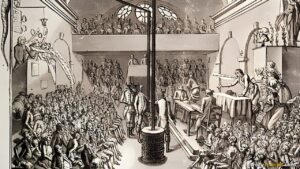
The French Revolution was a period of major social and political change in France that lasted from 1789 to 1799. Before the revolution, France was an absolute monarchy ruled by King Louis XVI, which meant the king held nearly total power over the government and the people. French society was also divided by the Estates SystemA rigid social structure dividing French society into three groups based on birth, left over from feudalism., a rigid structure left over from feudalism that separated people into three groups, or estates.
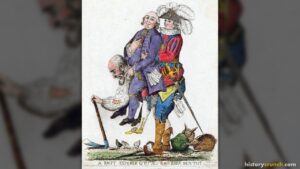
The First Estate was made up of the clergy, and the Second Estate was made up of the nobility. Together, these two privileged groups were only a tiny fraction of the population, yet they held most of the wealth, land, and power. The Third Estate included everyone else, from wealthy merchants and lawyers down to poor peasants, and it made up the vast majority of French people. In fact, the members of the Third Estate carried most of the tax burden while enjoying the fewest rights.
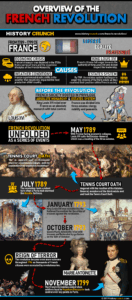
By the late 1780s, France faced a severe economic crisis caused by years of costly wars, lavish royal spending, and an unfair tax system. When Louis XVI called a meeting of the Estates-General in 1789 to solve the financial problems, the anger of the Third Estate boiled over. That anger set off a chain of events, beginning with the storming of the Bastille on July 14th, 1789, that would transform France completely.
How Did the Revolution End Absolute Monarchy?
One of the most important results of the French Revolution was the end of absolute monarchy in France. For centuries, French kings had claimed the right to rule with almost no limits on their power. The revolutionaries rejected this idea and insisted that political power should come from the people rather than from a single ruler.
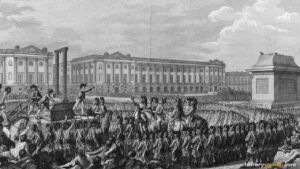
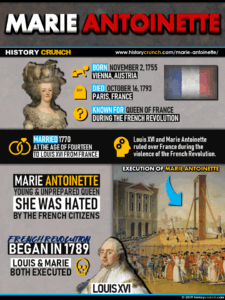
This shift became clear when the revolutionary government put King Louis XVI on trial and executed him by guillotine in January of 1793. His queen, Marie Antoinette, was executed later the same year. The killing of the king shocked the royal families of Europe and sent a powerful message that even a monarch could be held accountable to the nation.
In place of the monarchy, France created a republic in which representatives were chosen to govern on behalf of the people. Although the new government went through many changes and periods of turmoil, the basic idea remained. More specifically, the revolution established the principle that a government must answer to its citizens, a belief that lies at the heart of modern democracy.
FactsthatCrunchWhy Was the Declaration of the Rights of Man Important?
Another lasting achievement of the French Revolution was the Declaration of the Rights of Man and of the Citizen, which the National Assembly adopted in August of 1789. This document set out the core values of the revolution and declared that all men were born free and equal in their rights. In doing so, it directly challenged the old system of privilege based on birth and rank.
The Declaration was inspired by the ideas of the Age of Enlightenment as well as by the American Revolution. It listed rights such as freedom of religion, freedom of the press, and the idea that there should be no taxation without representation. For example, it stated that the law should apply equally to everyone rather than favoring the nobility and clergy.
The Declaration did have important limits, because its political rights were mainly granted to property-owning men and left out women and the poor. Even so, it became a model for later statements of human rights around the world. In reality, its ideals of liberty and equality outlived the revolution and continue to influence how people think about freedom today.
FactsthatCrunchThe law is the expression of the general will. All citizens have the right to take part, in person or by their representatives, in its formation. It must be the same for everyone whether it protects or penalizes. All citizens being equal in its eyes are equally admissible to all public dignities, offices, and employments, according to their ability, and with no other distinction than that of their virtues and talents.
All citizens may take part in lawmaking and hold public office. What does this reveal about the real limits of the Declaration's political rights?
How Did Enlightenment Ideas Shape the Revolution?
The French Revolution was closely tied to the Age of Enlightenment, an intellectual movement of the 18th century in which thinkers questioned the traditional foundations of society. Enlightenment writers challenged the idea that a king had a natural right to rule and argued instead that governments should serve the people. These ideas were widely discussed in the salons of France, where educated people gathered to debate the questions of the day.
Enlightenment thinkers promoted the belief that a ruler could only govern with the consent of the governed. This idea led many French citizens to question whether Louis XVI truly had the right to rule when so many of his people opposed him. As a result, Enlightenment values gave the revolutionaries the language and the reasoning to justify overthrowing the old order.
The significance of this connection is that the French Revolution turned Enlightenment theory into practice. Ideas that had once been debated in books and meeting rooms were now used to build a new form of government. In fact, the revolution showed the world that these ideas could reshape an entire nation.
FactsthatCrunchHow Did the Revolution Spread Nationalism?
The French Revolution was also particularly important in spreading nationalismThe belief that people sharing a common language, culture, and history should govern themselves as one nation., which is the belief that people who share a common language, culture, and history should govern themselves as a nation. Before the late 18th century, most people identified themselves by their religion, their village, or their loyalty to a king rather than by a national identity. The revolution encouraged the French to see themselves first and foremost as citizens of a single French nation.
This new spirit of nationalism grew even stronger during the wars that followed the revolution. When Napoleon Bonaparte‘s armies marched across Europe in the early 19th century, they carried revolutionary ideas with them wherever they went. Napoleon had risen to power in France after the revolution and eventually made himself emperor, bringing the revolutionary period to a close.
In the lands his armies conquered, Napoleon’s presence had a surprising effect. Groups such as the Germans and the Spaniards developed a stronger sense of their own national identity as they resisted French occupation. As stated above, nationalism was therefore spread both by those who embraced the revolution and by those who fought against French control.
FactsthatCrunchHow Did the Revolution Inspire Later Movements?
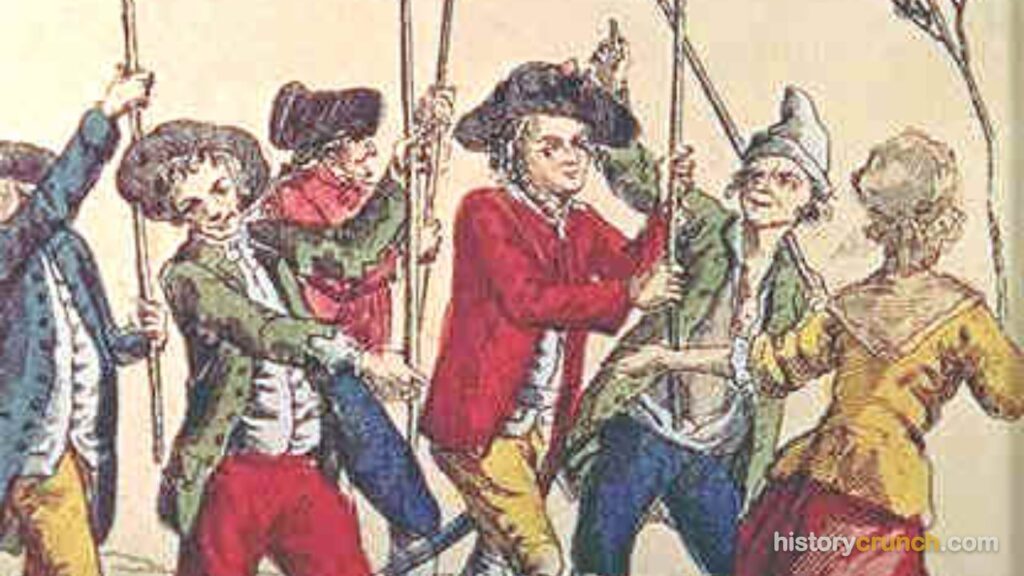
The influence of the French Revolution did not end when the fighting stopped. Throughout the 19th and 20th centuries, people across Europe and around the world looked back to the revolution as an example of how ordinary citizens could challenge unjust rulers. Its slogans and symbols became a source of hope for those seeking greater freedom.
For instance, later waves of revolution in Europe, including the uprisings of 1830 and 1848, echoed the demands first raised in France for constitutions, elected assemblies, and national self-rule. The revolution also planted seeds that would grow into movements for democracy and human rights far beyond European borders. In this way, the French Revolution served as a kind of school for future reformers and revolutionaries.
At the same time, the revolution offered a warning about how quickly change could turn violent. The Reign of TerrorA period during the revolution when tens of thousands of people were executed out of fear and extremism., during which tens of thousands of people were executed, showed how fear and extremism could take hold. This darker side of the revolution reminded later generations that the struggle for freedom could carry serious dangers.
FactsthatCrunchIn what order did these European upheavals inspired by the French Revolution unfold?
Significance of the French Revolution
The significance of the French Revolution lies in the way it helped to create the modern world. By ending absolute monarchy and building a republic, it advanced the idea that governments must answer to their citizens rather than to kings. This principle became a foundation of democratic government in many countries.
The revolution also spread powerful ideas about liberty, equality, and human rights through documents like the Declaration of the Rights of Man and of the CitizenA 1789 document listing core rights such as freedom of religion and equality under the law for all men.. Even though these rights were limited at first, they set a standard that later movements worked to expand. Over time, the values of the revolution shaped how people everywhere understood freedom and fairness.
Finally, the French Revolution left behind a legacy of nationalism and a model for change that inspired countless later revolutions. It stands as a reminder that the actions of ordinary people can transform an entire society. For all of these reasons, the French Revolution remains one of the most studied and most important turning points in history.
FactsthatCrunchThe French Revolution reshaped France and influenced the world, but its record includes both lasting achievements and serious dangers.
Key Vocabulary
Absolute monarchy
Estates System
Declaration of the Rights of Man and of the Citizen
Age of Enlightenment
Nationalism
Reign of Terror
Republic
Frequently Asked Questions
Why is the French Revolution so important?
The French Revolution is important because it ended absolute monarchy in France and spread ideas about democracy, equality, and human rights that reshaped the modern world. It marked a shift away from a society ruled by kings and nobles toward one built around the rights of citizens. Because these ideas traveled far beyond France, the revolution is often seen as a starting point for modern politics.
What are the main effects of the French Revolution?
The main effects of the French Revolution include the fall of the monarchy, the creation of a republic, and the end of the old feudal Estates System. It also spread Enlightenment ideas about liberty and equality and encouraged the growth of nationalism across Europe. In addition, it inspired reform movements and revolutions in other countries for many years afterward.
How did the French Revolution change France?
The French Revolution changed France by replacing the absolute monarchy with a republic and abolishing the special privileges of the nobility and clergy. It swept away the feudal Estates System that had divided society for centuries. These changes gave more legal equality to ordinary citizens and permanently altered how France was governed.
Did the French Revolution influence other countries?
Yes, the French Revolution influenced many other countries by spreading ideas about freedom, equality, and self-government. Its example encouraged later uprisings in Europe, including the revolutions of 1830 and 1848, and inspired movements for rights around the world. The Declaration of the Rights of Man also became a model for human rights documents in other nations.
How did the French Revolution lead to Napoleon?
The French Revolution led to Napoleon Bonaparte because years of instability and war created an opening for a strong military leader to seize power. Napoleon rose through the army during the revolution and took control of the government in 1799, later making himself emperor. His rise brought the revolutionary period to an end while also spreading many of its ideas across Europe.
Cite This Article
To cite this article as a source, use one of the formats below.
MLA: Millar, B. “Significance of the French Revolution: A Detailed Summary.” HistoryCrunch, 11 August 2026, https://historycrunch.com/significance-of-the-french-revolution/.
APA: Millar, B. (2026). Significance of the French Revolution: A Detailed Summary. HistoryCrunch. https://historycrunch.com/significance-of-the-french-revolution/
Chicago: Millar, B. “Significance of the French Revolution: A Detailed Summary.” HistoryCrunch. August 11, 2026. https://historycrunch.com/significance-of-the-french-revolution/
Sources
- William Doyle, The Oxford History of the French Revolution.
- Peter McPhee, Liberty or Death: The French Revolution.
- Fordham Modern History Sourcebook
- Liberty, Equality, Fraternity (revolution.chnm.org), George Mason