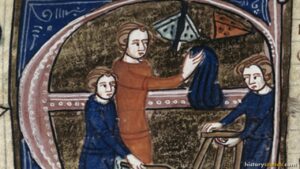
Feudalism was a form of government common in medieval Europe that involved society being structured in a very rigid and hierarchicalOrganized in ranked levels where some people hold more power than others. way. It was popular in European society from the 9th century until the 15th century and was the form of government in which the country was dominated by an absolute monarch, in whom all power was held by a single king. The monarch would rule over the country while the rest of the people were bound by a hierarchical system in which people were placed into estates in which they were born. While feudalism was common in Europe in the Middle Ages, it should be noted that many societies throughout history contained elements of feudalism.
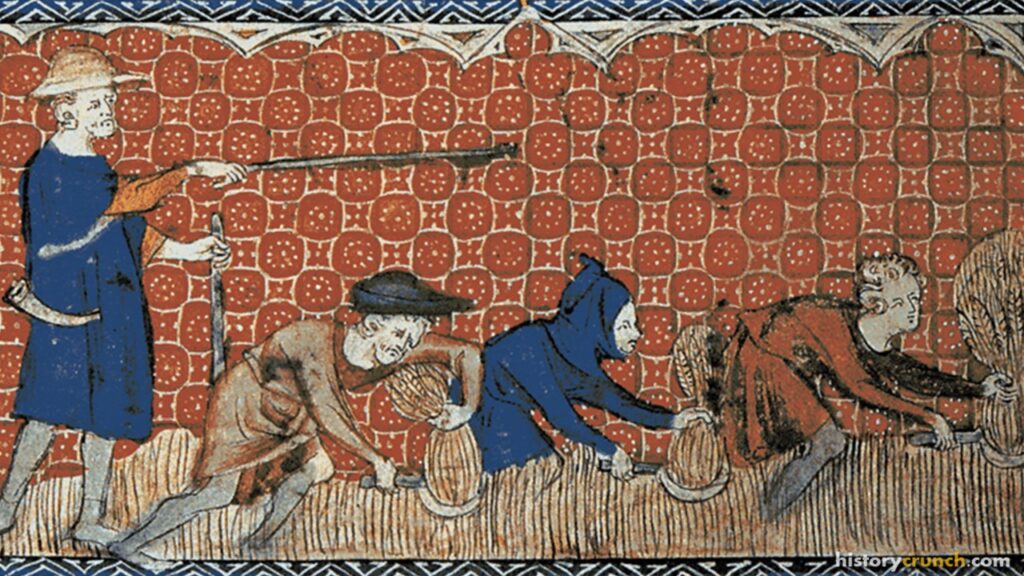
Feudalism is best understood through the ownership and working of the land. In a feudal society, the land was owned by noble lords and worked by the local peasants, who were also referred to as serfs. The lords would receive the land from the monarch who would in return expect the noble lords to provide the king with soldiers for his armies, which would often come from the peasant class. Peasants would work for the noble lord in exchange for the ability to live and work on the land.
 FactsthatCrunch
What were the main levels of the feudal social hierarchy in the Middle Ages?
Feudalism arranged medieval society into strict levels based on land ownership and service. The monarch held all land and granted portions to nobles in exchange for military support. Nobles gave smaller plots to knights who fought for them in battle. At the bottom, peasants and serfs farmed the land and produced food and goods for everyone above them. Serfs were legally bound to the land and could not leave without their lord's permission, while free peasants had slightly more freedom but still owed labor and fees to the noble who controlled the estate. The clergy formed a separate pillar of this system, running their own estates and collecting a tax called the tithe, equal to one tenth of a person's income or produce.
Main Principles
Historians have identified several main principles of feudalism as a political, economic and social system. In general, the main principles of feudalism were based on land and classes. For instance, feudal societies had several distinct classes or estates, including clergy, nobility, knights and peasants. With that said, at the top was the absolute monarch (king or queen), who owned all the land and distributed it to nobles or lords in return for loyalty and military support, especially in time of warfare or crisis.
The clergy were the first class, the nobility the second, and the peasants would represent the third class. The clergy and the nobility enjoyed the most power and prestige in society and generally held most of the important positions in the government and military. Also, beneath the nobles were the knights, who were granted smaller pieces of land in exchange for serving the nobles in battle. At the bottom were the peasants and serfs, who worked the land to produce food and goods for everyone above them. In return, they received protection and the right to live on the land. The peasants and serfs made up the vast majority of the population but lacked any sort of power in society.
History
While feudalism, as a system, is most often associated with the Middle Ages in Europe, it should be noted that it had its beginnings much earlier. In fact, some historians have argued that the origins of feudalism began with the fall of the Roman Empire in 476 CE. The fall of Rome left many parts of Europe with no central authority. As such, without a strong central government to provide protection, people began turning to local noble lords for safety. These lords controlled large estates and offered protection to peasants, who, in return, worked the land and provided food and services. This system was based on mutual obligation: lords provided security, and peasants provided labor.
Feudalism grew stronger during the Carolingian Empire under Charlemagne in the 8th and 9th centuries, which is the time that historians refer to as the Early Middle Ages. For example, Charlemagne granted land, or fiefsPieces of land a lord gave to a vassal in return for loyalty and military service., to loyal nobles in exchange for military service and support. By the 10th century, feudalism had spread across much of western Europe, particularly in France, England, and the Germanic kingdoms. In fact, by the time of the Middle Ages, feudalism had become the dominant political and social system in Europe.
The feudal system reached its height between the 11th and 13th centuries, particularly in western Europe. However, feudalism gradually declined by the late Middle Ages because of economic changes, the growth of towns, stronger monarchies, and events such as the Black Death, which reduced the population and increased the value of labor.
 FactsthatCrunch
What were the key causes of feudalism's rise after the fall of Rome?
The Feudal Contract
A key feature of the feudal system was the feudal contract, which was the mutual agreement of obligations that bound the different classes of society together. At each level of the feudal hierarchy, those above and below were connected by a formal set of duties and expectations. A lord granted land, known as a fief, to a vassalSomeone who received land from a lord and swore loyalty and promised military service in return., and in return the vassal swore an oath of loyalty and promised to provide military service and other support when called upon. This relationship was formalized through a ceremony known as homageA ceremony in which a vassal knelt before a lord and pledged loyalty to seal the feudal contract., in which the vassal knelt before the lord and pledged his loyalty.
The feudal contract was not a written legal document in the modern sense but rather a sworn oath reinforced by custom and social obligation. Breaking the feudal contract was considered a serious moral failure as well as a practical one, since the entire system depended on these obligations being honored. The relationship between lord and vassal could extend across multiple levels simultaneously, as a great lord might himself be a vassal to a more powerful noble or to the king, while also being the lord of many smaller vassals beneath him.
FactsthatCrunchThe feudal contract was a sworn agreement that locked lords and vassals into a set of mutual duties, binding each level of the feudal hierarchy together through land, loyalty, and military service.
The Role of the Peasants and Serfs
While the feudal contract governed relationships among the nobility and knights, the vast majority of people in a feudal society were peasants and serfs who sat at the bottom of the hierarchy. Peasants were agricultural workers who farmed the land and produced the food and goods that supported everyone above them in the social structure. In reality, the entire feudal system depended on their labor, yet they received the fewest protections and the least power.
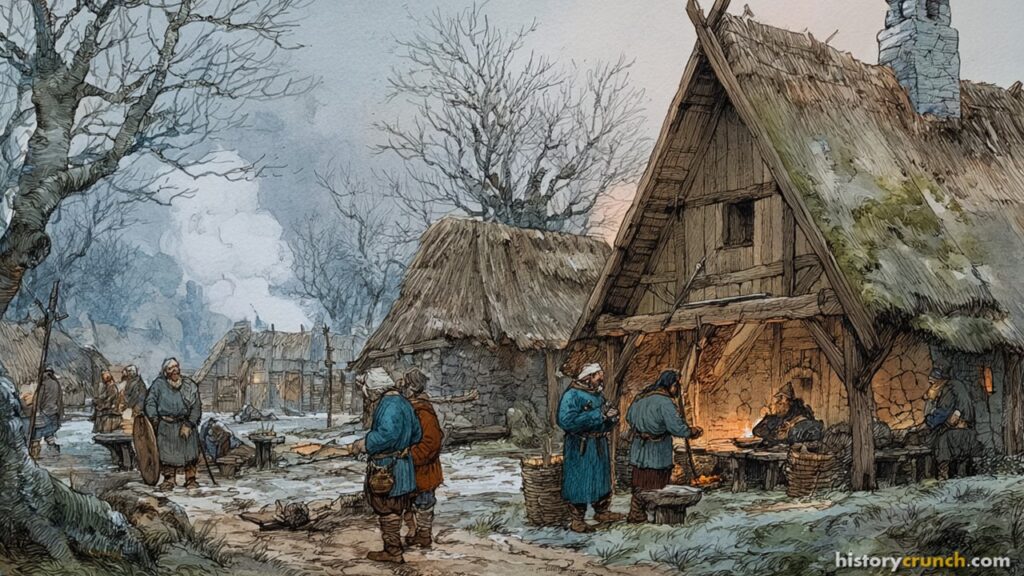
Serfs were a specific category of peasants who were legally bound to the land they worked. This meant they could not leave the estate of their lord without permission, and if the land was sold or transferred to a new owner, the serfs went with it. In exchange for the right to work the land and receive the lord’s protection, serfs were required to work a portion of their time on the lord’s own fields, pay various fees and dues, and provide services such as maintaining roads and buildings on the estate. Their lives were heavily controlled by the noble lord, who held legal authority over them in most matters.
 FactsthatCrunch
If a lord's land was sold or passed to a new owner, the serfs who worked it went with the land.
The Role of the Catholic Church
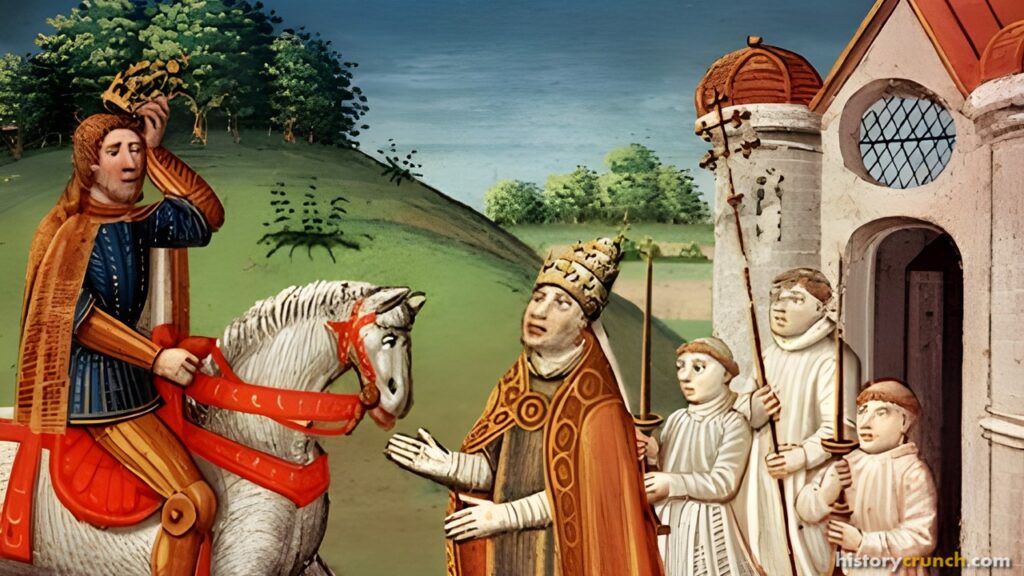
The Catholic Church played a central and distinctive role within the feudal system. Unlike the nobility and peasantry, the clergy formed a separate pillar of feudal society that operated according to its own hierarchy and answered ultimately to the Pope in Rome rather than to any secularBelonging to non-religious, worldly authority rather than to the Church. lord. At the same time, the Church was deeply embedded in the feudal structure in practical terms. Bishops and abbots controlled large estates worked by peasants, and the Church collected a tax known as the titheA Church tax requiring all people to hand over one tenth of their income or produce., which required all people to pay one tenth of their income or produce to the Church.
The Church also provided the ideological foundation of the feudal system. By teaching that the social order was divinely ordained and that each person had a God-given place in society, the Church encouraged acceptance of the feudal hierarchy among the population. Furthermore, the Church provided essential services that no other institution could offer at the time, including education, the running of hospitals and charitable institutions, and the recording of important documents. As such, the Church was both a participant in and a supporter of the feudal order throughout the Middle Ages.
FactsthatCrunchWhen Adam delved and Eve span, who was then the gentleman?
Ball preached these words to thousands of rebel peasants gathered at Blackheath outside London during the Peasants' Revolt of 1381, asking why people who farmed the lords' land and handed one tenth of their produce to the Church as the tithe should accept ranks that did not exist at creation.
Decline of Feudalism
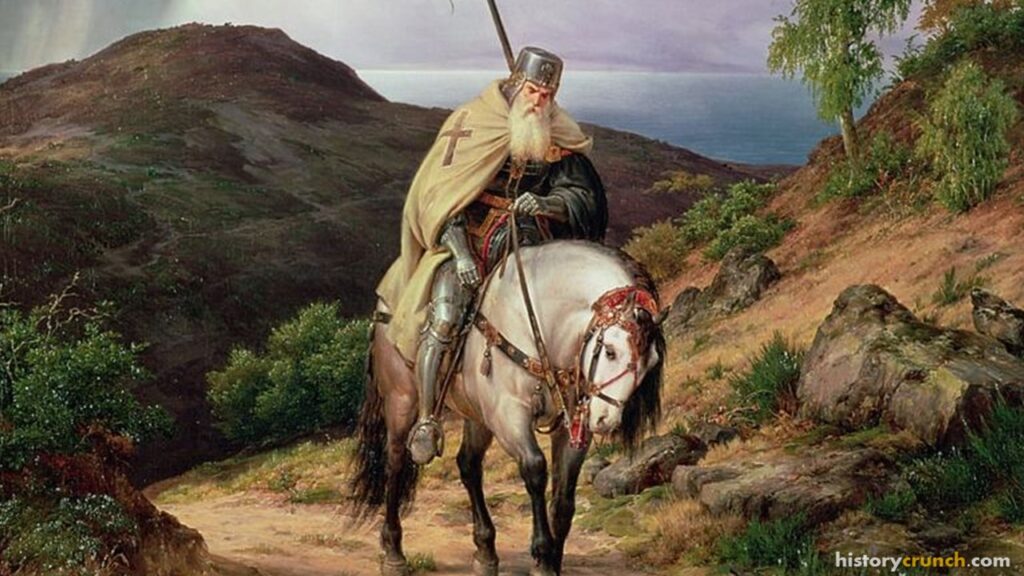
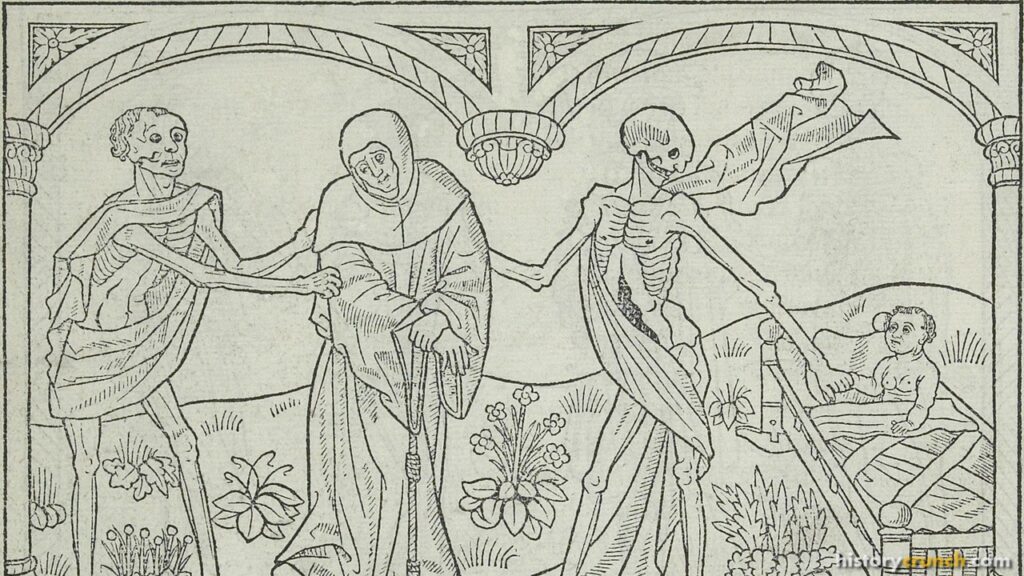
The decline of feudalism was a gradual process that unfolded over several centuries and was driven by a combination of factors. One of the most important was the Black Death of the mid-1300s, which killed an estimated one third to one half of Europe’s population. The massive loss of life dramatically reduced the number of available agricultural workers, which gave surviving peasants greater bargaining power. Many lords were forced to offer better conditions and wages to retain workers, which weakened the rigid obligations of the feudal system.
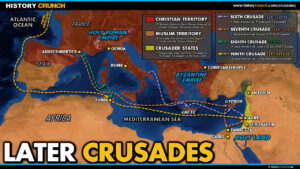
The growth of towns and trade also undermined feudalism. As merchants and craftspeople accumulated wealth outside the land-based feudal structure, a new middle class began to emerge that did not fit neatly into the traditional feudal hierarchy. Towns often negotiated charters that gave them legal rights and freedoms independent of the local nobility, further eroding the feudal lord’s authority. Furthermore, the Crusades, which sent large numbers of knights and nobles to fight in the Middle East, disrupted feudal relationships and exposed Europeans to new ideas, goods, and ways of life that challenged traditional social structures.
The rise of stronger centralized monarchies also contributed to feudalism’s decline. As kings accumulated more power and were able to maintain their own professional armies rather than relying on noble vassals, the military necessity that had originally driven the feudal system became less important. By the end of the 15th century, feudalism had largely broken down across much of Western Europe, though it persisted in modified forms in Eastern Europe and Russia well into the modern period.
 FactsthatCrunch
 Why Did Feudalism Decline?
Significance
The significance of feudalism in the history of Europe is considerable. For several centuries it was the dominant political, social, and economic system across much of the continent, shaping the daily lives of millions of people from the highest king to the lowest serf. The rigid class structure it created determined where a person was born, how they lived, what work they did, and what rights they held, with little possibility of moving between social levels.
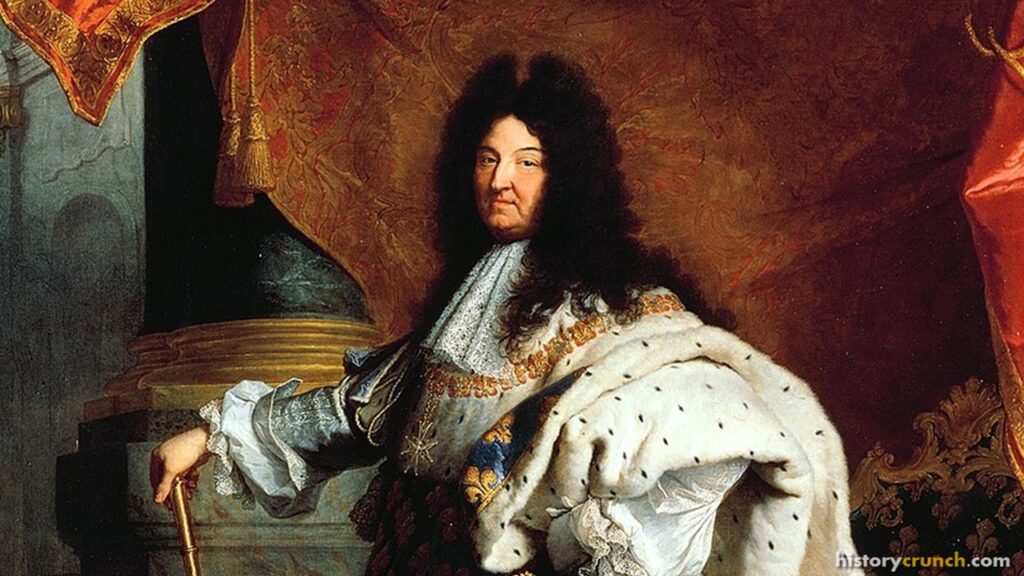
Feudalism also laid important groundwork for the political developments that followed it. The gradual decline of the feudal nobility and the rise of stronger centralized monarchies was a direct precursor to the Age of Absolutism, in which kings consolidated total power over their kingdoms. In reality, the weakening of the noble class that feudalism’s decline produced made it easier for absolute monarchs such as Louis XIV of France to centralize authority in ways that would not have been possible when powerful feudal lords controlled their own armies and territories.
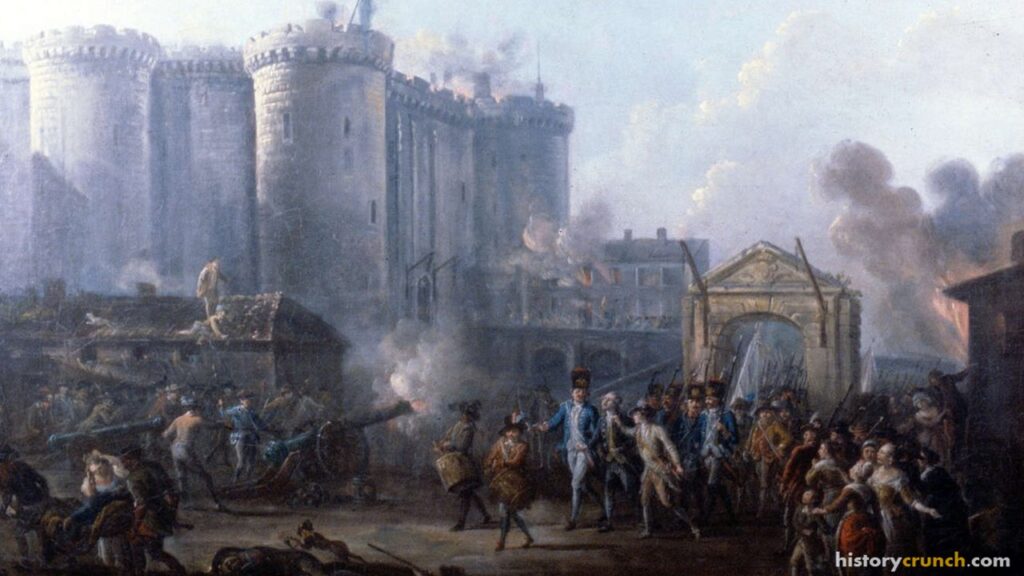
Furthermore, the rejection of feudal social structures was central to the intellectual developments of the Renaissance and the Age of Enlightenment. Thinkers of both periods challenged the idea that a person’s place in society was fixed by birth and argued instead for the importance of individual merit, reason, and rights. These ideas contributed directly to the revolutionary movements of the late 18th century, most notably the French Revolution, which formally abolished the last remnants of the feudal system in France in 1789. Because of this, feudalism stands as one of the most important and influential systems of government in the history of the Western world, both for the society it created and for the reactions it eventually produced.
 FactsthatCrunch
Under feudalism, power was distributed across many lords who held real authority over land and people. Absolute monarchy replaced that arrangement by concentrating all governing power in one ruler, which became possible partly because the decline of the feudal noble class left kings without strong rivals.
Explore Middle Ages · 476 – 1500 CE
Keep exploring Middle Ages with these History Crunch resources.
Key Vocabulary
Hierarchical
Fiefs
Vassal
Homage
Tithe
Serfdom
Secular
Frequently Asked Questions
What is feudalism in simple terms?
Feudalism was a system that ranked people into fixed classes based on land and loyalty. A king gave land to nobles, who let peasants work it in return for protection. Everyone owed duties to the person above them, and the system ran mostly on trade of labor for safety.
What was a fief in the feudal system?
A fief was a piece of land that a lord granted to a vassal in exchange for loyalty and service. The vassal usually promised military help and swore an oath during a ceremony called homage. A fief could be small or huge, and it came with the peasants who farmed it.
What was the difference between a peasant and a serf?
A serf was a type of peasant who was legally tied to the land and could not leave without the lord’s permission. Regular peasants farmed the land too, but serfs had even fewer freedoms. If the land was sold, the serfs were transferred along with it to the new owner.
Why did feudalism end?
Feudalism declined because of the Black Death, the growth of towns, and stronger kings. The plague killed between one third and one half of Europe’s people, so surviving workers could demand better pay. Trade created a new middle class, and kings built their own armies instead of relying on nobles.
What role did the Catholic Church play in feudalism?
The Catholic Church was its own powerful pillar of feudal society and answered to the Pope in Rome. Bishops and abbots ran large estates, and the Church collected a tax called the tithe worth one tenth of a person’s income. It also taught that the social order was set by God, which helped people accept the system.
Cite This Article
To cite this article as a source, use one of the formats below.
MLA: Woida, K.L. “Feudalism: A Detailed Summary.” HistoryCrunch, 15 September 2026, https://historycrunch.com/feudalism/.
APA: Woida, K. L. (2026). Feudalism: A Detailed Summary. HistoryCrunch. https://historycrunch.com/feudalism/
Chicago: Woida, K.L. “Feudalism: A Detailed Summary.” HistoryCrunch. September 15, 2026. https://historycrunch.com/feudalism/
Sources
- Fordham Medieval Sourcebook
- The Met (Heilbrunn Timeline) — medieval art
- Chris Wickham, Medieval Europe.
- Barbara Rosenwein, A Short History of the Middle Ages.