Children in the Middle Ages lived very different lives from children today. The medieval period was a difficult time for most people, and children were no exception. The lives of children during the Middle Ages varied greatly depending on their social class, with the children of peasants, nobles and those entering religious life all experiencing childhood in very different ways. In general, children in the Middle Ages were expected to take on responsibilities and contribute to the work of their families from a very young age.
 FactsthatCrunch
How did social class shape a child's upbringing in the Middle Ages?
A child's social class determined almost everything about their upbringing in the Middle Ages. Peasant children began doing simple chores such as gathering firewood and caring for animals by around age five or six, then moved on to full field labor in their early teens, with no access to schools or formal learning. Noble boys were sent to a lord's castle at around age seven to begin training as a page, while some children were sent to monasteries or convents as young as seven or eight, where the Church provided education and a structured daily routine.
What Was Childhood Like in the Middle Ages?
Childhood in the Middle Ages was generally much shorter than it is today. Medieval society did not have the same understanding of childhood as a distinct and protected stage of life that most people have today. For instance, children were expected to begin contributing to the work of their families as soon as they were physically able, which for many meant starting simple tasks by the age of five or six. By their early teenage years, many children were already taking on adult responsibilities, whether that meant working full time on the land, beginning an apprenticeshipA period of training where a young person learns a skilled trade by working under an experienced adult. or entering into a marriage arranged by their family. As such, the transition from childhood to adulthood was much faster and less clearly defined in the Middle Ages than it is in modern times.
FactsthatCrunchIn the Middle Ages, children began doing real work as young as five or six years old. Peasant children gathered firewood, fetched water, cared for small animals, and helped with basic farming tasks. By their early teenage years, many were doing full adult field work or had already started an apprenticeship under a skilled tradesperson.
In the United States today, the Fair Labor Standards Act sets 14 as the minimum age for most non-farm jobs, and limits the hours minors can work during school weeks. Children under 18 are barred from jobs considered hazardous. These protections reflect a view of childhood as a distinct stage of life that deserves legal protection, a concept that did not exist in the Middle Ages.
The shift from medieval childhood to modern child labor law shows how society's understanding of what children owe their families, and what families and governments owe children, has changed fundamentally over several centuries.
Children and Mortality in the Middle Ages
One of the most important aspects of childhood in the Middle Ages was the very high rate of child mortality. Infant mortalityThe death of babies or very young children, used here to describe how common it was for children to die in their first years of life., which refers to the death of children in their first year of life, was extremely high during the medieval period. Historians estimate that as many as one in three children did not survive past their first few years of life. This was due to a number of factors, including: poor nutrition, lack of medical knowledge, unsanitary living conditions and the frequent spread of diseases. For instance, the Black Death, which was the most famous pandemic in human history and devastated Europe in the 14th century, had a particularly severe impact on young children who were especially vulnerable to the disease.
As a result of the high rate of child mortality, families in the Middle Ages often had many children in the hope that at least some would survive to adulthood. The loss of a child was a common and painful experience for medieval families. With that said, historians have found evidence that medieval parents did form strong emotional bonds with their children and grieved deeply when they died, challenging the older idea that people in the Middle Ages were indifferent to the deaths of their children because death was so common.
FactsthatCrunchTrue or False: Historians have found evidence that medieval parents grieved deeply when their children died, rather than being indifferent to child death.
Peasant Children in the Middle Ages
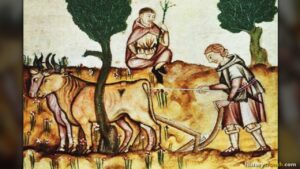
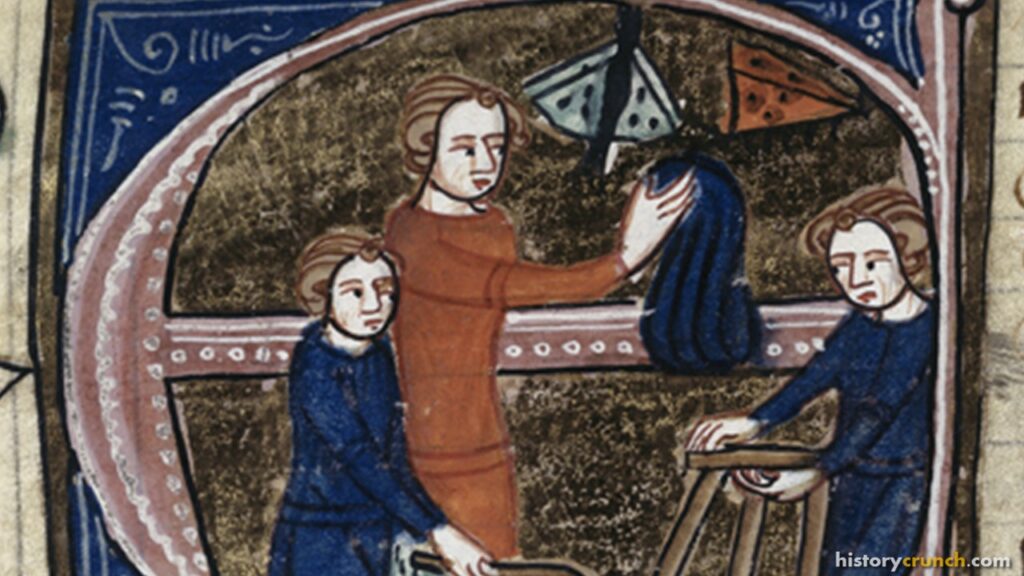
The majority of children in the Middle Ages were born into peasant families who lived and worked on the land under the feudal system and the Manor System. Life for peasant children was defined by hard work and limited opportunities. From a very young age, peasant children were expected to help their families with basic tasks around the home and on the land. For instance, young children might be responsible for tasks such as: gathering firewood, caring for small animals, fetching water and helping with simple farming tasks. As they grew older, children took on heavier and more demanding work alongside their parents in the fields.
Education was generally not available to peasant children in the Middle Ages. Most peasants could not read or write, and there were no schools for the children of serfs or common farmers. Instead, peasant children learned the skills they needed for life by working alongside their parents and other adults in their community. Boys generally learned farming and the other skills of their father, while girls learned the domestic skills of their mother, including cooking, spinning, weaving and caring for children. As such, the lives of peasant children in the Middle Ages were shaped almost entirely by the demands of agricultural labor and the expectations of the feudal systemA medieval social order where peasants worked land owned by lords in exchange for protection and a place to live..
FactsthatCrunchPeasant children in the Middle Ages learned their family's work through hands-on training alongside adults, gaining the skills they needed by doing real tasks from an early age.
Noble Children in the Middle Ages
The lives of children born into noble families were very different from those of peasant children. Noble children lived in castles or manor houses and had access to better food, clothing and education than the children of peasants. From a young age, noble children were educated in the skills and knowledge expected of their social class. For instance, noble boys received instruction in reading, writing, Latin, music and the basics of religion. Girls from noble families were also given some education, though their learning was generally focused on the skills expected of a noblewoman, such as needlework, music and the management of a household.
For boys from noble families, childhood was also closely tied to the path toward knighthood. As discussed in other articles, the process of becoming a knight began at a young age. At around the age of seven, a boy from a noble family would be sent to the castle of a lord or another knight to begin his training as a pageA young boy, around age seven, sent to a lord’s castle to begin the first stage of training toward becoming a knight.. During this time, he would learn basic skills such as riding horses, using weapons and understanding the customs of noble society. By his early teenage years, a page would become a squireA teenage boy assigned to serve a specific knight and continue his training after completing his time as a page., assigned to a specific knight to assist and continue his training. As such, for noble boys, childhood was largely a preparation for the responsibilities and expectations of adult knightly life.
Noble girls, on the other hand, were generally prepared for the role of wife and mother. Marriages among the nobility were typically arranged by families for political or economic reasons, and girls could be promised in marriage from a very young age. In some cases, noble girls were married as young as twelve or thirteen, though they often did not begin living with their husbands until they were older. As such, the childhood of noble girls in the Middle Ages was shaped by the expectation that they would eventually fulfill the role of a noblewoman in medieval society.
FactsthatCrunchIn what order did a noble boy pass through the stages of training toward knighthood in the Middle Ages?
Children and the Catholic Church
The Catholic Church played an important role in the lives of children throughout the Middle Ages. For instance, the Church oversaw important religious ceremonies that marked key moments in a child’s life, including baptismA Church ceremony performed shortly after a child’s birth, considered essential for the child’s spiritual well-being., which took place shortly after birth and was considered essential for the spiritual well-being of the child. As well, the Church ran many of the schools that did exist during the Middle Ages, meaning that education was closely tied to religious instruction. Children who attended these schools were taught to read and write primarily through the study of religious texts in Latin.
For some children in the Middle Ages, the Church also offered a path into religious life. Boys could be sent to monasteriesReligious communities where monks lived, worked, and prayed, and where some boys were sent as young as seven or eight to begin religious training. as young as seven or eight to begin their training as monks, while girls could enter convents to train as nuns. Life in a monastery or convent provided children with education, stability and a structured daily routine, and for some families it was seen as a positive opportunity for a child who might not otherwise have access to learning or a secure future.
FactsthatCrunchHistorians estimate that as many as one in three children in the Middle Ages did not survive past their first few years of life.
Poor nutrition, lack of medical knowledge, unsanitary living conditions, and the frequent spread of disease all drove child mortality to levels that are very high by modern standards. Because so many children died young, families often had as many children as possible in the hope that at least some would survive to adulthood. The Catholic Church played a central role in the rituals surrounding these deaths, including the baptism ceremony performed shortly after birth, which families treated as urgent precisely because infant death could come so quickly.
Significance of Children in the Middle Ages
In conclusion, the lives of children in the Middle Ages were shaped by the major institutions and social structures of the time, including the feudal system, the Manor System and the Catholic Church. While childhood in the Middle Ages was generally short and difficult, children played an important role in the economy and social life of medieval European society. Understanding the lives of children in the Middle Ages helps provide a more complete picture of what daily life was like during this important period in the history of Europe.
FactsthatCrunchWhat did medieval childhood really look like beneath the surface?
Explore Middle Ages · 476 – 1500 CE
Keep exploring Middle Ages with these History Crunch resources.
Key Vocabulary
Infant mortality
Feudal system
Apprenticeship
Page
Squire
Baptism
Monasteries
Frequently Asked Questions
At what age did medieval children start working?
Most children began simple tasks around the age of five or six. Peasant children helped by gathering firewood, fetching water and caring for small animals. By their early teens, many were doing full adult work in the fields or beginning an apprenticeship.
How high was child mortality in the Middle Ages?
Historians estimate that as many as one in three children died before reaching their first few years of life. Poor nutrition, unsanitary conditions and the frequent spread of disease were the main causes. Families often had many children in the hope that some would survive to adulthood.
Did medieval children go to school?
Education was not available to most children, especially those from peasant families. Noble boys learned reading, writing, Latin, music and religion, while noble girls learned household skills. The Catholic Church ran many of the few schools that did exist, so lessons were closely tied to religious texts.
How were noble children raised differently from peasant children?
Noble children lived in castles or manor houses with better food, clothing and education. Noble boys often trained for knighthood, starting as a page around age seven and later becoming a squire. Peasant children, by contrast, spent their days doing farm work and household chores.
At what age could children enter religious life?
Boys could be sent to monasteries as young as seven or eight to train as monks. Girls could enter convents to train as nuns. For some families, this path offered a child education, stability and a secure future they might not have had otherwise.
Cite This Article
To cite this article as a source, use one of the formats below.
MLA: Millar, B. “Children in the Middle Ages: A Detailed Summary.” HistoryCrunch, 14 October 2026, https://historycrunch.com/children-in-the-middle-ages/.
APA: Millar, B. (2026). Children in the Middle Ages: A Detailed Summary. HistoryCrunch. https://historycrunch.com/children-in-the-middle-ages/
Chicago: Millar, B. “Children in the Middle Ages: A Detailed Summary.” HistoryCrunch. October 14, 2026. https://historycrunch.com/children-in-the-middle-ages/
Sources
- The Met (Heilbrunn Timeline): medieval art
- Barbara Rosenwein, A Short History of the Middle Ages.
- Fordham Medieval Sourcebook
- Jacques Le Goff, Medieval Civilization 400-1500.