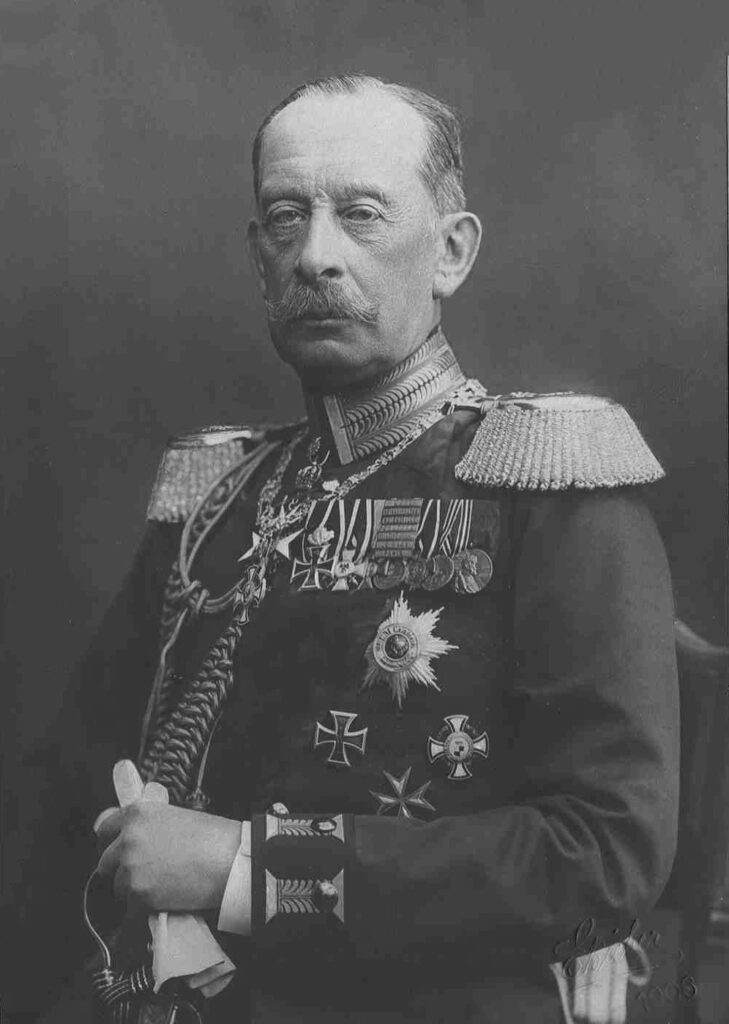
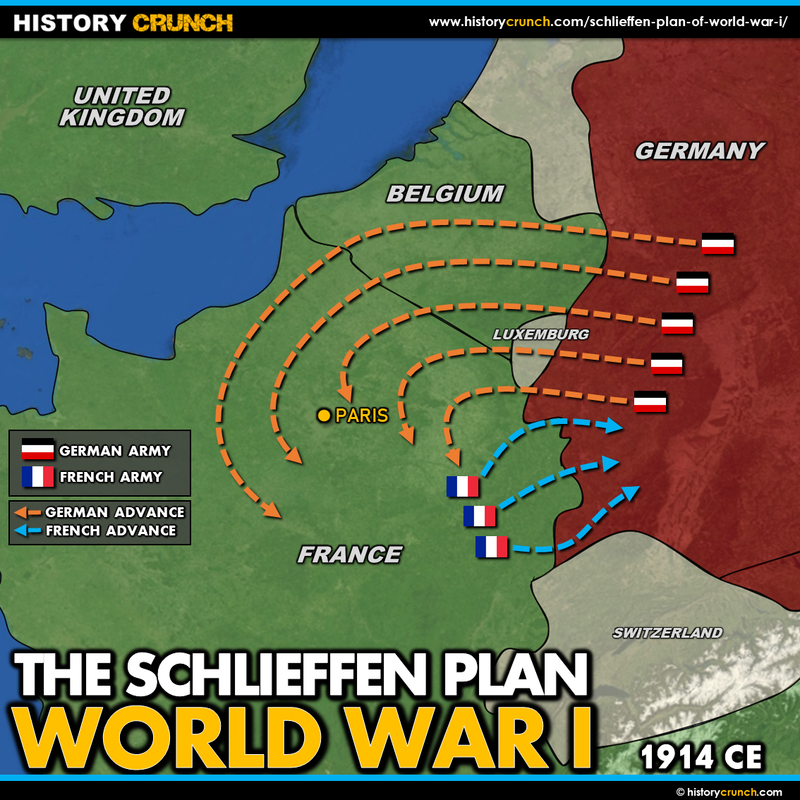
The Schlieffen Plan was the German plan of attack at the beginning of World War I in 1914. The Schlieffen Plan was designed by and named after the German Army Chief of Staff, Alfred von Schlieffen. He had been asked to design a plan of attack to help ensure German victory at the outbreak of war in Europe. Since Germany was facing both France and Russia in World War I, Germany would have to deal with a two-front warFighting enemies on opposite sides at the same time, splitting an army’s strength across two borders. and the possibility of its total armed forces being split to fight on both its western and eastern borders. The Schlieffen Plan was Germany’s response to this problem and at its heart the Schlieffen Plan was designed to prevent Germany from being forced to fight a two-front war.
 FactsthatCrunch
What were the main reasons Germany feared a two-front war in World War I?
What Was the Schlieffen Plan?
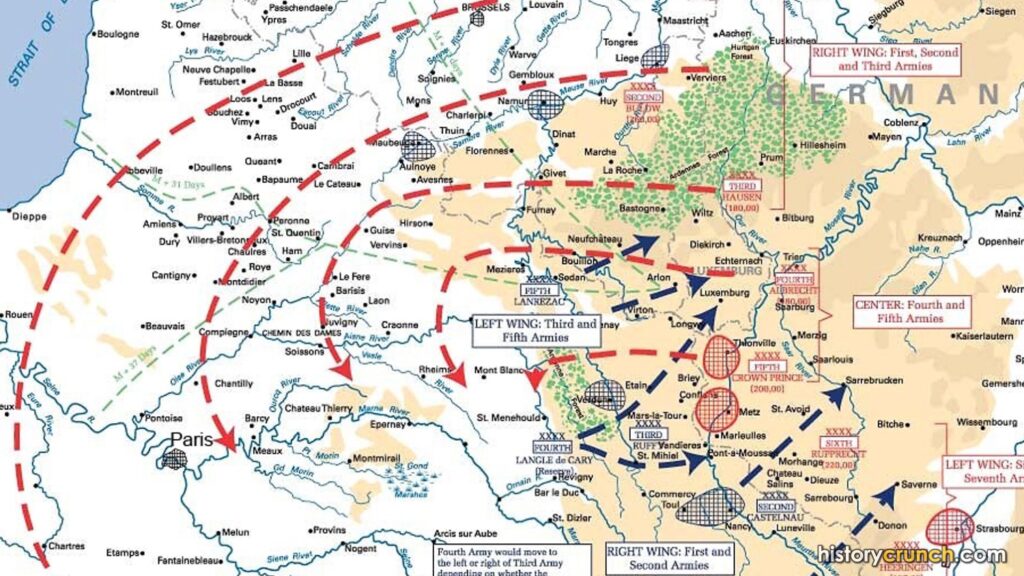
The Schlieffen Plan was designed such that Germany would first attack France through Belgium. France had fortifiedStrengthened with walls, forts, or other defenses to make a place harder to attack. its border towns with Germany and in order to avoid this, Germany hoped to bypass them completely by invading French territory from Belgium. The German forces were then to make their way across the French territory until they captured Paris, which was the capital of France. By capturing Paris, Germany hoped to end the war with France and come to peace or surrender terms with the French.
Next, German forces would turn their attention to its eastern border and begin the assault against Russia. In the early 1900s Russia was primarily an agricultural-based economy and lacked the heavy industry required to manufacture weapons and tools for war. As such, Germany believed that Russia would be slow to mobilizeTo organize and move a country’s military forces so they are ready to fight. for the war and take as long as six weeks. The Schlieffen Plan was designed such that Germany could knock France out of the war before that time and then turn its attention to fighting Russian forces. For instance, Germany first invaded France, through Belgium, but also fought Russian forces in the East at the Battle of Tannenberg.
 FactsthatCrunch
Germany built its entire war strategy around the idea that Russia would be slow to act, giving German forces time to knock France out of the war first. Russia mobilized in less than two weeks in 1914, collapsing that assumption and forcing Germany into the two-front war the Schlieffen Plan was designed to prevent.
Did the Schlieffen Plan Work?
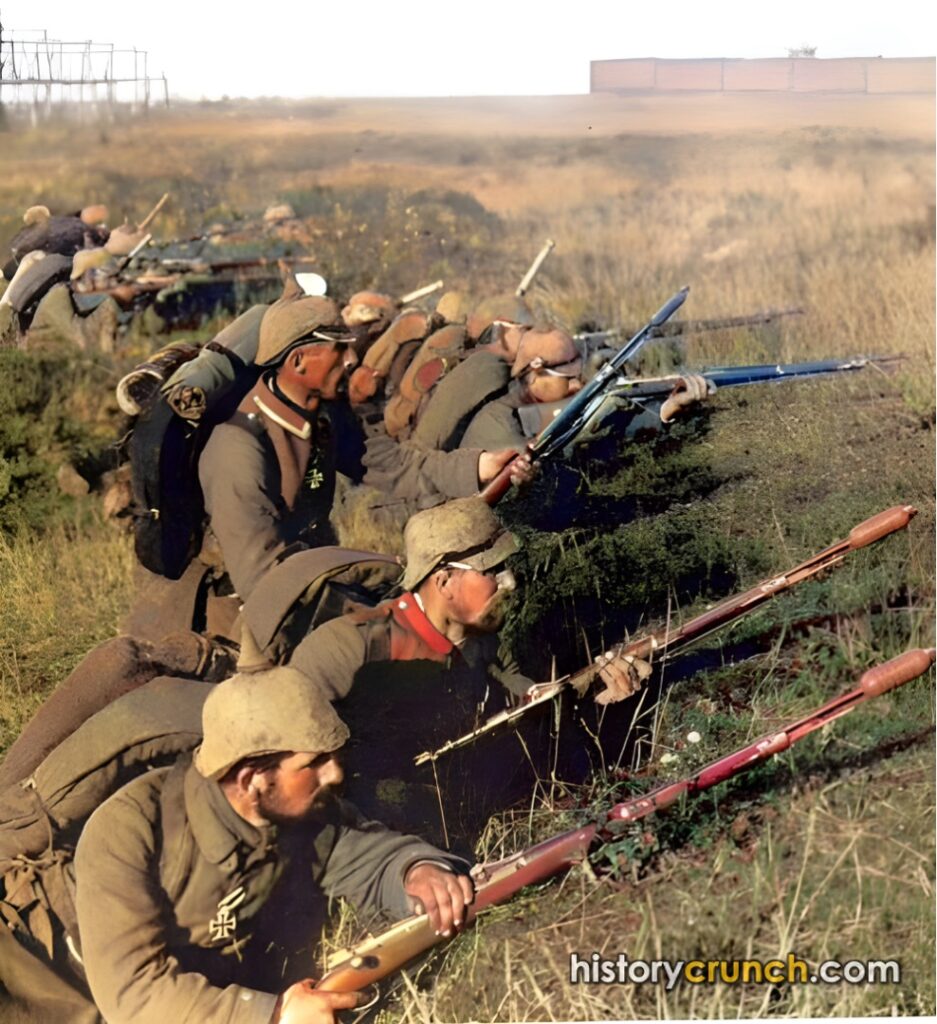
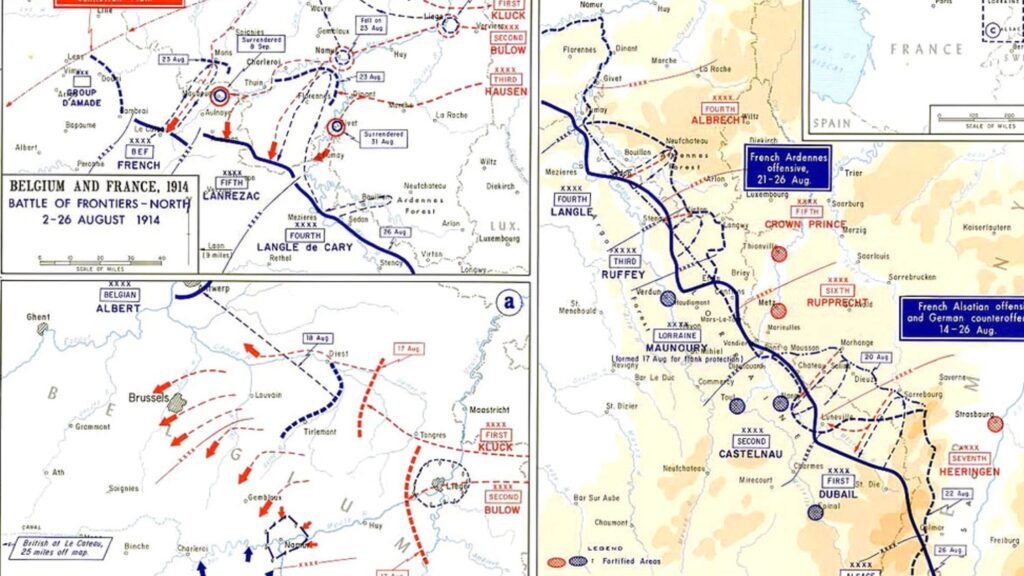
In reality, the Schlieffen Plan failed to deliver the result that the Germans hoped for. The overall plan failed for several different reasons. First, Germany did not plan on the British forces (British Expeditionary Force) arriving in time to help the Belgian forces defend against the German offensiveA large, organized military attack meant to push into enemy territory.. This slowed the German push towards France and allowed France to prepare for war in the north. When the Germans finally did push into France they failed to capture Paris and were stopped at the First Battle of the Marne. At the same time, Russia was able to mobilize its war effort in the east in less than two weeks, and forced Germany to begin to fight a two-front war.
Why did the Schlieffen Plan fail to knock France out of the war quickly in 1914?
What Was the Outcome of the Schlieffen Plan?
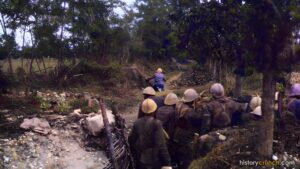
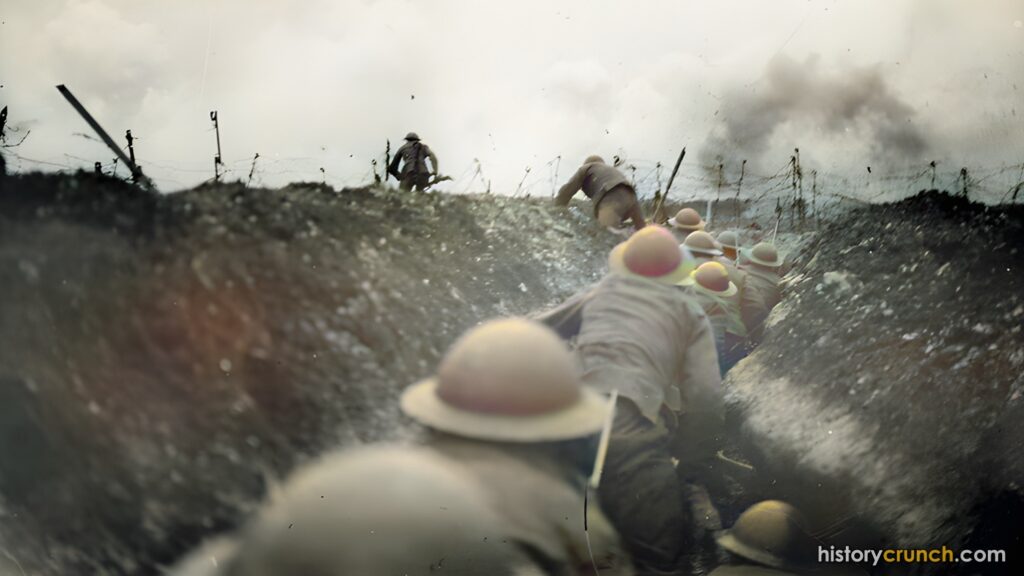
In the end, the Schlieffen Plan failed to bring a quick end to World War I and instead led to trench warfare in Northern France. For instance, following the First Battle of the Marne in 1914, the Allies raced against Germany to ‘outflankTo move troops around the side of an enemy force to attack from an unexpected angle.’ the other in an event known as the ‘Race to the Sea’.
The ‘Race to the Sea’ occurred throughout September and October of 1914. The German Army was successfully stopped at the First Battle of the Marne in early September and each side raced north in an attempt to flank the other. British and French forces countered the German push north throughout September and October until the two sides reached the North Sea in Belgium on October 19th. What resulted was a line of trenches that extended throughout much of northern Belgium and France. It was along this line of trenches that some of the most significant battles of World War I took place.
World War I timeline · 1914 – 1918
Key Vocabulary
Two-front war
Mobilize
Fortified
Offensive
Outflank
Trench warfare
Frequently Asked Questions
Who created the Schlieffen Plan?
The Schlieffen Plan was designed by Alfred von Schlieffen, the German Army Chief of Staff. He was asked to build a plan that would help ensure a German victory in a European war. The plan was named after him, though it was carried out years after he first wrote it.
Why did Germany invade France through Belgium?
Germany invaded France through Belgium to avoid the strong forts along the French border. France had fortified its border towns with Germany, which made a direct attack costly. Marching through Belgium let German forces bypass those defenses and push toward Paris.
What problem was the Schlieffen Plan meant to solve?
The Schlieffen Plan was meant to stop Germany from fighting a two-front war. Germany faced France in the west and Russia in the east at the same time. The plan called for a fast defeat of France before turning east to fight Russia.
Why did the Schlieffen Plan fail?
The Schlieffen Plan failed for several reasons that combined to slow the German attack. British forces arrived to help defend Belgium, which gave France more time to prepare. German troops were then stopped at the First Battle of the Marne and never captured Paris. Russia also mobilized in less than two weeks, forcing the two-front war Germany feared.
What happened after the Schlieffen Plan failed?
After the plan failed, the fighting turned into trench warfare across northern France and Belgium. Both sides tried to outflank each other in a push north called the Race to the Sea. When they reached the North Sea on October 19th, 1914, a long line of trenches remained. Some of the deadliest battles of World War I were later fought along it.
Cite This Article
To cite this article as a source, use one of the formats below.
MLA: Beck, Elias. “Schlieffen Plan: A Detailed Summary.” HistoryCrunch, 29 September 2026, https://historycrunch.com/schlieffen-plan/.
APA: Beck, E. (2026). Schlieffen Plan: A Detailed Summary. HistoryCrunch. https://historycrunch.com/schlieffen-plan/
Chicago: Beck, Elias. “Schlieffen Plan: A Detailed Summary.” HistoryCrunch. September 29, 2026. https://historycrunch.com/schlieffen-plan/
Sources
- Hew Strachan, The First World War.
- Margaret MacMillan, The War That Ended Peace.
- Imperial War Museum
- John Keegan, The First World War.