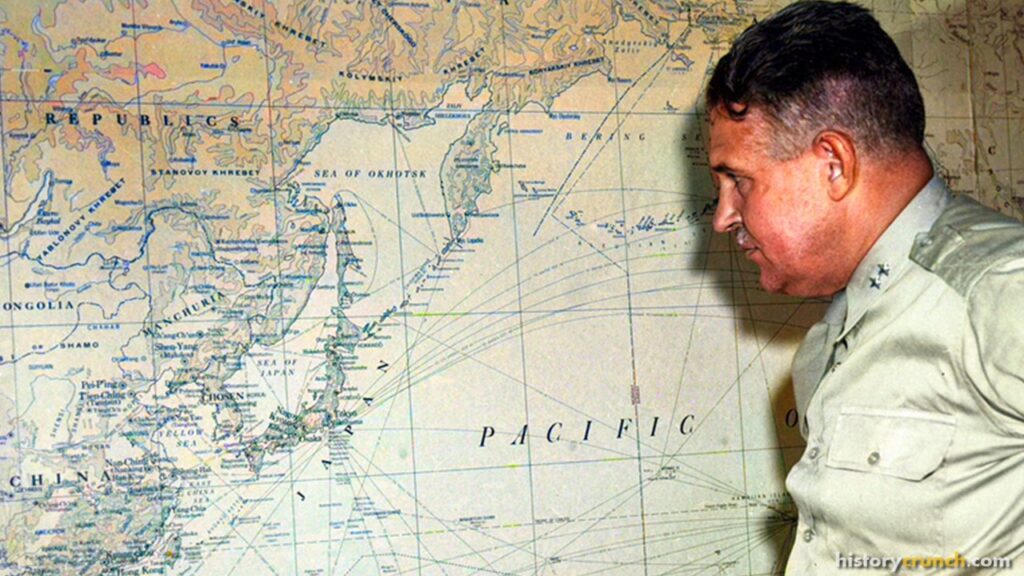
The atomic bombing of Japan at the end of World War II by the United States is one of the most debated and controversial topics in all of history. Since the bombing in 1945, historians have debated whether or not the United States was justifiedSupported by good reasons; fair or right given the circumstances. in using the two atomic bombs to end the war. Some have argued in favor of the use of the bombs for a range of reasons, including: it ended the war, it saved the lives of millions, and it was necessary for the emerging Cold War with the Soviet Union. Others have argued against the use of the bombs, with evidence such as: it was not needed, it was inhumane, it was a crime against humanity, and it led to the modern atomic age and threat of nuclear war. Still others argue that perhaps the first bomb used against Hiroshima was justified but that the second used against Nagasaki was not. Read below to learn more specific information about the main reasons for the use of the atomic bombs by the United States. Alternatively, read Reasons Against the Atomic Bombing of Japan to learn about the main reasons against the use of the bombs and why some historians believe the United States was unjustified.
 FactsthatCrunch
The United States dropped an atomic bomb on Hiroshima
Reasons in Favor of the Atomic Bombing of Japan – Main Arguments
Many historians have argued that the atomic bombing of Japan at the end of World War II was necessary and justified. There have been several key reasons developed to support this position, such as:
- It led to a quick end to World War II.
- It saved the lives of American soldiers.
- It potentially saved the lives of Japanese soldiers and civilians.
- It forced Japan to surrender, which it appeared unwilling to do.
- It was revenge for Japan’s attack at Pearl Harbor.
- It matched the brutality that Japan used during the war.
- Japan was warned about the potential of the atomic bombs.
- The program to create the bombs was too expensive for them not to be used.
- Bombs are a natural part of war.
- It was necessary as a display for the emerging Cold War.
Caused World War II to End
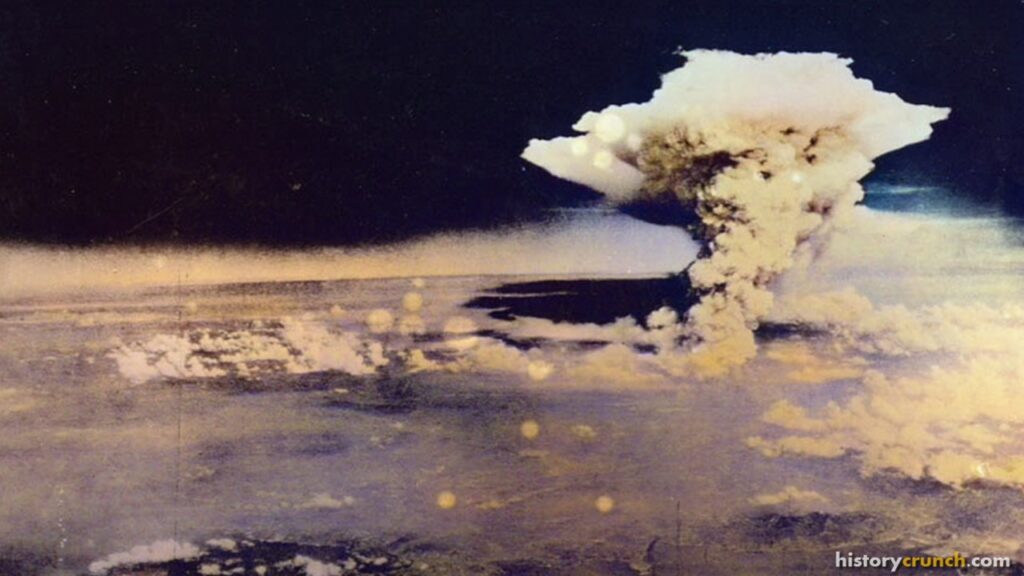
First, some historians argue that the atomic bombing of Japan was justified because it caused World War II to come to a quick end. World War II was a multi-theater war with major fighting operations occurring in both the European Theater of war and the Pacific Theater of war. While the European Theater of the war ended in early 1945 with the defeat of Nazi Germany, the Pacific Theater of World War II continued into the summer of that year as Japan continued to fight against the United States. The fighting in the Pacific Theater of the war was brutal and made Japan a particularly difficult enemy to defeat. Although the United States by 1945 had successfully pushed back the Japanese forces to the main islands of Japan, the war still lingered. At the time, it was argued that the war could last months, maybe even years longer, if the United States was to carry out a land invasion of the Japanese home islands. In the end, the United States used the first atomic bomb against the Japanese city of Hiroshima on August 6th, 1945 and the second against Nagasaki on August 9th, 1945. The quickness of these two bombings caused the leadership of Japan to announce the country’s surrender shortly after with the formal surrender taking place on September 2nd, 1945. As a result, many historians argue that the use of the atomic bombs was necessary and justified as a means of ending World War II as quickly as possible. In total, the war had lasted for over 5 years and had led to the deaths of tens of millions of people. Ending the war as quickly as possible was seen as a positive because it ended the brutal fighting that had devastated so many.
FactsthatCrunchFollow the chain from top to bottom. Tap any step to read what happened.
Saved the Lives of Millions of People
The second reason why some were in favor of the use of the atomic bombs was that it potentially saved the lives of millions of people. For example, it was estimated that it would cost the lives of nearly one million American soldiers to continue the war. Operation Downfall was the codenameA secret word used to refer to a classified military plan or program. for the planned but never executed American invasion plan for the Japanese mainland islands during the end stages of World War II in the Pacific Theatre. It was set to occur in October of 1945 and if it had taken place it would have been the largest amphibiousA military attack launched from the sea onto land. attack in human history. The estimated American casualties for the invasion ranged wildly from one hundred thousand American casualties to over one million. The estimated numbers were calculated based on earlier battles in Iwo Jima and Okinawa and the heavy death tolls to American soldiers in these battles, and the expectation that the Americans would not only be fighting the Japanese Army but also a hostile civilian population who sought to protect their homeland. Due to the large number of expected casualties and the development of the atomic bomb, United States President Harry S. Truman made the decision to use American made atomic bombs to end the war in the Pacific, and prevent the deaths of millions.
Further to the idea of saving the lives of American soldiers in Operation Downfall, it has also been suggested that the use of the atomic bombs against Japan was actually beneficial because it helped prevent the deaths of many Japanese soldiers and civilians. This is a controversial point, because obviously, the bombs ended up killing and harming hundreds of thousands of people. However, some historians have argued that the refusal of Japan to consider surrender may have led to the death of millions of Japanese people, and by using the bombs the United States forced the Japanese leadership to surrender and thereby saved many more people. This is best evidenced by the earlier battles between the United States and Japan in the Pacific Theater of World War II. For example, the battle of Iwo Jima, which took place from February to March in 1945, involved some of the deadliest and fiercest fighting in the war. The United States Armed Forces invaded the island in hopes of using it as a staging ground towards the larger invasion of the Japanese main islands. It was defended by determined and loyal Japanese forces. However, the American victory was assured due to their overwhelming control of the air and sheer number of forces. Of the 22,060 Japanese soldiers defending the island, 18,844 died either from fighting or by ritual suicide. Only 216 were captured during the course of battle. The Japanese bushidoA Japanese warrior code of honor that emphasized loyalty and dying rather than surrendering. code of honor, coupled with effective propaganda which portrayed American soldiers as ruthless animals, prevented surrender for many Japanese soldiers. As well, many Japanese civilians, including whole families chose to commit suicide rather than be captured by the American forces. This massive death rate of Japanese soldiers and civilians during the Battle of Iwo Jima proved to American leadership that the Japanese would not surrender without a brutal fight to the death. This would obviously cost the lives of many (perhaps millions) of American soldiers, but would also cost the lives of many Japanese people who would rather commit suicide than surrender. Based on this evidence, the United States argued that a land invasion of the main islands, which had millions more Japanese people, may end up costing the lives of many more Japanese people than would die by the two atomic bomb blasts. As such, some historians have argued that the atomic bombing of Hiroshima and Nagasaki was justified because it forced the Japanese leadership to surrender, which ultimately saved the lives of many Japanese people.
FactsthatCrunchIt is late summer 1945, and you are President Harry S. Truman, facing the final stage of World War II in the Pacific. Operation Downfall, the planned invasion of the Japanese home islands, is scheduled to begin in October 1945, and military planners have warned you that American casualties could range from 100,000 to over one million. Intelligence reports show that Japanese soldiers and civilians alike refuse to surrender, as battles like Iwo Jima proved, where 18,844 of 22,060 Japanese defenders died rather than give up. The choice you make in the next few days will determine how many Americans and Japanese live or die before this war ends.
Revenge for the Attack on Pearl Harbor
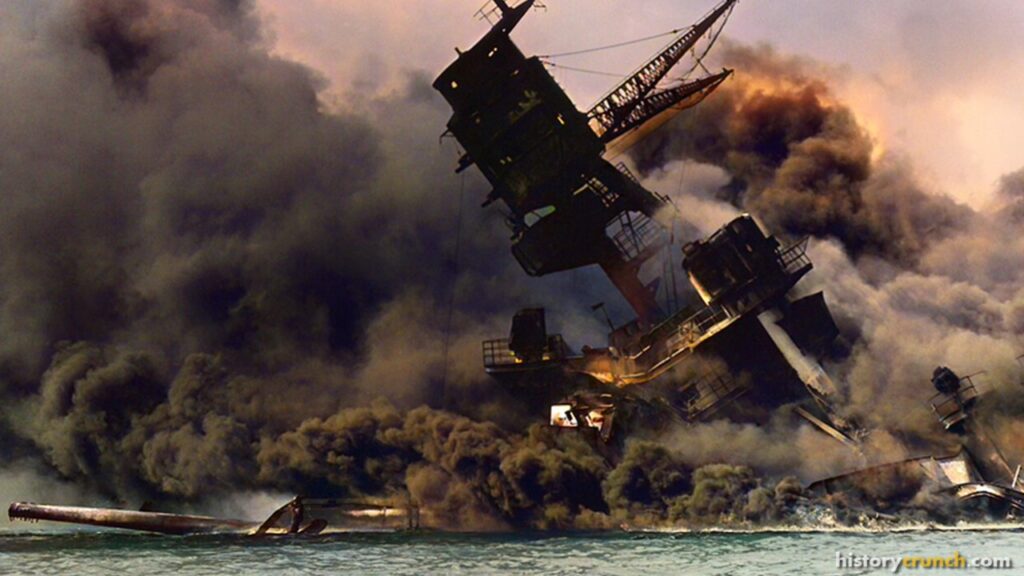
Another powerful reason for the use of the atomic bombs against Japan was that it was a reasonable measure to win the war and bring retaliation against Japan for its surprise attack against the United States at Pearl Harbor. The United States was brought into the fighting of World War II in both the European and Pacific Theaters of war due to the Imperial Japanese attack on Pearl Harbor on December 7th, 1941. The attack resulted in the sinking of several American ships, including the USS Arizona, which remains at the bottom of the harbor today. In all, 2402 Americans were killed and another 1282 were wounded. The intent of the Japanese attack was to inflict a preventative and decisive blow to the American Pacific naval fleet in order to allow itself free rein over the territory it sought in the South Pacific. The attack was profoundly shocking to the American public due to the magnitude of the attack and the fact that Japan surprise attacked the United States without issuing a formal declaration of war first. In a statement after the atomic bombing of Hiroshima, United States President Truman stated that the “Japanese began the war from the air at Pearl Harbor… [and have now] been repaid many fold.” As such, many historians view the atomic bombing of Japan as a necessary and justified retaliation for the attack at Pearl Harbor.
Similar to Japanese Brutality During the War
Further to the idea of retaliating for Pearl Harbor, many historians argued in favor of using the bombs against Japan due to the brutality that the Japanese Army used during the war. As stated previously, Japanese soldiers and civilians were known for their unwillingness to surrender even when faced with insurmountableToo great to be overcome or defeated. odds. For example, American soldiers who returned from the fighting in the Pacific spoke about how wounded Japanese soldiers would kill American medics who were trying to help them after a battle. Often, American medics would attend to the wounded on both sides and the wounded Japanese soldiers would secretly pull the pin of a grenade and use it to kill the American medics and themselves. This brutality caused many in the United States to hate the Japanese way of fighting and argued that the atomic bombs were justified because they were equally brutal towards Japan. Similarly, Japan was also responsible for brutal treatment of other people during the time period. For example, Japanese forces carried out crimes against humanity against Chinese civilians during the Nanking Massacre. As such, some people suggest that the brutality of the atomic bombs was justified because of the way in which Japan had carried out its own attacks against others.
FactsthatCrunchThe Nanking Massacre showed that Japan's military was willing to kill large numbers of civilians, and supporters of the atomic bombings later pointed to it as evidence that Japan's conduct in the war had been brutal enough to justify a severe response.
Japanese forces attacked Nanjing, the Chinese capital at the time, in December 1937, killing large numbers of civilians and prisoners of war over several weeks.
The massacre became a central example in the argument that Japan had carried out crimes against humanity during the war, making it harder to argue that the atomic bombings were a disproportionate reply.
American leaders and historians who supported the bombings used events like the Nanking Massacre to argue that Japan had demonstrated a willingness to use extreme force against civilian populations throughout the war.
Because Japan had not been held accountable for the massacre during the war, some argued that the bombings served partly as a form of justice for the victims of Japanese military violence across Asia.
United States Fairly Warned the Japanese
The next reason for the use of the atomic bomb was that the United States had fairly warned Japan and Japanese citizens about the potential devastation of atomic weapons. The United States had called for the surrender of Japan several times before finally using the two atomic bombs, and gave the Japanese government multiple opportunities to avoid being bombed. As well, the United States famously dropped leafletsPrinted sheets dropped from aircraft to warn or inform people on the ground. over several Japanese cities warning the citizens about the potential for their city to be bombed. This shows that the United States gave Japan a fair warning about the potential for devastation, which is more than Japan gave the United States in the earlier Pearl Harbor attack.
FactsthatCrunchHow did the United States warn Japan before dropping the atomic bombs?
Manhattan Project Was Costly
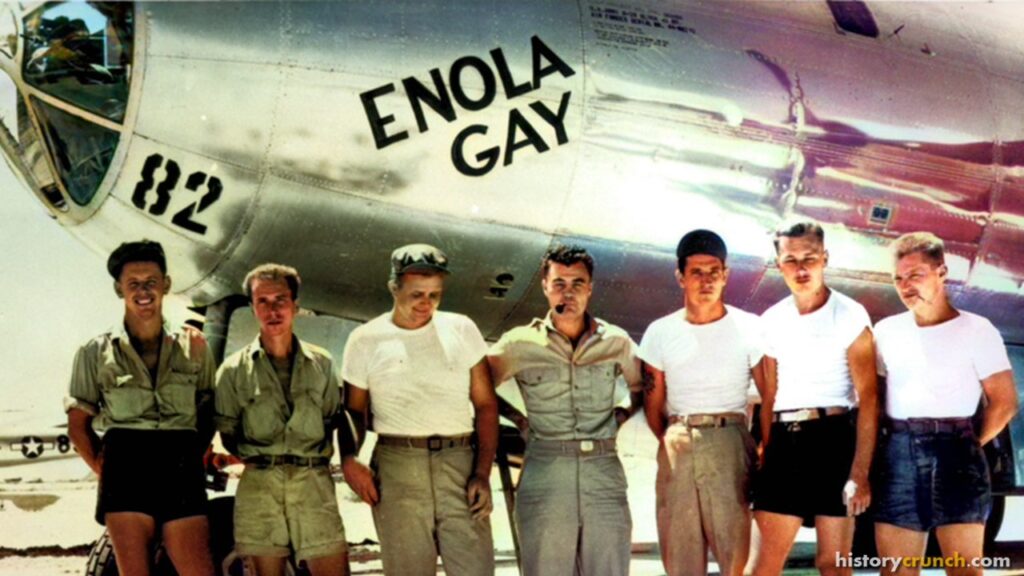
Another reason that many historians believe that the atomic bombing of Japan was justified was that the United States had spent a great deal of money on the creation of the bombs and needed to use them in order to justify the cost. The Manhattan Project was the codename of the secret American program to create the first atomic weapon during the end of World War II. The project was run by General Leslie Groves, and its scientific work was led by Robert Oppenheimer, an American physicist who was the head of the Los Alamos Laboratory in New Mexico where the first atomic bombs were designed. The program had its beginnings in 1939 after it was determined that Nazi German scientists had discovered nuclear fissionThe splitting of an atom’s nucleus that releases a massive amount of energy, making atomic bombs possible. in 1938. United States President Franklin D. Roosevelt created the program with the intention of creating an atomic bomb before Nazi Germany. In total, it’s estimated that the United States spent nearly $2 billion on the Manhattan Project which made it the most expensive government program in the history of the United States at the time. Some have argued that had the United States not used the bombs to end the war, that the government would have been criticized for spending so much money on a device and then not using it. This criticism would have been especially worse if instead of using the bombs, the United States instead carried out Operation Downfall which would have caused a large loss of life for American soldiers. Therefore, some historians contend that the United States was justified in using the atomic bombs against Japan.
About how much did the United States spend on the Manhattan Project to build the first atomic bombs?
Bombs Are a Natural Part of War
Yet another reason in favor of the use of the atomic bombs was that bombs, just like any other form of new technology are a natural part of war. Wars are always a productive period of time for new technological advancements and weapons. Atomic bombs are ultimately no different from any other form of weapon. For example, the bombing of cities was a common strategy in World War II and was used by all sides. More specifically, the Allied nations famously fire-bombed the German city of Dresden which took place over four separate raids in 1945, between February 13th and 15th. The raids involved many soldiers, with 722 British RAF bombers and 527 United States Air Force bombers. Combined, the British and American air forces dropped an unprecedented amount of explosives, with almost 4,000 tons of bombs dropped on Dresden. As a result of the bombings, more than 1,600 acres of the city were destroyed, and approximately 25,000 people were killed. However, the exact death toll is unknown as the German government at the time falsified the casualty figures. After the initial raids, a few other random attacks occurred, mainly in an attempt to disrupt the railroads and thus prevent travel. There were few reported deaths from these subsequent raids. Therefore, people who supported the use of the atomic bombs against Japan use the bombing of Dresden (and other cities) as evidence that massive bombing campaigns are a natural part of war.
Necessary to Check Growing Soviet Aggression
The final key reason for the use of the atomic bombs against Japan was the nature of the emerging Cold War. During World War II, the Allied nations of Britain, the United States and the Soviet Union faced off against the Axis nations of Nazi Germany, Italy and Japan. As the European Theater of the war came to an end, the main Allied nations famously met in a series of conferences (Yalta and Potsdam) to decide how to best handle the end of the war and the defeat of Germany. It is at these conferences that a divide or conflict began to emerge between the Soviet Union and the United States. For example, the Potsdam Conference is now viewed as a major event in the Cold War, because it highlighted the divide between Stalin and the other two leaders (Winston Churchill of Britain and Harry S. Truman of the United States). Neither side trusted the other and Joseph Stalin was resentful of the other two believing that they delayed the Normandy Invasion and Allied invasion of Italy during World War II to cause the Soviet army to struggle alone against Nazi Germany. This divide was further highlighted at the earlier Yalta Conference. As well, it is at the Potsdam Conference that Truman made Stalin aware of the American atomic weapons program (Manhattan Project) and that the Americans had developed the world’s first atomic bomb. As well, Truman was incredibly suspicious of Stalin and his intentions and Stalin felt a similar way towards Truman. In general terms, the seeds of the Cold War were planted at the Potsdam Conference. The United States would bomb Hiroshima just days after the conference ended and World War II would be over in just a few weeks, while the Cold War was just beginning. Today, many historians view the bombing of Japan at the end of World War II as a way of the United States signaling to the Soviet Union their capabilities. Since a divide was occurring between the two nations, some argue that the United States used the bombing of Japan as a means of warning the Soviet Union against carrying out any sort of conflict.
In conclusion, historians have identified several main reasons for the use of the atomic bombs, but it remains an extremely controversial topic and one of the most debated in all of history. For instance, many continue to argue that the atomic bombing of Japan was completely unnecessary and that the United States was not justified for using the terrifying weapons against a nearly defeated nation.
Key Vocabulary
Justified
Amphibious
Bushido
Leaflets
Codename
Nuclear fission
Insurmountable
Frequently Asked Questions
Why did the United States drop atomic bombs on Japan?
The main reason given was to end World War II quickly and force Japan to surrender. Supporters also argued the bombs saved lives, answered the attack on Pearl Harbor, and warned the Soviet Union. Japan had shown it would not surrender easily, so leaders wanted a fast end to the fighting.
When were the atomic bombs dropped on Hiroshima and Nagasaki?
The United States dropped the first atomic bomb on Hiroshima on August 6th, 1945. The second bomb hit Nagasaki on August 9th, 1945. Japan announced its surrender soon after, and the formal surrender took place on September 2nd, 1945.
What was Operation Downfall?
Operation Downfall was the planned American invasion of Japan’s main islands, set for October of 1945. It would have been the largest sea landing in history. Estimated American casualties ranged from one hundred thousand to over one million, which was a key reason leaders chose the bombs instead.
How did the Manhattan Project affect the decision to use the bombs?
The Manhattan Project was the secret program that built the first atomic bombs, costing nearly $2 billion. This made it the most expensive government program in American history at that time. Some argue leaders felt pressure to use the weapons so the huge cost would not be wasted.
How did the attack on Pearl Harbor relate to the bombing of Japan?
Japan’s surprise attack on Pearl Harbor on December 7th, 1941 brought the United States into World War II. The attack killed 2,403 Americans and wounded another 1,178. After Hiroshima, President Truman said Japan had been repaid many times over, so some view the bombs as payback for Pearl Harbor.
Is the atomic bombing of Japan still debated today?
Yes, the bombing remains one of the most debated topics in all of history. Supporters say it ended the war and saved lives, while critics call it unneeded and inhumane. Some even argue the first bomb on Hiroshima was justified but the second on Nagasaki was not.
Cite This Article
To cite this article as a source, use one of the formats below.
MLA: Beck, Elias. “Reasons in Favor of the Atomic Bombing of Japan: A Detailed Summary.” HistoryCrunch, 2 October 2026, https://historycrunch.com/reasons-in-favor-of-the-atomic-bombing-of-japan/.
APA: Beck, E. (2026). Reasons in Favor of the Atomic Bombing of Japan: A Detailed Summary. HistoryCrunch. https://historycrunch.com/reasons-in-favor-of-the-atomic-bombing-of-japan/
Chicago: Beck, Elias. “Reasons in Favor of the Atomic Bombing of Japan: A Detailed Summary.” HistoryCrunch. October 2, 2026. https://historycrunch.com/reasons-in-favor-of-the-atomic-bombing-of-japan/
Sources
- Max Hastings, Inferno / All Hell Let Loose.
- Imperial War Museum