The atomic bombing of Japan by the United States at the end of World War II is one of the most controversial events in all of world history. World War II ended in Europe by May of 1945 with the defeat of Nazi Germany by the Allied Powers, but the war did not officially end in the Pacific Theater until the atomic bombing of Japan in August of 1945. The United States had developed its atomic weaponry through its secretive program called the Manhattan Project.
 FactsthatCrunch
The Manhattan Project was the secret United States program that built the world's first atomic bombs during World War II, bringing together scientists, engineers, and military planners at sites across the country.
Atomic Bombing of Japan – Summary
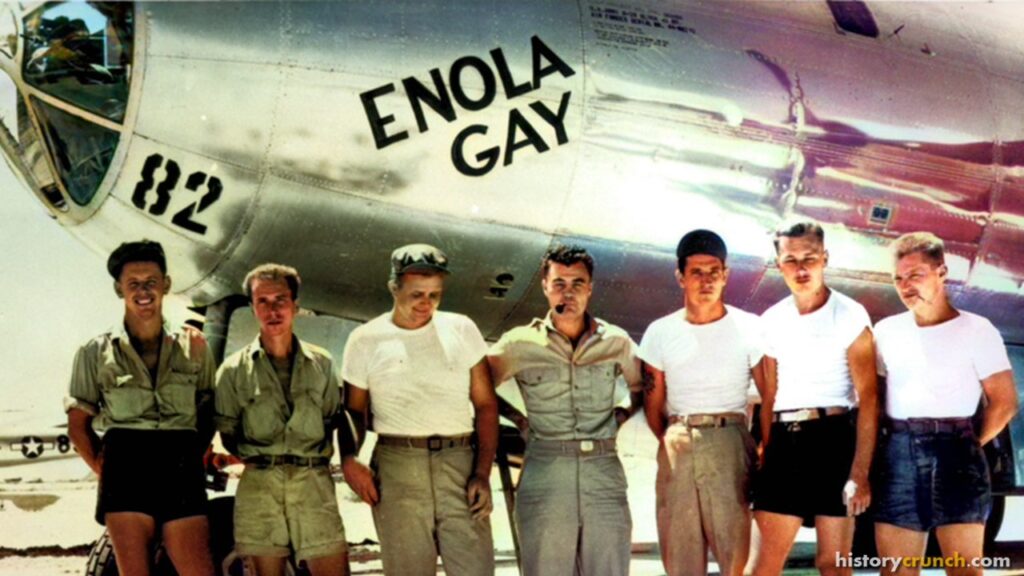
The first atomic bomb dropped on Japan was codenamedGiven a secret name to hide the true identity or purpose of something. Little Boy and was detonatedExploded or set off, used here to describe the moment an atomic bomb went off over a city. over the city of Hiroshima on August 6th, 1945. Hiroshima is a city on the largest island of Japan and had a population of about 350,000 at the time of the atomic bombing. The atomic bomb was carried to its target by an American B-29 bomber called the Enola Gay after United States President, Harry S. Truman, approved its use against Japan.
The city of Nagasaki was located in the southwest of Japan and had approximately 240,000 people. The atomic bomb used against Nagasaki was called the Fat Man and was delivered to the city on August 9th, 1945, by the American B-29 bomber Bockscar.
Japan’s surrender was announced on August 15th, and World War II in the Pacific was over. The formal surrender of Japan would occur on September 2nd, 1945, aboard the United States battleship USS Missouri. There, Japanese officials signed the official Instrument of SurrenderThe official document signed by Japanese officials on September 2nd, 1945, formally ending World War II..
The atomic bombing of Japan by the United States in 1945 is one of the most controversial events in all of world history and many have argued both in favor of using the weapon and against using it in order to end World War II. Regardless, the atomic bombing is a significant event for its role in ending World War II and for the impact it would have on all future warfare. Read Atomic Bombing of Japan for more detailed information on the two atomic bombs used against Japan at the end of World War II.
FactsthatCrunchOn August 6th, 1945, the American B-29 bomber Enola Gay dropped the atomic bomb called Little Boy on the Japanese city of Hiroshima. Japan did not surrender right away.
Atomic Bombing of Japan – Reasons For
Some historians have argued that the atomic bombing of Japan at the end of World War II was necessary and justifiedHaving good enough reasons to show that an action was fair or morally acceptable.. There have been several key reasons developed to support this position, such as:
- It led to a quick end to World War II.
- It saved the lives of American soldiers.
- It potentially saved the lives of Japanese soldiers and civilians.
- It forced Japan to surrender, which it appeared unwilling to do.
- It was revenge for Japan’s attack at Pearl Harbor.
- It matched the brutality that Japan used during the war.
- Japan was warned about the potential of the atomic bombs.
- The program to create the bombs was too expensive for them not to be used.
- Bombs are a natural part of war.
- It was necessary as a display for the emerging Cold War.
The above is a general list of reasons in favor of the use of the atomic bombs. Read Reasons in Favor of the Atomic Bombing of Japan for more detailed reasons on why the United States was justified in using the atomic bombs against Japan.
FactsthatCrunch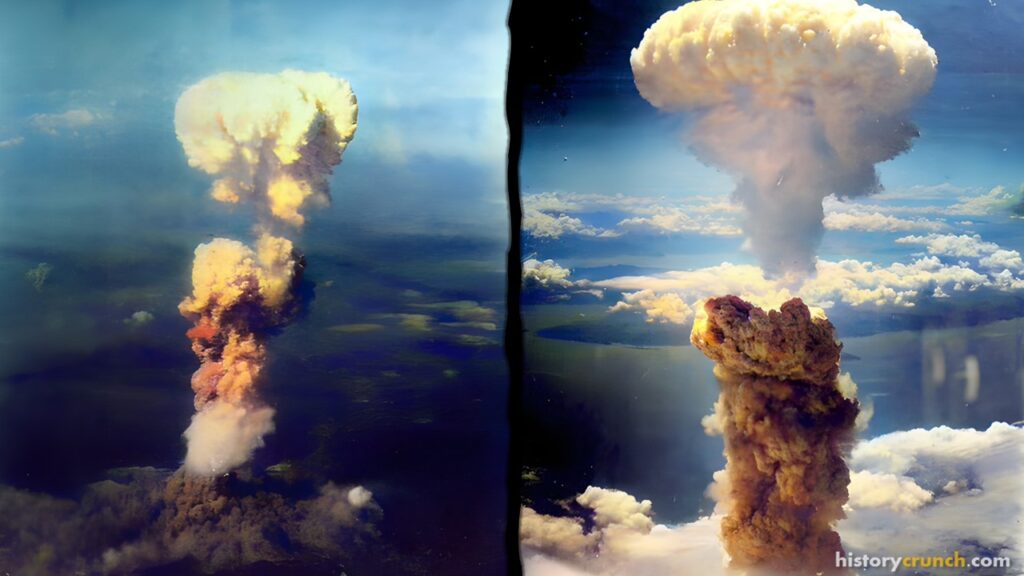 Black & whiteColor
Atomic Bombing of Japan – Reasons Against
Although some historians were in favor of the use of the atomic bombs, many others have argued that the atomic bombing of Japan at the end of World War II was not necessary and unjustified. There have been several key reasons developed to support this position, such as:
- It was inhumaneCruel and causing extreme suffering, especially to people who cannot defend themselves..
- It caused too much destruction.
- It killed too many innocent people, including children.
- It was unnecessary as Japan was essentially defeated.
- Japan was seeking surrender.
- It was not universally supported in the United States.
- The United States could have done something else.
- The United States should have waited longer between the two bombs.
- It was used more to scare the Soviet Union than to defeat Japan.
- It led to the modern atomic age and the threat of nuclear warfare.
The above is a general list against the use of the atomic bombs in World War II. Read Reasons Against the Atomic Bombing of Japan for more detailed reasons on why the United States was not justified in using the atomic bombs against Japan.
FactsthatCrunchWas Japan already close to surrender before the atomic bombs were dropped in World War II?
Historians debate this question seriously. Some argue that Japan was essentially defeated and seeking surrender before the bombs fell, pointing to Japan's heavy losses across the Pacific and back-channel peace contacts through the Soviet Union in mid-1945. Others argue that Japan's military leaders were still preparing to fight a full invasion of the home islands, making a quick surrender far from certain without the bombs.
Key Vocabulary
Manhattan Project
Codenamed
Detonated
Pacific Theater
Instrument of Surrender
Inhumane
Justified
Frequently Asked Questions
Why did the United States drop atomic bombs on Japan?
The United States dropped the bombs to force Japan to surrender and end World War II quickly. American leaders believed an invasion of Japan would cost many lives on both sides. Japan had not surrendered after fighting ended in Europe. The bombs were meant to end the war in the Pacific without a long land invasion.
When were the atomic bombs dropped on Japan?
The first bomb was dropped on Hiroshima on August 6th, 1945, and the second on Nagasaki on August 9th, 1945. The Hiroshima bomb was named Little Boy, and the Nagasaki bomb was named Fat Man. Both were carried by American B-29 bombers. Japan announced its surrender just days later, on August 15th, 1945.
What was the Manhattan Project?
The Manhattan Project was the secret United States program that built the first atomic bombs. It ran during World War II and brought together many scientists and engineers. The project produced the weapons later used against Hiroshima and Nagasaki. Its work also began the modern atomic age that followed the war.
Why is the atomic bombing of Japan so controversial?
It is controversial because people still disagree over whether it was justified. Supporters say it ended the war fast and saved soldiers on both sides. Critics say it killed too many innocent people and that Japan was already near defeat. These opposing views keep the debate alive today.
When did Japan formally surrender to end World War II?
Japan formally surrendered on September 2nd, 1945, aboard the United States battleship USS Missouri. Japanese officials there signed the Instrument of Surrender. Japan had first announced its surrender on August 15th, 1945. The formal signing officially ended World War II in the Pacific.
Cite This Article
To cite this article as a source, use one of the formats below.
MLA: Beck, Elias. “Was the United States Justified in Using the Atomic Bombs Against Japan?: A Detailed Summary.” HistoryCrunch, 2 October 2026, https://historycrunch.com/was-the-united-states-justified-in-using-the-atomic-bombs-against-japan/.
APA: Beck, E. (2026). Was the United States Justified in Using the Atomic Bombs Against Japan?: A Detailed Summary. HistoryCrunch. https://historycrunch.com/was-the-united-states-justified-in-using-the-atomic-bombs-against-japan/
Chicago: Beck, Elias. “Was the United States Justified in Using the Atomic Bombs Against Japan?: A Detailed Summary.” HistoryCrunch. October 2, 2026. https://historycrunch.com/was-the-united-states-justified-in-using-the-atomic-bombs-against-japan/
Sources
- The National WWII Museum
- Imperial War Museum