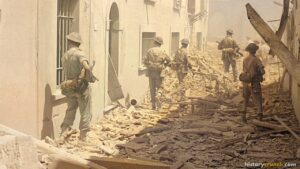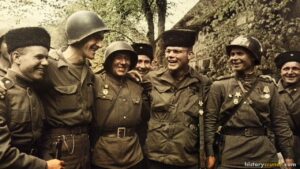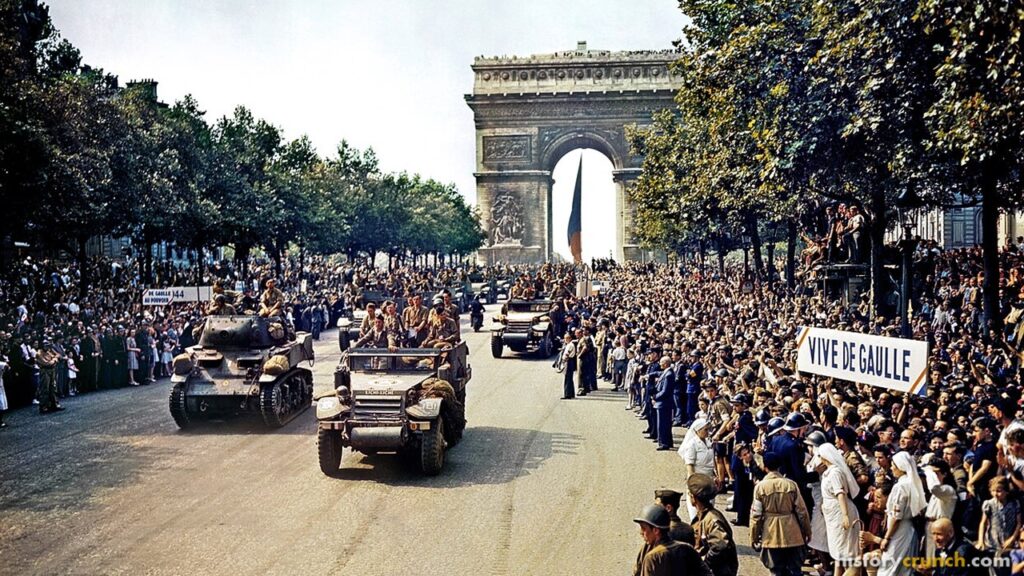
The European Theater of World War II was the region of fighting that occurred across Europe, including Western Europe, Eastern Europe, Scandinavia, the Mediterranean, and the Balkans. World War II was a global conflict that was fought on several theaters, including the European Theater, the Pacific Theater, and the North African Theater. The European Theater began on September 1st, 1939, when Nazi Germany invaded Poland, and lasted until the surrender of Nazi Germany on May 8th, 1945. During that time, the European Theater involved fighting between the Allied Powers of Britain, France, the Soviet Union, and the United States against the Axis Powers of Nazi Germany and Fascist Italy.
 FactsthatCrunch
Germany launched a sustained air campaign against Britain to try to gain control of the skies before a possible invasion.
European Theater of World War II – Formation
World War II began on September 1st, 1939, when Nazi Germany, under the leadership of Adolf Hitler, invaded Poland using a rapid and aggressive style of warfare known as ‘blitzkrieg‘. This means that Germany used fast-moving armored units, airplanes, and motorized infantry to quickly overwhelm and confuse enemy forces before they could organize a proper defense. Poland was defeated within weeks. In response, Britain and France declared war on Germany on September 3rd, 1939. However, little fighting took place in the west for the first several months of the war. This period of inaction became known as the ‘Phoney War‘.
In the spring of 1940, Germany launched a rapid offensive into Western Europe. In April of 1940, Germany invaded Denmark and Norway. In May of 1940, Germany invaded France, Belgium, the Netherlands, and Luxembourg. German forces bypassed France’s main defensive fortification, known as the ‘Maginot Line‘, by attacking through the Ardennes forest in Belgium. The speed of the German advance trapped a large force of British and French soldiers near the French coast and forced a dramatic evacuation from the beaches of Dunkirk. France fell to Germany by June of 1940, leaving Britain as the primary Allied power in Western Europe.
Following the fall of France, Germany attempted to defeat Britain through a sustained air campaign known as the ‘Battle of Britain‘, which lasted from July to October of 1940. The British Royal Air Force successfully resisted the German Luftwaffe, and Germany was unable to gain control of the skies over Britain. As a result, Hitler abandoned his plans for an invasion of Britain and turned his attention eastward.
On June 22nd, 1941, Germany launched a massive invasion of the Soviet Union known as ‘Operation Barbarossa‘. This was the largest land invasion in history and opened an enormous new front in the east. Germany initially made rapid gains, advancing deep into Soviet territory. However, the Soviet Union, under the leadership of Joseph Stalin, was able to resist the German advance, particularly during the brutal winter of 1941. The Eastern Front became the largest and bloodiest area of fighting in the entire European Theater.
The United States entered World War II in December of 1941 following the Japanese attack on Pearl Harbor, Hawaii. Although the attack occurred in the Pacific, the United States committed major forces to the European Theater as well, alongside Britain and the other Allied nations. American industrial production and military manpower played a central role in the eventual Allied victory in Europe.
The main Allied nations fighting in the European Theater included: Britain, the Soviet Union, the United States, Canada, France, Australia, Poland, and numerous other nations who contributed forces to the war effort.
FactsthatCrunch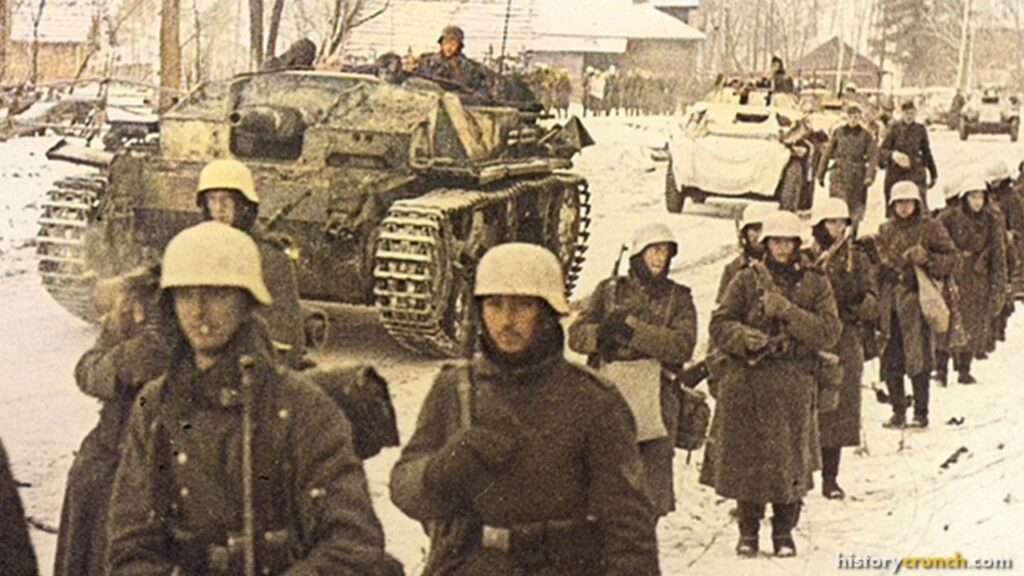 Why Did Germany Invade the Soviet Union in Operation Barbarossa?
European Theater of World War II – Battles
The European Theater was the site of some of the largest and most significant battles of World War II. The fighting occurred across multiple fronts and regions, from the beaches of Western Europe to the vast plains of the Soviet Union. The most significant battles and operations of the European Theater are listed below. In these battles, the Allied Powers faced off against the Axis Powers of Nazi Germany and Fascist Italy.
- Battle of France
- Battle of Britain
- Battle of the Atlantic
- Operation Barbarossa
- Siege of Leningrad
- Battle of Moscow
- Battle of Stalingrad
- Battle of Kursk
- Allied Invasion of Sicily
- Italian Campaign
- D-Day (Normandy Invasion)
- Battle of the Bulge
- Battle of Berlin
European Theater of World War II – Nature of Warfare
One of the most defining features of the European Theater was the scale and variety of the fighting. Unlike the North African Theater, which was largely confined to a narrow desert corridor, the European Theater stretched across an entire continent and involved fighting on land, at sea, and in the air simultaneously. As such, the nature of warfare in the European Theater varied greatly depending on the region and the front.
On the Eastern Front, which ran along the border between Germany and the Soviet Union, the fighting was characterized by massive land battles involving millions of soldiers, thousands of tanks, and enormous quantities of artillery. The distances involved were vast, and the front shifted back and forth over hundreds of miles as each side launched major offensives. The Eastern Front saw some of the largest single battles in history, including the Battle of Stalingrad and the Battle of Kursk. The fighting on the Eastern Front was also characterized by extreme brutality, and casualties on both sides were far higher than in any other theater of the war.
On the Western Front, the nature of the fighting changed significantly over the course of the war. In the early years, Germany used ‘blitzkrieg‘ tactics to rapidly conquer large portions of Western Europe through speed and surprise. In the later years of the war, following the Allied landings in Normandy in June of 1944, the fighting became a large-scale campaign to push German forces back through France, Belgium, the Netherlands, and into Germany itself. The Allied advance from the west, combined with the Soviet advance from the east, eventually encircled and crushed Germany between two fronts.
The Battle of the Atlantic was a critical naval campaign that ran for the entire duration of the European Theater, from 1939 to 1945. Germany used submarines, known as ‘U-boatsGerman submarines used to attack Allied supply ships crossing the Atlantic Ocean in order to cut off Britain’s supplies.‘, to attack Allied supply ships crossing the Atlantic Ocean from North America to Britain. The goal was to cut off Britain’s supply of food, fuel, and war materials. The Allied Powers responded with convoy systems, air patrols, and improved technology to detect and destroy German submarines. The Battle of the Atlantic was the longest continuous military campaign of World War II, and its outcome was vital to the survival of Britain and the success of the Allied war effort in Europe.
Strategic bombing was another major feature of the European Theater. Both the Allied Powers and Germany used large fleets of bomber airplanes to attack enemy cities, factories, transportation networks, and military targets. The Allied bombing campaign against Germany, carried out primarily by the British Royal Air Force and the United States Army Air Forces, targeted German industrial production and aimed to reduce Germany’s ability to manufacture weapons and equipment. German bombing campaigns earlier in the war, including the ‘Blitz‘ against British cities, aimed to break civilian morale. Air power played an increasingly important role as the war progressed, and Allied air superiority over Europe became a decisive factor in the final stages of the conflict.
The Holocaust was also a defining and horrific feature of the European Theater. Throughout the war, the Nazi German government systematically persecuted and murdered millions of Jewish people, as well as Roma, people with disabilities, political opponents, and others. The Nazi regime established a network of concentration camps and extermination camps across occupied Europe as part of this genocide. As Allied forces advanced into Germany and occupied territories, they liberated these camps and revealed the full scale of Nazi atrocities to the world. The HolocaustThe Nazi German government’s systematic persecution and murder of approximately six million Jewish people and millions of others during the war. resulted in the deaths of approximately six million Jewish people and millions of others.
FactsthatCrunchEuropean Theater of World War II – Significance
The European Theater of World War II was one of the most significant conflicts in modern history. The fighting in the European Theater occurred from September 1st, 1939 until May 8th, 1945. During this time, tens of millions of soldiers and civilians lost their lives across Europe. Historians estimate that the European Theater resulted in at least 39 million deaths in total, making it the deadliest theater of the entire war. The Soviet Union suffered the greatest losses of any single nation, with estimates of Soviet military and civilian deaths ranging from 20 to 27 million people.
The European Theater was significant because it resulted in the complete defeat and unconditional surrender of Nazi Germany. On April 30th, 1945, Adolf Hitler committed suicide in a bunker beneath the city of Berlin as Soviet forces closed in on the city. Germany surrendered unconditionally on May 8th, 1945, a date that became known as Victory in Europe Day, or V-E Day. The defeat of Nazi Germany brought an end to both the Axis Powers in Europe and to the fascist regimes that had controlled much of the continent since the 1930s. It also led to the liberation of all the countries that had been occupied by Germany during the war.
The European Theater was significant because it fundamentally changed the political landscape of Europe and the world. The defeat of Nazi Germany and the end of the war led to the division of Germany into separate zones of occupation controlled by the Allied Powers. It also established the Soviet Union and the United States as the two dominant world powers, replacing the European empires that had previously dominated global affairs. The competition between these two powers following the war led directly to the beginning of the Cold War, which shaped global politics for the next several decades. Furthermore, the destruction caused by the war led to the creation of new international institutions, including the United Nations, which were designed to prevent such a devastating conflict from happening again.
The European Theater was also significant because it exposed the crimes of the Holocaust to the world. As Allied forces advanced through Germany and occupied Europe, they liberated concentration camps and gathered evidence of the systematic murder carried out by the Nazi regime. The scale of the Holocaust shocked the world and led to major international efforts to define and prosecute crimes against humanity. The Nuremberg Trials, held between 1945 and 1946, placed surviving Nazi leaders on trial for war crimes and crimes against humanity. These trials established important legal precedents for international law and the prosecution of genocide that continue to influence the world today.
FactsthatCrunchOn April 30th, 1945, Adolf Hitler committed suicide in his underground bunker beneath the city of Berlin as Soviet forces fought their way into the capital. Within days, Germany surrendered unconditionally on May 8th, 1945, ending the war in Europe and bringing Nazi rule across the continent to a complete stop.
Soviet and Allied forces closing in on Berlin from east and west, Nazi Germany still formally at war
All German forces surrendered, occupied territories liberated, V-E Day declared, Cold War division of Europe began
Explore World War II · 1939 – 1945
Keep exploring World War II with these History Crunch resources.
Key Vocabulary
Blitzkrieg
Phoney War
Maginot Line
Operation Barbarossa
U-boats
Holocaust
Nuremberg Trials
Frequently Asked Questions
When did the European Theater of World War II begin and end?
The European Theater began on September 1st, 1939, when Nazi Germany invaded Poland. It ended on May 8th, 1945, when Germany surrendered without conditions. This final day became known as Victory in Europe Day, or V-E Day. The fighting spread across Western Europe, Eastern Europe, Scandinavia, the Mediterranean, and the Balkans.
Which countries fought in the European Theater?
The Allied Powers included Britain, the Soviet Union, the United States, Canada, France, Australia, and Poland. They fought against the Axis Powers of Nazi Germany and Fascist Italy. Many smaller nations also sent forces to help the Allied war effort. The United States joined in December of 1941 after the attack on Pearl Harbor.
What was the Eastern Front in World War II?
The Eastern Front was the fighting between Germany and the Soviet Union, and it was the largest and bloodiest part of the war. It opened on June 22nd, 1941, when Germany launched Operation Barbarossa, the biggest land invasion in history. Battles there involved millions of soldiers and thousands of tanks. The front shifted back and forth over hundreds of miles as each side attacked.
What was the Battle of Britain?
The Battle of Britain was a sustained air campaign fought from July to October of 1940. Germany tried to destroy the British Royal Air Force so it could invade Britain. The British pilots held off the German Luftwaffe and kept control of their skies. As a result, Hitler gave up his plans to invade and turned his attention eastward.
How many people died in the European Theater?
Historians estimate that at least 39 million people died in the European Theater, making it the deadliest theater of the war. The Soviet Union suffered the most, losing somewhere between 20 and 27 million soldiers and civilians. The Holocaust alone killed about six million Jewish people and millions of others. These deaths included soldiers and ordinary civilians across the continent.
Why was the European Theater so important?
The European Theater ended with the complete defeat and surrender of Nazi Germany in 1945. Its outcome changed the political map of the world and divided Germany into zones of occupation. It left the Soviet Union and the United States as the two leading world powers, which led to the Cold War. The war also led to the United Nations and the Nuremberg Trials for war crimes.
Cite This Article
To cite this article as a source, use one of the formats below.
MLA: Millar, B. “European Theater of World War II: A Detailed Summary.” HistoryCrunch, 2 October 2026, https://historycrunch.com/european-theater-of-world-war-ii/.
APA: Millar, B. (2026). European Theater of World War II: A Detailed Summary. HistoryCrunch. https://historycrunch.com/european-theater-of-world-war-ii/
Chicago: Millar, B. “European Theater of World War II: A Detailed Summary.” HistoryCrunch. October 2, 2026. https://historycrunch.com/european-theater-of-world-war-ii/
Sources
- Imperial War Museum
- The National WWII Museum