The Battle of the Bulge in World War II was fought between December 16th, 1944, and January 25th, 1945, and was the last major German offensiveA major, large-scale military attack intended to gain ground or achieve a strategic goal. campaign on the Western Front. Launched by the Nazis through the forested Ardennes region of Belgium and Luxembourg, the Battle of the Bulge was an attempt by Nazi Germany to recapture the port of Antwerp, and force a negotiated peace with the Allies. However, it resulted in the largest and bloodiest battle fought by the United States in all of World War II and involved over one million soldiers. Although initially successful, the German advance was ultimately repelled, marking a decisive turning point in the European theater.
Why did Hitler want to seize the port of Antwerp during the Battle of the Bulge?

Battle of the Bulge in World War II – Background
The Second World War began on September 1st, 1939 when Nazi Germany invaded the nation of Poland. As the war progressed, major battles occurred in European battlefields, including: Battle of France, Battle of Britain, Operation Barbarossa and the Battle of Stalingrad. Throughout these early years of World War II, the United States remained on the sidelines, since it was practicing a foreign policy based on the principles of isolationismA foreign policy where a country stays out of other nations’ conflicts and avoids international involvement.. However, this changed on December 7th, 1941 when Japan surprise attacked the United States during the attack on Pearl Harbor. This event brought the United States into the fighting of World War II, including direct involvement in both the European and Pacific Theaters of the war.
In fact, American forces played a key role in both the Allied invasion of Sicily and the Normandy Landings of D-Day. Both were important steps towards liberating Europe from the control of Nazi Germany and fascist Italy. As a result of these events, by late 1944, Germany was facing military collapse. For example, the Allied nations had liberated France and were advancing toward Germany from the west. At the same time, the forces of the Soviet Union were pushing from the east. Nazi Germany was feeling the pressure from all sides.
As a result, Adolf Hitler, the fascist leader of Nazi Germany, believed a surprise counteroffensiveA large military attack launched in response to an enemy’s advance, meant to push them back. in the West could improve the Nazi regime’s chances. For instance, Hitler believed that a Nazi offensive could split the Allied lines between the British and American forces. As well, Hitler hoped to seize Antwerp, which was a critical supply port at the time. Finally, Hitler thought the counteroffensive might force the Allies into a separate peace, allowing Germany to focus on the Eastern Front.
Battle of the Bulge in World War II – Summary
As stated above, the Battle of the Bulge occurred from December 16th, 1944 to January 25th, 1945 and is one of the last major battles of World War II in Europe. The major participating countries of the battle included Britain, the United States and Germany. The Battle of the Bulge was a German offensive attack into the Ardennes Forest region of Belgium and Luxembourg, that was supported by over 400,000 Nazi German troops and tank and artillery divisions. The Allied countries had been pushing forward through France and had been working to liberate the region from Nazi control, but the German forces carried out a surprise attack that became known as the Battle of the Bulge.
The Battle of the Bulge is a particularly important battle for the United States because it is the Allied nation that had to endure much of the German attack. On the morning of December 16th, 1944 about 200,000 German troops, having achieved total surprise, attacked the unprepared Allied forces. The goal of the Germans was to divide the Allied forces by making a decisive push through the Ardennes Forest. At first the American troops struggled to withstand the German attack and were pushed back a considerable distance, which produced the bulge for which the battle was named.
The battle was named for the ‘bulge’ that was created on war-time maps when the German offensive pushed back the Allied lines. For instance, the town of Bastogne, a critical road junction, was besiegedSurrounded by enemy forces so that supplies and reinforcements cannot get in or out. by Nazi German forces during the battle. At the time, it was defended by the United States 101st Airborne Division. The conflict saw the town experience tough conditions as the Nazis pushed into the region.
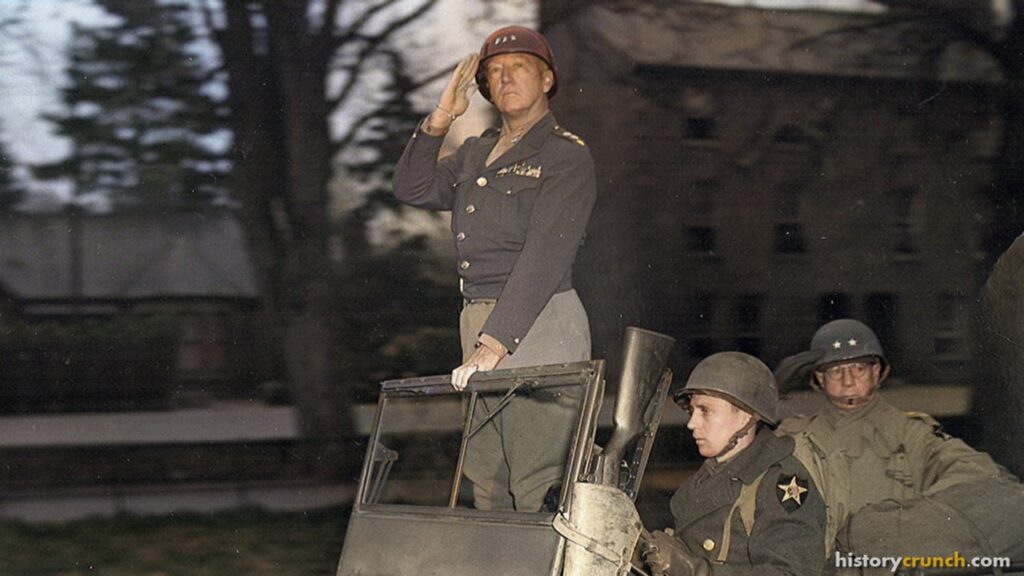
However, the American soldiers were able to hold their positions and put up a strong defense which proved too much for the German assault. Finally, the Allies gained the upper hand in the battle when American Lieutenant General George S. Patton turned the Third Army towards the town of Bastogne, on the front lines, and stopped the German offensive.
As well, improved weather conditions allowed Allied air power to return, which devastated Nazi German supply lines. As such, the German offensive ground to a halt due to several factors, including: fuel shortages, Allied reinforcements and increased resistance.
The Battle of the Bulge officially ended on January 25th, 1945, as the Allies restored their front lines.
Battle of the Bulge in World War II – Significance
The Battle of the Bulge in World War II was a highly significant event. The number of casualtiesSoldiers lost in battle through death, wounds, capture, or disappearance. suffered during the Battle of the Bulge, for both sides, varies wildly. It is generally accepted that the Germans suffered between 65,000 and 125,000 total casualties during the battle. In fact, many historians now look at the Battle of the Bulge as a major loss to Germany and that it significantly lessened the ability of the Nazis to maintain control over parts of Europe. It was Hitler’s last major attempt to reverse the tide in the West.
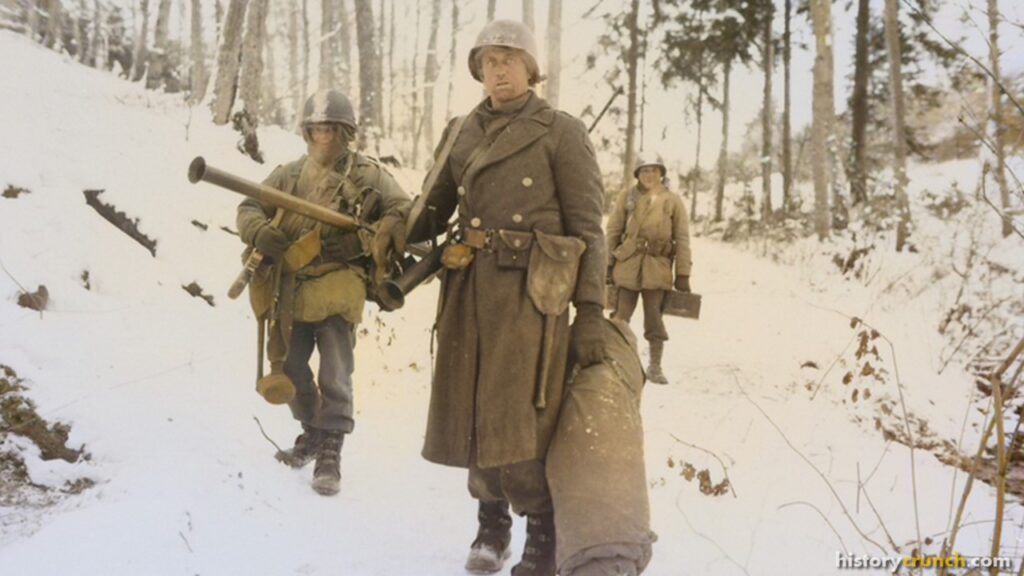
The Americans suffered about 89,500 casualties during the battle, including about 19,000 killed, making it the bloodiest battle for the United States in World War II. Today, the Battle of the Bulge is remembered as a time of great heroism by American soldiers who had to withstand a powerful Nazi German attack in the cold and difficult terrain of the Ardennes Forest.
FactsthatCrunchDuring the Battle of the Bulge from December 16th, 1944 to January 25th, 1945, roughly 19,000 American soldiers were killed in action, making it the deadliest single battle for the U.S. Army in World War II.
According to the U.S. Army Center of Military History, total American casualties reached about 89,500, including roughly 47,500 wounded and more than 23,000 missing or captured. Germany lost an estimated 100,000 soldiers killed, wounded, or captured, losses the German military could not replace.
Explore World War II · 1939 – 1945
Keep exploring World War II with these History Crunch resources.
Key Vocabulary
Isolationism
Counteroffensive
Offensive
Besieged
Casualties
Theater
Frequently Asked Questions
Why is it called the Battle of the Bulge?
The battle was named for the bulge that appeared on wartime maps when German forces pushed back the Allied lines. The surprise attack through the Ardennes drove a deep dent into Allied-held territory. The name became the common way to describe the German offensive that began in December 1944.
When was the Battle of the Bulge fought?
The Battle of the Bulge was fought between December 16th, 1944, and January 25th, 1945. It took place in the forested Ardennes region of Belgium and Luxembourg. The fighting lasted about six weeks in harsh winter weather.
Why did Germany launch the attack?
Adolf Hitler hoped a surprise counteroffensive could split the Allied lines between British and American forces. He also wanted to seize the key supply port of Antwerp. Hitler believed a major win might force the Allies into a separate peace, freeing Germany to focus on the Eastern Front.
What happened at Bastogne?
The town of Bastogne was a vital road junction that German forces surrounded during the battle. It was defended by the United States 101st Airborne Division under tough conditions. The American soldiers held their positions until Lieutenant General George S. Patton turned the Third Army to relieve the town.
Why was the Battle of the Bulge important for the United States?
It was the largest and bloodiest battle fought by the United States in all of World War II. American forces suffered about 89,500 casualties during the fighting, including about 19,000 killed. The battle is remembered as a time of great heroism by soldiers who endured the cold Ardennes terrain.
How did the Battle of the Bulge end?
The German offensive ran out of steam because of fuel shortages, Allied reinforcements, and stronger resistance. Clearer weather let Allied air power return and destroy German supply lines. The battle officially ended on January 25th, 1945, when the Allies restored their front lines.
Cite This Article
To cite this article as a source, use one of the formats below.
MLA: Beck, Elias. “Battle of the Bulge in World War II: A Detailed Summary.” HistoryCrunch, 2 October 2026, https://historycrunch.com/battle-of-the-bulge-in-world-war-ii/.
APA: Beck, E. (2026). Battle of the Bulge in World War II: A Detailed Summary. HistoryCrunch. https://historycrunch.com/battle-of-the-bulge-in-world-war-ii/
Chicago: Beck, Elias. “Battle of the Bulge in World War II: A Detailed Summary.” HistoryCrunch. October 2, 2026. https://historycrunch.com/battle-of-the-bulge-in-world-war-ii/
Sources
- Max Hastings, Inferno / All Hell Let Loose.
- The National WWII Museum