The Axis Powers of World War II were the group of countries that fought against the Allied Powers during the Second World War. The three main members of the Axis Power were Nazi Germany, Italy, and Japan. These nations formed alliances with one another in the 1930s and early 1940s and worked together to expand their power through military aggression. In fact, the Axis Powers were responsible for starting many of the conflicts that led to the outbreak and spread of World War II.
 FactsthatCrunch
What Was World War II?
World War II lasted from 1939 to 1945 and became the largest and deadliest war in all of human history. During the major events of the war, the Axis Powers attempted to conquer territory in Europe, Africa and parts of Asia. Their actions brought destruction to many countries and caused the deaths of millions of people. Therefore, understanding the Axis Powers is important for understanding the causes, events and outcomes of World War II.
Axis Powers of World War II – Member Nations
As stated above, the Axis Powers were a military and political alliance led mainly by Nazi Germany, fascist Italy, and Imperial Japan during the timeframe of World War II. Furthermore, these countries shared some important goals. For example, all three wanted to expand their territory, strengthen their military power and challenge the influence of other major nations such as Britain, France, the Soviet Union and the United States. In fact, all of these countries were the member nations of the Allied Powers of World War II, which were the opposing side to the Axis nations.
However, the Axis Powers were not all identical. They came from different regions of the world and had different leaders, cultures and political goals. For example, Nazi Germany focused mainly on territorial gains and influence in Europe and Africa. Meanwhile, Italy wanted to build a stronger empire in the Mediterranean and Africa. For its part, Imperial Japan sought to increase its control over regions in East Asia and the Pacific. Despite these differences, they cooperated together before and during World War II because they saw benefit in working together against common enemies. As a result, they became one of the two main sides in the Second World War. The sections below detail the main differences between the three Axis Powers of World War II.
FactsthatCrunchGermany and Italy focused their territorial goals on Europe, North Africa, and the Mediterranean, while Japan's goals were entirely in Asia and the Pacific. The three powers shared a drive to build empires through conquest, but they aimed at separate regions with little coordination of their overall territorial plans.
Nazi Germany
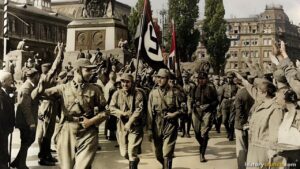
Nazi Germany was the most powerful and aggressive of the Axis Powers in Europe. It was led by Adolf Hitler, who came to power in 1933 as the leader of the Nazi Party. Hitler created a dictatorship and transformed Germany into a militarized state based upon Nazism. He believed that Germany needed more land (lebensraumA German word for ‘living space,’ meaning Hitler’s goal of conquering more land for Germany to control.), more power and greater control over Europe.
Hitler also promoted racist ideology in the form of anti-Semitism, eugenics and Social Darwinism. In fact, Nazi ideology claimed that Germans were part of a superior ‘Aryan’ race. These racist beliefs helped lead to the events of the Holocaust, in which six million Jewish people and millions of other people were murdered by the Nazi regime in terrible death camps.
Furthermore, Nazi Germany’s military actions played a major role in causing World War II. In 1939, Germany invaded the nation of Poland, which historians consider to be the event that ultimately began the war. In fact, the Nazi invasion of Poland caused Britain and France to then declare war on Nazi Germany. Over the next several years, Nazi German forces conquered much of Europe and became the driving force behind the Axis war effort.
FactsthatCrunchOn September 1st, 1939, Germany invaded Poland, setting off a chain of events that pulled nation after nation into the deadliest war in history.
Italy
Italy was another major member of the Axis Powers. It was led by Benito Mussolini, who had established a fascistDescribing a government system built on a powerful dictator, extreme nationalism, and total state control over society. dictatorship in Italy before Adolf Hitler rose to power in Germany. Similarly to Hitler, Mussolini believed in a strong state, a powerful military and expansion through conquest. In fact, Mussolini ultimately sought to expand Italy’s presence on the world stage.
Italy had already shown aggressive ambitions before World War II. For example, it invaded the African nation of Ethiopia in 1935. This action demonstrated that Mussolini was willing to use military force to expand Italian territory. Later, Italy grew closer to Nazi Germany and eventually joined the war on Germany’s side. For instance, the two nations agreed to the Rome-Berlin Axis, which was the political and military partnership between fascist Italy and Nazi Germany in the 1930s.
Although Italy was an important Axis member, it was generally considered to be weaker militarily than Nazi Germany. Its military often struggled in battle, and Germany frequently had to support Italian campaigns. Regardless, Italy played a major role in World War II in North Africa, the Mediterranean and parts of Europe.
Imperial Japan
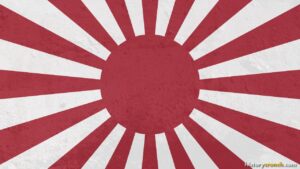
Imperial Japan was the third major Axis Power and was led by Emperor Hirohito during the events of World War II. With that said Hideki Tojo was the military leader of Japan during this time and was responsible for much of Japan’s military actions in the war. Unlike Nazi Germany and Italy, Japan was located in East Asia and thus focused its efforts on expanding its influence in the Pacific region. In the years before World War II, Japanese leaders increasingly supported military expansion, because Japan needed access to evermore natural resources to carry out its expansion in Asia and the Pacific.
In 1931, Japan invaded Manchuria in northeastern China. Later, it launched a larger war against China in 1937, called the Second Sino-Japanese War. These actions showed that Japan was already pursuing imperial expansion before the wider events of World War II began. Regardless, Imperial Japan joined fascist Italy and Nazi Germany through the agreements of the Anti-Comintern Pact of 1936 and the Tripartite Pact of 1940.
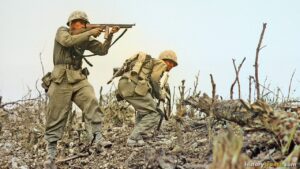
Imperial Japan joined the other Axis nations because it also opposed the existing world order dominated by Western powers, especially the United States. It believed that conquering territory in Asia would strengthen its empire, and it saw the United States’ military presence in the Pacific as a threat to its ability to continue its expansion. As a result, in 1941, Japan attacked Pearl Harbor, the American naval base in Hawaii. This attack brought the United States into World War II and expanded the conflict into a truly global war. As well, during that war, Japanese forces committed terrible atrocitiesActs of extreme cruelty and violence committed against people, especially civilians during war., including the Nanking Massacre in late 1937 and early 1938.
Axis Powers of World War II – How Did It Form?
The alliance of the Axis Powers of World War II developed gradually throughout the 1930s. For instance, Nazi Germany and Italy first drew closer in 1936 with the Rome-Berlin Axis. In the same year, Germany and Japan signed the Anti-Comintern Pact on November 25th, 1936. Italy later joined the pact in 1937.
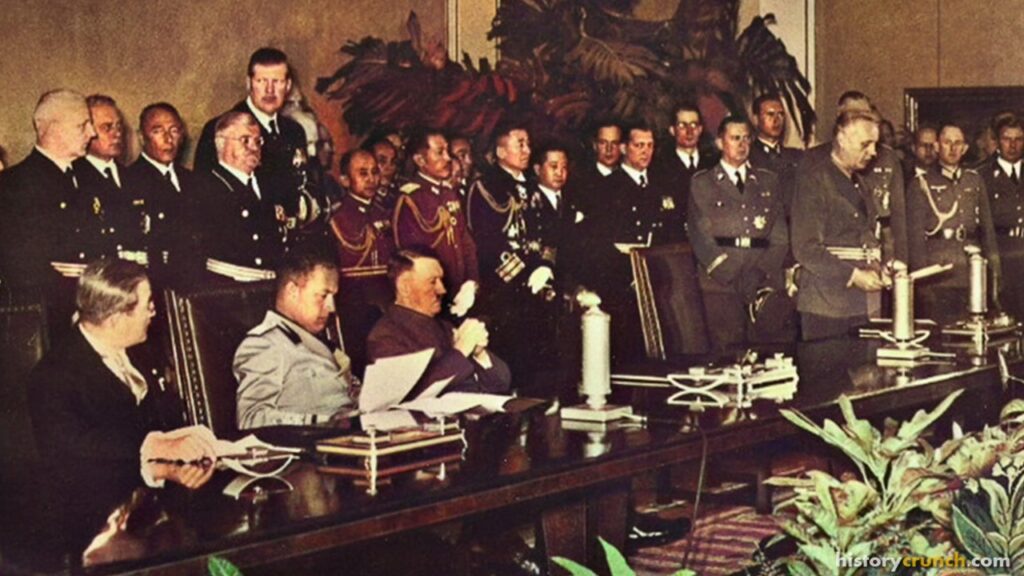
The most important agreement came on September 27th, 1940, when Nazi Germany, Italy and Imperial Japan signed the Tripartite Pact in Berlin. This agreement formally recognized the three countries as allies. It stated that if one of them was attacked by a country not already involved in the war, then the others would assist. This was mainly aimed at discouraging the United States from entering the war. Therefore, by 1940, the three major Axis Powers were clearly linked in a formal alliance.
Nazi Germany, Italy and Imperial Japan were the leading Axis Powers, but several other states also joined or cooperated with them, including: Hungary, Romania, Bulgaria and Slovakia. More specifically, Hungary joined the Tripartite PactThe 1940 agreement that formally made Nazi Germany, Italy, and Japan official military allies. on November 20th, 1940. Romania then joined on November 23rd, 1940, and Bulgaria joined on March 1st, 1941. These countries often allied with Germany because they hoped to gain territory, feared Soviet communism, or wanted Nazi German support. Romania was especially important because of its oil fields at Ploiesti, which helped fuel the Nazi German war machine.
FactsthatCrunch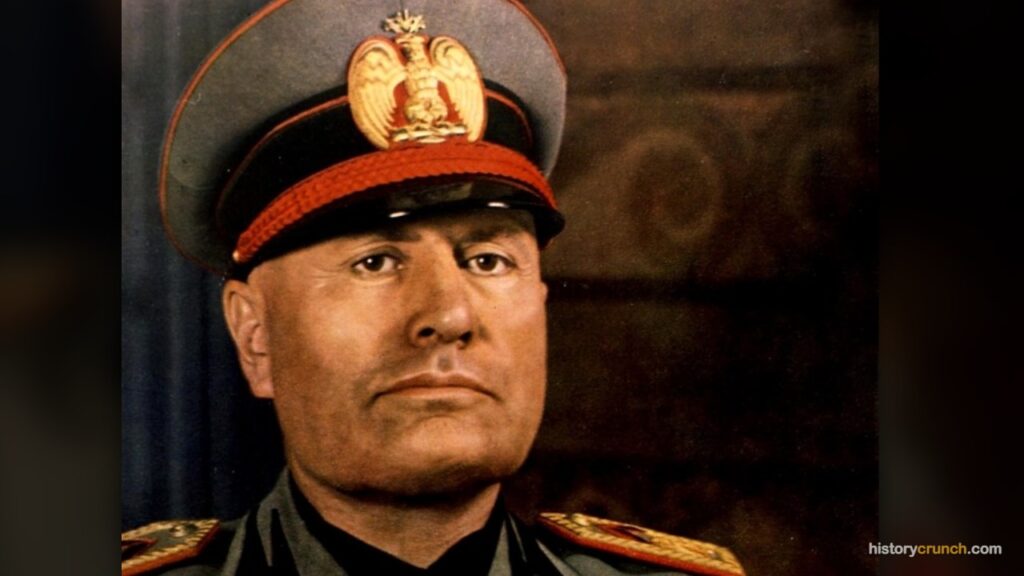
Axis Powers of World War II – Issues
Although the Axis Powers of World War II were successful militarily for a time and expanded their territories in the early years of the War, they also had serious weaknesses that caused them to falter. First, the member nations of the Axis Powers were spread across different parts of the world. Nazi Germany and Italy fought mainly in Europe and North Africa, while Japan fought in East Asia and the Pacific. This made coordination difficult between the three nations.
Second, the Axis Powers often followed separate strategies. For instance, Adolf Hitler, Benito Mussolini and Hideki Tojo cooperated regularly, but they did not always closely coordinate their separate military plans. Third, the Axis underestimated the strength of their enemies. More specifically, Adolf Hitler underestimated the military capabilities of Britain, the Soviet Union and the United States. As well, Japan underestimated American industrial capacity during the war in the Pacific. Finally, historians generally agree that Mussolini overestimated Italy’s overall military strength and ability.
FactsthatCrunchThe Axis alliance of Germany, Italy, and Japan had real military and industrial strengths, but it also carried serious weaknesses that grew harder to overcome as the war went on.
Axis Powers of World War II – Defeat
As World War II progressed, the Axis Powers began to experience defeat on the battlefields of Europe and the Pacific. For example, several major turning points weakened the Axis. First, Nazi Germany failed to defeat Britain in the Battle of Britain in 1940. Also, Nazi Germany also suffered a crushing defeat at the Battle of Stalingrad, which lasted from August of 1942 to February of 1943. In the Pacific, Japan lost key naval strength at the Battle of Midway in June of 1942, and was never able to recover. As a result, these losses, along with some others led to the ultimate defeat of the Axis Powers.
Italy was the first major Axis Power to collapse in World War II. This was the result of when Allied forces invaded Sicily in July of 1943. In fact, the Sicily Invasion led to the end of Benito Mussolini as he was removed from power on July 25th, 1943. Italy then surrendered to the Allied Powers in September of 1943.
For their part, Nazi Germany continued to fight in World War II until 1945. Following the daring Allied attack during the Normandy Invasion, American, British and Canadian forces advanced from the west, while Soviet forces advanced from the east. As such, Nazi Germany was slowly surrounded by the armies of the Allied Powers as they pushed the Nazi forces back. Adolf Hitler eventually died by suicide in Berlin on April 30th, 1945. Nazi Germany officially surrendered on May 8th, 1945, a day known as V-E Day or Victory in Europe Day.
Japan continued fighting after Nazi Germany’s surrender. However, after years of defeat, heavy bombing, the Soviet declaration of war against Japan on August 8th, 1945, and the American atomic bombings of Hiroshima on August 6th, 1945 and Nagasaki on August 9th, 1945, Japan agreed to surrender. The formal surrender took place on September 2nd, 1945, aboard the USS Missouri. This officially ended World War II, and the last of the Axis Powers.
FactsthatCrunchCan you match each event to how the Axis Powers were defeated?
Axis Powers of World War II – Significance
The Axis Powers were significant because they were the main aggressor nations of World War II. Their actions caused the war to spread across Europe, Africa and Asia. They also carried out some of the worst crimes in modern history, including: genocide, mass violence, and brutal occupation. These can be especially seen in the events of the Holocaust and the Nanking Massacre.
The Axis Powers also show how dangerous militarism, dictatorship and extreme nationalism can be. Their leaders used propaganda, fear and violence to gain power and control their populations. Once in power, they pushed their countries into destructive wars that caused enormous suffering.
FactsthatCrunchThe Axis Powers were the main aggressor nations of World War II, and their actions spread the war across Europe, Africa, and Asia.
Their invasions, from Manchuria and Ethiopia to Poland and Pearl Harbor, started or widened the major conflicts of the war.
They carried out some of the worst crimes in modern history, including the Holocaust and the Nanking Massacre.
Their leaders used propaganda, fear, and violence to gain power and control their own people.
Their defeat shows how dangerous militarism, dictatorship, and extreme nationalism can be.
Key Vocabulary
Lebensraum
Anti-Semitism
Eugenics
Fascist
Anti-Comintern Pact
Tripartite Pact
Atrocities
Frequently Asked Questions
Who were the three main Axis Powers in World War II?
The three main Axis Powers were Nazi Germany, fascist Italy, and Imperial Japan. These nations formed alliances in the 1930s and early 1940s to expand their power through military force. They fought against the Allied Powers, which included Britain, France, the Soviet Union, and the United States.
What was the Tripartite Pact?
The Tripartite Pact was the agreement signed on September 27th, 1940, that formally linked Germany, Italy, and Japan as allies. It promised that if one member was attacked by a country not yet in the war, the others would help. This was mainly meant to discourage the United States from joining the fighting.
Which countries besides the big three joined the Axis Powers?
Several smaller states joined or cooperated with the Axis, including Hungary, Romania, Bulgaria, and Slovakia. Hungary joined the Tripartite Pact on November 20th, 1940, followed by Romania and Bulgaria. Romania was especially valuable for its oil fields at Ploiesti, which fueled the German war machine.
Why did the Axis Powers lose World War II?
The Axis Powers lost because of key defeats and serious weaknesses in their alliance. They were spread across distant regions, which made it hard to coordinate their plans and share support. They also underestimated the military and industrial strength of Britain, the Soviet Union, and the United States.
When did each Axis Power surrender?
Italy surrendered first, in September of 1943, after Allied forces invaded Sicily. Nazi Germany surrendered on May 8th, 1945, a day known as V-E Day. Japan agreed to surrender after the atomic bombings, and the formal surrender took place on September 2nd, 1945, aboard the USS Missouri.
Cite This Article
To cite this article as a source, use one of the formats below.
MLA: Millar, B. “Axis Powers of World War II: A Detailed Summary.” HistoryCrunch, 4 October 2026, https://historycrunch.com/axis-powers-of-world-war-ii/.
APA: Millar, B. (2026). Axis Powers of World War II: A Detailed Summary. HistoryCrunch. https://historycrunch.com/axis-powers-of-world-war-ii/
Chicago: Millar, B. “Axis Powers of World War II: A Detailed Summary.” HistoryCrunch. October 4, 2026. https://historycrunch.com/axis-powers-of-world-war-ii/
Sources
- Imperial War Museum
- Gerhard L. Weinberg, A World at Arms.
- The National WWII Museum
- Max Hastings, Inferno / All Hell Let Loose.