The Anti-CominternAn international organization founded in 1919 to spread communist movements and coordinate revolutionary activity across different countries. Pact was an agreement between Nazi Germany and Imperial Japan in the years before World War II. It was signed in Berlin, Germany on November 25th, 1936, and it was directed against the Communist International, which was also known as the Comintern. On the surface, the Anti-Comintern Pact focused on opposition to international communism, but in reality it was also aimed more specifically at the growing influence of the Soviet Union. For that reason, the Anti-Comintern Pact was an important step in the development of the wider Axis partnership that later shaped World War II.
What Was the Comintern?
To understand the Anti-Comintern Pact, it is first necessary to understand the ‘Comintern’. The Comintern, or Communist International, was founded in Moscow in March of 1919 by Vladimir Lenin and the Bolsheviks after the events of the Russian Revolution. Its purpose was to encourage communist movements around the world and to coordinate revolutionary activity across different countries. Therefore, many conservative, nationalist, and fascistBelonging to a far-right nationalist movement that promotes authoritarian rule and often opposes communism. leaders in Europe and Asia saw the Comintern as a serious threat to their governments and societies.
By the 1930s, the Comintern had become closely connected to Soviet policy, which increased fears in countries that already distrusted communism or opposed Soviet influence. In this way, the Anti-Comintern Pact was not just a statement against an organization. It was also part of a larger political struggle over ideology, power, and international influence in the years before World War II.

Anti-Comintern Pact – Why Did It Develop?
The Anti-Comintern Pact developed because both Nazi Germany and Imperial Japan had reasons to fear or oppose Soviet communism. Adolf Hitler, the fascist leader of Nazi Germany strongly promoted anti-communism as part of Nazi ideology, and he often presented himself as a defender of Europe against BolshevismThe communist ideology and movement associated with Lenin and the Russian Revolution, used by Hitler as a term to describe the Soviet threat.. At the same time, Japanese leaders (such as Hideki Tojo) were increasingly worried about Soviet power in Asia, especially as Japan expanded into Manchuria and fought to increase its influence in China. These shared concerns helped bring the two countries closer together.
Another important factor was the growing tension in East Asia during the 1930s. Japanese leaders were angered by Soviet military aid to China, and later by the Soviet-Chinese Non-aggression Treaty of August of 1937. In Nazi Germany, Joachim von Ribbentrop played an important role in building closer ties with Japan, while Japanese figures such as Hiroshi Oshima supported stronger cooperation with Germany. Therefore, the Anti-Comintern Pact grew out of both ideological hostility toward communism and strategic concerns about the Soviet Union.
FactsthatCrunchWhy did Nazi Germany and Japan each want the Anti-Comintern Pact?
Anti-Comintern Pact – History and World War II
The Anti-Comintern Pact was signed by Joachim von Ribbentrop for Nazi Germany and Kintomo Mushanokōji for Imperial Japan on November 25th, 1936. Publicly, the agreement stated that Nazi Germany and Japan would cooperate against the activities of the Comintern and would consult one another on measures to defend themselves from communist influence. In general, the pact was presented as a defensive agreement against revolutionary communism rather than as an open military alliance.
However, the Anti-Comintern Pact had greater importance than its public wording suggested. A secret part of the agreement reflected the fact that both countries were thinking about the Soviet Union as the real danger behind the pact. This meant that the Anti-Comintern Pact was not simply propaganda. It was also part of the diplomatic movement that brought two expansionistDescribing a country that seeks to grow its territory or power beyond its current borders. powers into closer strategic alignmentWhen countries coordinate their goals and actions to gain shared military or political advantage. before the outbreak of global war in the form of World War II.
The Anti-Comintern Pact became more important when fascist Italy joined on November 6th, 1937. By that time, Benito Mussolini had already aligned Italy with Nazi Germany as part of the Rome-Berlin Axis. Italy’s entry into the Anti-Comintern Pact strengthened the connection among Nazi Germany, Italy, and Japan.
The Anti-Comintern Pact mattered because it helped bring together countries that would later become major Axis powers in World War II. During the late 1930s, Hitler became more aggressive in Europe, while Japan continued its expansion in East Asia. In this setting, the Anti-Comintern Pact helped create a sense of common purpose among governments that opposed communism, distrusted the Soviet Union, and believed in military expansion. As such, the Anti-Comintern Pact was part of the diplomatic breakdown that pushed the world closer to war. Later, this trend continued with the Pact of Steel in May of 1939 and the Tripartite PactA 1940 agreement that formally united Germany, Italy, and Japan as Axis Powers in World War II. on September 27th, 1940. Therefore, the Anti-Comintern Pact was one important stage in the formation of the Axis Powers of World War II.
FactsthatCrunch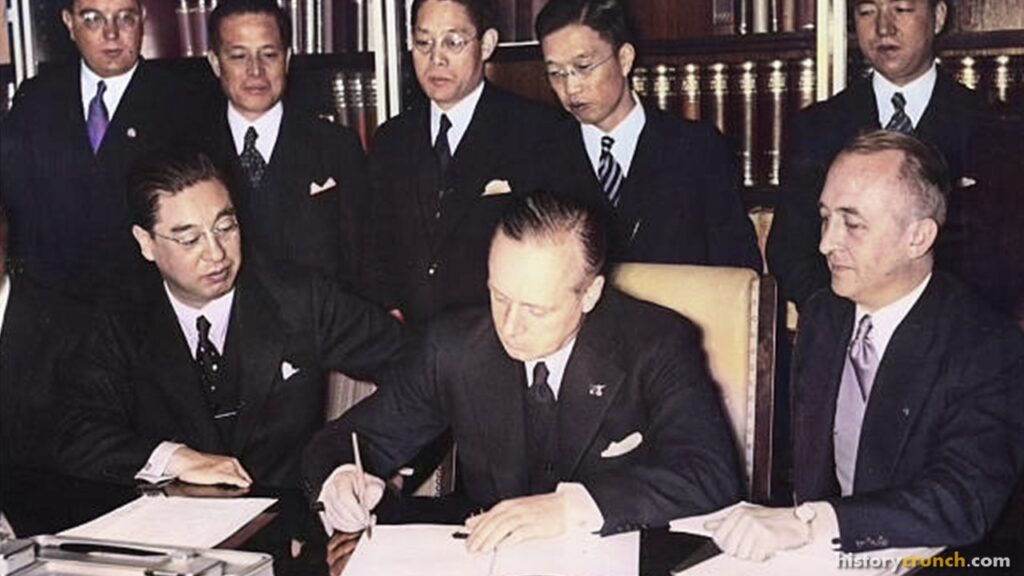 Black & whiteColour
Anti-Comintern Pact – Significance
The Anti-Comintern Pact was significant because it marked an important step in the growing cooperation between Nazi Germany, Japan, and later Italy in the years before World War II. It showed that these countries were beginning to unite around shared hostility toward communism, shared suspicion of the Soviet Union, and a broader willingness to challenge the international order of the 1930s. In this way, the Anti-Comintern Pact helped prepare the diplomatic ground for the later Axis Powers of World War II. As such, historians consider the Anti-Comintern Pact to be a factor in the causes of World War II.
FactsthatCrunchTap each impact to read what it led to.
Explore World War II · 1939 – 1945
Keep exploring World War II with these History Crunch resources.
Key Vocabulary
Comintern
Bolsheviks
Fascist
Bolshevism
Expansionist
Tripartite Pact
Strategic alignment
Frequently Asked Questions
What was the Anti-Comintern Pact?
The Anti-Comintern Pact was an agreement between Nazi Germany and Imperial Japan signed on November 25th, 1936. It was directed against the Communist International, or Comintern, which encouraged communist movements around the world. Although it looked defensive, it was also aimed at the growing power of the Soviet Union.
Who signed the Anti-Comintern Pact?
Joachim von Ribbentrop signed for Nazi Germany and Kintomo Mushanokoji signed for Imperial Japan. The two men put their names to the agreement in Berlin on November 25th, 1936. Ribbentrop had worked to build closer ties between Germany and Japan before the signing.
What was the Comintern?
The Comintern, or Communist International, was founded in Moscow in March of 1919 by Vladimir Lenin and the Bolsheviks. Its goal was to spread communist movements and to coordinate revolution across different countries. By the 1930s it was closely tied to Soviet policy, which alarmed governments that distrusted communism.
When did Italy join the Anti-Comintern Pact?
Fascist Italy joined the Anti-Comintern Pact on November 6th, 1937. By that time Benito Mussolini had already linked Italy with Germany through the Rome-Berlin Axis. Italy’s entry tied together Germany, Italy, and Japan, the three future major Axis powers.
Why is the Anti-Comintern Pact important to World War II?
The Anti-Comintern Pact helped bring together the countries that later formed the Axis Powers. It gave Germany, Japan, and Italy a shared purpose built on hostility to communism and suspicion of the Soviet Union. This cooperation later grew into the Pact of Steel in May of 1939 and the Tripartite Pact in September of 1940.
Cite This Article
To cite this article as a source, use one of the formats below.
MLA: Millar, B. “Anti-Comintern Pact: A Detailed Summary.” HistoryCrunch, 4 October 2026, https://historycrunch.com/anti-comintern-pact/.
APA: Millar, B. (2026). Anti-Comintern Pact: A Detailed Summary. HistoryCrunch. https://historycrunch.com/anti-comintern-pact/
Chicago: Millar, B. “Anti-Comintern Pact: A Detailed Summary.” HistoryCrunch. October 4, 2026. https://historycrunch.com/anti-comintern-pact/
Sources
- Antony Beevor, The Second World War.
- Imperial War Museum
- Max Hastings, Inferno / All Hell Let Loose.