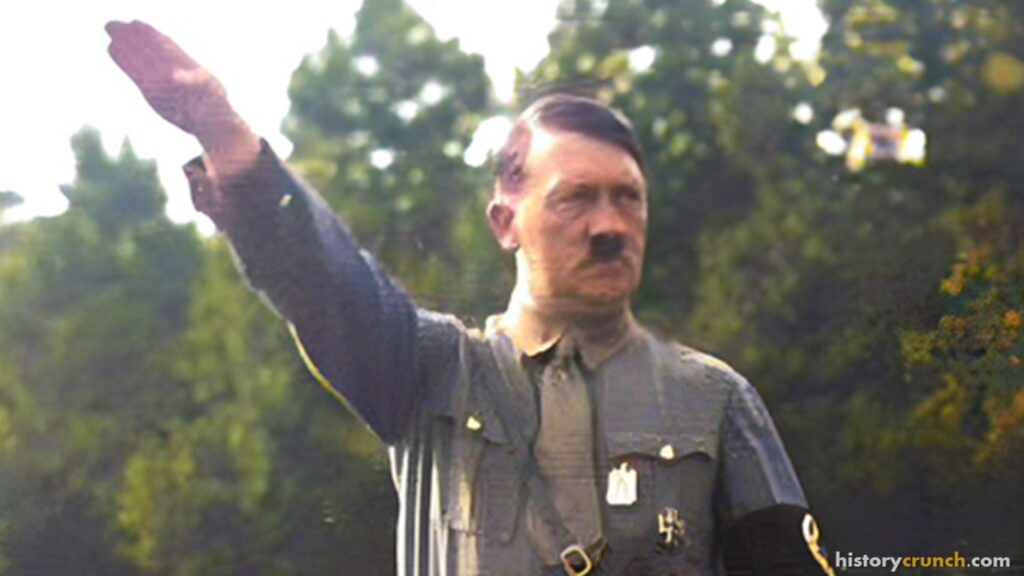
There were several significant causes of World War II, which occurred just two decades after the end of World War I and were one of the most important events in all of world history. Although the war broke out in September of 1939 when Nazi Germany invaded Poland, the war had its beginnings in several key events, such as: the Treaty of Versailles, the failure of the League of Nations, the failed policy of appeasement and the rise to power of Adolf Hitler. With that said, the immediate cause of World War II was the German invasion of Poland in 1939. In fact, World War II is generally considered to have begun on September 1st, 1939, which is the date that Germany invaded Poland.
Causes of World War II – Treaty of Versailles
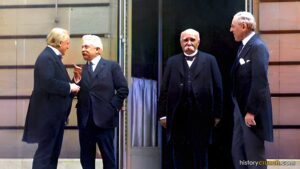
When World War I ended, Germany was forced to agree to the terms of the Treaty of Versailles. In general, the terms punished Germany and forced the country to give up land, limit its army and accept blame for starting World War I. The Treaty of VersaillesThe peace agreement after World War I that forced Germany to give up land, limit its army, and accept blame for starting the war. created a legacy for Germany and Europe in the years after World War I. The treaty is now viewed by many as too severe of a punishment towards Germany in the years after World War I and is often viewed as a cause of World War II and the rise to power of Adolf Hitler and fascism in Germany. Hitler rose to power in Germany based on his refusal to continue to accept the terms of the treaty and his promise to return Germany’s nationalistic pride.
 FactsthatCrunch
The Treaty of Versailles, signed on June 28th, 1919, forced Germany to accept full blame for World War I, pay heavy reparations, and give up about 13 percent of its territory.
The Treaty of Versailles created deep economic hardship and political anger across Germany throughout the 1920s. Hitler and the Nazi Party turned that anger into votes by promising to restore German power and tear up the treaty's terms.
Causes of World War II – Failure of the League of Nations
The League of Nations was an international organization created following World War I with the goal of preventing another war from breaking out. It was hoped that the League of Nations would bring stability to global affairs by allowing disputes between countries to be settled through negotiation rather than conflict. If a dispute did occur, the League of Nations had three options to stop a conflict from occurring. First, the League of Nations could call on the states in dispute to sit down and discuss the problem in an orderly and peaceful manner. If this failed, the League of Nations could introduce economic sanctionsPenalties that cut off trade or money with a country to pressure it into changing its behavior. against an aggressor nation in the hope that it would face bankruptcy if it did not follow the orders of the League of Nations. Finally, if the economic sanctions failed to work the League of Nations could potentially use their armies to fight. Unfortunately, the League of Nations failed to stop the growing crisis of Nazi aggression in the years before World War II. The organization lacked the ability to respond to aggression and was viewed as too weak against dictators such as Adolf Hitler and Benito Mussolini.
FactsthatCrunchWhy did the League of Nations fail to stop Hitler?
The League of Nations lacked the power to enforce its decisions because it had no standing army, and any military action required a unanimous vote from its council, which was nearly impossible to achieve. The United States never joined the League, which weakened it from the start, and major members like Britain and France were unwilling to risk another war by confronting Germany directly. When Hitler began rearming Germany in 1935 in violation of the Treaty of Versailles, the League issued warnings but took no effective action, making clear it could not stop determined aggression.
Causes of World War II – Failure of Appeasement
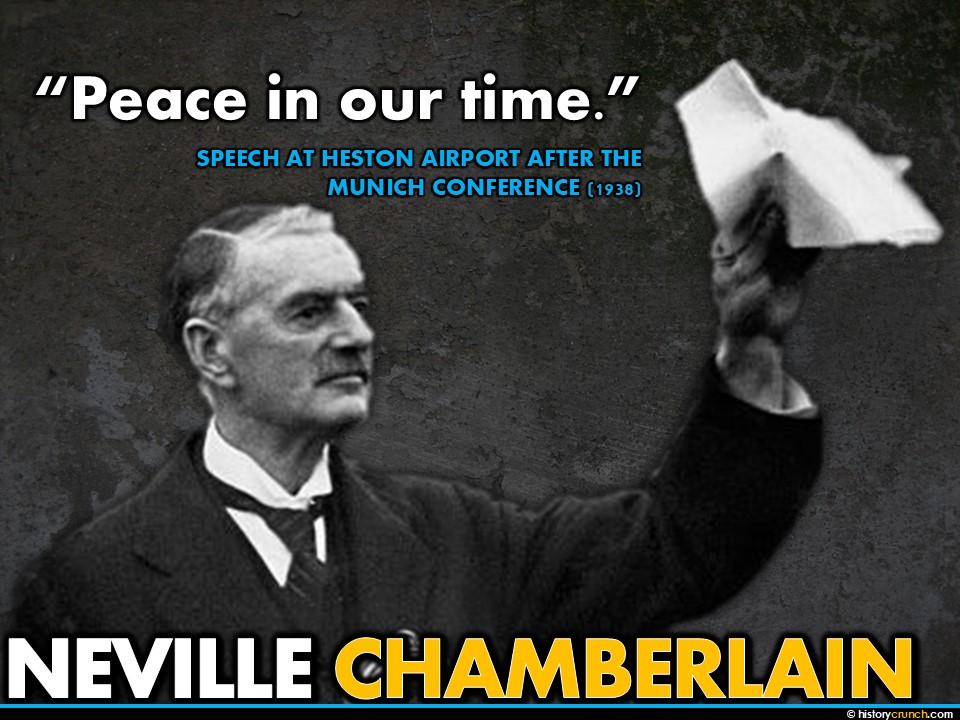
The policy of appeasement was the name for the foreign policy of the Western European countries of Britain and France towards Germany in the years after World War I but before World War II. This time is known as the interwar years and is the general timeframe when the Nazi Party and Adolf Hitler took control of Germany. After rising to power in Germany, Hitler began to carry out aggression towards other nation-states in Europe and Hitler carried out actions that went against the general terms of the Treaty of Versailles. The Western European democracies of Britain and France did not want to enter into a military conflict with Germany at this time as both had been reducing their armies and ability to wage war. This lack of will to fight pushed both countries towards the policy of appeasementA foreign policy of giving in to an aggressive country’s demands in hopes of preventing further conflict. which involved giving into the demands of an aggressive country in the hopes that the aggression could be contained. Some historians have argued that if the British and French had acted earlier than the German invasion of Poland, then they may have been able to stop Hitler and the Nazis and avoided the devastation of World War II. As such, many now look to the failure of appeasement as a reason to not use the same foreign policies in modern-day global conflicts.
Causes of World War II – Rise to Power of Adolf Hitler
Another important cause of World War II was the rise to power of Adolf Hitler and the Nazi Party. Adolf Hitler’s rise to power was a series of events that saw him take advantage of political instability, economic hardship, and widespread anger in post-World War I Germany. Born in Austria in 1889, Hitler served for Germany in World War I and later joined the German Workers’ Party in 1919, which later became the National Socialist German Workers Party (Nazi Party). Hitler quickly rose through the ranks of the Nazi Party and after becoming leader promoted a political platform based on ultranationalismAn extreme belief that one’s own country or people are superior and must be put above all others., anti-Semitism, anti-communism, and the complete rejection of the terms of the Treaty of Versailles. The rise to power of Hitler was an important cause of World War II, because he and the Nazi Party argued for Germany to expand its territory in Europe. This, obviously, set the stage for conflict, especially as Hitler demanded control over territories in Czechoslovakia and Austria.
Hitler and the Nazi Party instituted a fascist dictatorship in Germany in the years before the start of World War II. As such, it’s also important to note the role of extremist ideologies in the outbreak of the Second World War. More specifically, the rise of communism in the early 20th century, and the growth of fascism in Italy and Germany were important to the tensions that eventually resulted in war.
FactsthatCrunchCauses of World War II – Nazi Germany Invasion of Poland
The Nazi German invasion of Poland on September 1st, 1939 is one of the most important events of the early years of World War II. Germany, under the leadership of Adolf Hitler, had just recently signed a non-aggression pactAn agreement between two countries promising not to attack each other. with the Soviet Union and used the opportunity to invade Poland. The invasion of Poland would see the country become split in two, with one half under the control of Nazi Germany and the other under the control of the Soviet Union. Poland was created at the end of World War I out of territory that had traditionally been part of the German, Austro-Hungarian and Russian empires. Hitler sought to reclaim this territory for Germany and to unite all German-speaking people.
On the morning of September 1st, 1939, Germany unleashed its blitzkriegA fast military attack combining tanks and air support to overwhelm and surround enemy forces quickly. tactics of war that would prove to be successful in much of the fighting of World War II. Blitzkrieg involved German tank divisions and air support overwhelming the Polish forces as they encircled and cut off the Polish troops. German forces invaded from the north, south and west and quickly forced the Polish into a retreat. France and Britain, realizing that appeasement had failed to halt Hitler’s aggression, declared war on Nazi Germany on September 3rd, 1939. The major powers of Europe were once again forcing the world into a global conflict. World War II had begun.
FactsthatCrunch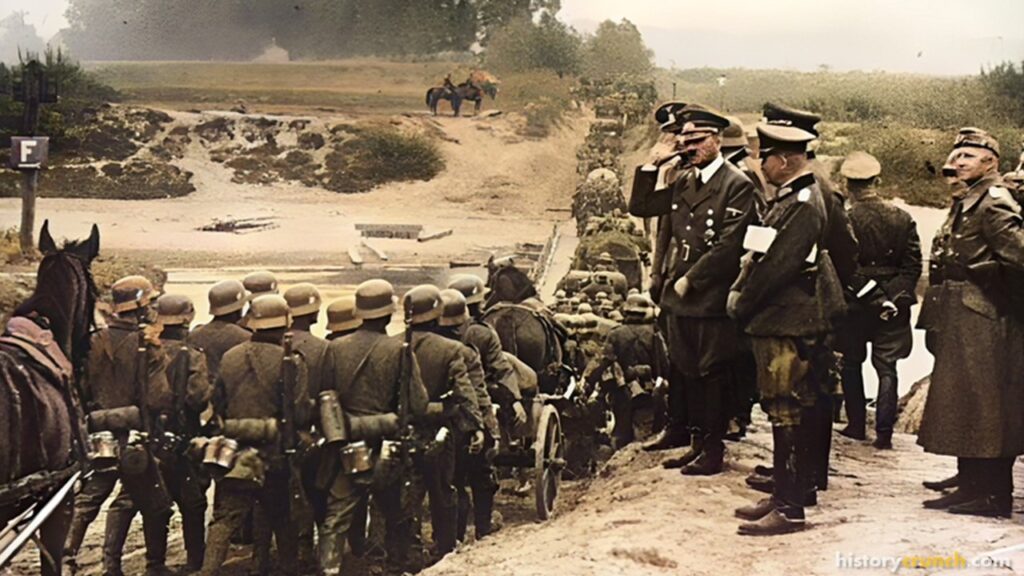 Black & whiteColour
Key Vocabulary
Treaty of Versailles
Appeasement
Economic sanctions
Ultranationalism
Anti-Semitism
Blitzkrieg
Non-aggression pact
Frequently Asked Questions
What were the main causes of World War II?
The main causes were the Treaty of Versailles, the failure of the League of Nations, the failed policy of appeasement, and the rise of Adolf Hitler. These events built up tension in Europe over about two decades. The immediate cause was the German invasion of Poland in 1939.
When did World War II begin?
World War II is generally considered to have begun on September 1st, 1939, when Germany invaded Poland. Two days later, on September 3rd, 1939, Britain and France declared war on Nazi Germany. Their declaration showed that the policy of appeasement had failed to stop Hitler.
How did the Treaty of Versailles help cause World War II?
The Treaty of Versailles punished Germany by forcing it to give up land, limit its army, and accept blame for World War I. Many people saw these terms as too harsh and unfair. Hitler used this anger to gain support by promising to reject the treaty and restore German pride.
Why did the League of Nations fail to prevent the war?
The League of Nations failed because it lacked the power to stop aggressive dictators like Hitler and Mussolini. It could ask nations to talk, apply economic sanctions, or use armies, but these tools proved too weak. As a result, the League could not stop the growing crisis of Nazi aggression.
What was the policy of appeasement?
Appeasement was the policy of Britain and France of giving in to Hitler’s demands to avoid another war. Both countries had reduced their armies and did not want to fight Germany. Many historians argue that acting earlier might have stopped Hitler and prevented the war.
What was blitzkrieg?
Blitzkrieg was a fast attack strategy that Germany used when it invaded Poland in 1939. It combined tank divisions with air support to overwhelm and surround enemy forces quickly. German troops invaded from the north, south, and west, forcing the Polish army into a fast retreat.
Cite This Article
To cite this article as a source, use one of the formats below.
MLA: Beck, Elias. “Causes of World War II: A Detailed Summary.” HistoryCrunch, 1 October 2026, https://historycrunch.com/causes-of-world-war-ii/.
APA: Beck, E. (2026). Causes of World War II: A Detailed Summary. HistoryCrunch. https://historycrunch.com/causes-of-world-war-ii/
Chicago: Beck, Elias. “Causes of World War II: A Detailed Summary.” HistoryCrunch. October 1, 2026. https://historycrunch.com/causes-of-world-war-ii/
Sources
- Max Hastings, Inferno / All Hell Let Loose.
- Gerhard L. Weinberg, A World at Arms.