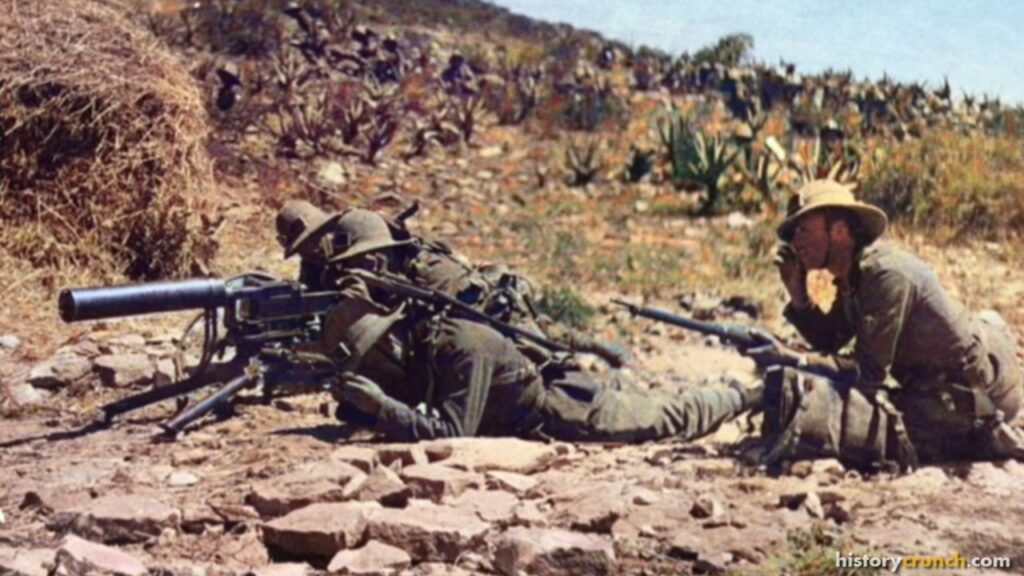
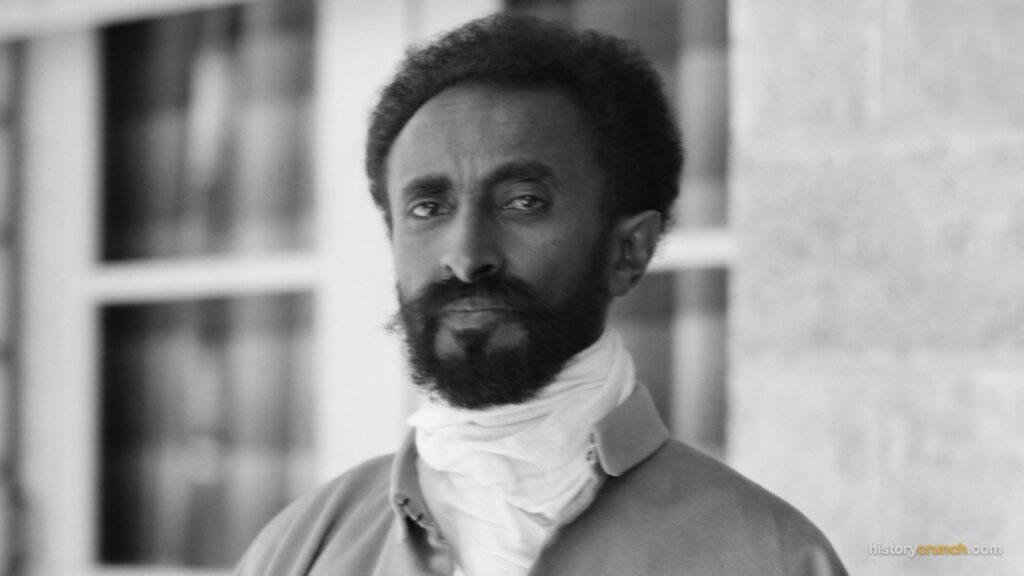
The Italian invasion of Ethiopia in 1935 was one of the most important events in the years before World War II. It began on October 3rd, 1935, when Benito Mussolini’s Italy invaded the independent African state of Ethiopia, which was also often called ‘Abyssinia’. At the time, Ethiopia was ruled by Emperor Haile Selassie, and it was one of the very few African countries that had remained independent during the events of the Scramble for Africa. Therefore, the invasion became a major international crisis, and the weak response of the League of Nations damaged confidence in collective securityThe idea that nations working together through an international organization can stop aggression against any one of them. and pushed Europe closer to a wider war. For this reason, the Italian Invasion of Ethiopia in 1935 is often viewed as an important cause of World War II.
 FactsthatCrunch
In 1935, Ethiopia was one of only two African countries that were still independent.
What Was Imperialism in Africa?
To understand the Italian invasion of Ethiopia in 1935, it is first necessary to learn about the history of imperialism in Africa. As mentioned above, the ‘Scramble for Africa‘ is the term historians use for the rapid expansion of European empires into Africa, which took place from about 1870 to 1914. During these years, most of the African continent came under the control of European powers such as Britain, France, Germany, Belgium, Portugal, Spain and Italy. This is important because the invasion of Ethiopia did not happen in isolation. It grew out of a longer history of European competition, empire-building, and intervention in Africa.
Ethiopia stood out in this larger story because it had not been fully conquered during the Scramble for AfricaThe rapid takeover of most of Africa by European powers between about 1870 and 1914.. In fact, along with Liberia, it remained independent while most of the continent was colonized. For Mussolini, this made Ethiopia an especially important target. Conquering it would allow Italy to expand its African empire and claim a larger place among the European imperial powers.
FactsthatCrunchWhat were the main causes of the Scramble for Africa that drove European powers to divide up the African continent?
Italian Invasion of Ethiopia – Causes
Benito Mussolini had ruled Italy as a fascist dictator since his rise to power in the 1920s. His brand of fascism was strongly based on support for territorial expansion and militarism. As such, he wanted Italy to appear powerful, disciplined and ready to build a modern empire. For instance, the Italian fascistRelating to a style of authoritarian government built on nationalism, militarism, and a single powerful leader. regime celebrated ideas of national glory and often connected its ambitions to the memory of the ancient Roman Empire. This resulted in Ethiopia becoming one of Mussolini’s main foreign policy targets by the mid-1930s.
Italy also had a specific reason for wanting revenge in Ethiopia. In March of 1896, at the Battle of Adwa, Ethiopian forces had defeated an Italian army during an earlier Italian attempt to conquer the country. That defeat was remembered in Italy as a national humiliation. Therefore, when Mussolini planned the invasion of 1935, he was not only seeking more territory. Rather, he was also trying to erase a past defeat and present himself as the leader who had restored Italian pride.
FactsthatCrunchWhat was ONE reason Mussolini wanted to conquer Ethiopia in 1935?
Italian Invasion of Ethiopia – Abyssinia Crisis
The immediate crisis that led to war in Ethiopia developed from the events of the Walwal Incident in December of 1934. Italy had built a fort at Walwal, in disputed territory in the Ogaden region. Tensions rose when Ethiopian and Italian forces clashed there after an international boundary mission arrived in the area. This is important because Mussolini used the border dispute as an excuse to prepare for a much larger invasion that he had already begun planning.
After the Walwal Incident, the dispute became known internationally as the ‘Abyssinia Crisis’. Ethiopia appealed to the League of Nations for assistance, which was the international organization tasked with preventing major conflicts in the aftermath of World War I. Ethiopian leaders were hoping that the League would protect it from the Italian aggression. However, Italy continued military preparations, and the international response remained weak. This resulted in the crisis becoming a major example of the failure of collective security in the 1930s. As such, historians often refer to the Abyssinia Crisis as an example of the failure of the League of Nations, which in turn set the stage for the outbreak of World War II.
FactsthatCrunchThe Walwal clash on December 5th, 1934, happened at an oasis about 50 miles inside Ethiopia, where Italy had built a fort.
Italian and Ethiopian troops fought there over who controlled the wells. Mussolini used the clash as an excuse to prepare a full invasion, and the dispute grew into the Abyssinia Crisis.
Italian Invasion of Ethiopia – Major Events
The Italian invasion of Ethiopia began on October 3rd, 1935. Italian forces under General Emilio De Bono crossed the Mareb River from Eritrea into northern Ethiopia, while other Italian forces under Rodolfo Graziani attacked from Italian Somaliland in the south. Italy did not issue a formal declaration of war before the attack. This is significant because it showed that Mussolini was willing to openly challenge international law and the authority of the League of Nations.
Italy invaded with major military advantages over the Ethiopian defenses. In fact, Italian forces had large numbers of troops, artillery, tanks, aircraft and even colonial soldiers from other parts of the Italian empire. On the other hand, Ethiopia lacked the same level of modern weapons, motorized transport and industrial support. Therefore, from the beginning, the war was deeply unequal in terms of military technology and resources.
Ethiopia resisted the invasion under the leadership of Emperor Haile Selassie and several major commanders. Ethiopian forces mobilized in large numbers and fought to defend their territory from the invading Italians. For instance, Ethiopian armies launched counterattacks in late 1935 and they tried to use the difficult terrain and their numerical strength to slow the Italian advance. However, Ethiopia faced enormous difficulties. For instance, many Ethiopian soldiers were poorly armed when compared with the Italians, and modern air power gave Italy a major advantage. This resulted in a war in which Ethiopian forces could not fully overcome the gap in weapons and supplies.
As the war continued, Italy used increasingly brutal methods on the battlefield. In fact, Mussolini became frustrated with slow progress and replaced Emilio De Bono with Pietro Badoglio in late 1935. Under Badoglio, the Italian offensive became more aggressive and Italian forces used mustard gasA chemical weapon that burns skin and lungs, banned by international law but used by Italy against Ethiopian forces. against Ethiopian troops and, at times, against civilian areas as well. This is significant because Italy was a signatory to the 1925 Geneva Protocol, which had banned chemical warfare. As such, Italy was going against international law, which caused the League of Nations to respond.
Regardless, the use of chemical weapons gave Italy a decisive advantage in several stages of the war. Furthermore, Italian air attacks and heavy artillery made Ethiopian resistance even more difficult. Therefore, the invasion of Ethiopia in 1935 is also remembered as a war in which modern weapons were used in especially destructive ways against a much weaker state.
The war turned decisively in Italy’s favor in 1936. On March 31st, 1936, Ethiopian forces suffered a major defeat at the Battle of Maychew, and the Ethiopian leader was forced to flee into exile on May 2nd, 1936. Italian forces then entered Addis Ababa, the Ethiopian capital city on May 5th, 1936. Soon after, Italy formally annexedWhen one country formally takes over and absorbs another country’s territory as its own. Ethiopia. On May 9th, 1936, King Victor Emmanuel III was proclaimed emperor of Ethiopia, and Italy combined Eritrea, Italian Somaliland, and Ethiopia into ‘Italian East Africa’. However, it should be noted that Ethiopian resistance movements continued for years and regular fighting lasted well into 1937.
FactsthatCrunchHow Did Italy Use Mustard Gas in the Italian Invasion of Ethiopia?
Italian forces used mustard gas against Ethiopian troops and civilian areas during the invasion, especially after Pietro Badoglio replaced Emilio De Bono as commander in late 1935 and the offensive became more aggressive. This was a serious violation of international law because Italy had signed the 1925 Geneva Protocol, which banned the use of chemical weapons in warfare. The use of mustard gas gave Italy a decisive military advantage at several stages of the war, since Ethiopian forces had no effective protection against it.
Italian Invasion of Ethiopia – League of Nations Responds
As stated above, the Italian invasion of Ethiopia and the methods of war that the Italians used eventually caused the League of Nations to intervene. With that said, the response by the League of Nations was weak and ineffective. The League declared Italy to be the aggressor and imposed sanctionsPenalties such as trade restrictions placed on a country to punish it for breaking international rules.. However, the sanctions were limited and they did not include some of the most important resources, such as oil. Britain and France were also hesitant to push too hard against Mussolini because they were worried about maintaining European stability and did not want to drive Italy closer to Adolf Hitler.
This is important, because historians generally agree that the failure of the League of Nations was a major cause of World War II. In fact, many people around the world saw the Abyssinia Crisis as proof that while the League of Nations could condemn aggression, it could not truly prevent it. This resulted in a serious loss of confidence in the international system created after World War I, which ultimately led to the outbreak of World War II in 1939.
Italian Invasion of Ethiopia – Significance
The Italian invasion of Ethiopia was important because it exposed the weakness of the League of Nations and the collapse of the collective security of Europe following the destruction of World War I. More specifically, the crisis showed that an aggressive state could invade another country and face few consequences. This helped undermine the international order that had been built after World War I, and is ultimately considered to be a cause of World War II.
The invasion was also important because it affected the balance of power in Europe. Britain and France failed to stop Mussolini and Italy from aligning itself with Nazi Germany in the years that followed. This resulted in the strengthening of the two dictatorships that later formed the Rome-Berlin Axis.
Explore World War II · 1939 – 1945
Keep exploring World War II with these History Crunch resources.
Key Vocabulary
Imperialism
Scramble for Africa
Fascist
Collective security
Sanctions
Mustard gas
Annexed
Frequently Asked Questions
When did Italy invade Ethiopia?
Italy invaded Ethiopia on October 3rd, 1935, without a formal declaration of war. Italian forces attacked from two directions, crossing from Eritrea in the north and from Italian Somaliland in the south. The main fighting ended in May of 1936, though Ethiopian resistance continued for years afterward.
Why did Mussolini invade Ethiopia?
Mussolini invaded to expand Italy’s African empire and prove that his fascist state was powerful. He also wanted revenge for Italy’s defeat at the Battle of Adwa in 1896, which was remembered as a national humiliation. Ethiopia stood out because it was one of the few African countries that was still independent.
What was the Abyssinia Crisis?
The Abyssinia Crisis was the international dispute that grew out of the Walwal Incident in December of 1934. Ethiopia asked the League of Nations for help against Italian aggression, but the response was weak. The crisis became a well-known example of the failure of collective security in the 1930s.
How did the League of Nations respond to the invasion?
The League declared Italy the aggressor and imposed sanctions, but the sanctions were limited and ineffective. Important resources like oil were left off the list, so Italy was not truly punished. Britain and France were also hesitant to anger Mussolini and push him toward Adolf Hitler.
Did Italy use chemical weapons in Ethiopia?
Yes, Italian forces used mustard gas against Ethiopian troops and sometimes against civilian areas. This broke international law, since Italy had signed the 1925 Geneva Protocol banning chemical warfare. The gas, along with air attacks and heavy artillery, gave Italy a major advantage over Ethiopia’s weaker forces.
Why is the invasion seen as a cause of World War II?
The invasion is seen as a cause of World War II because it exposed the weakness of the League of Nations. It showed that an aggressive country could invade another state and face few real consequences. This damaged trust in the postwar international order and pushed Italy closer to Nazi Germany.
Cite This Article
To cite this article as a source, use one of the formats below.
MLA: Millar, B. “Italian Invasion of Ethiopia in 1935: A Detailed Summary.” HistoryCrunch, 1 October 2026, https://historycrunch.com/italian-invasion-of-ethiopia-in-1935/.
APA: Millar, B. (2026). Italian Invasion of Ethiopia in 1935: A Detailed Summary. HistoryCrunch. https://historycrunch.com/italian-invasion-of-ethiopia-in-1935/
Chicago: Millar, B. “Italian Invasion of Ethiopia in 1935: A Detailed Summary.” HistoryCrunch. October 1, 2026. https://historycrunch.com/italian-invasion-of-ethiopia-in-1935/
Sources
- Max Hastings, Inferno / All Hell Let Loose.
- Antony Beevor, The Second World War.
- The National WWII Museum