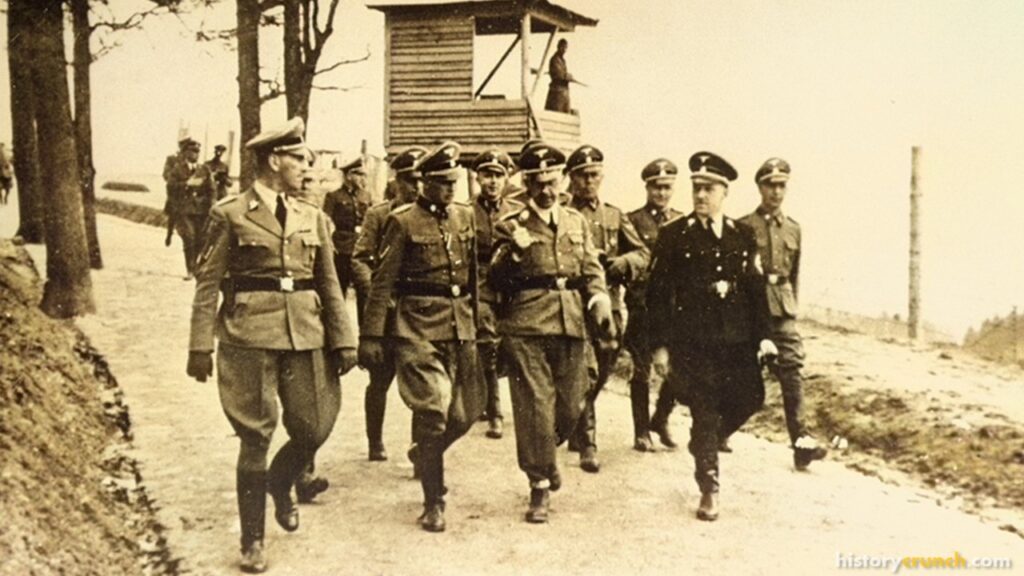
The SS (Schutzstaffel) was an important paramilitaryAn armed group organized like a military force but not part of an official national army. organization in Nazi Germany during the rise to power of Adolf Hitler and the major events of World War II and the Holocaust. The SS was originally formed as Hitler’s personal bodyguards but later expanded into a powerful force responsible for enforcing Nazi ideology, running the concentration and extermination camps, and carrying out mass executions.
 FactsthatCrunch
SS (Schutzstaffel) – Creation and Early History
Adolf Hitler began his rise to power in the 1920s and as a result, worked to establish organizations that would benefit both himself and the Nazi Party, such as: Hitler Youth, the SA and the SS. The SA was established first, in 1921, followed by the SS in 1925 and the Hitler Youth in 1926. Hitler ordered the creation of the SS in 1925 in order to act as his personal security force in public rallies and meetings throughout Germany. While the SS was originally formed as part of the SA, the SS grew to become much bigger and more significant, especially in terms of its role in carrying out the Holocaust.
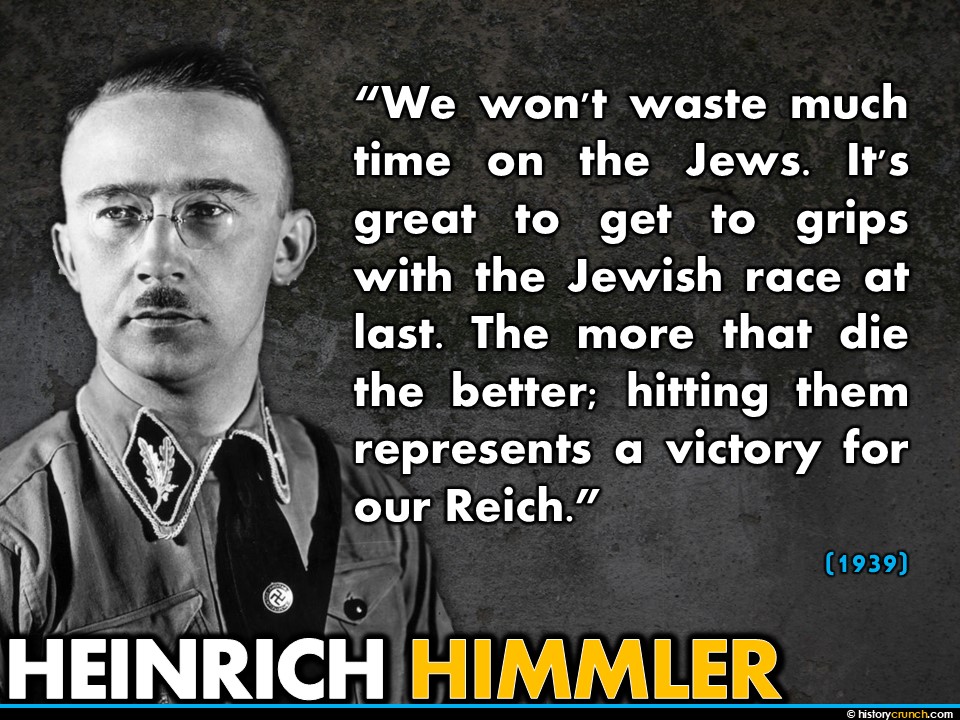
The earliest version of the SS was called the Saal-Schutz or ‘Hall-Protection’ and consisted of an eight-member team that was tasked with guarding Adolf Hitler and other high ranking Nazi officials. The first commander of the SS was Julius Schreck; after him came Joseph Berchtold, then Erhard Heiden, and then Heinrich Himmler, who became Reichsführer-SSThe highest leadership rank within the SS, held by Heinrich Himmler starting in January 1929. in January 1929. Under Himmler, the SS grew dramatically in size and importance. First, he officially separated the SS from the SA and instead built the SS into an elite force. Next, he promoted the idea that the SS should be made up of racially pure forces that were used to promote the goals and ambitions of the Nazi Party, including violence against those deemed ‘undesirable’, such as Jewish people. Himmler believed that SS soldiers should portray the ideal values of AryanismA Nazi racial belief that people of certain European heritage were superior and most desirable. and as such enlisted only those that could prove their ethnic heritage and contained the most desirable genetic traits.
 FactsthatCrunch
When Heinrich Himmler became Reichsfuehrer-SS in January 1929, he separated the SS from the SA and rebuilt it as a racially selective elite force tied directly to Nazi Party goals.
Before Himmler took charge, the SS was a small guard unit inside the larger SA. His changes turned it into a separate, powerful organization responsible for enforcing Nazi ideology, running the camps, and carrying out mass killings.
SS (Schutzstaffel) – World War II
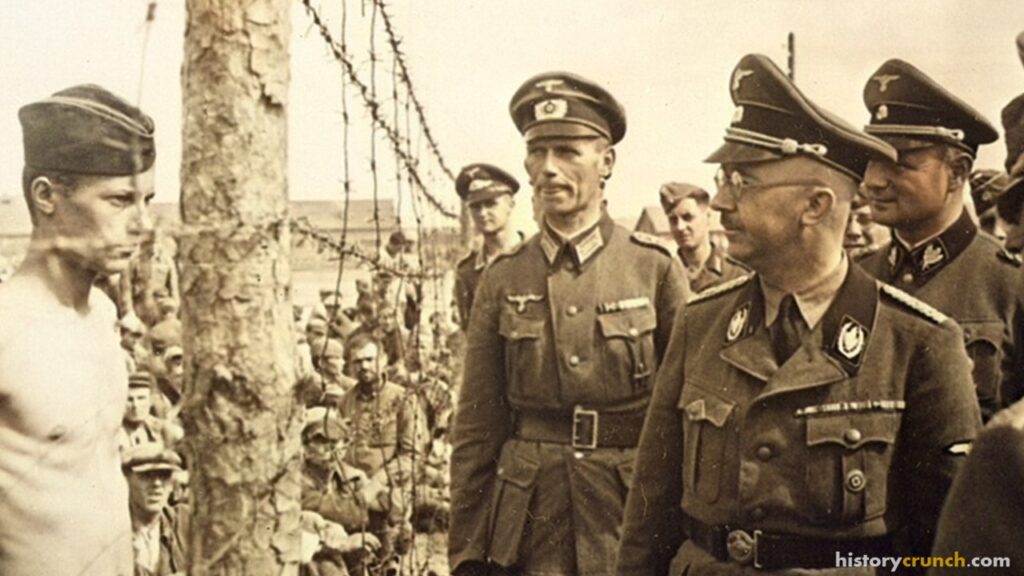
By 1932, the SS had increased its membership by thousands, and the group wore their distinctive all-black uniforms. Hitler’s appointment as Chancellor in 1933 allowed the SS to continue to expand. For example, Himmler oversaw the creation of two significant units within the SS. The first was the SS-Verfügungstruppen (SS-VT), which was created in 1934 as a military force for the Nazi Party. World War II began in 1939 when Nazi Germany invaded Poland. The SS-VT played an important role in the German invasion of Poland and the war for Germany on the Eastern Front. The second unit was the SS-TotenkopfverbändeThe SS unit, also called the Death Head’s Unit, responsible for creating and running the concentration camp system. (SS-TV), which has also been referred to as the Death Head’s Unit due to their emblem of a skull that they wore on their right collar. In general, the Death Head’s Unit was tasked with the creation and administration of the concentration camp system that was initiated by Hitler and the Nazi Party. As such, they were responsible for some of the most horrible acts of the Holocaust.
 FactsthatCrunch
SS (Schutzstaffel) – Holocaust
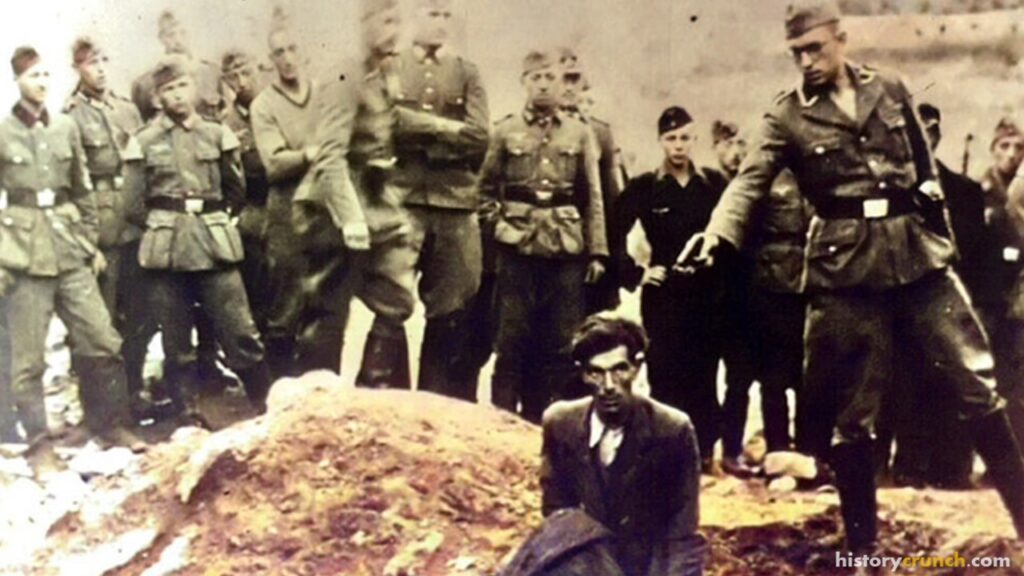
Another aspect of the SS that was responsible for the Holocaust was the einsatzgruppenSS death squads that followed behind front-line Nazi forces and carried out mass executions of Jewish people and other minorities.. The einsatzgruppen were SS death squads that captured and killed Jewish people and other minorities during the events of World War II and the Holocaust. In general, the death squads followed directly behind the front line Nazi forces as they conquered territory throughout Europe as part of World War II. Once the Nazi forces had captured an area, the einsatzgruppen would begin the process of rounding up any undesirable people living in the region and carry out their executions. Since the einsatzgruppen were part of the larger SS structure, their actions were under the direction of the head of the SS, Heinrich Himmler.
Two other main units of the SS created by Himmler were Allgemeine-SS (General SS) and Waffen-SS (Armed-SS). The Allgemeine-SS were tasked with general duties such as policing and ensuring the policies of the Nazi Party were followed throughout German society. On the other hand the Waffen-SS consisted of combat units of troops within Nazi Germany’s military and were used extensively throughout World War II against the Allied nations.
The SS was one of the most important organizations in Nazi Germany and characterized the brutal nature of the Nazi Party and its racial ideology. Historians hold it responsible for the deaths of millions in the concentration camps of the Holocaust and for carrying out brutal executions of several different groups of people, including: Jewish, Polish, Roma, etc. When Nazi Germany was finally defeated and World War II was ended, the Allied nations deemed the SS to be a criminal organization for its role in carrying out various war crimes and crimes against humanitySerious violations against large groups of people, such as mass murder, that are condemned under international law.. As such, high ranking members of the SS were tried at the Nuremberg TrialsPost-war proceedings in which Allied nations prosecuted high-ranking Nazi and SS members for war crimes. and found guilty for their actions during the war. Himmler, the head of the SS, was captured when trying to flee and committed suicide before facing justice.
 FactsthatCrunch
What was the main job of the Einsatzgruppen during the Holocaust?
Key Vocabulary
Paramilitary
Reichsführer-SS
SS-Totenkopfverbände
Einsatzgruppen
Aryanism
Crimes against humanity
Nuremberg Trials
Frequently Asked Questions
What does SS stand for?
SS stands for Schutzstaffel, a German word that means “Protection Squadron.” The name reflected its first job as a security force for Adolf Hitler. Over time the group grew far beyond guard duty into a large and feared organization.
Who was in charge of the SS?
Heinrich Himmler led the SS as Reichsführer-SS starting in January 1929. He replaced Erhard Heiden, the third commander, after Julius Schreck and Joseph Berchtold, and greatly expanded the group. Under Himmler, the SS became an elite force built around Nazi racial ideas.
What was the difference between the SS and the SA?
The SS began in 1925 as a small unit within the larger SA, which was another Nazi paramilitary group. Himmler later separated the SS from the SA and turned it into an elite force. The SS grew much bigger and more powerful, especially in running the Holocaust.
What were the Einsatzgruppen?
The Einsatzgruppen were SS death squads that killed Jewish people and other minorities during World War II. They followed behind the front-line Nazi forces as new land was captured. In each area they rounded up targeted groups and carried out mass shootings.
What happened to the SS after World War II?
The Allied nations declared the SS a criminal organization after Germany was defeated. High-ranking members were tried at the Nuremberg Trials and found guilty of war crimes. Himmler was captured while trying to flee and killed himself before he could face justice.
Cite This Article
To cite this article as a source, use one of the formats below.
MLA: Beck, Elias. “SS (Schutzstaffel): A Detailed Summary.” HistoryCrunch, 16 September 2026, https://historycrunch.com/ss-schutzstaffel/.
APA: Beck, E. (2026). SS (Schutzstaffel): A Detailed Summary. HistoryCrunch. https://historycrunch.com/ss-schutzstaffel/
Chicago: Beck, Elias. “SS (Schutzstaffel): A Detailed Summary.” HistoryCrunch. September 16, 2026. https://historycrunch.com/ss-schutzstaffel/
Sources
- J.M. Roberts & Odd Arne Westad, The Penguin History of the World.
- Jerry Bentley & Herbert Ziegler, Traditions & Encounters: A Global Perspective on the Past.