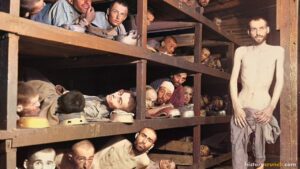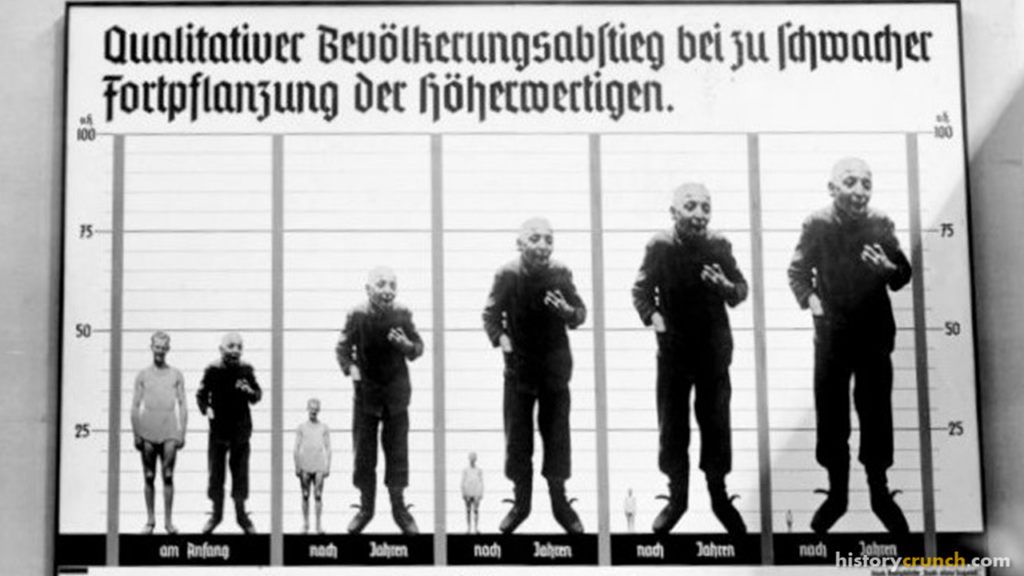
Eugenics in Nazi Germany played a central role in the Nazi regime’s racist ideology that led to the Holocaust. In short, Nazi eugenics sought to eliminate individuals deemed genetically ‘unfit’ or ‘inferior’, including: Jewish people, disabled people, and others with ‘hereditary’ illnesses. As such, eugenics is important to understand when studying the regime of Nazi Germany and the events of the Holocaust.
WHAT WAS THE HOLOCAUST?
The Holocaust was one of the most important events of the 20th century and is perhaps the most significant genocide in human history. It occurred from 1933 to 1945, and over 11 million people were executed as a result of the ideals of Adolf Hitler and the Nazi Party. In total, 6 million were Jewish people, while the other 5 million included several other groups, including: disabled people, homosexuals, communists, Soviet and Polish prisoners of war, Roma, and other religious and ethnic minorities. The Nazi regime made use of eugenics to carry out the prejudice and death of millions of these people during the events of the Holocaust.
EUGENICS IN NAZI GERMANY – SUMMARY
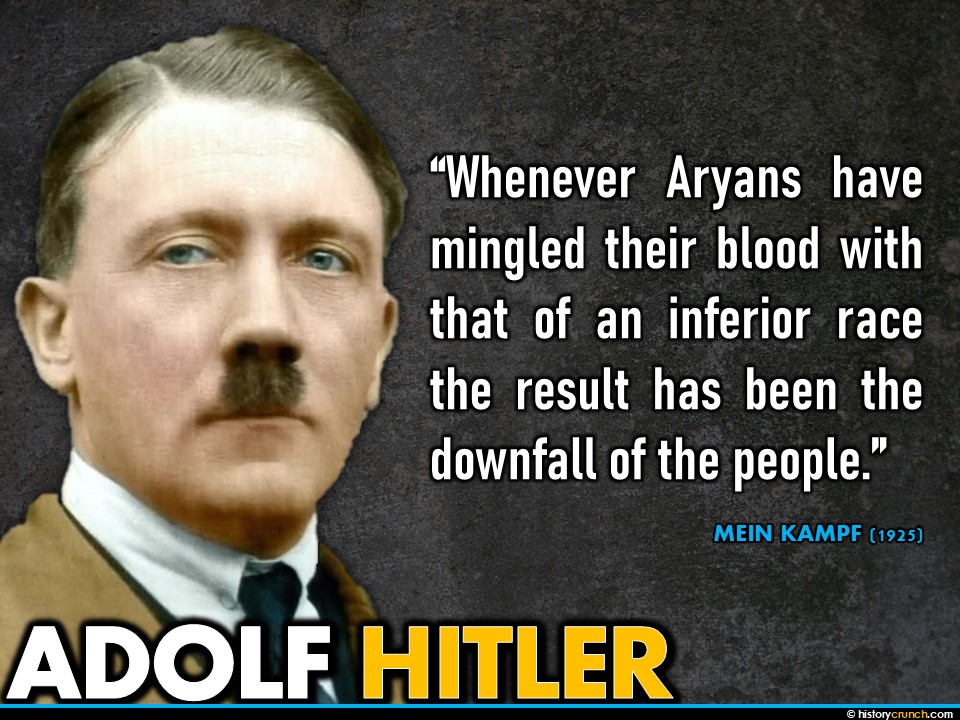
As part of the Holocaust, the Nazi regime classified and discriminated against different groups of people based on certain characteristics, including: ethnic heritage, mental and physical disability and genetic background. In his book, Mein Kampf, Adolf Hitler promoted the idea that Germany should actively seek to create a master race which he referred to as ‘Aryans’. For Hitler, Aryans were northern Europeans who had certain genetic traits, including blonde hair and blue eyes. Hitler believed that Aryan genetic traits should be promoted and that all others should be restricted or removed from society. In order to achieve this, the Nazis practiced the theory of eugenics, which is the idea that certain genetic traits should be promoted while others should be removed through selective reproduction.

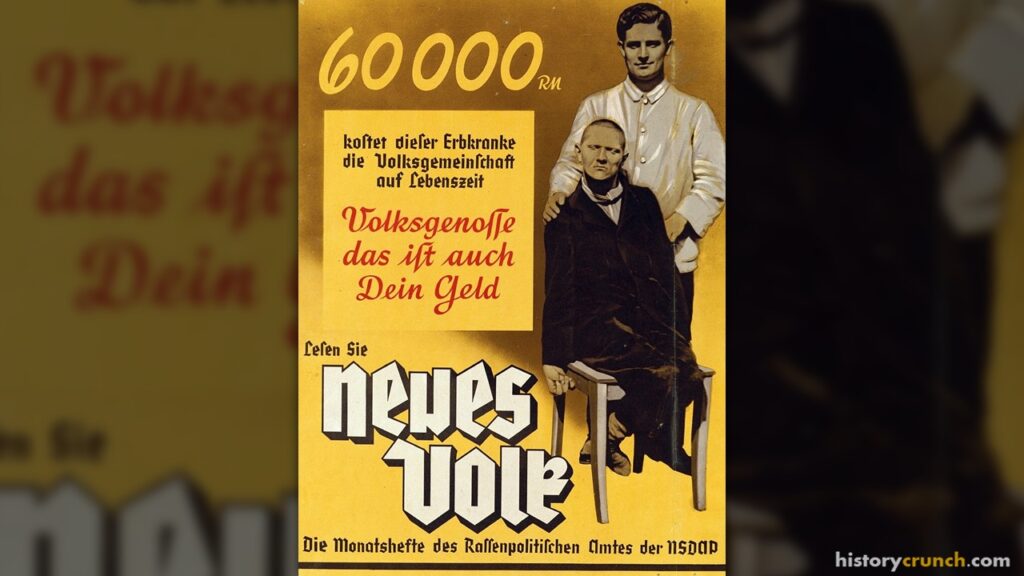
Eugenics developed as a theory along with the early development of genetics as a field of study, and while it was not unique to the Nazis, Germany was the country that practiced eugenics the most. Essentially, countries that practiced eugenics sought to eliminate certain human traits by preventing ‘undesirable’ people from reproducing. For Nazi Germany, the people with ‘undesirable’ genetic traits included: mentally and physically disabled people, the Jewish, the Polish, and Slavic people. The first victims of the Holocaust were mentally and physically disabled German citizens who the Nazi regime considered to be a burden on society. It was the view of Nazi officials that the care for these people was too expensive and they carried genetic traits that weakened the Aryan race. As such, the Nazis created the Euthanasia Program, which was designed to execute many of these people.
Under the Euthanasia Program Nazi doctors passed judgment on a disabled person based purely on viewing the patient’s file. If 2 out of 3 of the Nazi doctors deemed so, then the patient would be euthanized, meaning they were executed. These people were murdered with carbon monoxide gas in six killing centers set up in hospitals and asylums in Germany and Austria: Grafeneck, Brandenburg, Hartheim, Sonnenstein, Bernburg and Hadamar. Today, many historians view the Euthanasia Program as one of the first stages in the overall Holocaust and a clear example of Nazi eugenics policy. Another example of eugenics in the events of the Holocaust was the creation of the Nuremberg Laws. First passed in 1935, the Nuremberg Laws made German Jewish people second class citizens and banned sexual relations and marriage between Jewish people and persons of German blood. Officially, the Nuremberg Laws were two laws, the Reich Citizenship Law and the ’Law for the Protection of German Blood and Honor’. The goal of the laws for the Nazis was to limit the ability of Jewish genetic traits to spread and to legalize discrimination against Jewish people in Germany.
Finally, the creation of the concentration camps and death camps, as part of the Holocaust, is based upon the principles of eugenics because the Nazis were attempting to exterminate all of the groups of people they deemed to be ‘undesirable’. For example, during the Holocaust, which occurred from 1933 to 1945, over 11 million people were executed. In total, 6 million were Jewish people, while the other 5 million included several other groups, including: disabled people, homosexuals, communists, Soviet and Polish prisoners of war, Roma, and other religious and ethnic minorities.
Frequently Asked Questions
What is eugenics?
Eugenics is the idea that some genetic traits should be promoted while others are removed through controlled reproduction. Supporters wanted to stop people they saw as “undesirable” from having children. The theory grew alongside the early study of genetics in the late 1800s and early 1900s.
What was the Euthanasia Program?
The Euthanasia Program was a Nazi plan to kill disabled German citizens seen as a burden. Nazi doctors judged patients just by reading their files, and two of three doctors could order death. Victims were murdered with carbon monoxide gas at six killing centers in Germany and Austria.
Who were the “Aryans” in Nazi ideology?
Aryans were the “master race” that Hitler wanted to build in Germany. He described them as northern Europeans with traits like blonde hair and blue eyes. Hitler wanted these traits promoted while all others were restricted or removed from society.
What were the Nuremberg Laws?
The Nuremberg Laws were two laws first passed in 1935 that made German Jewish people second class citizens. They banned marriage and sexual relations between Jewish people and those of German blood. The goal was to stop Jewish genetic traits from spreading and to legalize discrimination.
How was eugenics linked to the Holocaust?
Eugenics gave the Nazis the reasoning behind the mass murder of the Holocaust. Between 1933 and 1945, over 11 million people were killed, including 6 million Jewish people. The concentration camps and death camps were built to remove every group the Nazis called “undesirable.”
Did other countries practice eugenics?
Yes, eugenics was not unique to the Nazis and several countries followed the theory. However, Germany practiced it the most and used it to justify mass killing. Many of these nations tried to stop people they viewed as “undesirable” from reproducing.
Cite This Article
To cite this article as a source, use one of the formats below.
MLA: Beck, Elias. “Eugenics in Nazi Germany: A Detailed Summary.” HistoryCrunch, 16 September 2026, https://historycrunch.com/eugenics-in-nazi-germany/.
APA: Beck, E. (2026). Eugenics in Nazi Germany: A Detailed Summary. HistoryCrunch. https://historycrunch.com/eugenics-in-nazi-germany/
Chicago: Beck, Elias. “Eugenics in Nazi Germany: A Detailed Summary.” HistoryCrunch. September 16, 2026. https://historycrunch.com/eugenics-in-nazi-germany/
Sources
- Ian Kershaw, Hitler (biography).
- German History in Documents and Images (GHDI)