Historians have identified several causes of the Korean War, which began in 1950. For instance, Korea divided into two separate governments after World War II: the communist North supported by the Soviet Union and China, and the capitalist South backed by the United States. Tensions escalated as both sides claimed the right to govern all of Korea. This eventually resulted in the outbreak of the Korean War. The conflict was ultimately rooted in Cold War rivalries, ideological differences, and unresolved issues from the division of Korea.
 FactsthatCrunch
What Was the Korean War?
The Korean War was the first major conflict following the end of World War II and the first war of the Cold War between the United States and Soviet Union. It was fought between North Korea and South Korea throughout the early part of the 1950s. The north had the support of communist allies including the Soviet Union and China, while the south had the support of the west with the United States. In fact, the United States played a large role in the conflict for several years. Due to the time period and nature of the Korean War, historians today consider it to be a Cold War era proxy warA conflict where two powerful rival nations support opposite sides instead of fighting each other directly. between the United States and Soviet Union. Today, historians generally agree on several main causes of the Korean War, including: the spread of communism during the Cold War, American containmentThe American Cold War policy of stopping communism from spreading into new countries., and Japanese occupation of Korea during World War II.
American Containment
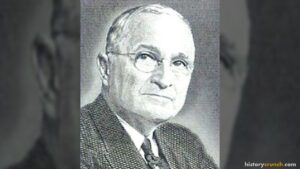
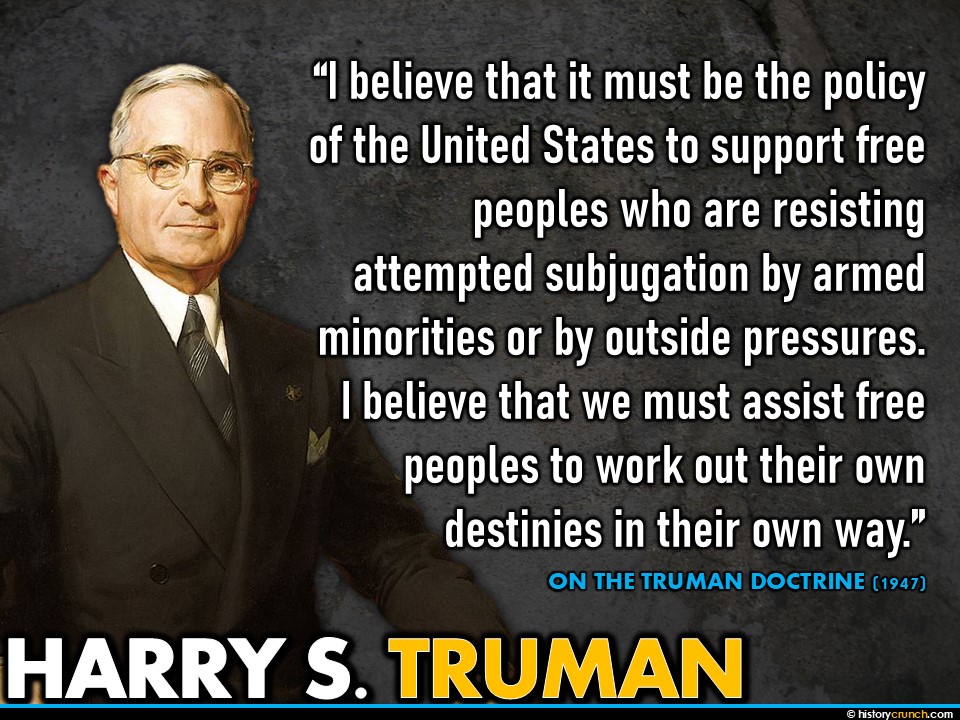
The main reason the United States got involved in Korea was the purpose of doing everything possible to keep communism from spreading around the world. Since the beginning of the Cold War the United States had practiced a policy of containment against the expansion of communism, and wanted to prevent the ideologyA system of political beliefs and ideas that guides how a government or movement operates. from taking root in different regions of the world. For its part, the Soviet Union had actively supported the spread of communism around the world in places such as Cuba, Korea, Vietnam and Eastern Europe. The American containment policy is often referred to as the Truman Doctrine, since American President Harry S. Truman argued that the United States should actively support the containment of Soviet Communism in the years immediately after World War II. Further to this idea, the reasons for American involvement in the Korean War are often held as part of the Domino TheoryThe Cold War belief that if one country fell to communism, its neighbors would fall next, like dominoes..
FactsthatCrunchThe Domino Theory
The Domino Theory was a Cold War era belief popular within the United States from the 1950s until the end of the Cold War. Based on the Truman DoctrinePresident Truman’s policy that the United States should actively resist the spread of Soviet communism worldwide., the theory held the idea that if Soviet communism was able to spread into a single country, then it had the potential to spread to all of the other surrounding countries. The basic idea was that the Americans needed to prevent the first domino from falling (country turning to communism) in order to prevent the spread of communism. As such, historians now argue that the United States used the Domino Theory to justify its involvement in Korea, just as it did in the later Vietnam War.
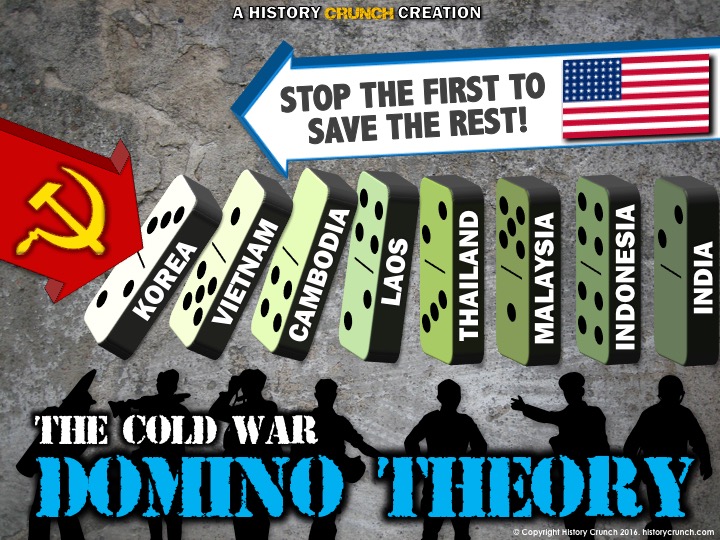
The Domino Theory was coined by President Truman in 1950 to justify American involvement in the Korean War.
The Division of Korea
The conflict in Korea had its beginnings in 1945, at the end of World War II. Because Japan had occupied the Korean Peninsula in the years before and during World War II, both the Soviet Union and the United States worked to liberate the region from the Japanese. The Soviet Union invaded the northern half of Korea in August of 1945 and liberated it from Japanese control, with American forces liberating the southern half soon after. By 1948, Korea had been officially split into two halves with separate governments, along the 38th parallelThe geographic line dividing Korea into a communist north and a capitalist south after World War II.. North Korea would be led during the war by Kim Il-Sung, who ruled over the country as a dictatorA ruler who holds total power over a country without democratic limits on their authority.. South Korea would be led by President Syngman Rhee, an anti-communist statesman.
Communist Expansion
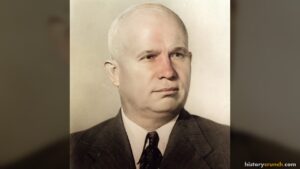
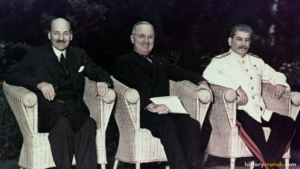
Between 1948 and 1950, the tensions between the two sides escalated until finally fighting began in 1950. During the Korean War, several key world leaders played significant roles. The President of the United States was Harry S. Truman, who today is best known for his decision to use the atomic bombs against Japan at the end of World War II. During the Korean War, he supported South Korea and the government of Syngman Rhee. On the side of North Korea was the Soviet Union, who was led by Joseph Stalin. Stalin is regarded today as a brutal dictator who oversaw the early years of the Cold War against the United States. Finally, Mao Zedong led China, which entered the war after the United Nations forces crossed the 38th parallel into North Korea. Mao Zedong was the communist ruler of China after having led the communist revolution in the country in 1949.
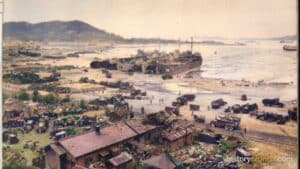
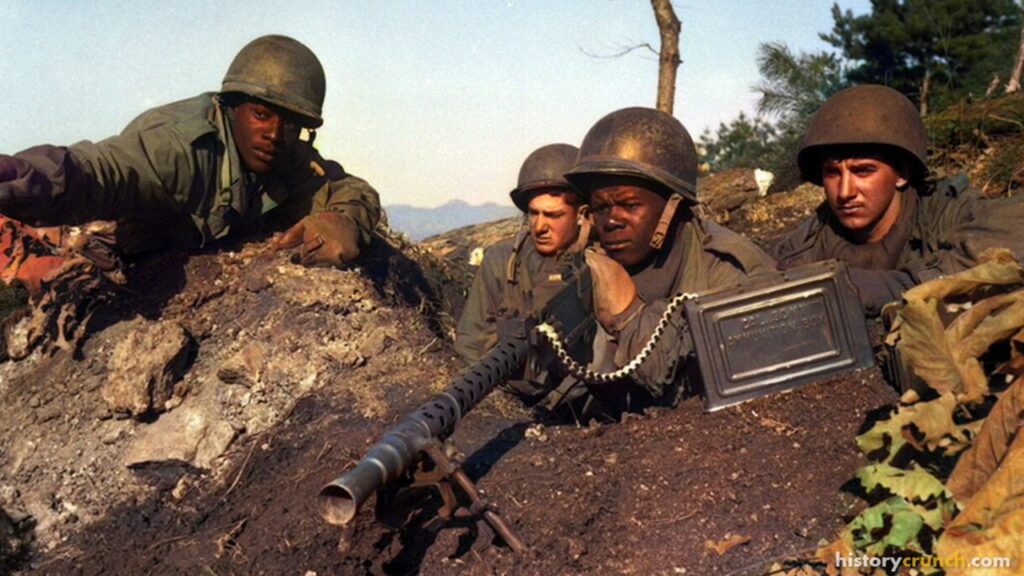
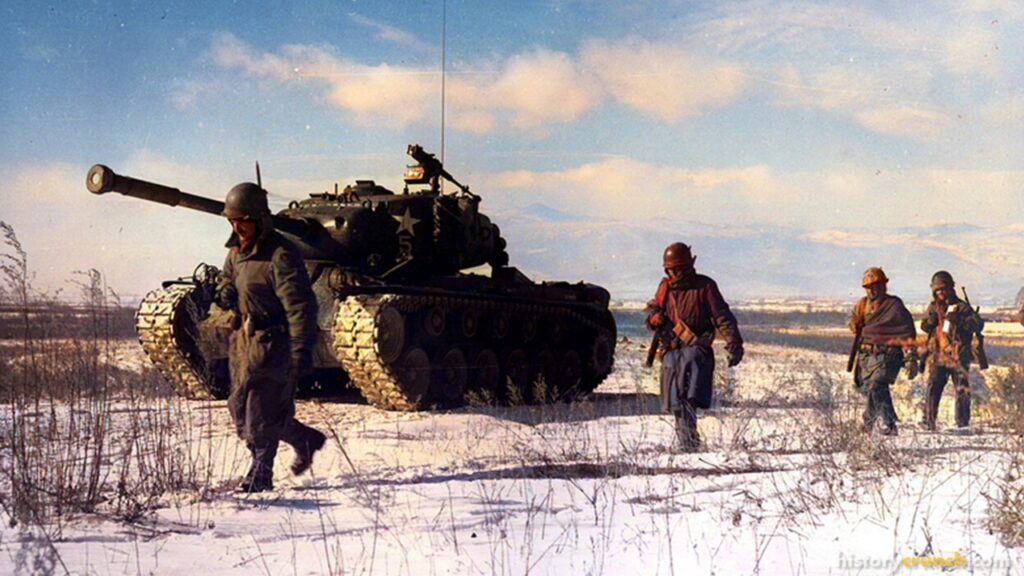
On June 25th, 1950, the conflict escalated when forces from North Korea invaded the south with the support of the Soviet Union. Over 80,000 troops marched from the north all the way to the southern borders where they captured Seoul, the capital of South Korea in just three days. The Korean War had begun.
Which capital city did North Korean forces capture within three days of invading on June 25th, 1950?
Korean War timeline · 1950 – 1953
Key Vocabulary
Containment
Truman Doctrine
Domino Theory
Proxy war
38th parallel
Dictator
Ideological
Frequently Asked Questions
What were the main causes of the Korean War?
The main causes were the spread of communism during the Cold War, the American policy of containment, and the earlier Japanese occupation of Korea. These forces split Korea into a communist North and a capitalist South after World War II. Both governments claimed the right to rule all of Korea, and this rivalry led to war in 1950.
Why did the United States get involved in the Korean War?
The United States got involved mainly to stop the spread of communism around the world. This goal came from its Cold War policy of containment, also known as the Truman Doctrine. American leaders feared that if one country turned communist, nearby countries would follow, an idea called the Domino Theory.
How did Korea become divided into North and South?
Korea was divided at the end of World War II in 1945 after Japan lost control of the peninsula. The Soviet Union liberated the northern half in August, and American forces liberated the south soon after. By 1948, the country had two separate governments split along the 38th parallel.
When did the Korean War begin?
The Korean War began on June 25th, 1950, when North Korean forces invaded the South with Soviet support. Over 80,000 troops pushed south and captured Seoul, the capital of South Korea, in just three days. This surprise attack marked the official start of the fighting.
Which world leaders played a role in the Korean War?
Several key leaders shaped the conflict on both sides. Harry S. Truman led the United States and supported South Korea under President Syngman Rhee. Joseph Stalin led the Soviet Union, Kim Il-Sung ruled North Korea, and Mao Zedong led China, which joined after United Nations forces crossed the 38th parallel.
Why is the Korean War called a Cold War proxy war?
The Korean War is called a proxy war because the United States and Soviet Union backed opposite sides without fighting each other directly. The Soviet Union and China supported North Korea, while the United States supported South Korea. It was the first major armed conflict of the Cold War era.
Cite This Article
To cite this article as a source, use one of the formats below.
MLA: Beck, Elias. “Causes of the Korean War: A Detailed Summary.” HistoryCrunch, 18 September 2026, https://historycrunch.com/causes-of-the-korean-war/.
APA: Beck, E. (2026). Causes of the Korean War: A Detailed Summary. HistoryCrunch. https://historycrunch.com/causes-of-the-korean-war/
Chicago: Beck, Elias. “Causes of the Korean War: A Detailed Summary.” HistoryCrunch. September 18, 2026. https://historycrunch.com/causes-of-the-korean-war/
Sources
- Truman Presidential Library
- William Stueck, The Korean War: An International History.
- Sheila Miyoshi Jager, Brothers at War: The Unending Conflict in Korea.