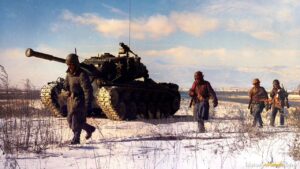
Nikita Khrushchev was one of the most significant Soviet leaders of the 20th century. In fact, he led the Soviet Union during some of the most dangerous years of the Cold War and helped change the country after the death of Joseph Stalin. More specifically, he served as the main Soviet leader from 1953 to 1964, and he is remembered for de-Stalinization, the Berlin Crisis, the Cuban Missile Crisis, and his attempts to reform the Soviet system.
 FactsthatCrunch
Khrushchev delivered his 1956 secret speech condemning Stalin's cult of personality, which reshaped how communists around the world understood Soviet rule. His words launched the de-Stalinization campaign, which challenged the ideas Stalin had built Soviet society around and opened debates that spread across the Soviet bloc.
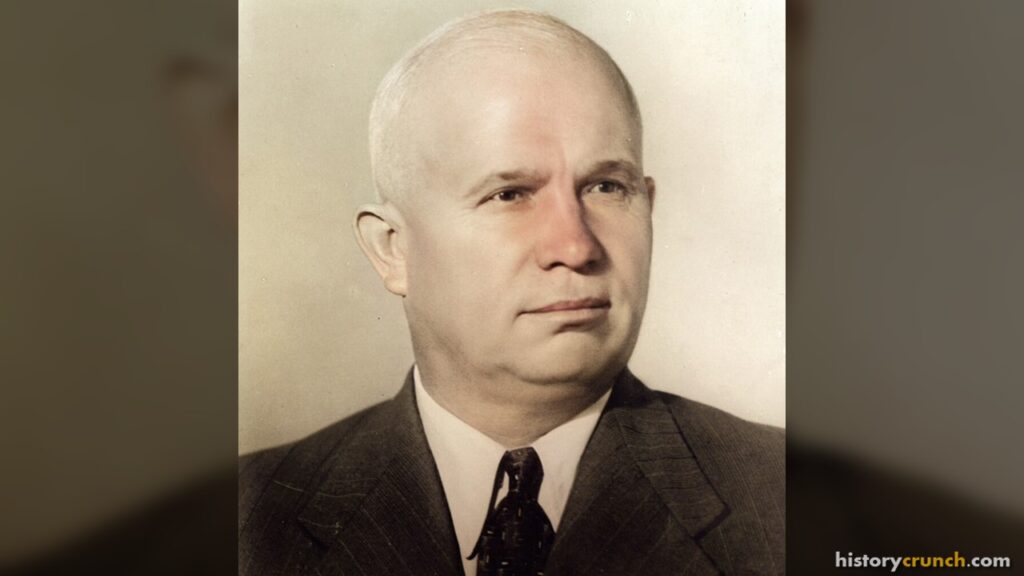
Nikita Khrushchev – Early Life
Nikita Sergeyevich Khrushchev was born on April 17th, 1894, in Kalinovka, in the Russian Empire, near the modern Russian-Ukrainian border. He came from a poor family, and his father worked as a miner. As a young man, Khrushchev worked in industrial and mining jobs, which gave him experience with the working-class life that later shaped his political image.
Before he became a major Soviet leader, Khrushchev rose through the world created by the Russian Revolution. He became involved in workers’ organizations, joined the Communist Party in 1918, and served with the Red Army during the Russian Civil War. Therefore, his early life was closely tied to the rise of the Soviet state itself.
Nikita Khrushchev – Rise in Soviet Politics
After the Russian Civil War, Khrushchev steadily moved upward in the Communist Party. He worked in party organizations in Ukraine and later in Moscow, where he gained a reputation as a loyal and energetic official. During the 1930s, he rose to prominence under Joseph Stalin and became deeply connected to the Soviet leadership. In fact, by the late 1930s he had become a leading party figure in Ukraine and a member of the PolitburoOne of the most powerful governing bodies inside the Soviet Communist Party, made up of top leaders., which was one of the most powerful bodies in the Soviet government.
Khrushchev’s rise was significant because it placed him near the center of Soviet power before and during World War II. He worked in Ukraine, helped oversee party rule, and later returned to Moscow in the postwar years. After Stalin died in March of 1953, a struggle for power followed in the Soviet Union. Khrushchev eventually gained control and became first secretaryThe top leadership position in the Soviet Communist Party, making its holder the most powerful political figure in the country. of the Communist Party in 1953, which made him the leading political figure in the country. He later also became premier in 1958.
FactsthatCrunchNikita Khrushchev – Leadership of the Soviet Union
When Khrushchev took power, he tried to move the Soviet Union away from some of the harshest features of Stalin’s rule. The most famous example came on February 25th, 1956, when he delivered his “secret speech” attacking Stalin’s cult of personality and condemning many of Stalin’s abuses. This speech helped begin de-Stalinization, which was the effort to reduce Stalin’s image and reform parts of the Soviet system. This was significant because it shocked many communists and changed politics across the Soviet bloc.
Although he criticized Stalin, he was still willing to use force to keep Soviet control in Eastern Europe. In 1956, unrest spread through Eastern Europe after de-StalinizationThe campaign to reduce Stalin’s glorified image and reform the harshest parts of the Soviet system he created. began, and the Hungarian Revolution broke out. Khrushchev allowed some flexibility in places such as Poland, but Soviet forces crushed the uprising in Hungary. As such, his rule mixed reform with repression.
Khrushchev also played a central role in several major Cold War confrontations with the United States. In November of 1958, he demanded that the Western powers leave West Berlin, which began the Berlin Crisis. The crisis dragged on for several years and eventually led to the building of the Berlin Wall on August 12th and 13th, 1961. The wall became one of the clearest symbols of Cold War division in Europe.
Another major crisis followed in October of 1962 with the Cuban Missile Crisis. Khrushchev supported placing Soviet nuclear missiles in Cuba, partly because of American missiles in Turkey and Italy and partly because of fears of another American-backed attack on Cuba after the Bay of Pigs Invasion. The crisis brought the Soviet Union and the United States dangerously close to nuclear war before a negotiated settlement ended it on October 28th, 1962. Although the crisis ended peacefully, many in the Soviet Union saw the final compromise as embarrassing for Khrushchev. At the time, the American president was John F. Kennedy.
Khrushchev also tried to improve Soviet life at home. He pushed agricultural reforms, including the Virgin Lands campaignKhrushchev’s agricultural program aimed at increasing grain production by farming previously unused land., in an effort to increase grain production. However, these efforts had mixed results, and Soviet agriculture remained a major weakness. Therefore, even though Khrushchev was energetic and willing to try new ideas, many of his domestic reforms did not solve the deeper problems of the Soviet economy.
FactsthatCrunchMany people believe Khrushchev's 1956 speech attacking Stalin was delivered openly to the full Soviet public and was reported freely in Soviet newspapers.
The speech was delivered on February 25th, 1956, in a closed session of the 20th Party Congress, meaning ordinary citizens and foreign delegates were excluded. Soviet newspapers did not publish it, and the Soviet government treated it as a secret document. The text reached the wider world only after a copy was obtained by Western intelligence and released by the U.S. State Department later that same year.
Nikita Khrushchev – Removal from Power and Death
By the early 1960s, many Soviet officials had grown unhappy with Khrushchev. Some disliked his unpredictable style, while others blamed him for agricultural failures, foreign policy problems, and the damage done to Soviet prestige during the Cuban Missile Crisis. In October of 1964, he was removed from power in an internal party coupA sudden, secret takeover of a government or leadership position by a group from within. led by Leonid Brezhnev and other Soviet leaders. His fall showed that even the leader of the Soviet Union could be pushed aside by the Communist Party elite.
After his removal, Khrushchev lived mostly in retirement and never returned to political power. He died on September 11th, 1971, in Moscow. Unlike some earlier Soviet leaders, he did not receive the same level of public honor at death, which reflected his mixed reputation inside the Soviet Union.
FactsthatCrunchThe removal of Khrushchev showed that the Communist Party elite, not any single leader, held the final say over Soviet power. His fall came from a buildup of policy failures and resentment rather than a single dramatic act.
Nikita Khrushchev – Significance
Nikita Khrushchev was significant because he helped reshape the Soviet Union after Stalin and played a central role in some of the most important moments of the Cold War. His secret speech and de-Stalinization campaign weakened Stalin’s image and opened the door to important political changes. As well, his actions in Berlin and Cuba placed him at the center of the global struggle between the Soviet Union and the United States.
At the same time, Khrushchev remains a debated historical figure. Some people remember him as the Soviet leader who tried to reform the system and reduce some of its worst abuses. Others focus on his role in crushing opposition in Eastern Europe and bringing the world close to nuclear war. Regardless, Nikita Khrushchev was one of the most important political leaders of the Cold War era.
FactsthatCrunch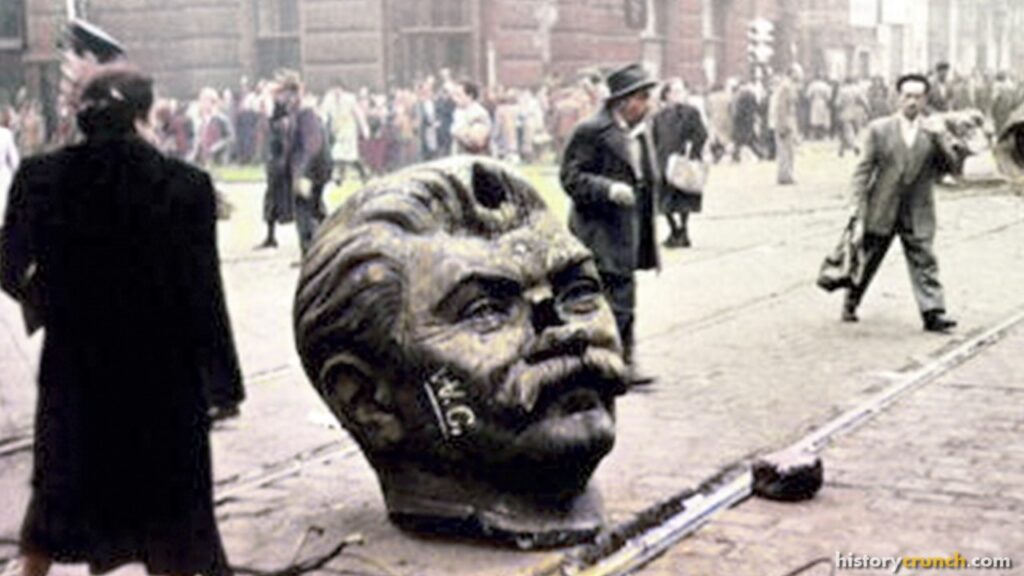 Black & whiteColor
Key Vocabulary
Cult of personality
De-Stalinization
Politburo
First secretary
Virgin Lands campaign
Coup
Frequently Asked Questions
What was Nikita Khrushchev’s secret speech?
The secret speech was a talk Khrushchev gave on February 25th, 1956, that attacked Joseph Stalin. In it, he condemned Stalin’s cult of personality and many of his abuses of power. The speech shocked communists and helped begin de-Stalinization across the Soviet bloc.
What was de-Stalinization?
De-Stalinization was the effort to reduce Stalin’s image and reform parts of the Soviet system. Khrushchev led this campaign after he took power in 1953. It weakened Stalin’s reputation but also stirred unrest in Eastern Europe, including the Hungarian Revolution of 1956.
What role did Khrushchev play in the Cuban Missile Crisis?
Khrushchev supported placing Soviet nuclear missiles in Cuba in October of 1962. He did this partly because of American missiles in Turkey and Italy and fears of another attack on Cuba. The crisis nearly led to nuclear war before a settlement ended it on October 28th, 1962.
How did Khrushchev lose power?
Khrushchev was removed from power in an internal party coup in October of 1964. The coup was led by Leonid Brezhnev and other unhappy Soviet officials. They blamed him for farming failures, foreign policy problems, and the damage done during the Cuban Missile Crisis.
When did Khrushchev lead the Soviet Union?
Khrushchev was the main Soviet leader from 1953 to 1964. He became first secretary of the Communist Party in 1953 after Stalin died in March of that year. He later also became premier in 1958, which gave him control over both the party and the government.
Cite This Article
To cite this article as a source, use one of the formats below.
MLA: Millar, B. “Nikita Khrushchev: A Detailed Biography.” HistoryCrunch, 12 October 2026, https://historycrunch.com/nikita-khrushchev/.
APA: Millar, B. (2026). Nikita Khrushchev: A Detailed Biography. HistoryCrunch. https://historycrunch.com/nikita-khrushchev/
Chicago: Millar, B. “Nikita Khrushchev: A Detailed Biography.” HistoryCrunch. October 12, 2026. https://historycrunch.com/nikita-khrushchev/
Sources
- State Department — Office of the Historian
- Wilson Center Digital Archive
- John Lewis Gaddis, The Cold War: A New History.
- Vladislav Zubok, A Failed Empire.