The Berlin Crisis of 1961 was one of the most significant confrontations of the Cold War and one of the defining events of the early years of President John F. Kennedy’s presidency. Throughout 1961, Soviet Premier Nikita Khrushchev applied intense pressure on the Western powers to change the status of West Berlin, threatening to sign a separate peace treaty with East Germany that would have cut off Western access to the city. When diplomacy failed to resolve the crisis, East Germany, backed by the Soviet Union, began constructing a wall dividing East and West Berlin on August 13th, 1961. The Berlin Wall would stand for 28 years and become one of the most powerful symbols of the Cold War.
What Was the Cold War?
The Cold War was a period of intense political, ideologicalRelating to a set of beliefs about how society and government should be organized., and military tension between the United States and the Soviet Union that lasted from the end of World War II in 1945 until the early 1990s. At its heart, the Cold War was a ‘face off’ or competition between the two superpowers, rooted in a fundamental ideological conflict between the capitalism and democracy of the United States and the communism and dictatorship of the Soviet Union. Although the Cold War never escalated into direct military conflict between the two nations, it involved proxy wars, nuclear arms races, and a series of dangerous confrontations and crises. The Berlin Crisis of 1961 was one of the most serious of these confrontations and brought the two superpowers to the edge of direct military conflict in the heart of Europe.
Berlin Crisis of 1961 – Background
To fully understand the Berlin Crisis of 1961, it is first important to understand the situation in Berlin that led to it. Following the end of World War II in 1945, Germany was divided into four occupation zones controlled by the Allied Powers, including: the United States, Britain, France, and the Soviet Union. The German capital of Berlin was similarly divided, with the western sectors of the city controlled by the United States, Britain, and France, while the eastern sector was controlled by the Soviet Union. As the Cold War deepened, West Berlin became a capitalist city located deep within Soviet-controlled East Germany.
The status of Berlin had already produced one major Cold War crisis. For instance, from June of 1948 to May of 1949, the Soviet Union had blockadedBlocked all routes into or out of an area to cut off supplies and access. land and rail access to West Berlin in an attempt to force the western Allies out of the city. This event, known as the Berlin Blockade, was defeated by the massive Allied airlift operation that supplied the city from the air for nearly a year. Despite this Soviet setback, the question of Berlin’s status remained unresolved throughout the 1950s and continued to be a source of serious tension between the two superpowers.
A new crisis began on November 10th, 1958, when Khrushchev delivered a speech demanding that the western Allies withdraw their forces from West Berlin within six months. He threatened that if they did not do so, the Soviet Union would sign a separate peace treaty with East Germany and hand over control of access routes to West Berlin to the East German government. This would have effectively given the Soviet Union and East Germany full control over the city. American President Dwight D. Eisenhower firmly rejected these demands and a growing crisis continued to build throughout 1959 and 1960.
 FactsthatCrunch
On November 10th, 1958, Soviet Premier Nikita Khrushchev delivered a speech demanding that Western powers withdraw their forces from West Berlin within six months.
Berlin Crisis of 1961 – The Vienna Summit
When John F. Kennedy became President of the United States in January of 1961, he had hoped to end the crisis and lower the tensions of the moment. In June of 1961, Kennedy traveled to Vienna, Austria, for a summitA high-level meeting between the leaders of different countries to discuss major issues. meeting with Khrushchev intended to reduce tensions and find common ground on key issues.
However, the Vienna Summit, held on June 3rd and 4th, 1961, proved to be a tense and difficult meeting. Khrushchev renewed his demands over Berlin, threatening once again to sign a separate peace treaty with East Germany if the Western powers did not withdraw from the city within six months. Kennedy made clear that the United States was committed to maintaining its presence in West Berlin and would defend its rights there militarily if necessary. The summit ended without any agreement on Berlin or other key issues.
In an address to the American people on July 25th, 1961, Kennedy responded to the Soviet pressure by announcing a major increase in American military spending and the activation of 150,000 reservistsCivilians who have military training and can be called into active duty during a crisis.. He declared that the United States would defend West Berlin and that an attack on the city would be treated as an attack on the western alliance of NATO as a whole. As such, both sides had made clear their willingness to risk a major confrontation over Berlin, making the summer of 1961 one of the most dangerous periods of the entire Cold War.
FactsthatCrunchUlbricht believed the open border between East and West Berlin was the most urgent threat to East Germany's survival. He argued that the steady loss of workers and professionals to the West was wrecking the country's economy and could not continue. He pressed Khrushchev for permission to close the border in letters, at a Warsaw Pact meeting in March 1961, and again at a face-to-face meeting in Moscow on August 1st, 1961, making clear he saw sealing the border as the only practical solution.
Berlin Crisis of 1961 – Construction of the Berlin Wall
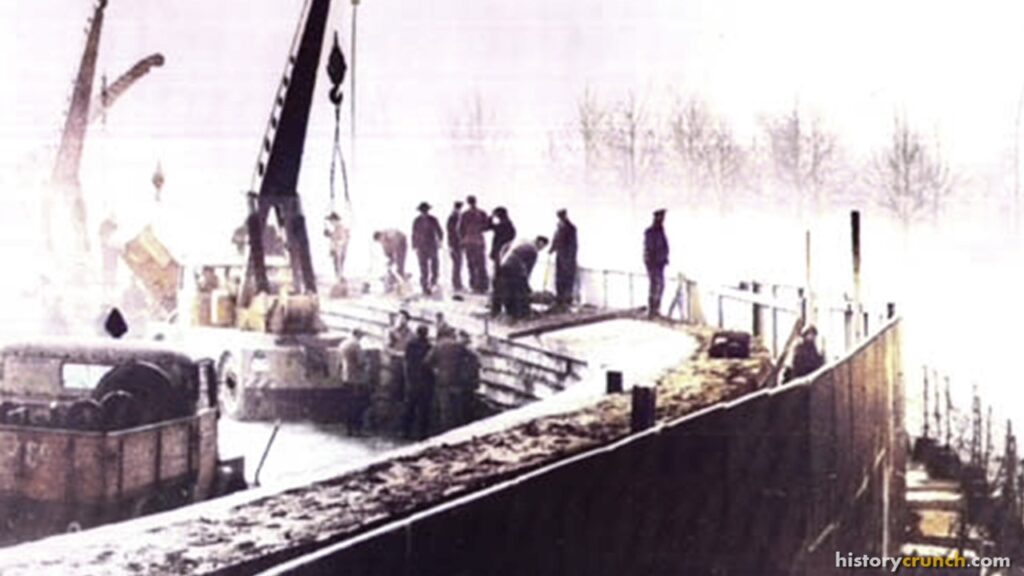
While diplomatic tensions between Kennedy and Khrushchev escalated throughout the summer of 1961, East German leader Walter Ulbricht was pressing the Soviet Union to allow him to close the border between East and West Berlin. In fact, thousands of East Germans were fleeing East Germany by crossing into West Berlin. As such, Khrushchev agreed, and on the night of August 12th to 13th, 1961, East German authorities began sealing the border between East and West Berlin with barbed wire. Within days, construction of a permanent concrete wall had begun, and the two halves of the city were physically divided for the first time.
The construction of the wall shocked the people of Berlin and the western world. Families who had gone to bed in one part of the city woke up to find themselves permanently separated from relatives, friends, and workplaces in the other part. For instance, East Berliners who worked in West Berlin were suddenly cut off from their jobs, and many people were separated from family members without warning. East German border guards were posted along the wall with orders to prevent anyone from crossing without authorization. Armed guards were stationed in watchtowers overlooking what became known as the ‘death stripThe heavily patrolled open area between two parallel sections of the Berlin Wall where guards could shoot escapees.‘, the heavily patrolled area between two parallel walls. Over the 28 years that the Berlin Wall stood, at least 140 people were killed attempting to cross it.
As a symbolic gesture of American commitment to West Berlin, Kennedy sent Vice President Lyndon B. Johnson and retired General Lucius D. Clay to West Berlin on August 19th, 1961, where they were greeted by the population of the city. Clay had organized the Berlin Airlift in 1948 and was a popular figure to the people of West Berlin.
During the Berlin Crisis of 1961, was each of these a reason East Germany built the Berlin Wall, or a direct result of the wall's construction?
Berlin Crisis of 1961 – Checkpoint Charlie
The most dangerous direct confrontation of the Berlin Crisis came in October of 1961 at Checkpoint Charlie, the main crossing point between East and West Berlin used by Allied military personnel and diplomats. A dispute arose over whether East German or Soviet guards had the authority to inspect the documents of American diplomatic personnel crossing through the checkpoint. The United States insisted that under postwar agreements, only Soviet officers had the right to inspect Allied personnel, not East German guards. When an American diplomat was stopped by East German guards on October 22nd, 1961, and required to show his papers, the United States responded by stationing tanks at Checkpoint Charlie pointing toward the East German border.
The Soviet Union responded by moving its own tanks to the East German side of the checkpoint. For approximately 16 hours, American and Soviet tanks sat facing each other at a distance of approximately 100 yards (91 meters) at Checkpoint Charlie, in what became one of the most direct and dangerous military standoffsA situation in which two opposing sides face each other directly but neither is willing to back down first. of the entire Cold War. The threat of a potential nuclear war hung over the situation and added to the tension. Regardless, the confrontation was eventually resolved through communications between Kennedy and Khrushchev, with both sides agreeing to withdraw their tanks simultaneously. As such, the Checkpoint Charlie standoff was resolved peacefully, but it demonstrated just how close the Berlin Crisis had brought the two superpowers to direct military conflict.
FactsthatCrunchThe Checkpoint Charlie tank standoff of October 1961 brought American and Soviet armor face to face across the Berlin border crossing, and both sides worked through direct communications to pull back without firing a shot.
Berlin Crisis of 1961 – Significance
The Berlin Crisis of 1961 was significant for several important reasons. First, the construction of the Berlin Wall, while a deeply troubling development that violated the freedom of the people of Berlin, effectively resolved the immediate crisis over the city. By sealing the border and stopping the flow of refugees, the East German government stabilized its population and relieved the pressure that had been driving the crisis. As such, the Berlin Wall brought a degree of stability to the Berlin situation, even as it became one of the most hated symbols of communist repression.
Second, the Berlin Crisis demonstrated the dangerous potential of Cold War confrontations to escalate toward direct military conflict. The Checkpoint Charlie standoff, in which American and Soviet tanks faced each other directly, showed how quickly a dispute over procedure and protocol in a divided city could bring two nuclear powers to the edge of war. As such, the crisis contributed to both sides’ understanding of the need for direct communication channels between the American and Soviet leadership, which eventually produced the Moscow-Washington hotlineA direct communication link set up between the American and Soviet leadership to manage future crises quickly. established in 1963.
Third, the Berlin Wall became one of the most powerful symbols of the Cold War and of the stark contrast between life in the democratic West and the communist East. The image of a wall built not to keep enemies out but to keep a country’s own people in became a major propaganda point for the western nations throughout the Cold War. In June of 1963, Kennedy visited West Berlin and delivered one of the most famous speeches of his presidency to a crowd of more than 120,000 people, declaring in solidarity with the people of West Berlin: “Ich bin ein Berliner,” meaning “I am a Berliner.” The speech became one of the most memorable moments of the Cold War era and reinforced the symbolic importance of Berlin in the conflict between democracy against communism.
Ich bin ein Berliner. (I am a Berliner.)
Explore Cold War · 1947 – 1991
Keep exploring Cold War with these History Crunch resources.
Key Vocabulary
Ideological
Blockaded
Summit
Reservists
Death strip
Standoff
Hotline
Frequently Asked Questions
What caused the Berlin Crisis of 1961?
The crisis began when Soviet Premier Nikita Khrushchev pressured the Western powers to leave West Berlin. He threatened to sign a separate peace treaty with East Germany that would cut off Western access to the city. Large numbers of East Germans were also fleeing to the West through Berlin, which pushed East Germany to act.
When was the Berlin Wall built?
East German authorities began sealing the border with barbed wire on the night of August 12th to 13th, 1961. Within days, workers started building a permanent concrete wall. The wall divided East and West Berlin for the first time and stood for 28 years.
What happened at Checkpoint Charlie in 1961?
American and Soviet tanks faced each other at Checkpoint Charlie in October of 1961 in a tense standoff. The dispute began over whether East German guards could inspect American diplomatic personnel. The tanks sat about 100 yards (91 meters) apart for roughly 16 hours before both sides agreed to pull back.
How did President Kennedy respond to the crisis?
Kennedy made clear that the United States would defend West Berlin, even with military force. In July of 1961, he announced higher military spending and activated 150,000 reservists. He later visited West Berlin in June of 1963 and gave his famous “Ich bin ein Berliner” speech.
Why is the Berlin Crisis of 1961 important?
The crisis showed how quickly a Cold War dispute could bring two nuclear powers close to war. The Berlin Wall ended the immediate crisis by stopping the flow of refugees, but it became a hated symbol of communist control. The tense standoff also helped lead to the Moscow-Washington hotline in 1963.
Cite This Article
To cite this article as a source, use one of the formats below.
MLA: Millar, B. “Berlin Crisis of 1961: A Detailed Summary.” HistoryCrunch, 9 October 2026, https://historycrunch.com/berlin-crisis-of-1961/.
APA: Millar, B. (2026). Berlin Crisis of 1961: A Detailed Summary. HistoryCrunch. https://historycrunch.com/berlin-crisis-of-1961/
Chicago: Millar, B. “Berlin Crisis of 1961: A Detailed Summary.” HistoryCrunch. October 9, 2026. https://historycrunch.com/berlin-crisis-of-1961/
Sources
- John Lewis Gaddis, The Cold War: A New History.
- State Department — Office of the Historian
- Odd Arne Westad, The Global Cold War.
- Wilson Center Digital Archive