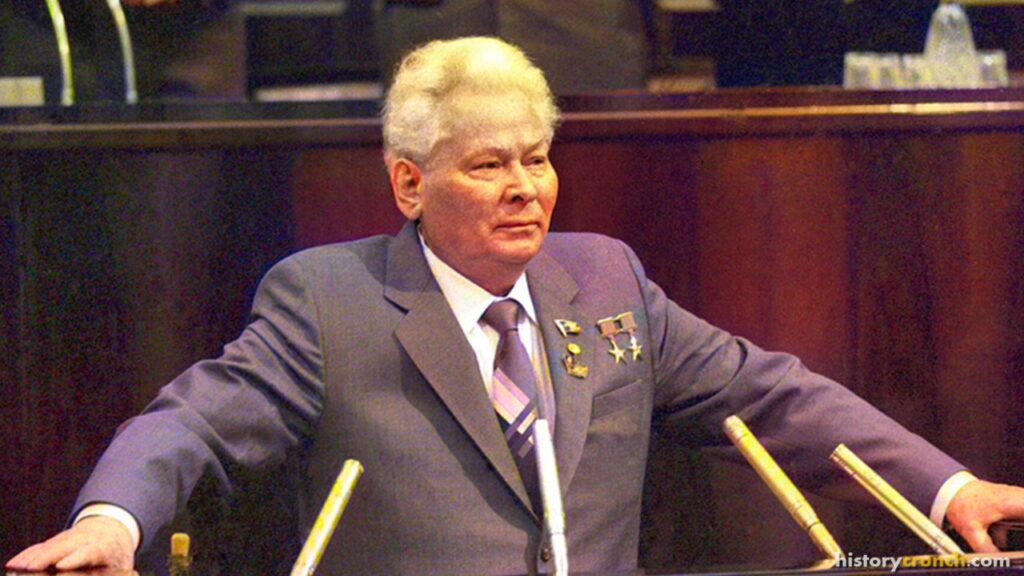
Konstantin Chernenko was the main Soviet leader from February 13th, 1984, to March 10th, 1985, and his brief rule showed how the Soviet Union’s aging leadership was struggling just before Mikhail Gorbachev came to power. As such, he was an important figure in the Cold War in the 1980s.
 FactsthatCrunch
Chernenko rose through Soviet politics almost entirely because of his close working relationship with Leonid Brezhnev, serving under him in Moldavia in 1948 and advancing as Brezhnev gained power over the following decades. His rule is significant because it represented the final stage of the Soviet Union's older, cautious leadership style before Mikhail Gorbachev introduced major reforms. His death on March 10th, 1985, opened the way for Gorbachev, whose leadership would transform the Soviet Union and the Cold War.
Konstantin Chernenko – Early Life
Konstantin Ustinovich Chernenko was born on September 24th, 1911, in Bolshaya Tes, in the Yenisey Governorate of the Russian Empire. He came from a poor peasant family in Siberia, and his early life was far different from the world of top Soviet politics that he later entered. As a young man, he joined the KomsomolThe youth organization of the Soviet Communist Party that young people joined before becoming full party members. in 1926, became a full member of the Communist Party in 1931, and also served in the Soviet frontier guards from 1930 to 1933.
After his military service, Chernenko worked as a propagandistSomeone whose job was to spread government-approved ideas and messages to influence public opinion. in the Krasnoyarsk region. This was important because propaganda work was one of the main ways loyal Communist Party officials could rise through the Soviet system. Therefore, his early career helped place him on the path toward higher political office.
FactsthatCrunchThe Komsomol was the Soviet Communist Party's youth organization, and it served as the required training ground before a young person could apply for full party membership.
Konstantin Chernenko – Rise in Soviet Politics
Chernenko’s rise in politics was closely connected to Leonid Brezhnev. In 1948, he became head of the propaganda department in Moldavia, where he served under Brezhnev. As Brezhnev moved upward in the Soviet leadership during the 1950s and 1960s, Chernenko advanced with him. This relationship became the key reason Chernenko later reached the highest levels of Soviet power.
After Brezhnev became the top Soviet leader in 1964, Chernenko was appointed head of the General Department of the Communist Party’s Central Committee. In that position, he helped set the agenda for PolitburoThe top decision-making committee of the Soviet Communist Party, which held real governing power. meetings and draft important party decrees. He became a full member of the Central Committee in 1971 and a full member of the Politburo in 1978. As such, even though he was not well known outside the Soviet Union, he held an important role inside the Soviet political system.
When Brezhnev died on November 10th, 1982, Chernenko was considered as a possible successor, but Yuri Andropov became leader instead. However, after Andropov died on February 9th, 1984, Chernenko was chosen as general secretaryThe highest leadership position in the Soviet Communist Party, making the holder the most powerful person in the USSR. on February 13th, 1984. This was significant because the Soviet leadership passed once again to an older and less reform-minded figure at a time when the country was already weakening.
FactsthatCrunchKonstantin Chernenko – Leadership of the Soviet Union
Chernenko’s time in power was very short, and his poor health limited what he could do. Even so, his rule generally represented a return to the more conservative style of the Brezhnev era. He pulled back from some of Andropov’s limited reform efforts, and many Soviet leaders treated him as a transitional figureA leader seen as temporary, filling a gap between two more important or lasting rulers. rather than a strong long-term ruler. In fact, because he was often too ill to lead actively, Mikhail Gorbachev increasingly handled important duties such as chairing Politburo meetings when Chernenko was absent.
Chernenko also led during a tense stage of the Cold War. Soviet foreign policy took on a harsher tone, and under his leadership the Soviet Union boycottedRefused to participate in an event as a form of political protest. the 1984 Summer Olympics in Los Angeles. The official explanation focused on security concerns, but the boycott was widely understood as a response to the United States boycott of the 1980 Moscow Olympics. Therefore, Chernenko’s rule reflected continuing Cold War rivalry rather than a major move toward better relations with the West.
At the same time, Chernenko did not solve the Soviet Union’s deeper problems. The economy remained weak, the leadership remained old and cautious, and no major new direction appeared under him. Because of this, his brief rule is often seen as the last stage of the old Soviet order before larger reforms began under Gorbachev.
Why did the Soviet Union boycott the 1984 Summer Olympics in Los Angeles?
Konstantin Chernenko – Death
Chernenko had serious health problems long before he became leader, including emphysemaA serious lung disease that makes breathing very difficult and worsens over time. and heart trouble. His condition worsened during his time in office, and this greatly reduced his ability to govern. He died on March 10th, 1985, in Moscow, at the age of 73. The next day, Mikhail Gorbachev was chosen to succeed him as the new leader of the Soviet Union.
FactsthatCrunchWhen Chernenko's health made him unable to govern, Mikhail Gorbachev stepped in to chair Politburo meetings, giving Gorbachev real governing experience and signaling to Soviet leaders that a younger generation was ready to take charge.
Chernenko was so ill so often that Gorbachev regularly ran Politburo meetings in his place, giving Gorbachev direct authority over the Soviet leadership's day-to-day decisions before he ever held the top job.
This handoff of duties showed senior Soviet officials that Gorbachev could handle power, making it easier for them to choose him as general secretary the day after Chernenko died on March 10th, 1985.
The pattern of an unwell leader leaning on a younger deputy exposed how fragile the old Soviet system had become, with real decisions quietly shifting away from the official top figure.
Because Gorbachev had already built working relationships across the Politburo during Chernenko's absences, he entered office with political allies in place, which helped him push forward the sweeping reforms that later reshaped the Cold War.
Konstantin Chernenko – Significance
Konstantin Chernenko was significant because he represented the final stage of the Soviet Union’s older leadership before the reform era of the mid-1980s. His short rule showed that the Soviet system was becoming increasingly weak, cautious, and unable to respond effectively to major economic and political problems.
At the same time, Chernenko remains a relatively minor figure compared with leaders such as Khrushchev, Brezhnev, and Gorbachev. He did not introduce major reforms or lead during a dramatic breakthrough, but his brief time in power helped mark the end of one Soviet era and the beginning of another. This is significant because his death opened the way for Gorbachev, whose leadership would transform the Soviet Union and the Cold War.
FactsthatCrunchHow did Chernenko's rule close out the old Soviet order before Gorbachev's reforms began?
Key Vocabulary
Komsomol
Propagandist
Politburo
General secretary
Emphysema
Transitional figure
Boycotted
Frequently Asked Questions
Who was Konstantin Chernenko?
Konstantin Chernenko was the leader of the Soviet Union from February 13th, 1984, to March 10th, 1985. He was born into a poor peasant family in Siberia in 1911 and rose through the Communist Party over several decades. His short rule is often seen as the final stage of the old Soviet order before major reforms began.
How did Chernenko rise to power in the Soviet Union?
Chernenko rose mainly through his close ties to Leonid Brezhnev. He first served under Brezhnev in Moldavia in 1948 and advanced as Brezhnev gained power in the 1950s and 1960s. After Brezhnev became the top leader in 1964, Chernenko took charge of the Central Committee’s General Department.
Why was Chernenko’s rule so short?
Chernenko’s rule was short because of his very poor health. He suffered from emphysema and heart trouble long before taking office, and his condition grew worse while he led. He was often too ill to govern, and he died after just over a year in power.
Why did the Soviet Union boycott the 1984 Olympics under Chernenko?
The Soviet Union boycotted the 1984 Summer Olympics in Los Angeles during Chernenko’s leadership. The official reason given was security concerns about the athletes. Most observers saw it as payback for the United States boycott of the 1980 Moscow Olympics, which showed that Cold War tension was still high.
Who succeeded Chernenko as Soviet leader?
Mikhail Gorbachev succeeded Chernenko as leader of the Soviet Union. Chernenko died on March 10th, 1985, in Moscow, and Gorbachev was chosen the next day. Gorbachev had already handled many duties while Chernenko was too ill to work, and his reforms would later transform the country.
Cite This Article
To cite this article as a source, use one of the formats below.
MLA: Millar, B. “Konstantin Chernenko: A Detailed Biography.” HistoryCrunch, 12 October 2026, https://historycrunch.com/konstantin-chernenko/.
APA: Millar, B. (2026). Konstantin Chernenko: A Detailed Biography. HistoryCrunch. https://historycrunch.com/konstantin-chernenko/
Chicago: Millar, B. “Konstantin Chernenko: A Detailed Biography.” HistoryCrunch. October 12, 2026. https://historycrunch.com/konstantin-chernenko/
Sources
- State Department — Office of the Historian
- Wilson Center Digital Archive
- Odd Arne Westad, The Global Cold War.