Propaganda in the Cold War was one of the most important aspects of the conflict between the United States and the Soviet Union. Unlike previous wars, the Cold War was not fought primarily on battlefields but through a sustained competition for prestigeThe respect and admiration a country earns in the eyes of other nations and peoples.. In general, both superpowers used propaganda extensively throughout the Cold War to promote their own ideologicalRelated to a set of political or social beliefs that guide how a society should be organized. systems, discredit the opposing system, maintain public support among their own populations, and influence the governments and citizens of other nations. Historians consider the use of propaganda in the Cold War to have been significant for several reasons, including: the enormous scale and variety of the campaigns carried out by both sides, the role propaganda played in shaping the domestic politics of both nations, and its lasting effects on the culture and media of the 20th century.

What Was the Cold War?
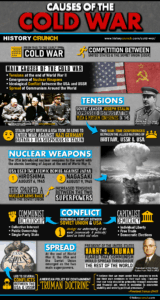
The Cold War was a period of intense political, ideological, and military tension between the United States and the Soviet Union that lasted from the end of World War II in 1945 until the early 1990s. At its heart, the Cold War was a ‘face off’ or competition between the two superpowers, rooted in a fundamental ideological conflict between the capitalism and democracy of the United States and the communism and dictatorship of the Soviet Union. Although the Cold War never escalated into direct military conflict between the two nations, it involved proxy wars, nuclear arms races, and a series of dangerous confrontations and crises. Propaganda played a key role during these events and was used by both the United States and Soviet Union as a way of promoting their own interests.
What Was Propaganda in the Cold War?
Propaganda is information used to influence how people think and feel, especially for political purposes. In general, propaganda does not simply provide neutral facts. Instead, it selects information, repeats certain messages, appeals to emotions, and presents events in ways that support a particular goal. This is significant because propaganda can shape public opinion even when the information being presented is incomplete, exaggerated, or one-sided. During the Cold War, both the United States and the Soviet Union used propaganda extensively, employing a wide range of media including: radio, film, posters, newspapers, literature, sport, and education.
FactsthatCrunchWhich definition fits each Cold War propaganda medium?
Propaganda in the Cold War – American Propaganda
The United States used a wide range of propaganda tools during the Cold War. In general, American propaganda during the Cold War focused on several main themes, including: promoting the benefits of capitalism and democracy, emphasizing the freedoms available to citizens in Western societies, and portraying communism and the Soviet Union as oppressive and dangerous.
One of the most important tools of American Cold War propaganda was radio broadcasting. The United States government established Radio Free Europe in 1949 and the Voice of America as organizations dedicated to broadcasting news, political commentary, and cultural programming to audiences behind the Iron Curtain. Radio Free Europe was secretly operated by the Central Intelligence Agency (CIA) until 1971, after which it was funded openly by Congress. It broadcast in 15 languages to most Soviet-dominated countries and was intended to provide people living under communist rule with access to uncensored information. As such, radio broadcasting was one of the most effective tools of Western propaganda during the Cold War.
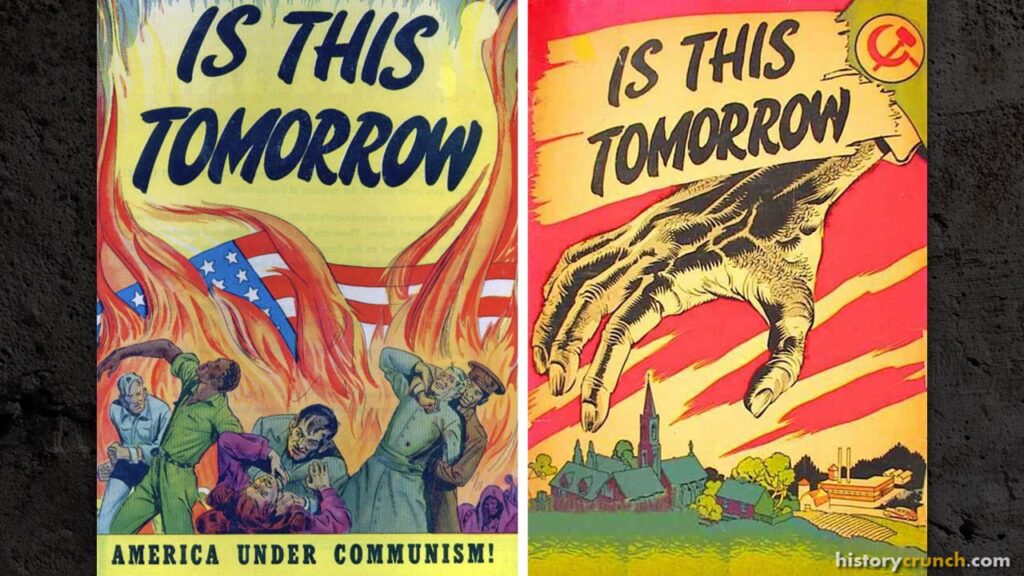
Film was another important vehicle for American Cold War propaganda. In the early years of the Cold War, numerous anti-communist films were released by Hollywood studios. These films portrayed communism as a direct and immediate threat to American values and way of life. For instance, the 1962 film ‘Red Nightmare’ depicted a fictional scenario in which an ordinary American town was taken over by communists. Furthermore, the era of McCarthyism in the early 1950s placed significant pressure on Hollywood studios to demonstrate their loyalty to American values, which produced a wave of films designed to appear patriotic and strongly anti-communist.
American propaganda also operated through education and domestic media. For instance, American children in the 1950s were shown instructional videos at school with titles such as ‘How to Spot a Communist’, which reflected the broader climate of anti-communist fear associated with McCarthyismA period of intense anti-communist suspicion in the United States named after Senator Joseph McCarthy. and the Second Red Scare. The era of McCarthyism itself, named after United States Senator Joseph McCarthy, was in part sustained by propaganda that portrayed communism as an internal as well as an external threat to American society.
FactsthatCrunchHow did American and Soviet use of the arts and media for Cold War propaganda differ?
Propaganda in the Cold War – Soviet Propaganda
The Soviet Union also ran a large-scale propaganda operation throughout the Cold War, directed both at its own population and at audiences around the world. Soviet propaganda was heavily controlled by the state, with radio, television, and the print media all operating as instruments of the Communist Party. In general, Soviet Cold War propaganda focused on several main themes, including: the benefits of socialism, the failures of the United States as a nation, and the promotion of Soviet achievements.
Soviet propaganda made extensive use of poster art, which had been a central feature of Communist communication since the Russian Revolution of 1917. Cold War era Soviet posters promoted themes of socialist solidarity, Soviet technological achievement, and the dangers of American capitalism and imperialismA policy where a powerful nation extends control or influence over weaker nations or peoples.. For instance, American consumerism and materialism were frequent targets, with posters often depicting American businessmen as evil figures profiting from the labor of ordinary workers. The Soviet Union also used the racial inequality and civil rights struggles of the United States as a major propaganda theme, portraying the treatment of African Americans as evidence of the fundamental hypocrisy and moral failure of the American democratic system.
Soviet propaganda also emphasized the achievements of the Soviet space program as evidence of the superiority of the socialist system. For instance, the launch of Sputnik 1 in October of 1957 and the first human spaceflight by Yuri Gagarin in April of 1961 were presented as proof that socialism was capable of producing greater scientific and technological achievements than the capitalist West. As well, the Soviet Union used its successes in sport as a form of propaganda, viewing victories in international competitions such as the Olympic Games as demonstrations of the strength and vitality of the communist system.
FactsthatCrunch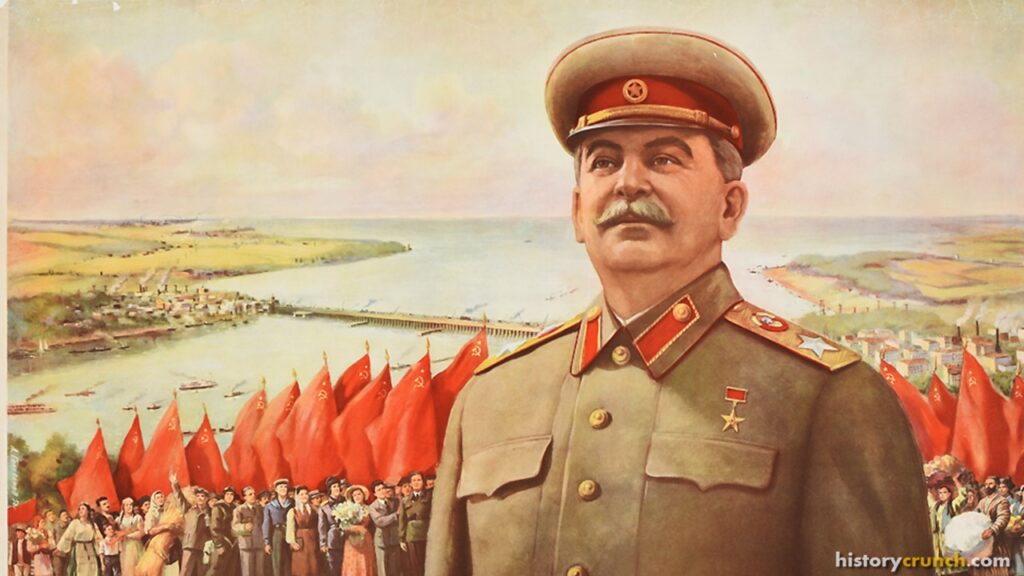 Soviet Cold War Propaganda: Key Themes
Propaganda in the Cold War – Significance
Propaganda in the Cold War was significant for several important reasons. First, it demonstrated that the ideological conflict between the United States and the Soviet Union was fought as much through the battle for hearts and minds as through military confrontation. The enormous investment that both superpowers made in propaganda reflected their understanding that the loyalty of their own populations and the allegiances of other nations would ultimately be determined by ideas and beliefs as much as by military power.
Second, Cold War propaganda had important and lasting effects on the domestic politics and culture of both nations. In the United States, the climate of anti-communist propaganda contributed to the era of McCarthyism, the suppression of civil liberties, and a culture of political fear that affected the careers and lives of thousands of ordinary Americans. In the Soviet Union, the tight state control of information and the suppression of alternative viewpoints reinforced the authoritarian nature of the communist government and contributed to the growing gap between official propaganda and the everyday reality of Soviet life.
Third, the use of radio broadcasting by the United States to reach audiences behind the Iron CurtainThe name for the political and military barrier separating communist Eastern Europe from the democratic West. proved to be one of the most effective long-term tools of Cold War propaganda. The ability of Radio Free Europe and the Voice of America to provide people in Eastern Europe and the Soviet Union with access to uncensored information contributed to the growth of dissidentA person who openly opposes or resists the official policies of their government. movements and the gradual weakening of public faith in communist governments that eventually played an important role in the collapse of the Soviet bloc in 1989.
FactsthatCrunchIt is early 1950, and you are an American official debating how to fight the Cold War. The Soviet Union controls most of Eastern Europe, and people living behind the Iron Curtain have little access to news that their governments have not approved. The government can fund new programs, openly or in secret, and the question before you is how the United States can reach those millions of people with uncensored information. The choice you make will shape how America competes with Soviet propaganda for years to come.
Explore Cold War · 1947 – 1991
Keep exploring Cold War with these History Crunch resources.
Key Vocabulary
Prestige
Ideological
Proxy wars
Iron Curtain
McCarthyism
Dissident
Imperialism
Frequently Asked Questions
What was propaganda used for during the Cold War?
Propaganda was used to promote each side’s ideology and discredit the other during the Cold War. Both the United States and the Soviet Union wanted to keep public support at home and win over other nations. Because the conflict was fought through ideas as much as weapons, propaganda became a central tool. It appeared in radio, film, posters, newspapers, sport, and schools.
What were Radio Free Europe and the Voice of America?
Radio Free Europe and the Voice of America were American radio stations that broadcast to people living under communist rule. Radio Free Europe began in 1950 and sent news and commentary in 15 languages behind the Iron Curtain. The Central Intelligence Agency secretly ran it until 1971, after which Congress paid for it openly. Its goal was to give listeners uncensored information.
How did the United States use film and schools for propaganda?
Hollywood released anti-communist films that showed communism as a threat to American life. The 1962 film “Red Nightmare” imagined a town taken over by communists. Schools also played a role, showing students videos with titles such as “How to Spot a Communist.” These efforts reflected the fear of the McCarthy era and the Second Red Scare.
What themes did Soviet propaganda focus on?
Soviet propaganda praised socialism and attacked the United States as unfair and weak. The state controlled radio, television, and newspapers and used colorful poster art dating back to 1917. It often pointed to American racial inequality and the struggles of African Americans as proof of American hypocrisy. Soviet space and sports victories were also shown as signs of socialist strength.
How did Soviet space achievements become propaganda?
The Soviet Union used its space program to argue that socialism beat capitalism in science. The launch of Sputnik 1 in October of 1957 was a major boost to this claim. Yuri Gagarin’s first human spaceflight in April of 1961 added to the message. These events were presented as proof of Soviet technological power.
Why was Cold War propaganda so important?
Cold War propaganda mattered because the struggle was a battle for hearts and minds, not just military might. It shaped politics at home, feeding McCarthyism in the United States and strict state control in the Soviet Union. American radio reaching Eastern Europe helped dissident movements grow over time. This loss of faith in communist rule played a part in the collapse of the Soviet bloc in 1989.
Cite This Article
To cite this article as a source, use one of the formats below.
MLA: Millar, B. “Propaganda in the Cold War: A Detailed Summary.” HistoryCrunch, 13 October 2026, https://historycrunch.com/propaganda-in-the-cold-war/.
APA: Millar, B. (2026). Propaganda in the Cold War: A Detailed Summary. HistoryCrunch. https://historycrunch.com/propaganda-in-the-cold-war/
Chicago: Millar, B. “Propaganda in the Cold War: A Detailed Summary.” HistoryCrunch. October 13, 2026. https://historycrunch.com/propaganda-in-the-cold-war/
Sources
- Vladislav Zubok, A Failed Empire.
- State Department — Office of the Historian
- John Lewis Gaddis, The Cold War: A New History.