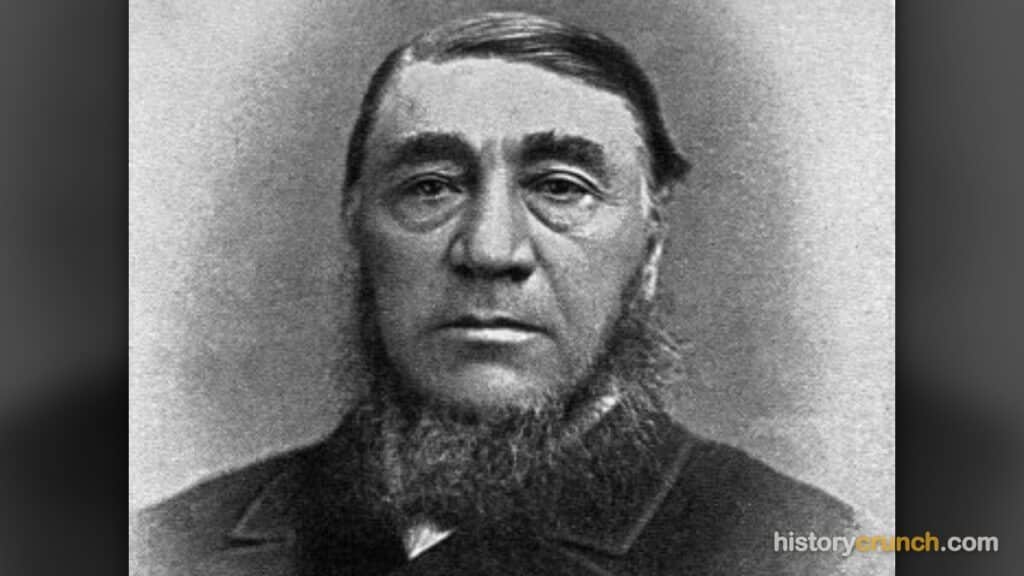
Paul Kruger was one of the most important figures in South African history and became the symbol of the Boer struggle against the British Empire. He led the Transvaal, or South African Republic, through decades of conflict and served as its president from 1883 until 1900. Known to his people by the nickname Oom Paul, meaning “Uncle Paul,” he was a farmer, soldier, and statesman who helped build the Afrikaner nation. His stubborn defense of Boer independence eventually helped bring about the Second Boer War, a major event in the final years of British imperialism in Africa.
The Boers, also called Afrikaners, were descendants of Dutch, German, and French settlers who had farmed in southern Africa since the 1600s. The word “Boer” comes from the Dutch word for farmer. By the 1800s, many Boers wanted to live free from British control, and Kruger became the leading champion of that goal. His life is closely tied to the two independent Boer republics, the Transvaal and the Orange Free State, and to their long rivalry with Great Britain.
Early Life and Background
Stephanus Johannes Paulus Kruger was born on October 10th, 1825, on his grandfather’s farm at Bulhoek, in the Cape Colony region that is now part of South Africa. His parents were poor Boer cattle farmers of Dutch and German ancestry. Because his family often moved in search of new grazing land, Kruger received almost no formal schooling. In fact, he had only about three months of formal education in his entire life, and the Bible was nearly the only book he ever read.
Growing up in a rugged frontier area, young Kruger learned to survive in the wild. As a boy he shepherded his family’s cattle, and he soon became an expert horseman and marksman. These skills would later serve him well as a soldier and a hunter. In fact, Kruger became better known for his hunting than for his cattle farming.
In 1836, when Kruger was about ten years old, his family joined the Great Trek. This was a mass migration of thousands of Boer families, called Voortrekkers, who left the British-ruled Cape Colony to escape British rule and to found their own independent territories. Kruger traveled north with a trek party led by Hendrik Potgieter, and his family eventually settled in an area later known as Rustenburg, in the region that became the Transvaal.
The Great Trek shaped Kruger’s beliefs for the rest of his life. As a child he witnessed the Boers defend themselves in fierce battles against powerful African kingdoms, including clashes with the Matabele and Zulu peoples. At age sixteen, in 1841, Kruger was entitled to choose his own farm, and he settled at the base of the Magaliesberg Mountains. He married for the first time the following year, but his first wife and their infant son died soon afterward, most likely from malaria. He later married Gezina du Plessis, with whom he had a large family, though many of their children died young.
Rise to Power
Kruger’s strong leadership qualities began to emerge as a young man. He proved brave and skilled in military campaigns against African chiefs and in disputes among rival Boer leaders. More specifically, he helped settle a quarrel between leaders of the Transvaal, and he also took part in peace negotiations involving the Orange Free State and the Basotho people. Over time he rose to become Commandant-General, the top military commander of the South African Republic.
Kruger also became involved in shaping the young republic’s government. He served on a commission of the Volksraad, the Transvaal parliament, that helped draw up the country’s constitution. This work drew attention to his leadership and made him a rising figure in Boer politics. By 1874, he had been elected to the Executive Council, and he soon became Vice-President of the Transvaal.
In 1877, Britain annexed the Transvaal, taking control of the republic and ending its independence. Kruger became the leader of the resistance movement against British rule. He traveled to Britain twice as the head of Boer deputations to argue for the return of self-government, but the British refused to give it back. When peaceful protest failed, the Boers turned to war.
The First Boer War, which the Boers called the War of Independence, broke out in 1880. The Boers won a decisive victory at the Battle of Majuba Hill in 1881. As a result, Kruger helped negotiate the restoration of the Transvaal’s independence through the Pretoria Convention of 1881 and the London Convention of 1884, which recognized the republic’s control over its own internal affairs. In 1883, Kruger was elected president of the South African Republic, a position he would hold for the rest of his political life.
Major Achievements
As president, Kruger worked to protect the independence and identity of his people. He was re-elected several times, in 1888, 1893, and again in 1898, which showed how deeply the Boers trusted him. A man of firm religious faith and folksy manners, he often received ordinary citizens on the front porch of his house near the government buildings in Pretoria, the Transvaal capital.
Kruger’s leadership was tested by a huge change to the Transvaal’s economy. In 1886, gold was discovered in the Witwatersrand area, and this discovery transformed the poor farming republic into one of the richest regions in the world. The gold rush led to the rapid growth of the city of Johannesburg and brought a flood of foreign fortune-seekers into the country.
These newcomers were called Uitlanders, a word meaning “outlanders” or foreigners, and most of them were British. Before long, the Uitlanders may have outnumbered the Boers in parts of the republic. To protect Boer control of their own government, Kruger restricted voting rights so that a person had to live in the country for many years before being allowed to vote. This policy angered the Uitlanders and gave Britain an excuse to interfere in Transvaal affairs.
The tension exploded in the Jameson Raid of 1895 and 1896. The raid was carried out by the British colonial administrator Leander Jameson and troops from Cecil Rhodes‘ British South Africa Company against the Transvaal. Its goal was to spark an uprising among the Uitlanders in order to overthrow Kruger and hand the region to Britain. Instead, the raid failed completely, no uprising took place, and the British were deeply embarrassed. Because of this, many historians consider the Jameson Raid a major cause of the Boer War that followed.
By 1899, the British high commissioner, Alfred Milner, was pushing hard for war. That May, Kruger and Milner met at a conference in Bloemfontein, the Orange Free State capital. Kruger offered to shorten the residency period required for the vote, but Milner rejected the offer, and tensions kept rising. On October 9th, 1899, Kruger issued an ultimatum demanding that Britain withdraw its troops from the Transvaal border. Britain refused, and the Second Boer War began two days later, with the Orange Free State joining the Transvaal against the British Empire.
Later Life
Kruger was nearly seventy-four years old when the war began, so he did not fight in the field. Instead, he stayed in Pretoria and encouraged his commanders by telegram and messenger. At first the Boer commandos had great success, surrounding and besieging the towns of Ladysmith, Mafeking, and Kimberley. However, Britain poured a massive army into South Africa, eventually numbering close to half a million soldiers, far more than the Boers could ever gather.
The tide turned against the Boers in 1900. British forces relieved the besieged towns and captured the major cities, occupying Bloemfontein, Johannesburg, and finally Pretoria. As Lord Roberts advanced on the capital, Kruger fled and retreated with the last Boer army along the railway toward Delagoa Bay. Being too old to keep up with the guerrilla campaign that followed, he was chosen to go to Europe to seek help for the Boer cause.
In late 1900, Kruger left South Africa for the last time, sailing from the Portuguese port of Lourenço Marques aboard a Dutch warship sent by Queen Wilhelmina of the Netherlands. His wife Gezina was too ill to travel and stayed behind, where she died in 1901. Kruger landed in France and then settled in the Netherlands. Although he found much sympathy in France and Holland, no foreign power was willing to enter the war on behalf of the Boers.
While living in exile, Kruger received the news that the Boers had surrendered. The Second Boer War ended in May of 1902 with the Treaty of Vereeniging, a British victory that turned the Transvaal and the Orange Free State into British colonies. Kruger refused to return home under British rule. He moved to Clarens, in Switzerland, where he spent the last months of his life and died on July 14th, 1904, at the age of 78. His body was brought back to South Africa for a state funeral and buried in the Heroes’ Acre cemetery in Pretoria.
Significance of Paul Kruger
Paul Kruger is remembered as one of the most important figures in South African history and as the personification of the Afrikaner nation. To many Boers, he was a tragic folk hero who devoted his life to defending the freedom and independence of his people against the might of the British Empire. His firm faith, plain manners, and refusal to surrender made him a lasting symbol of Afrikaner identity.
At the same time, Kruger remains a controversial and divisive figure. Critics view him as a stubborn leader who resisted change and who denied rights not only to the Uitlanders but also to the many African peoples living in the Transvaal. His life reflects the tangled forces of colonialism, nationalism, and the struggle for identity in southern Africa during the Age of Imperialism.
Kruger’s name still appears across South Africa today. The world-famous Kruger National Park, one of the largest wildlife reserves in Africa, is named after him, reflecting his early support for protecting wildlife. His face also appears on the Krugerrand, a gold coin produced in South Africa and traded around the world. In these ways, the memory of Oom Paul lives on more than a century after his death.
Frequently Asked Questions
Who was Paul Kruger?
Paul Kruger was a Boer farmer, soldier, and statesman who served as president of the Transvaal, or South African Republic, from 1883 to 1900. He is best known as the leader of the Boers against the British Empire during the Second Boer War. Born into a poor farming family, he rose to become the most famous champion of Afrikaner independence.
Why was Paul Kruger called Oom Paul?
Paul Kruger was called Oom Paul because the phrase means “Uncle Paul” in the Afrikaans language. The nickname showed the warm, family-like affection that many Boers felt toward their president. He was known for his down-to-earth manner and for greeting ordinary citizens personally at his home in Pretoria.
What role did Paul Kruger play in the Boer War?
Paul Kruger helped trigger the Second Boer War by issuing an ultimatum in October of 1899 demanding that Britain remove its troops from the Transvaal border. Because he was elderly, he did not fight but guided his commanders through messages and telegrams. When British forces captured the Boer capitals, he fled to Europe to seek foreign support that never came.
Why is the Kruger National Park named after Paul Kruger?
The Kruger National Park is named after Paul Kruger because he supported setting aside land to protect wildlife during his time as president. This early idea for a protected wildlife area later grew into the huge national park that bears his name. Today it is one of the most visited nature reserves in the world.
How did Paul Kruger die?
Paul Kruger died of natural causes on July 14th, 1904, in Clarens, Switzerland, at the age of 78. He passed away in exile because he refused to return to South Africa after Britain won the war and took over the Boer republics. His remains were later returned to Pretoria for a state funeral and burial.
Cite This Article
To cite this article as a source, use one of the formats below.
MLA: Millar, B. “Paul Kruger: A Detailed Biography.” HistoryCrunch, 14 August 2026, https://historycrunch.com/paul-kruger/.
APA: Millar, B. (2026). Paul Kruger: A Detailed Biography. HistoryCrunch. https://historycrunch.com/paul-kruger/
Chicago: Millar, B. “Paul Kruger: A Detailed Biography.” HistoryCrunch. August 14, 2026. https://historycrunch.com/paul-kruger/
Sources
- J.M. Roberts & Odd Arne Westad, The Penguin History of the World.
- Jerry Bentley & Herbert Ziegler, Traditions & Encounters: A Global Perspective on the Past.