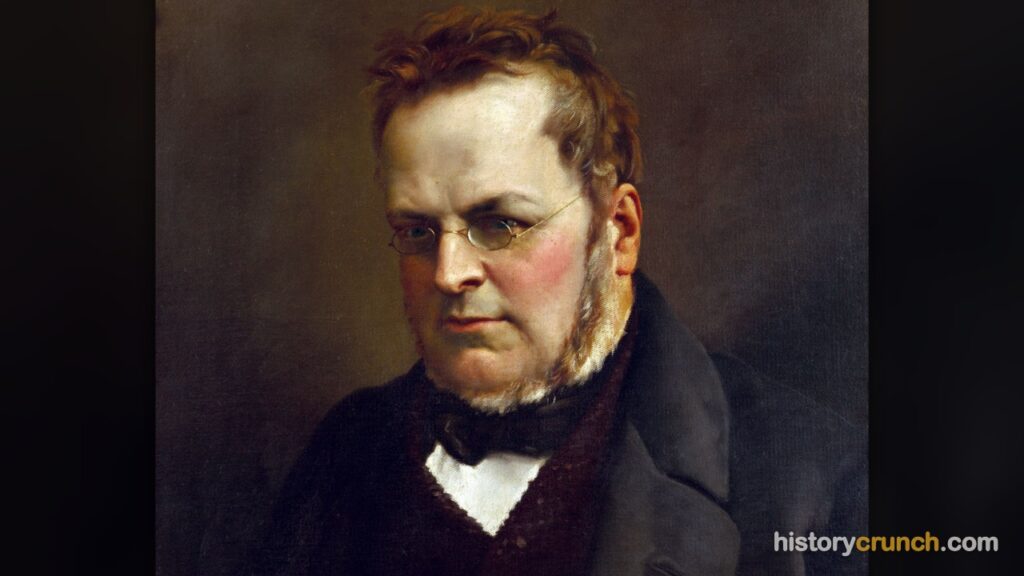
Count Camillo di Cavour was one of the most important figures in the creation of modern Italy. As the prime minister of the Kingdom of Sardinia, he used clever diplomacy, economic reform, and carefully planned wars to bring the many separate states of the Italian peninsula together into a single nation. His work was central to the movement known as Italian Unification, or the Risorgimento, which unfolded across the 1800s and reshaped the map of Europe. While other leaders inspired crowds and led armies, Cavour worked mostly behind the scenes, building alliances and shaping events step by step until a united Kingdom of Italy became possible.
Cavour is best understood as a statesman and a practical politician rather than a revolutionary. A statesman is a skilled and respected political leader who guides a country through major decisions, often focusing on long-term goals instead of quick, emotional action. Cavour believed that unification could only be won through patient planning, a strong economy, a modern army, and the support of powerful foreign allies. This careful, realistic approach set him apart from more idealistic leaders of the Risorgimento and helped make Italian unity a reality.
Early Life and Background
Camillo Benso, Count of Cavour, was born on August 10th, 1810, in Turin, the capital of Piedmont, which at the time was part of the French Empire under Napoleon. His family was noble and had served the ruling House of Savoy for centuries. As a younger son of an aristocratic family, Cavour was not expected to inherit the family’s main title or fortune, so his path in life was shaped by his own ambition and intelligence.
As a young man, Cavour was sent to a military academy and trained as an engineer in the army. In reality, military life did not suit him, since he disliked strict discipline and preferred to think and argue for himself. He left the army while still young and turned his attention to farming, business, and the study of politics and economics.
During these years, Cavour traveled widely across Europe, especially to Britain and France. There he observed modern factories, railroads, banks, and constitutional governments, and he was impressed by the liberal ideas he found. Liberalism in the 1800s meant support for constitutions, elected parliaments, free trade, and individual rights, and these ideas would guide Cavour throughout his career.
Rise to Power
In 1847, Cavour helped found a newspaper called Il Risorgimento, whose name gave the whole unification movement its label. Through the paper he argued for constitutional reform and cautious progress rather than violent revolt. This gave him a public voice and helped launch his political career.
The year 1848 brought a wave of revolutions across Europe, and Italian patriots rose up in an attempt to drive out foreign rulers and win freedom. These revolts largely failed, and Austria crushed the uprisings in northern Italy. Despite the failures, the events of 1848 taught the movement important lessons, especially that small Italian states could not defeat powerful Austria on their own and that a strong monarchy backed by a foreign ally offered the most realistic path forward.
Piedmont, formally called the Kingdom of Sardinia, was the one Italian state that came out of 1848 with its liberal constitution still in place. This made it the natural leader of the national movement. Cavour was elected to the Piedmontese parliament and quickly rose through several government posts, serving as minister of agriculture, trade, and finance. In 1852, he became prime minister, the position from which he would guide Piedmont and, eventually, all of Italy.
Major Achievements
As prime minister, Cavour first set out to make Piedmont into a strong and modern state that could lead the rest of Italy. He worked systematically to improve the kingdom by building railroads and roads, expanding banks and trade, reforming the legal system, and signing free trade treaties with other nations. He also strengthened the army, understanding that military power would be needed in any future struggle against Austria.
Cavour understood that unification could not be achieved by popular revolt alone and that it required careful diplomacy and the help of a powerful ally. To gain that ally, he made a bold move in 1855 by sending Piedmontese troops to fight alongside Britain and France in the Crimean War against Russia. Piedmont gained no territory from the war, but its soldiers fought well and earned respect across Europe.
More importantly, Piedmont’s part in the war won it a seat at the Congress of Paris in 1856, the peace conference that ended the fighting. There Cavour raised the “Italian question” before the great powers for the first time, drawing international attention to Austria’s control over Italy. In doing so, he learned that the French Emperor Napoleon III was sympathetic to the idea of a stronger, independent kingdom in northern Italy.
This opening led to Cavour’s most famous diplomatic stroke. In 1858, he met secretly with Napoleon III at the French town of Plombières and arranged a military alliance. Under their agreement, France would help Sardinia fight Austria, but only if Austria could be provoked into attacking first, and in return France would receive the territories of Nice and Savoy.
In 1859, Cavour deliberately built up the Piedmontese army until Austria demanded that Sardinia disarm. When Cavour refused, Austria attacked, exactly as he had planned, which triggered the alliance with France. In the war that followed, the Franco-Piedmontese forces won major victories at the bloody battles of Magenta and Solferino. However, Napoleon III suddenly made a separate peace with Austria at Villafranca without consulting Cavour, and while Piedmont gained the rich region of Lombardy, Venetia remained under Austrian control. Cavour was so furious that he briefly resigned, though he soon returned to office.
The following year brought even greater gains. A series of votes, called plebiscites, in the central Italian states of Tuscany, Parma, Modena, and the Romagna led those regions to join Piedmont. At the same time, the famous soldier Giuseppe Garibaldi led his volunteer force, known as the Red Shirts, in the “Expedition of the Thousand,” which toppled the Bourbon Kingdom of the Two Sicilies in the south. Cavour, worried that Garibaldi’s radical actions might spark conflict or provoke France, shrewdly sent Piedmontese troops south through the Papal States to guide and control the process, and more plebiscites brought the southern lands into the kingdom.
These combined efforts made unity possible at last. In March of 1861, the Kingdom of Italy was officially proclaimed, with Victor Emmanuel II of the House of Savoy as its first king. Cavour became the new nation’s first prime minister, the crowning achievement of his career.
Later Life
Cavour did not live long enough to enjoy the nation he had helped create. Just a few months after the Kingdom of Italy was proclaimed, he fell seriously ill, worn down by years of intense political work. He died in Turin on June 6th, 1861, at the age of only fifty.
At the time of his death, the unification of Italy was still not complete. Venetia remained under Austrian rule, and Rome was still controlled by the pope and protected by French soldiers. Cavour had hoped to make Rome the capital of Italy, but that goal would only be reached years later, in 1871, long after he was gone.
Even so, Cavour left behind a united kingdom that stretched across most of the peninsula and a set of liberal institutions that shaped the new Italy. The tasks he left unfinished were completed by the leaders who followed him, building on the foundation he had laid.
Significance of Count Camillo di Cavour
Count Camillo di Cavour is remembered as the chief architect of Italian unification and one of the most skilled statesmen of the 1800s. More than any other single leader, he turned the dream of a united Italy into a practical political reality through patient planning, economic reform, and clever diplomacy.
His greatest talent lay in the practical use of politics, an approach later often described as realpolitik, meaning politics based on real conditions and self-interest rather than ideals alone. By joining the Crimean War, cultivating France, and provoking Austria at just the right moment, Cavour showed how a small state could use the rivalries of larger powers to its own advantage. In this way, he is often compared to Otto von Bismarck, who used similar methods to unite Germany in the same period.
Cavour is usually named alongside Victor Emmanuel II, Giuseppe Garibaldi, and Giuseppe Mazzini as one of the key figures of the Risorgimento. Where Mazzini provided the ideals and Garibaldi the military daring, Cavour supplied the diplomacy and statecraft that tied everything together. As a result, the modern nation of Italy, which stands as one of the major countries of Europe today, owes much of its existence to his work.
Frequently Asked Questions
Who was Count Camillo di Cavour?
Count Camillo di Cavour was a Piedmontese statesman who served as prime minister of the Kingdom of Sardinia and became the first prime minister of the united Kingdom of Italy in 1861. He is best known as the political mastermind behind the unification of Italy. His full name was Camillo Benso, Count of Cavour, and he came from an old noble family that had long served the House of Savoy.
What did Cavour do to help unify Italy?
Cavour helped unify Italy by strengthening Piedmont’s economy and army, winning France as an ally, and provoking a war with Austria that expanded Piedmontese territory. He then managed the annexation of central and southern states through votes and careful diplomacy. Rather than leading troops himself, he worked through negotiation, treaties, and long-term strategy.
What was the Pact of Plombières?
The Pact of Plombières was a secret agreement made in 1858 between Cavour and the French Emperor Napoleon III. In it, France promised to help Piedmont in a war against Austria in exchange for the territories of Nice and Savoy, as long as Austria could be made to attack first. This deal set the stage for the war of 1859 that greatly expanded Piedmont.
Why did Cavour join the Crimean War?
Cavour sent Piedmontese troops to the Crimean War mainly to earn the friendship of Britain and France and to raise Piedmont’s standing in Europe. Although Piedmont won no land from the war, its participation gained it a seat at the Congress of Paris in 1856. There Cavour was able to bring international attention to the problem of Austrian rule in Italy.
How did Count Cavour die?
Cavour died of illness in Turin on June 6th, 1861, at the age of fifty, only about three months after the Kingdom of Italy was proclaimed. His death came before unification was complete, since Venetia and Rome were not yet part of Italy. He is buried in the family chapel at Santena, near Turin.
Cite This Article
To cite this article as a source, use one of the formats below.
MLA: Millar, B. “Count Camillo di Cavour: A Detailed Biography.” HistoryCrunch, 12 August 2026, https://historycrunch.com/count-camillo-di-cavour/.
APA: Millar, B. (2026). Count Camillo di Cavour: A Detailed Biography. HistoryCrunch. https://historycrunch.com/count-camillo-di-cavour/
Chicago: Millar, B. “Count Camillo di Cavour: A Detailed Biography.” HistoryCrunch. August 12, 2026. https://historycrunch.com/count-camillo-di-cavour/
Sources
- J.M. Roberts & Odd Arne Westad, The Penguin History of the World.
- Jerry Bentley & Herbert Ziegler, Traditions & Encounters: A Global Perspective on the Past.