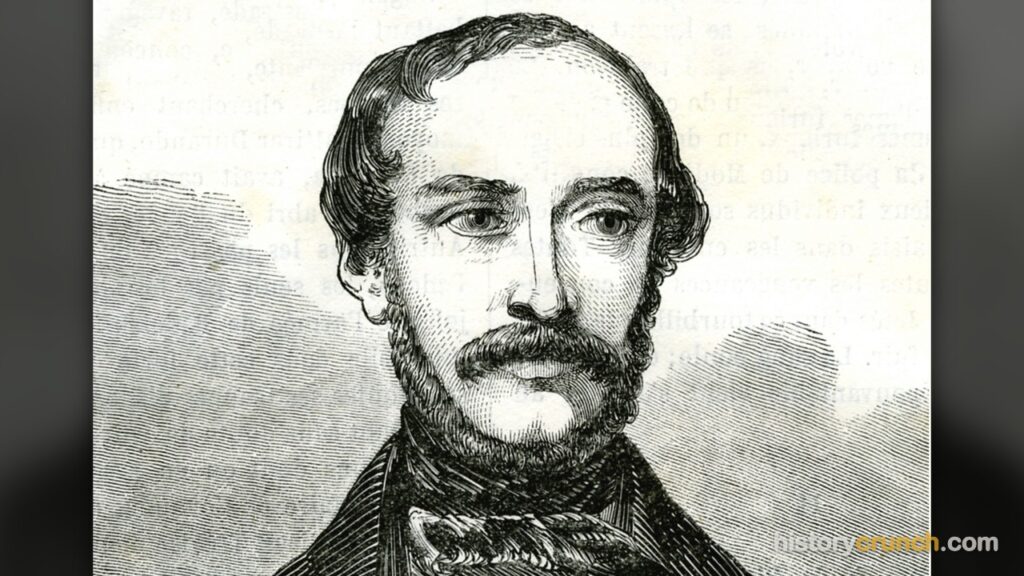
Giuseppe Mazzini was one of the most important figures in the movement to unite Italy into a single nation. Living during the 1800s, he devoted his entire life to the dream of freeing the Italian peninsula from foreign rule and joining its many separate states into one free and independent republic. His writings, his secret societies, and his tireless energy inspired generations of nationalists, and he is often remembered as the “prophet” or heart of the Risorgimento, the long struggle for Italian Unification.
Mazzini was a nationalist, which means he believed that people who shared a common language, culture, and history should govern themselves as a single united nation rather than be ruled by foreign powers or divided into many small states. He was also a republican, meaning he wanted Italy to be governed by its own people through elected representatives rather than by a king. These two beliefs shaped everything he did, and he combined them with a deep sense that a nation carried moral and spiritual duties.
Early Life and Background
Giuseppe Mazzini was born on June 22nd, 1805, in the port city of Genoa, which at the time was part of the French Empire under Napoleon Bonaparte. He came from a comfortable middle-class family, and his father was a respected doctor and professor of anatomy at the local university. His mother was a deeply religious woman who followed a strict form of Catholic teaching and helped shape her son’s strong sense of moral duty.
As a small child, Mazzini was frail and sickly, and he could barely walk until he was around six years old. Despite his weak health, he showed remarkable intelligence from a very young age and loved to read, spending long hours with books. In fact, he was so advanced that he entered the University of Genoa at just fourteen years old, where he studied law while also pursuing his passion for literature.
Mazzini grew up in a period when Italy did not exist as a country. Instead, the peninsula was divided into many separate kingdoms and states, several of which were controlled or heavily influenced by the Austrian Empire. In 1821, when Mazzini was a teenager, a group of failed revolutionaries fleeing an uprising against Austria took refuge in Genoa, and the sight of these exiles left a lasting mark on him and awakened his desire to free his homeland.
Entry Into Revolutionary Politics
As a young man, Mazzini began writing political essays for northern Italian newspapers, arguing for reform and national feeling. His writings were seen as dangerous by the authorities, and one of the newspapers he worked for was shut down. Around 1830, he joined a secret society called the Carbonari, a loose network of groups committed to ending absolute rule in Italy.
His involvement with the Carbonari soon led to trouble. In 1831, Mazzini was arrested and spent about six months in prison for his political activities. While locked away, he began to develop his own ideas about how a wider, better-organized revolution could unite all of Italy into a single republic.
When he was released, the government gave him a harsh choice. He could live under a kind of house arrest in a small Italian town where he would be forbidden from publishing his political ideas, or he could go into exile. Mazzini chose exile and moved to the French port city of Marseille, where he quickly became a leader among the other Italian exiles gathered there.
Founding of Young Italy
In July of 1831, while living in exile in Marseille, Mazzini founded a new secret political society called Young Italy, known in Italian as La Giovine Italia. Its goal was clear and bold, to free the Italian states from foreign rule and unite them into a single, independent, and democratic republic. The motto of the movement was “God and the People,” reflecting Mazzini’s belief that the nation carried a sacred and moral purpose.
Young Italy was different from the older secret societies like the Carbonari. As stated above, Mazzini had been disappointed by the Carbonari’s failed revolts and their reliance on foreign help. Instead, he aimed his new movement at the young, believing that youthful energy and idealism would succeed where the older generation had failed, and he sought to educate ordinary people about their role in building a nation.
The society grew quickly, especially in northern Italy, where higher literacy allowed its publications to spread widely. By some accounts it grew from just a few dozen members in 1831 to tens of thousands within a couple of years, and one of the young men it inspired was Giuseppe Garibaldi, who would later become the great military hero of Italian Unification. More information about the wider movement can be found in the History Crunch article on Italian Unification.
Years of Exile and Failed Uprisings
Mazzini soon wore out his welcome in France. After he wrote a famous open letter urging Charles Albert, the king of Sardinia-Piedmont, to lead the fight for Italian independence, the authorities ordered him to leave Marseille. He then moved to Switzerland, where he continued to plot revolutions from a distance.
During 1833 and 1834, Young Italy suffered a series of crushing setbacks. A planned mutiny within the Sardinian army was discovered, and many of the plotters were arrested and executed, while Mazzini himself was tried in his absence and sentenced to death. A follow-up attempt to invade the region of Savoy also failed badly, which damaged the movement and forced Mazzini deeper into exile.
Even so, Mazzini’s vision only grew larger. In 1834, still in Switzerland, he founded a new international organization called Young Europe, modeled on Young Italy. Through it he hoped to encourage nationalist movements across the continent, and he imagined a future “brotherhood of nations” in which free and independent peoples would live together in peace, an idea that some later saw as an early vision of a united Europe.
In 1837, Mazzini moved to London, England, where he would spend much of the rest of his life. There he wrote constantly for newspapers and journals, and he even started a free school for poor Italian boys. He also launched a newspaper aimed at ordinary working people, spreading his ideas about liberty, duty, and national unity.
Major Achievements and the Roman Republic
The high point of Mazzini’s career came during the wave of revolutions that swept across Europe in 1848 and 1849. Uprisings broke out across the Italian peninsula, and the city of Milan rose up against its Austrian rulers in the famous Five Days of Milan, briefly driving the Austrian army out. Mazzini returned to Italy in triumph, greeted as a hero after long years of exile.
The most dramatic moment came in Rome. A revolution there had driven out the pope, and in early 1849 a republic was proclaimed in the ancient city. For Mazzini, who had long dreamed that Rome would one day belong to the people, this was the fulfillment of his greatest hope, and he was elected as one of the three leaders, called a triumvirate, who governed the new Roman Republic.
Mazzini showed real skill as a leader, introducing reforms and running the government honestly. However, the republic did not last long. The pope appealed to Catholic nations for help, and a French army was sent to restore his power. After a heroic defense in which Garibaldi and his volunteers played a leading role, the Roman Republic was crushed in July of 1849, and Mazzini was once again forced into exile.
Later Life
After the fall of the Roman Republic, Mazzini returned to London and continued to plot uprisings, but these efforts repeatedly failed and cost his followers dearly. In reality, the tide of Italian Unification was moving away from his methods. Many Italians, especially the middle classes, put their hopes instead in the shrewd politician Count Camillo di Cavour and the kingdom of Sardinia-Piedmont, which pursued unification through diplomacy and warfare rather than popular revolution.
When Italy was finally united in 1861, it became a kingdom under the House of Savoy rather than the republic Mazzini had spent his life fighting for. He refused to accept this outcome and would not take part in the new monarchy’s parliament. As a result, this uncompromising republican remained under a sentence of death for treason even as his dream of a united Italy came true.
Mazzini spent his final years feeling isolated and disappointed. He continued to write, producing works such as an influential book on the duties of ordinary people, but his criticism of socialism and radical movements pushed away many younger reformers. He died in Pisa on March 10th, 1872, still officially banned from his own country, and living under a false name.
Significance of Giuseppe Mazzini
Even though Mazzini did not live to see the republic he wanted, his importance to Italian Unification is enormous. More specifically, he is remembered as the thinker and spiritual leader who kept the idea of a united Italy alive during decades when it seemed impossible. His writings and his secret societies planted the seeds of national feeling in the hearts of young Italians, and figures like Garibaldi carried those ideas into action.
Mazzini is often grouped with Cavour and Garibaldi as one of the three great makers of modern Italy. Where Cavour is remembered as the clever politician and Garibaldi as the fearless soldier, Mazzini is remembered as the soul of the movement, the one who gave it its ideals and moral energy. His constant pressure also helped push the Sardinian government to take up the national cause.
Beyond Italy, Mazzini’s influence reached across the world. His ideas about nationalism, democracy, and the cooperation of free nations inspired reformers and independence movements in many other countries. For instance, his vision of a peaceful brotherhood of self-governing peoples is sometimes seen as an early forerunner of later efforts to bring European nations together in cooperation.
Frequently Asked Questions
Who was Giuseppe Mazzini?
Giuseppe Mazzini was an Italian revolutionary, writer, and nationalist who devoted his life to uniting Italy into a single republic. Born in Genoa in 1805, he became one of the leading voices of the Risorgimento and is often called the prophet of Italian Unification. He worked mostly through writing and secret societies rather than as a soldier or a politician in power.
What was Young Italy and why did Mazzini create it?
Young Italy was a secret political society that Mazzini founded in 1831 to work for a united and independent Italian republic. He created it because he was frustrated with the older Carbonari societies, whose revolts had repeatedly failed. Young Italy focused on inspiring young people and educating ordinary Italians about their role in building a nation.
Why did Mazzini spend so much of his life in exile?
Mazzini lived in exile because the governments of his time considered him a dangerous revolutionary. After a prison term in Italy, he was forced out and lived in France, Switzerland, and England, and he was even sentenced to death in his absence. From these foreign cities he continued to write and organize plots against the rulers of the Italian states.
Did Mazzini get the united Italy he wanted?
Mazzini saw Italy united in 1861, but not in the form he had fought for. Instead of the democratic republic he dreamed of, Italy became a kingdom ruled by the House of Savoy. He refused to accept this monarchy and died disappointed, still banned from his homeland.
How is Mazzini different from Cavour and Garibaldi?
Mazzini, Cavour, and Garibaldi are seen as the three main makers of modern Italy, but each played a very different role. Mazzini was the idealist and thinker who inspired the movement, Cavour was the skilled politician who used diplomacy, and Garibaldi was the military hero who won battles. Together, their very different talents helped bring about the unification of Italy.
Cite This Article
To cite this article as a source, use one of the formats below.
MLA: Millar, B. “Giuseppe Mazzini: A Detailed Biography.” HistoryCrunch, 12 August 2026, https://historycrunch.com/giuseppe-mazzini/.
APA: Millar, B. (2026). Giuseppe Mazzini: A Detailed Biography. HistoryCrunch. https://historycrunch.com/giuseppe-mazzini/
Chicago: Millar, B. “Giuseppe Mazzini: A Detailed Biography.” HistoryCrunch. August 12, 2026. https://historycrunch.com/giuseppe-mazzini/
Sources
- Jerry Bentley & Herbert Ziegler, Traditions & Encounters: A Global Perspective on the Past.
- J.M. Roberts & Odd Arne Westad, The Penguin History of the World.