
World War I was fought from 1914 to 1918 between the Allies, led by France, Britain, Russia and from 1917 the United States, and the Central Powers, led by Germany, Austria-Hungary and the Ottoman Empire. It killed about 9.5 million soldiers, brought down four empires, and set up almost every conflict of the century that followed.
The war occurred from 1914 to 1918. This timeline covers 1870 to 1920, because it also includes the events that led to the war and the events that came out of it.
World War I was fought between the Allies and the Central Powers from 1914 to 1918 and killed about 9.5 million soldiers and millions of civilians. The events below run from the Franco-Prussian War of 1870, which created the Germany the war was fought against, to the League of Nations in 1920, which was supposed to make sure it never happened again. Most of them are the result of something earlier on the list: a promise made in secret, a fleet built to frighten a neighbor, an ultimatum written to be refused.
The forty-four years between the Franco-Prussian War and August 1914 are set out here in order. Every event is a step toward a war that nobody in 1870 was planning. Each one asks the same question: what did a country decide, and who did that decision frighten?
The trenches from the Belgian coast to Switzerland were where the war was decided. It begins with Germany's six-week plan to beat France, which failed in five, and ends with the Hundred Days in which the same Allied armies that had been stuck for four years advanced without stopping.
The war in the east was a war of movement across hundreds of miles, and it broke the country that fought it. This timeline follows Russia from the destruction of its first army at Tannenberg, through its greatest victory and its two revolutions, to the peace that took it out of the war and cost it a third of its people.
The war was fought in the mountains of Italy, on the beaches of Gallipoli, across the Balkans and through the Ottoman Middle East. These fronts decided which empires would survive the war, and the Armenian Genocide happened on one of them.
Battleships, submarines, airships, fighter aircraft and tanks all appeared in this war for the first time or in their first real form. This timeline follows the naval race that helped cause the war, the blockade and the submarine campaign that helped decide it, and the machines that changed what war would look like next time.
The United States stayed out of the war for nearly three years, joined it in April 1917, and by November 1918 had two million soldiers in France. This timeline follows the road in, from the Lusitania to the Zimmermann Telegram, the battles the American army fought, and the peace it then refused to sign.
The war was won and lost in factories, fields and kitchens as much as in trenches. This timeline follows what the war did to the people who stayed home: the shell shortage that put women in the munitions works, the laws that forced men into uniform, the rising in Dublin, the flu, and the hunger and mutiny that ended the German Empire from the inside.
The fighting stopped in November 1918 and the arguing began. This timeline follows the peace: the conference in Paris, the treaty Germany signed under protest, the new republic in Germany, the Senate vote that kept the United States out of the League, and the League's first meeting without it. The World War II timeline begins where this one ends.
How did the alliance system turn a quarrel between Austria-Hungary and Serbia into a war between all the great powers?
The alliance system was the set of promises made between 1879 and 1907 that divided the great powers of Europe into two camps, the Triple Alliance and the Triple Entente, so that a war between any two of them would pull in the rest.
Why did France and Germany go into the First World War already hating each other?
The rivalry between France and Germany began with the Franco-Prussian War of 1870 to 1871, in which the new German Empire defeated France and took the provinces of Alsace and Lorraine.
How did Germany's decision to build a battle fleet bring Britain into the war against it?
The Anglo-German naval race was the competition between 1898 and 1914 to build the most powerful battleships, begun by Germany's Naval Laws and made far more expensive by the launch of HMS Dreadnought in 1906.
Why did a quarrel in the Balkans start a war between the great powers?
The Balkan crises were the series of wars and diplomatic clashes between 1908 and 1913 in which Serbia grew stronger, the Ottoman Empire lost almost all of its European territory, and Austria-Hungary and Russia came close to war with each other.
How did the assassination in Sarajevo lead, in only five weeks, to a war between all the great powers of Europe?
The July Crisis was the five weeks between the assassination of Franz Ferdinand on June 28th, 1914, and Britain's declaration of war on August 4th, in which one decision after another turned a Balkan crisis into a general European war.
Everyone expected a short war in August 1914. Why did it become a four-year stalemate instead?
The opening campaign of 1914 was the German attempt to defeat France in six weeks under the Schlieffen Plan, which failed at the Battle of the Marne and led to the trench stalemate on the Western Front.
Britain began the war with an army of 80,000 men. How did it end the war with the one that beat the German army in 1918?
Britain's war ran from the declaration of August 4th, 1914, to the Hundred Days Offensive of 1918, and in between the country built, from almost nothing, the largest army in its history.
France lost more soldiers for its size than any other great power. How did it keep fighting for four years?
France's war was fought almost entirely on French soil, from the German invasion of August 1914 to the Armistice of November 1918, and it cost France about 1.4 million dead.
Verdun, the Somme and Passchendaele each cost hundreds of thousands of men for a few miles of ground. Why did the generals keep ordering attacks that failed?
The battles of attrition of 1916 and 1917 were the attempts by both sides to break the Western Front by wearing down the enemy's army, at Verdun, on the Somme and at Passchendaele, at a combined cost of more than two million casualties.
How did a war fought in trenches change the lives of people who never went near one?
The home front was the effort behind the lines: the factories, the food, the conscription laws and the propaganda that kept the armies fighting, and the strain that eventually broke Russia, Austria-Hungary and Germany from the inside.
Canada sent a division of volunteers in 1914. How did it end the war with a corps that led the Allied attack?
The Canadian Corps fought on the Western Front from April 1915 to November 1918, and its four divisions took Vimy Ridge in April 1917 after three earlier attempts had failed.
Why did the Allies fight the Ottoman Empire, and what came of it?
The war against the Ottoman Empire ran from November 1914 to the Armistice of Mudros in October 1918, and it took in Gallipoli, the Middle East, the Caucasus and the Armenian Genocide.
Why did Italy join the Allies in 1915 instead of its old partners, and what did it get for it?
Italy's war ran from its declaration of war on Austria-Hungary in May 1915 to the armistice of Villa Giusti in November 1918, and it was fought mostly in the mountains along the Isonzo River.
Austria-Hungary began the war to save itself from Serbia. Why did the war destroy it instead?
Austria-Hungary's war ran from its ultimatum to Serbia in July 1914 to the armistice of Villa Giusti in November 1918, and it ended with the empire split into new countries.
The borders of Iraq, Syria, Lebanon, Jordan, Israel and Turkey were drawn between 1916 and 1923. How did that happen?
The Ottoman Empire's defeat in the war ended four centuries of its rule over the Arab lands, which Britain and France divided between themselves as League of Nations mandates while making promises to Arabs and to Zionists that could not all be kept.
How did three years of war turn the Russian Empire into the world's first communist state?
Russia's war ran from the invasion of East Prussia in August 1914 to the Treaty of Brest-Litovsk in March 1918, and it destroyed the Tsar's government, the Provisional Government that replaced it, and the Russian army itself.
The United States stayed out of the war for nearly three years. What brought it in?
American entry into World War I came on April 6th, 1917, after Germany resumed unrestricted submarine warfare and the Zimmermann Telegram revealed a German plan to bring Mexico into a war against the United States.
Nothing was decided on the battlefield in 1917. Why do historians call it the decisive year?
1917 was the year the war changed shape: Germany's submarines brought in the United States, two revolutions took Russia out, and the French army mutinied, so that by December both sides knew 1918 would decide everything.
Which new weapons of World War I changed the fighting, and which only added to the killing?
World War I saw the first use in war of poison gas, tanks, strategic bombing from the air, fighter aircraft and unrestricted submarine warfare, and each of them changed how the war was fought and how the next one would be.
How did a weapon that could not fight a battle come closer than anything else to winning the war for Germany, and then bring in the country that beat it?
The submarine war ran from Germany's first declared war zone in February 1915 to the scuttling of its fleet in 1919, and it was Germany's answer to the British blockade.
Aircraft began the war watching the enemy. How did they end it bombing cities and leading attacks?
The air war of 1914 to 1918 turned the airplane, eleven years old when the war began, into a fighter, a bomber and a weapon of the battlefield, and produced the first air forces.
What difference did the American army make on the Western Front in 1918?
The American Expeditionary Force under General John Pershing grew from 14,000 men in June 1917 to two million by November 1918, and fought its largest battles at Belleau Wood, Saint-Mihiel and in the Meuse-Argonne.
In March 1918 Germany was closer to winning than at any time since 1914. How did it lose by November?
The campaign of 1918 began with Germany's Spring Offensive in March, the largest attack of the war in the west, and ended with the Hundred Days Offensive, in which the Allies advanced without a pause from August until the Armistice on November 11th.
The war began between five empires. Why did four of them not survive it?
The fall of the empires was the collapse, between 1917 and 1922, of the Russian, Austro-Hungarian, German and Ottoman empires, which between them had ruled most of Europe east of France and most of the Middle East.
Germany won most of its battles and was on enemy soil when the war ended. Why did it lose?
Germany's war ran from its declarations of war in August 1914 to the Kaiser's abdication in November 1918. It fought on two fronts, knocked Russia out, and lost to a blockade, an arithmetic of numbers, and the United States.
About 9.5 million soldiers died in the war. Where did they die, how were they counted, and how did the survivors remember them?
The human cost of World War I was about 9.5 million soldiers and millions of civilians dead, a flu pandemic that killed more than the fighting, and a way of remembering the dead that every country still uses.
Influenza killed somewhere between 50 and 100 million people worldwide. It spread through armies, camps and troopships. How much of that is the war's doing?
The deadliest thing about the First World War may not have been the fighting.
The Treaty of Versailles was meant to make another war impossible. Why did it fail?
The peace settlement of 1919 and 1920 was the set of treaties written at the Paris Peace Conference, above all the Treaty of Versailles with Germany, and the League of Nations that the treaties created to keep the peace.
The German army was retreating and its own commander said the war was lost. Why did millions of Germans come to believe the army had been betrayed at home?
The stab-in-the-back myth was the belief, spread in Germany after 1918, that the German army had been undefeated in the field and had been betrayed by revolutionaries and politicians at home.
Woodrow Wilson kept the United States out of the war, then took it in, then designed the peace. Why did his own country reject what he built?
Woodrow Wilson led the United States through the war as a neutral, then as a belligerent, and then tried to build a lasting peace on the Fourteen Points and the League of Nations, which the United States Senate refused to join.
The First World War grew out of forty years of decisions made in peacetime. A new Germany appeared in the middle of Europe in 1871, the great powers sorted themselves into two armed camps, and a race to build battleships turned Britain from a bystander into an enemy of Germany.
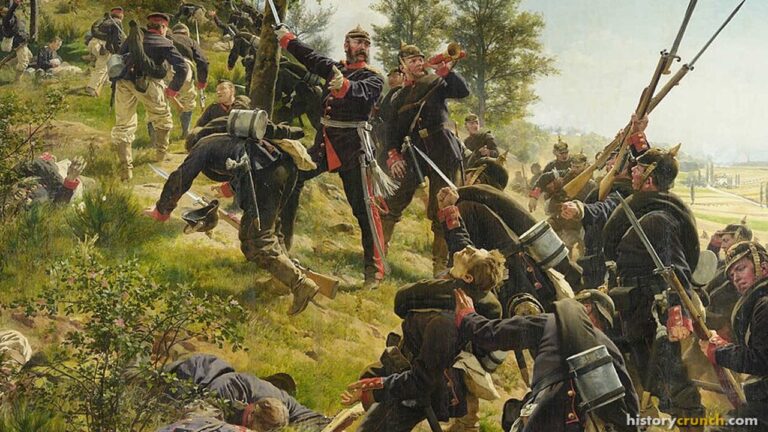
France declared war on Prussia after a quarrel over who would sit on the Spanish throne. Within six weeks the French army had been surrounded at Sedan and Emperor Napoleon III was a prisoner.
LEARN MORESHOW LESSwhy it matters · key numbers · 1 key figureMILITARYThe war that made Germany a single country began here. France lost fast and lost badly, and the humiliation shaped French politics for the next forty years.
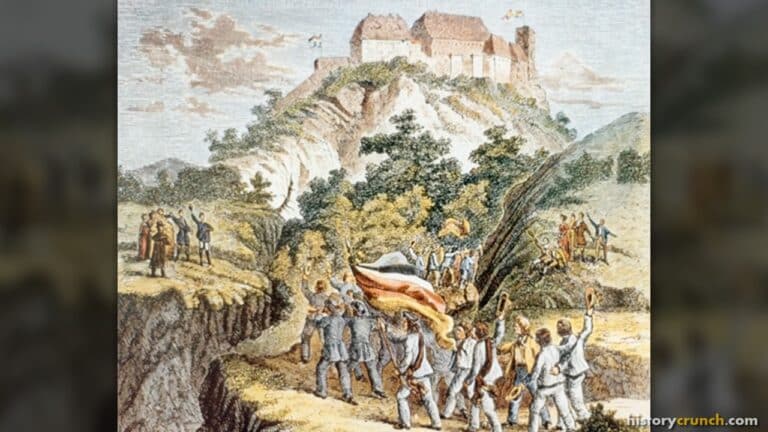
With Paris still under siege, the German princes gathered in the Hall of Mirrors at Versailles and proclaimed King Wilhelm I of Prussia the German Emperor. Germany, which had been a patchwork of small states, became one country overnight.
LEARN MORESHOW LESSwhy it matters · key numbers · elsewherePOLITICALA new great power appeared in the middle of Europe with the largest army on the continent and an economy that soon passed Britain's. Every alliance made between 1879 and 1907 was an answer to that fact.
The same year, the Paris Commune took over the French capital for two months before the French army crushed it, and Britain legalized trade unions.
The Treaty of Frankfurt ended the Franco-Prussian War. France handed Germany the provinces of Alsace and part of Lorraine, and agreed to pay five billion francs before the German army would leave.
LEARN MORESHOW LESSwhy it matters · key numbers · a sourcePOLITICALFrance never accepted the loss. French nationalism kept the wound open: schoolchildren were taught to think of the two annexed provinces as stolen, and getting them back was one of the first things France asked for when the fighting stopped in 1918.
IN THEIR OWN WORDS“Think of it always, speak of it never.”
Leon Gambetta, French politician, on Alsace-LorraineWHAT TO NOTICEGambetta's line became the unofficial French policy on the lost provinces for forty years: no public demands, and no forgetting.
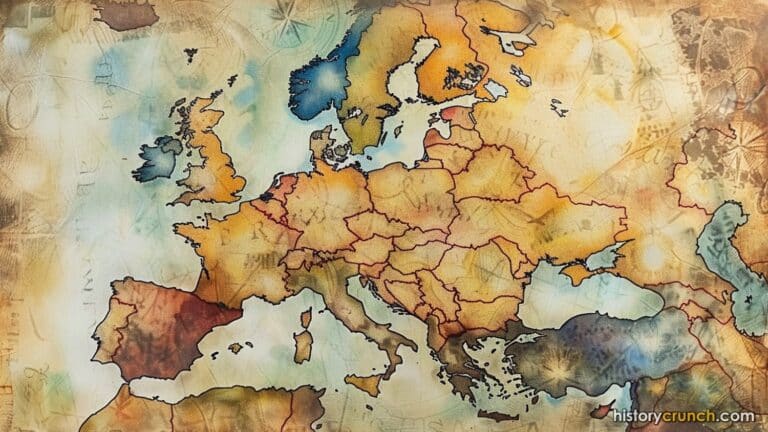
Germany and Austria-Hungary promised to fight together if Russia attacked either of them. The treaty was secret and it was renewed every few years until 1918.
LEARN MORESHOW LESSwhy it matters · 1 key figurePOLITICALThis was the first of the alliances that pulled Europe into two camps. It tied Germany to an empire with a dozen restless nationalities and a long quarrel with Russia over the Balkans, and in July 1914 that promise was called in.
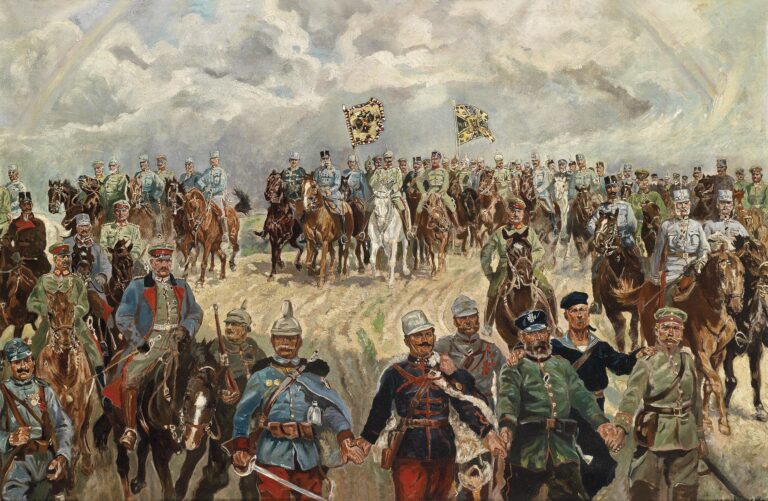
Italy joined the Dual Alliance, turning it into the Triple Alliance. Italy was angry that France had taken Tunisia, which it wanted for itself, and looked to Germany for protection.
LEARN MORESHOW LESSwhy it matters · a debate · 1 key figurePOLITICALOn paper the Central Powers now stretched from the North Sea to Sicily. In practice Italy had its own quarrel with Austria-Hungary over land on the Adriatic, and when the war came it stayed neutral for nine months, then joined Britain and France against Austria in May 1915.
Did the alliances make war more likely, or less?
More likely. They turned every quarrel between two countries into a quarrel between six, and gave generals a reason to plan for a war on two fronts.
Less likely, for a while. Bismarck built the alliances to keep France isolated and Europe calm, and they held the peace for more than thirty years.
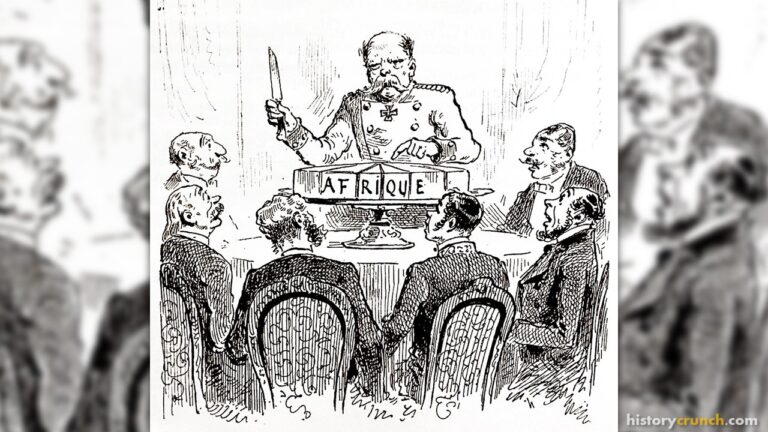
Fourteen countries met in Berlin to agree on rules for claiming African territory. No African was invited. Within twenty years almost the whole continent had been carved into European colonies.
LEARN MORESHOW LESSwhy it matters · key numbers · elsewherePOLITICALThe scramble for colonies gave the great powers new things to fight over, and the two Moroccan crises that followed showed how close they came. Germany arrived late to the race and felt cheated, which fed its demand for a 'place in the sun'.
Two years later, Karl Benz built the first practical gasoline car in Germany, and the Statue of Liberty was unveiled in New York.
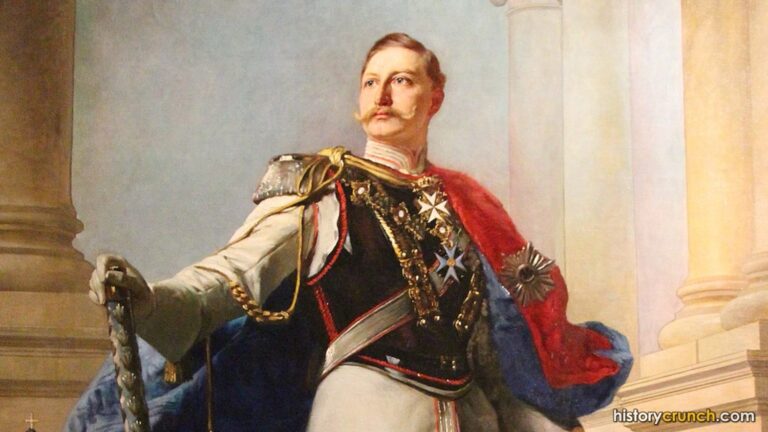
Wilhelm II became German Emperor at 29, after his father died of cancer only 99 days into his reign. He was impulsive, easily offended and determined to run foreign policy himself.
LEARN MORESHOW LESSwhy it matters · a source · 1 key figurePOLITICALBismarck had kept Germany's rivals apart by careful diplomacy. Wilhelm wanted a navy, colonies and respect, and the way he demanded them frightened Britain, France and Russia into each other's arms.
IN THEIR OWN WORDS“Germany also demands its place in the sun.”
Bernhard von Bulow, German Foreign Secretary, speaking for the Kaiser's policy, December 1897WHAT TO NOTICEBulow said it in the Reichstag, the German parliament, while defending Germany's seizure of a port in China. The phrase became the slogan for Wilhelm's push for colonies and a fleet.
The young Kaiser forced Otto von Bismarck, the chancellor who had built the German Empire, to resign. Three months later Germany let its secret Reinsurance Treaty with Russia lapse.
LEARN MORESHOW LESSwhy it matters · a debate · 2 key figuresPOLITICALBismarck's whole system rested on keeping France and Russia from joining up. What replaced it was an arms race, and militarism became the habit of every great power in Europe. Once the wire to Russia was cut, Russia went looking for a new partner, and France was waiting.
Would Bismarck have prevented the war?
Probably. He treated Russia as the one power Germany could not afford to lose, and he never wanted a fleet to compete with Britain's.
Probably not. The forces pushing Europe toward war, nationalism, the arms race and the Balkans, were bigger than one man, and Bismarck was 75 when he left office.
The French republic and the Russian tsar, who agreed about almost nothing else, agreed to fight together if Germany attacked either of them. French loans paid for Russian railways and Russian guns.
LEARN MORESHOW LESSwhy it matters · 1 key figurePOLITICALGermany now had an enemy on each side. Its generals answered with a plan to knock France out fast before Russia could get moving, and that plan is why the invasion of Belgium happened in 1914.
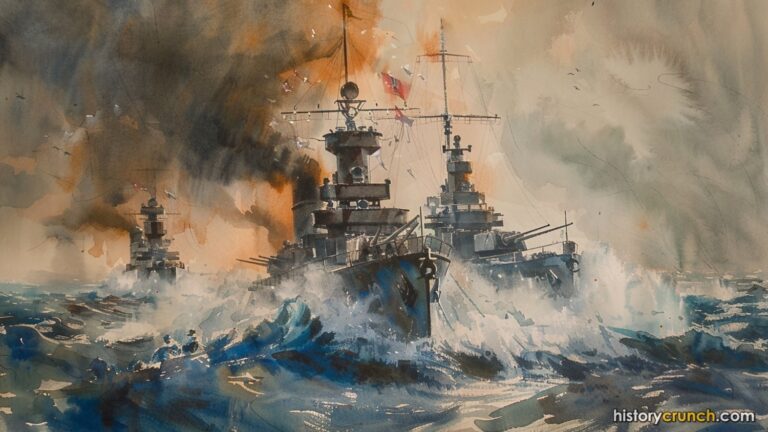
The Reichstag voted the money for a fleet of battleships. Admiral Alfred von Tirpitz argued that a strong enough German navy would make Britain think twice before ever fighting Germany.
LEARN MORESHOW LESSwhy it matters · key numbers · 1 key figureMILITARYIt did the opposite. Britain lived by the sea, and a German battle fleet in the North Sea looked like a threat aimed at Britain and nobody else. The naval race that followed did more than anything else to push Britain toward France.
Britain and France, enemies for most of the previous thousand years, agreed on who would get Egypt and who would get Morocco. It was not a military alliance, just a settling of old arguments.
LEARN MORESHOW LESSwhy it mattersPOLITICALGermany had counted on Britain and France staying rivals, and now saw itself facing encirclement by enemies on both sides. The friendship grew into secret military talks, and by 1914 British officers had a plan for landing an army in France.
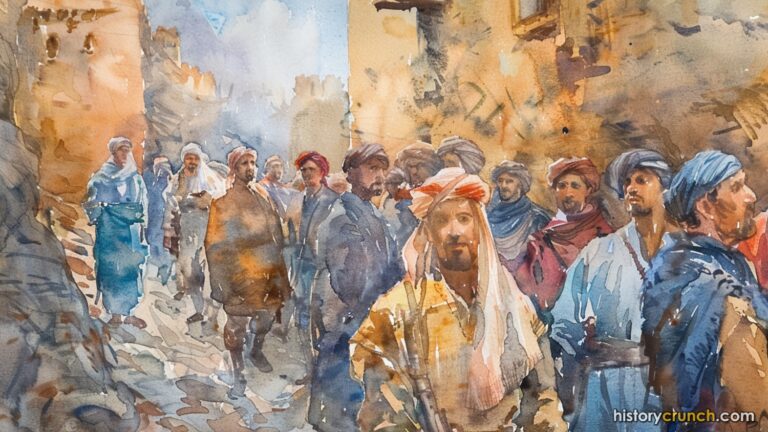
Kaiser Wilhelm II rode through Tangier and declared his support for Moroccan independence, a direct challenge to France's claim on the country. Germany wanted to test the new friendship between Britain and France.
LEARN MORESHOW LESSwhy it matters · 1 key figurePOLITICALThe test failed. Britain backed France, and Germany found itself nearly alone at the conference that followed. Germany learned that bluster brought its rivals closer together, but it tried the same thing again in 1911.
Thirteen countries met in Spain to settle the future of Morocco. Only Austria-Hungary sided with Germany. France kept control of Morocco's police and banks, which was most of what it wanted.
LEARN MORESHOW LESSwhy it matters · key numbersPOLITICALGermany had asked for a conference to split Britain from France and instead watched them vote together. The lesson German leaders drew was that they were being encircled, and that feeling drove their decisions in 1914.
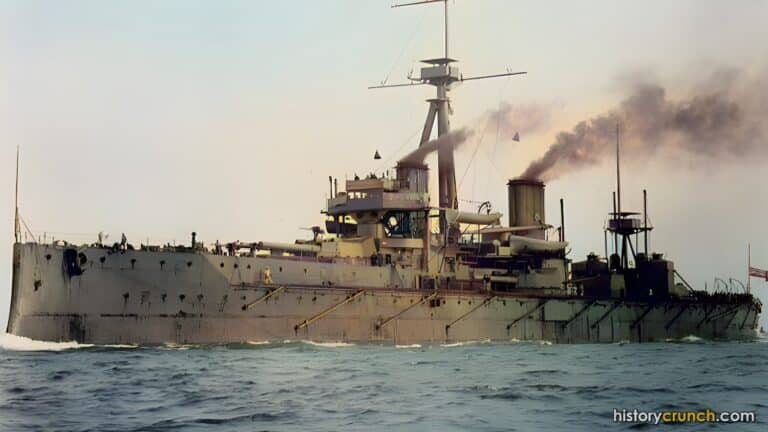
Britain launched a battleship with ten big guns instead of four and steam turbines that made it faster than anything afloat. It was built in a year and a day.
LEARN MORESHOW LESSwhy it matters · key numbers · elsewhereSCIENCEEvery older battleship, including Britain's own, was suddenly second rate. The race started again from zero, and Germany decided to build dreadnoughts of its own. By 1914 Britain had 29 and Germany 17.
The same year, an earthquake and fire destroyed most of San Francisco, and Finland became the first country in Europe to give women the vote.
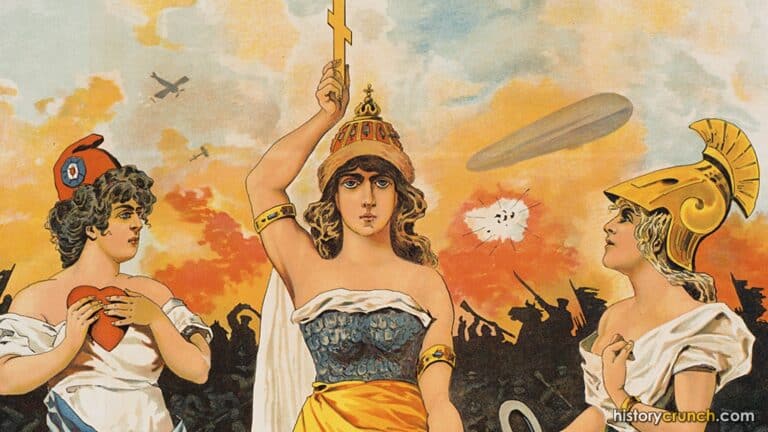
Britain and Russia divided Persia into zones of influence and agreed to stop competing in Afghanistan and Tibet. With France already friendly to both, the three countries became known as the Triple Entente.
LEARN MORESHOW LESSwhy it matters · a debatePOLITICALEurope was now split into two blocs of three. Germany's leaders talked of being surrounded by enemies, and the feeling that time was running against them made a preventive war look tempting.
Was Germany really encircled?
Yes. Three great powers had settled their quarrels with each other and had nothing left to argue about except Germany.
No. Britain refused to sign any binding alliance, and the Entente powers still distrusted each other. Germany's own naval race and clumsy diplomacy built the ring around it.
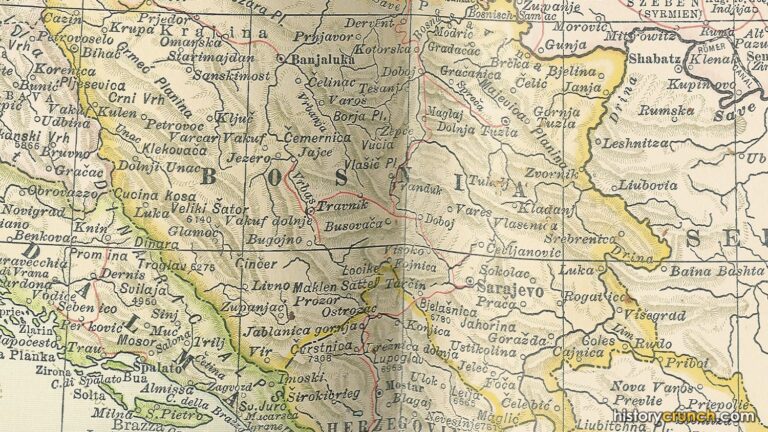
Austria-Hungary annexes Bosnia: it declared that the province, which it had run since 1878 but which still belonged to the Ottoman Empire on paper, was now part of the Austrian empire. Serbia, which wanted Bosnia's Serbs for itself, threatened war.
LEARN MORESHOW LESSwhy it matters · key numbers · 1 key figurePOLITICALRussia backed down when Germany stood behind Austria, and swore it would never back down again. Serbian anger over Bosnia produced the Black Hand and, six years later, the killing in Sarajevo.
Between 1911 and 1914 the crises came faster. Two Balkan wars made Serbia bigger and Austria-Hungary more frightened, and then two shots in Sarajevo gave the war party in Vienna its chance. In five weeks of July 1914 every great power in Europe chose war.
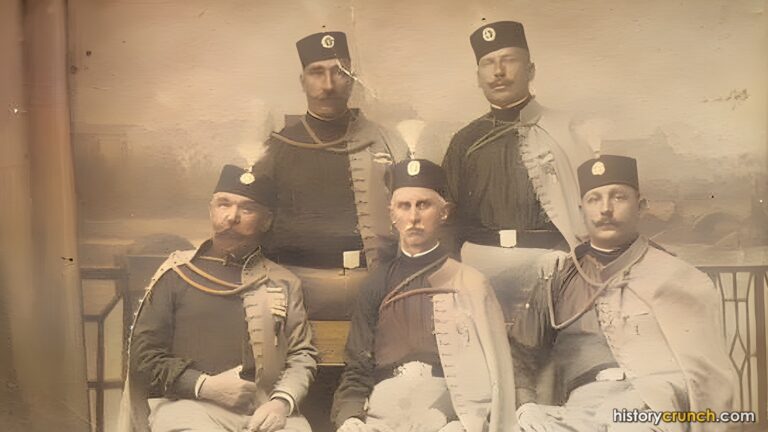
A group of Serbian army officers formed a secret society called Unification or Death, better known as the Black Hand. Its aim was to join every Serb in the Balkans into one country, by violence if needed.
LEARN MORESHOW LESSwhy it mattersPOLITICALThe society trained and armed the young Bosnians who killed Franz Ferdinand in 1914. Its head, Colonel Dragutin Dimitrijevic, also ran Serbian military intelligence, which is why Austria-Hungary blamed the Serbian state.
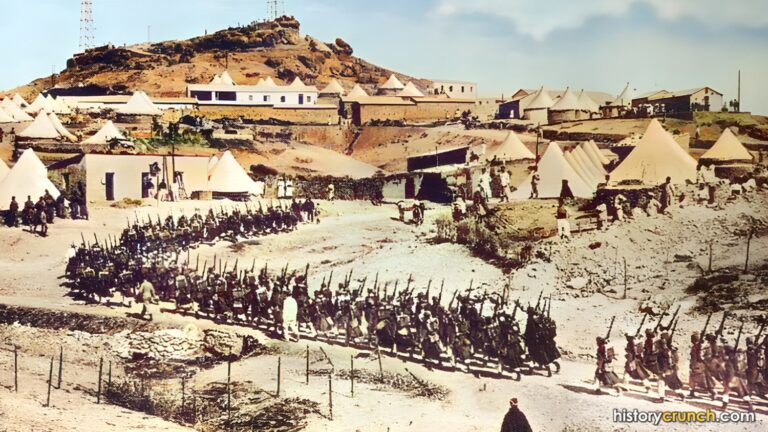
Germany sent the gunboat Panther to the Moroccan port of Agadir to protest French troops moving into the country. For several weeks Britain and France prepared for the possibility of war with Germany.
LEARN MORESHOW LESSwhy it matters · a source · 1 key figurePOLITICALGermany settled for a strip of the French Congo and came away looking like a bully that had been faced down. Inside Germany the retreat was seen as a humiliation, and the generals argued that next time they should not back off.
IN THEIR OWN WORDS“Peace at that price would be a humiliation intolerable for a great country like ours to endure.”
David Lloyd George, Mansion House speech, July 21st, 1911WHAT TO NOTICELloyd George was Britain's Chancellor of the Exchequer and had been thought a friend of Germany. His warning that Britain would fight rather than be ignored shocked Berlin.
Italy declared war on the Ottoman Empire and landed troops in Libya, the last piece of North Africa not yet taken by a European power. Italian aircraft dropped the first bombs ever used in war.
LEARN MORESHOW LESSwhy it matters · key numbersMILITARYThe Ottomans gave up Libya within thirteen months, and the small Balkan states saw how weak the empire had become. Within a year they attacked it themselves, and the Balkan Wars that followed set up the crisis of 1914.
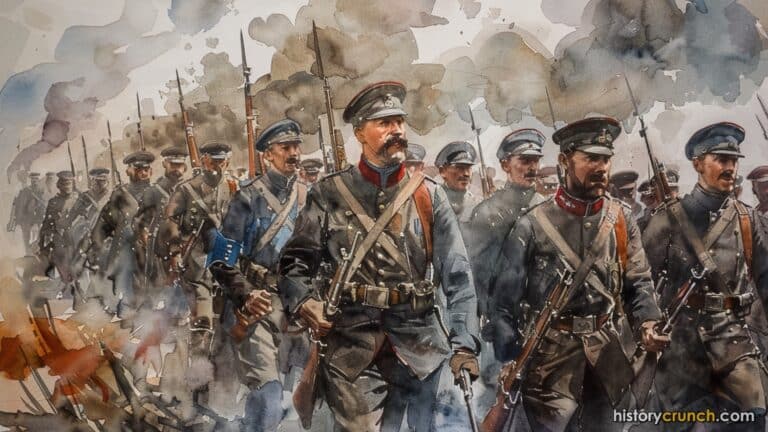
Montenegro, Serbia, Bulgaria and Greece attacked the Ottoman Empire together and drove it out of almost all of its European territory in a few months. Serbia doubled in size.
LEARN MORESHOW LESSwhy it matters · key numbersMILITARYAustria-Hungary watched Serbia grow and decided it could not let that continue. Russia backed Serbia. The two empires that would start the world war in 1914 were already facing each other across the same small country.
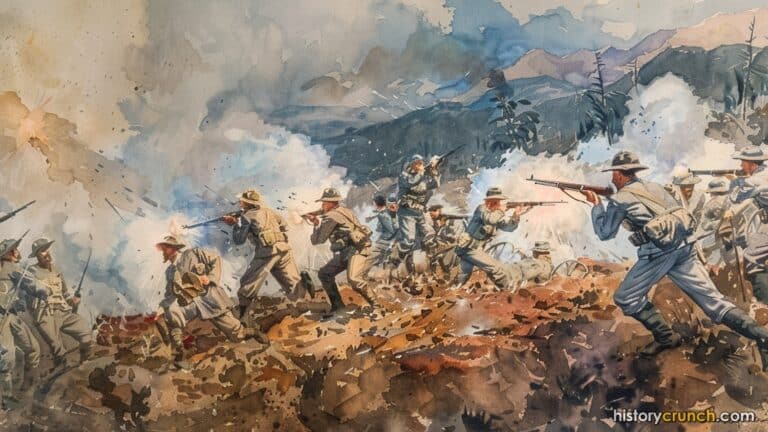
Bulgaria felt cheated of its share of the winnings and attacked Serbia and Greece. Romania and the Ottomans joined in against Bulgaria, which lost in six weeks.
LEARN MORESHOW LESSwhy it mattersMILITARYBulgaria came out of it bitter and looking for revenge, which is why it joined Germany in 1915. Serbia came out of it larger and more confident than ever, which is why Austria-Hungary wanted it crushed.
The treaty divided the Ottoman lands among the winners. Serbia gained Kosovo and much of Macedonia and now had about four and a half million people, nearly twice as many as before the wars.
LEARN MORESHOW LESSwhy it matters · key numbersPOLITICALVienna saw a bigger Serbia as a magnet for the South Slavs inside Austria-Hungary and began to talk openly about a war to destroy it. The murder in Sarajevo gave the war party the excuse it had been waiting for.
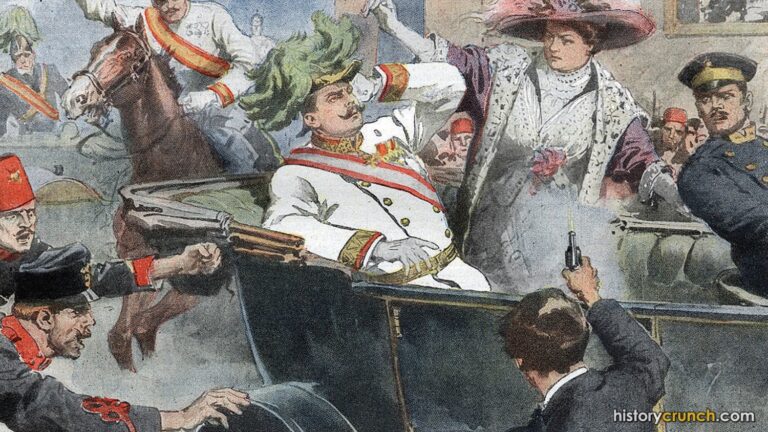
Gavrilo Princip, a 19-year-old Bosnian Serb armed by the Black Hand, shot Archduke Franz Ferdinand, heir to the Austro-Hungarian throne, and his wife Sophie as their car stopped on a Sarajevo street. An earlier bomb that morning had missed.
LEARN MORESHOW LESSwhy it matters · key numbers · a sourcePOLITICALAustria-Hungary blamed Serbia and decided on war. The alliances did the rest. Five weeks after two shots in a Bosnian street, every great power in Europe was at war.
IN THEIR OWN WORDS“Sophie, Sophie, don't die. Stay alive for our children.”
Archduke Franz Ferdinand's last words, June 28th, 1914WHAT TO NOTICEFranz Ferdinand had married Sophie against the emperor's wishes, and their children were barred from the throne. Both were dead within minutes of the shooting.
Did the assassination cause the war?
Yes. Without the murder there was no crisis in July 1914, and Europe had survived several crises in the previous ten years without a war.
Only as the spark. Austria wanted to crush Serbia, Germany wanted to fight Russia before it grew stronger, and the alliances and war plans were already in place. If not Sarajevo, something else.
An Austrian envoy asked the Kaiser what Germany would do if Austria punished Serbia and Russia stepped in. Wilhelm promised full support whatever Austria decided, then left on his summer cruise.
LEARN MORESHOW LESSwhy it matters · a debate · 1 key figurePOLITICALAustria would not have dared attack Serbia without knowing Germany stood behind it against Russia. Historians call this the blank cheque, and it is the reason many of them put the heaviest blame for the war on Germany.
Was Germany most to blame for the war?
Yes. Germany pushed Austria to attack, refused to hold a conference, declared war on Russia and France, and invaded Belgium. No other country made that many choices for war.
Every great power shares the blame. Austria wanted Serbia crushed, Russia mobilized first, France encouraged Russia, and Britain never told Germany plainly that it would fight.
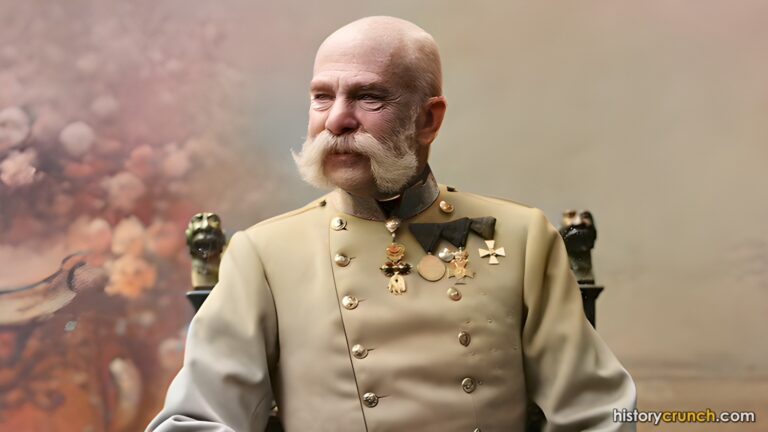
Austria-Hungary handed Serbia ten demands and gave it 48 hours to answer. One of them, that Austrian officials be allowed to run the investigation inside Serbia, was written so that no independent country could accept it.
LEARN MORESHOW LESSwhy it matters · key numbers · a sourcePOLITICALSerbia accepted almost everything, which surprised Europe, but it would not accept Austrian police on its soil. Austria had wanted a refusal, and it treated the answer as one.
IN THEIR OWN WORDS“This is the most formidable document I have ever seen addressed by one state to another that was independent.”
Edward Grey, British Foreign Secretary, July 24th, 1914WHAT TO NOTICEGrey's reaction shows how the ultimatum looked to the rest of Europe: not a demand for justice after a murder, but a demand designed to be refused.
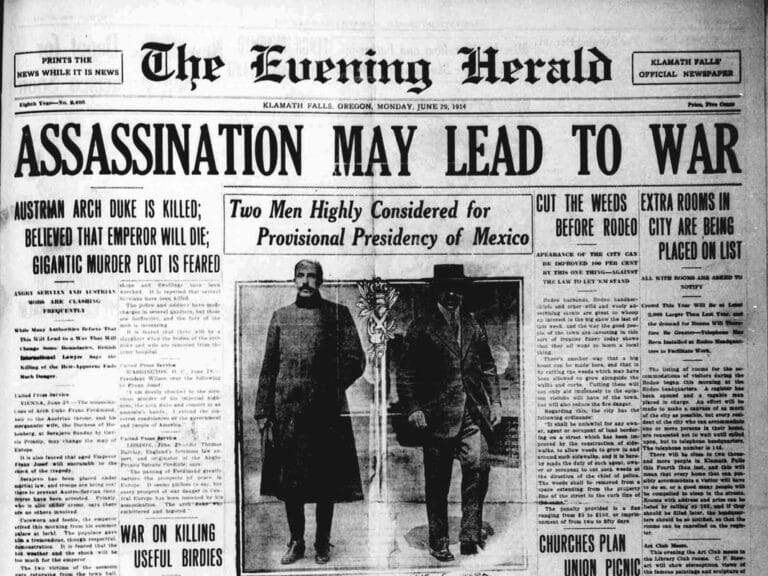
One month to the day after the assassination, Austria-Hungary declared war on Serbia by telegram. Austrian gunboats on the Danube shelled Belgrade the next day.
LEARN MORESHOW LESSwhy it matters · 1 key figureMILITARYThis was the first declaration of war. Russia answered by mobilizing, Germany answered Russia, and the chain reaction that had been feared for years ran to the end in seven days.
Tsar Nicholas II ordered the whole Russian army to mobilize, meaning millions of reservists reported to their units and the trains began to run to the frontiers. He had cancelled the same order the night before, then changed his mind.
LEARN MORESHOW LESSwhy it matters · key numbers · a sourceMILITARYMobilization was not yet war, but every general staff in Europe treated it as the start of one, because the side that mobilized first would win the opening battles. Germany gave Russia twelve hours to stop.
IN THEIR OWN WORDS“Willy, I foresee that very soon I shall be overwhelmed by the pressure forced upon me and be forced to take extreme measures which will lead to war.”
Tsar Nicholas II, telegram to Kaiser Wilhelm II, July 29th, 1914WHAT TO NOTICEThe Tsar and the Kaiser were cousins and wrote to each other in English as Nicky and Willy. The telegrams show two men who did not want the war and could not stop it.
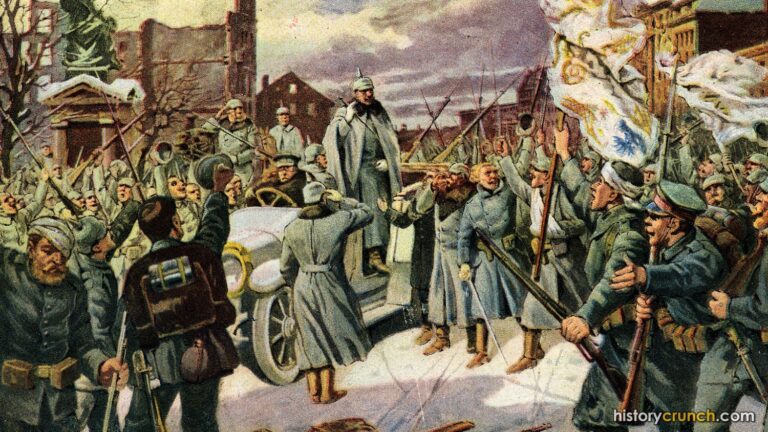
When Russia refused to halt its mobilization, Germany declared war on it and began mobilizing its own army. Crowds in Berlin cheered. France, bound to Russia by its alliance, ordered its army to mobilize the same afternoon.
LEARN MORESHOW LESSwhy it matters · 1 key figureMILITARYGermany's only war plan called for beating France first, so a war with Russia meant a war with France whether France wanted one or not. The decision to fight in the east made the invasion of the west automatic.
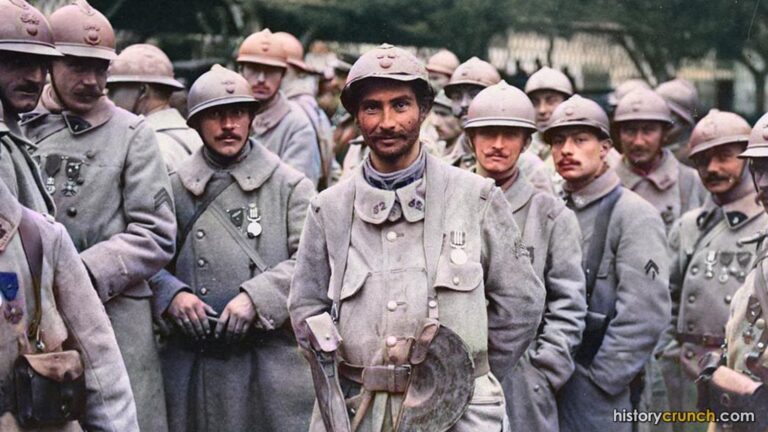
Germany declared war on France, claiming French planes had bombed German towns, which they had not. The day before, Germany had demanded free passage for its army through neutral Belgium, and on August 3rd Belgium refused.
LEARN MORESHOW LESSwhy it mattersMILITARYFrance had been waiting for this war since 1871 and went into it united. The German demand on Belgium turned a continental war into a British one, because Britain had guaranteed Belgian neutrality since 1839.
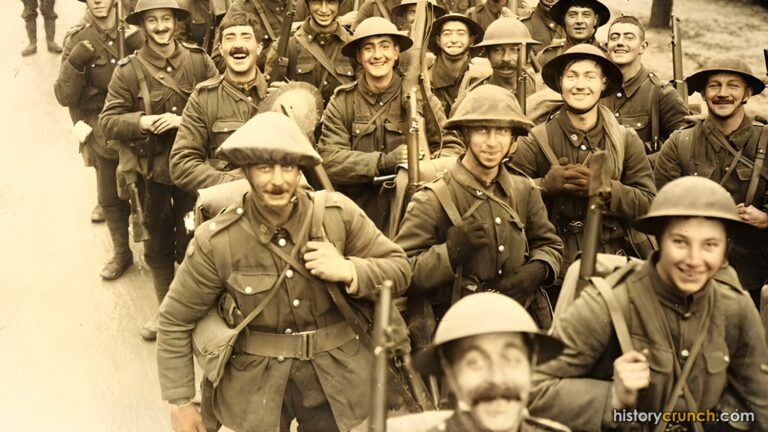
German troops crossed into Belgium at dawn. Britain demanded they withdraw by midnight, German time, and when the deadline passed Britain was at war. With it came Canada, Australia, New Zealand, South Africa and India.
LEARN MORESHOW LESSwhy it matters · key numbers · a sourceMILITARYThe war was now a world war. Britain brought the largest navy on earth, an empire of 400 million people, and the money and industry that would keep France and Russia fighting.
IN THEIR OWN WORDS“The lamps are going out all over Europe; we shall not see them lit again in our lifetime.”
Edward Grey, British Foreign Secretary, evening of August 3rd, 1914WHAT TO NOTICEGrey said it to a friend while watching the street lamps being lit outside the Foreign Office. It has become the most quoted line about the end of the old Europe.
Four days later, Ernest Shackleton's ship Endurance sailed from Plymouth for Antarctica. Its crew did not learn how the war was going for almost two years.
Everyone expected a short war. Germany's plan to beat France in six weeks failed on the Marne in September, Russia's invasion of Germany was destroyed at Tannenberg, and by Christmas two lines of trenches ran from the North Sea to Switzerland with no way around them.
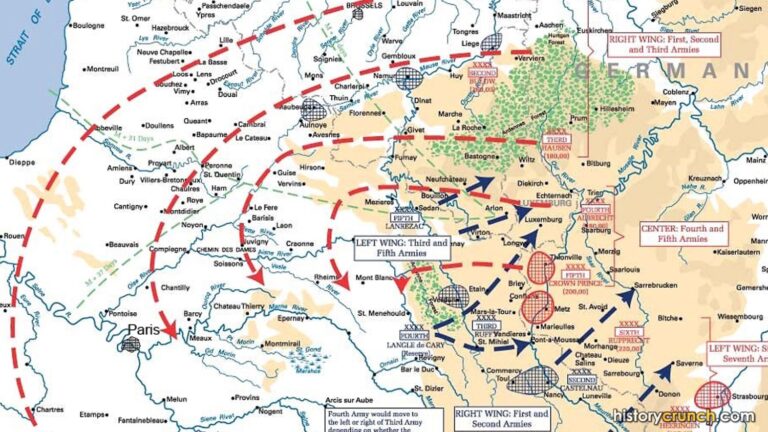
Germany's war plan sent seven armies sweeping through Belgium to circle around Paris and crush France in six weeks, before Russia could mobilize. It had been written in 1905 by Alfred von Schlieffen and weakened since by his successor, Helmuth von Moltke.
LEARN MORESHOW LESSwhy it matters · key numbers · a debateMILITARYEverything about the first month of the war came from this plan: the attack on Belgium, Britain's entry, and the race for Paris. When it failed on the Marne, Germany was left with the two-front war the plan had been written to avoid.
Could the Schlieffen Plan ever have worked?
Yes. The German right wing came within 30 miles of Paris. With the two corps Moltke sent east and the troops he took from the right wing, it might have got there.
No. Men on foot could not keep up with a timetable written for a map. The soldiers who reached the Marne had marched 300 miles in a month and were finished.
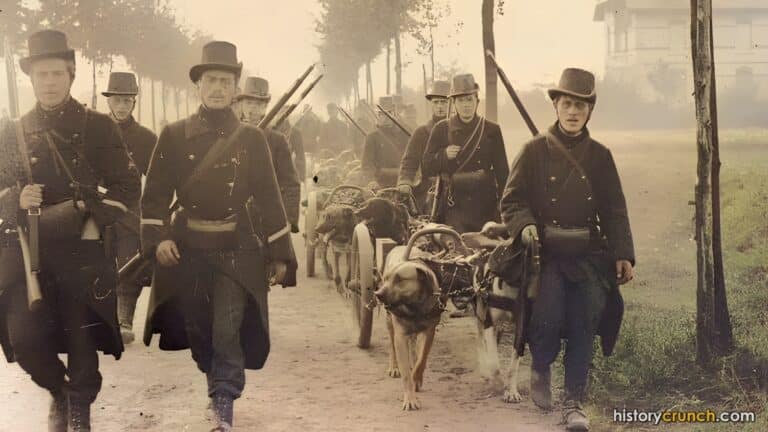
France launched its own war plan, an attack into Lorraine, and through the wooded hills of the Ardennes, to take back the provinces lost in 1871. French infantry in red trousers and blue coats charged German machine guns across open fields. On August 22nd alone, about 27,000 French soldiers were killed.
LEARN MORESHOW LESSwhy it matters · key numbersMILITARYAugust 22nd, 1914, is still the deadliest day in French history. The French army learned in a month what massed firepower did to men in the open, and the lesson cost it more than 200,000 casualties.
The Royal Navy closed the exits from the North Sea and began stopping every ship bound for Germany. Rather than fight the German fleet at its bases, Britain sat across its supply routes and waited.
LEARN MORESHOW LESSwhy it matters · key numbers · 1 key figureMILITARYThe blockade lasted until July 1919 and slowly starved Germany of food, fertilizer and raw materials. Germany's answer was the submarine, and the submarine is what eventually brought the United States into the war.
Britain's small professional army, about 80,000 men, met the German First Army at the Belgian town of Mons. British riflemen fired so fast that some Germans thought they faced machine guns, but by evening the British were falling back.
LEARN MORESHOW LESSwhy it matters · key numbersMILITARYThe retreat from Mons lasted two weeks and covered 200 miles. It kept the British army in the war and in line with the French, which made the stand on the Marne possible.
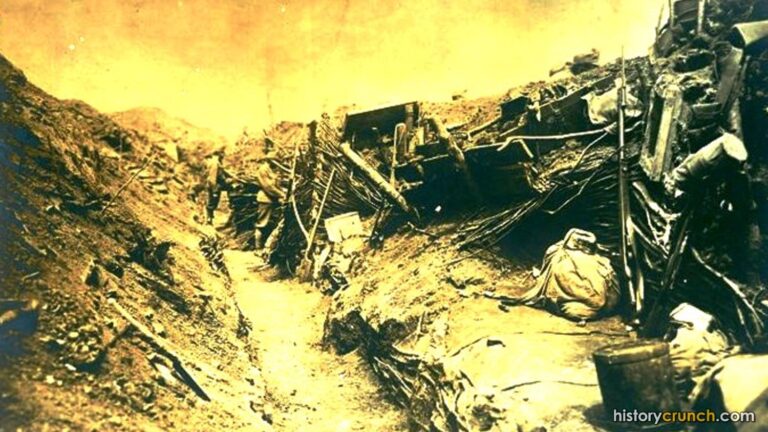
Four Russian armies attacked Austria-Hungary's eastern province of Galicia. In three weeks the Austrians lost the city of Lemberg and about 400,000 men, and were pushed back 100 miles to the Carpathian Mountains.
LEARN MORESHOW LESSwhy it matters · key numbersMILITARYAustria-Hungary's army never recovered its strength or its confidence. For the remaining four years of the war it depended on German troops to hold its front, and Germany was pulled deeper into a war in the east it had planned to win in six weeks.
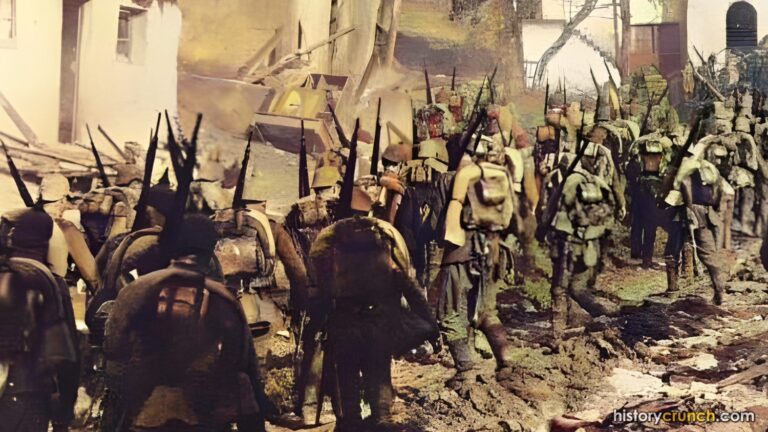
Two Russian armies invaded East Prussia faster than anyone expected. Paul von Hindenburg and Erich Ludendorff, listening to Russian radio orders sent without code, surrounded one of them in the forests near Tannenberg and took 92,000 prisoners. Its commander shot himself.
LEARN MORESHOW LESSwhy it matters · key numbers · 1 key figureMILITARYGerman propaganda made Hindenburg and Ludendorff national heroes on the strength of it, and by 1916 they were running Germany. It also took the pressure off the west just as the Schlieffen Plan was failing, because Moltke had already sent two corps east that were missed on the Marne.
British cruisers and destroyers raided the German patrol lines off the North Sea coast and sank three German light cruisers and a destroyer. Britain lost no ships.
LEARN MORESHOW LESSwhy it matters · key numbersMILITARYThe Kaiser ordered his fleet to take no more risks, and it spent most of the next two years in harbor. The decision left the sea to Britain and pushed Germany toward the submarine as its main naval weapon.
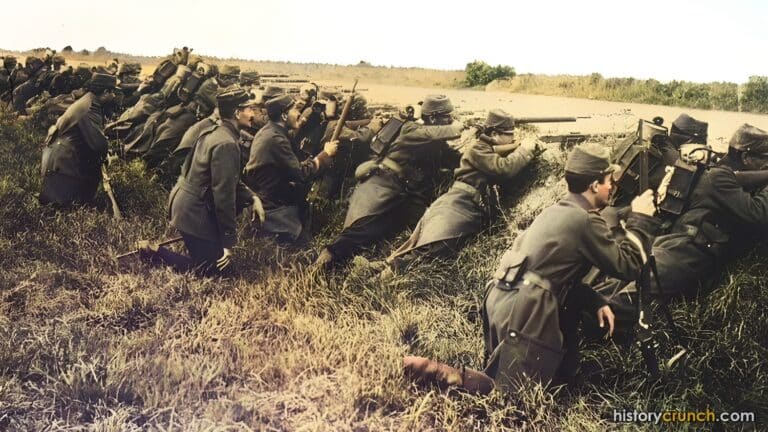
With the German army 30 miles from Paris, the French and British turned and attacked along the Marne River. Paris taxis carried 6,000 reinforcements to the front. A gap opened between two German armies, and after six days the Germans pulled back to the Aisne.
LEARN MORESHOW LESSwhy it matters · key numbers · a sourceMILITARYThe Schlieffen Plan was dead, and with it Germany's chance of a short war. The armies dug in on the Aisne, and the trench war that would last four years began within weeks.
IN THEIR OWN WORDS“Majesty, we have lost the war.”
Helmuth von Moltke, German commander in chief, to the Kaiser, September 1914WHAT TO NOTICEMoltke suffered a breakdown during the battle and was quietly replaced within days. Whether he said these exact words is disputed, but they sum up what the German high command understood.
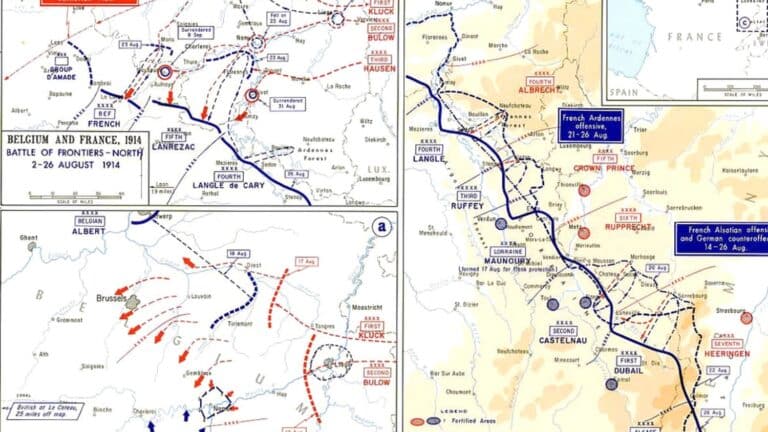
After the Marne each side tried to get around the other's open northern flank. Every attempt was blocked by the enemy arriving first, and the line of trenches grew northward, step by step, until it reached the Belgian coast.
LEARN MORESHOW LESSwhy it matters · key numbersMILITARYBy the middle of October there was no flank left to turn. The war of movement was over in the west, and trench warfare and stalemate took its place. The only way forward was straight through the enemy's trenches.
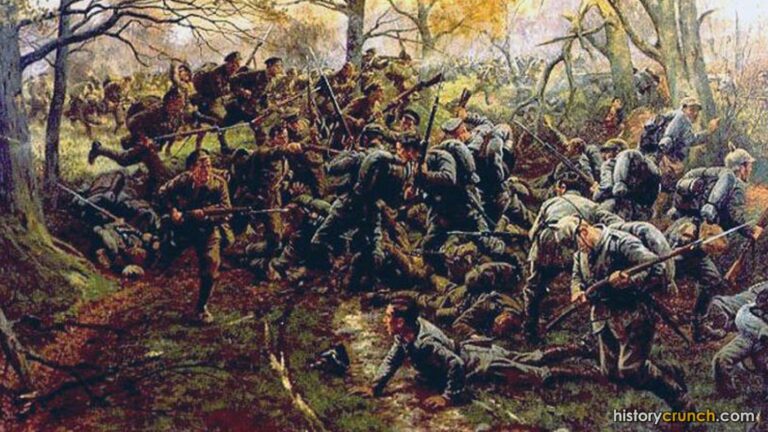
Germany made a last attempt to break through to the Channel ports at the Belgian town of Ypres. For a month British, French and Belgian troops held on against attacks that included German student volunteers advancing in close ranks.
LEARN MORESHOW LESSwhy it matters · key numbersMILITARYYpres held, but the old British regular army was largely used up doing it. The bulge in the line around the town, called the Ypres Salient, was fought over for four more years and became the most hated ground on the Western Front.
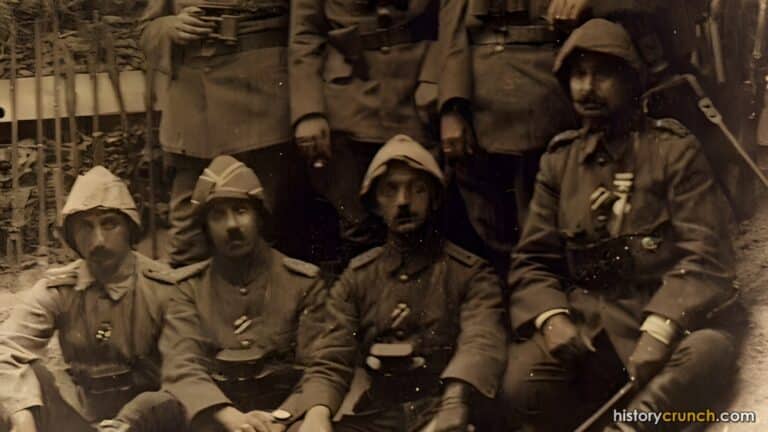
Two German warships that had escaped to Constantinople in August, now flying the Ottoman flag, shelled the Russian ports of Odessa and Sevastopol. Russia, Britain and France declared war on the Ottoman Empire within a week.
LEARN MORESHOW LESSwhy it mattersMILITARYThe war spread to the Middle East, the Caucasus and the Dardanelles. Russia lost its only warm-water route to its allies, and Britain had to defend Egypt and the Suez Canal. Gallipoli, the Armenian Genocide and the modern map of the Middle East all follow from this day.
Off the coast of Chile, Admiral Maximilian von Spee's cruiser squadron sank two British cruisers with the loss of every man aboard. Five weeks later, on December 8th, British battlecruisers caught Spee at the Falkland Islands and sank four of his five ships.
LEARN MORESHOW LESSwhy it matters · key numbersMILITARYCoronel was Britain's first naval defeat in a century and a shock to a country that thought the Royal Navy could not lose. The Falklands cleared the oceans of German surface raiders, and from then on the war at sea was fought in the North Sea and under it.
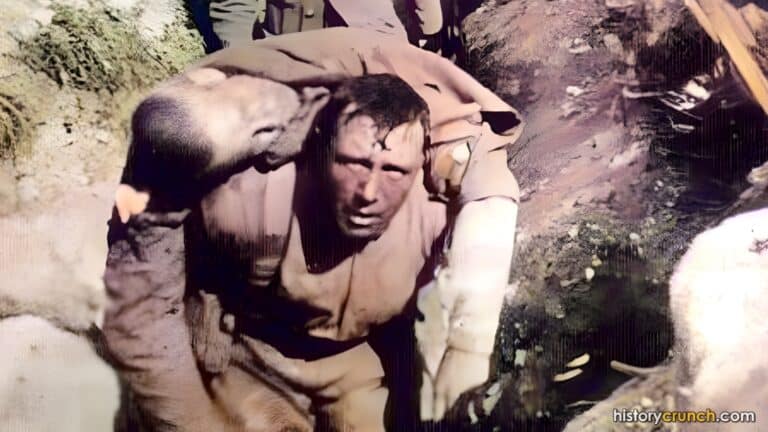
By December two lines of trenches ran without a break for about 475 miles, from the Belgian coast to the Swiss border. Between them lay no man's land, a strip of shell holes and barbed wire that was sometimes only 50 yards wide.
LEARN MORESHOW LESSwhy it matters · key numbers · a debateMILITARYThe trench line barely moved for three and a half years. Machine guns, barbed wire and quick-firing artillery made defending easy and attacking almost impossible, and every offensive until 1918 broke against that fact.
Why could nobody break the deadlock?
Because of the weapons. Machine guns and artillery could kill attackers faster than they could cross no man's land, and there was no way yet to move guns and supplies forward over the ground they had wrecked.
Because of the generals. They kept using the methods of 1870 against the weapons of 1914, and it took them years to learn what tanks, aircraft and creeping barrages could do.
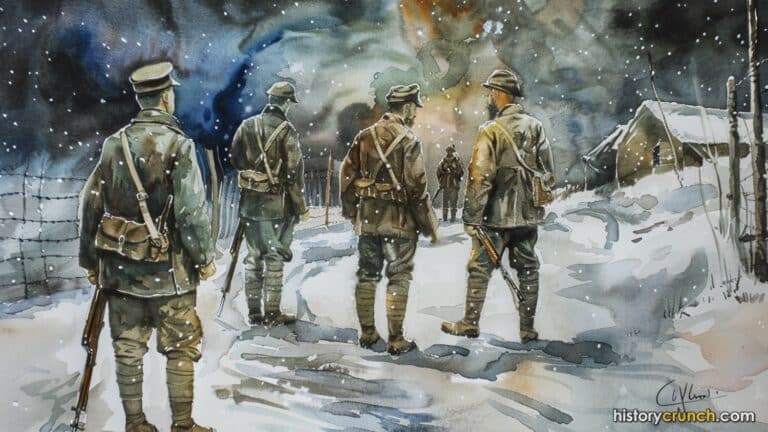
On Christmas Eve German soldiers put candles on the parapets and sang carols, and British soldiers sang back. On Christmas Day men from both sides met in no man's land to trade food and tobacco, bury their dead and, in a few places, kick a football about.
LEARN MORESHOW LESSwhy it matters · key numbers · a sourceSOCIALMen who had been shooting at each other for four months shook hands and swapped cigarettes. The soldiers plainly did not hate each other the way the newspapers said, and commanders on both sides made sure it never happened again: by Christmas 1915 the artillery was ordered to fire all day.
IN THEIR OWN WORDS“I wouldn't have missed the experience of yesterday for the most gorgeous Christmas dinner in England.”
Captain Robert Hamilton, 2nd Battalion Royal Warwickshire Regiment, diary, December 26th, 1914WHAT TO NOTICEHundreds of letters like this reached home. The War Office could not stop them being printed, and the truce was public knowledge in Britain within a week.
For two years the armies tried to break the trench lines and could not. Gas, tanks, Zeppelins and submarines all arrived, and Verdun and the Somme each cost more than half a million men for a few miles of ground. The war spread to Gallipoli, Italy and the Balkans, and the strain began to tell at home.
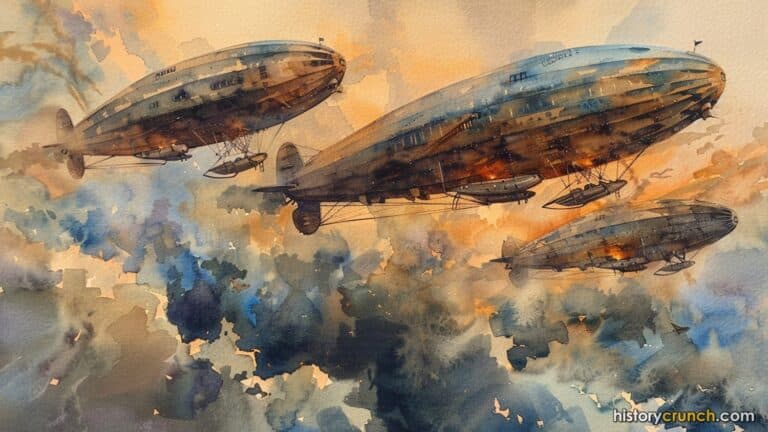
Two German airships dropped bombs on Great Yarmouth and King's Lynn on the English coast, killing four people. It was the first time in history that civilians far from any battlefield had been attacked from the air.
LEARN MORESHOW LESSwhy it matters · key numbersSCIENCEThe Zeppelins did little damage but they changed what war meant, and they created the home front: the civilians behind the lines were now in the war too. Cities were now targets, and the idea that bombing could break a country's will to fight, which drove the air war of 1939 to 1945, began here.
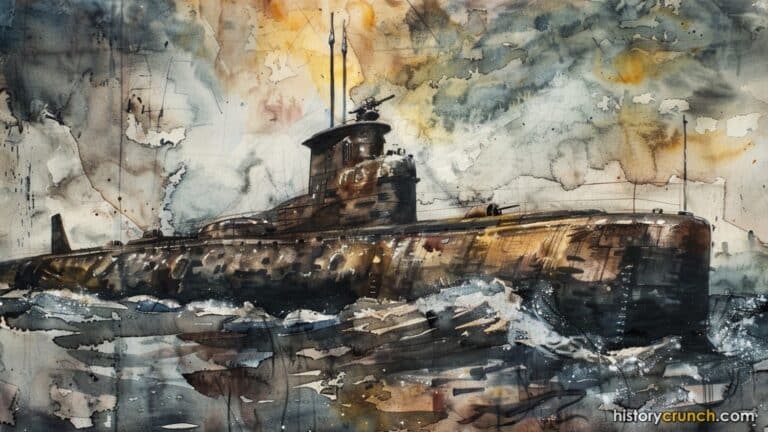
Germany announced that from February 18th its submarines would sink any merchant ship found in the seas around the British Isles, without warning, and that neutral ships entered at their own risk.
LEARN MORESHOW LESSwhy it matters · key numbersMILITARYIt was Germany's answer to the British blockade, and it broke the old rule that a warship had to warn a merchant ship and let the crew off before sinking it. Neutral countries, above all the United States, took it as a threat to their own ships and citizens.
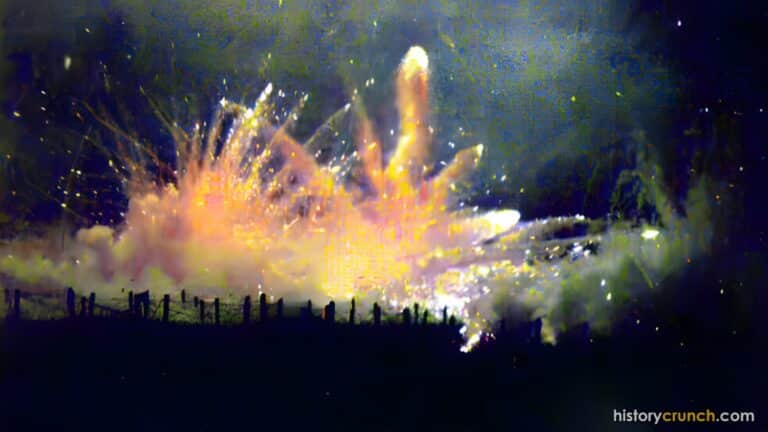
At five in the afternoon German troops opened 5,700 cylinders of chlorine gas and let the wind carry a green-yellow cloud onto French colonial troops, who broke and ran. Canadian soldiers next to them held the line through the night, some breathing through cloths soaked in urine.
LEARN MORESHOW LESSwhy it matters · key numbers · a sourceSCIENCEGas was a weapon of attrition: it did not break the line, it wore the men behind it down. It became normal on every front within months, and both sides raced to build masks and worse gases. It caused about a million casualties in the war but never broke a front, because a defender with a mask could still fire a machine gun.
IN THEIR OWN WORDS“It produces a flooding of the lungs. It is an equivalent death to drowning, only on dry land.”
Lance Sergeant Elmer Cotton, Northumberland Fusiliers, describing chlorine gas, 1915WHAT TO NOTICEThe Canadians had been in France for two months. Their stand at Ypres was the first time Canadian troops fought as a division, and it cost them about 6,000 casualties in four days.
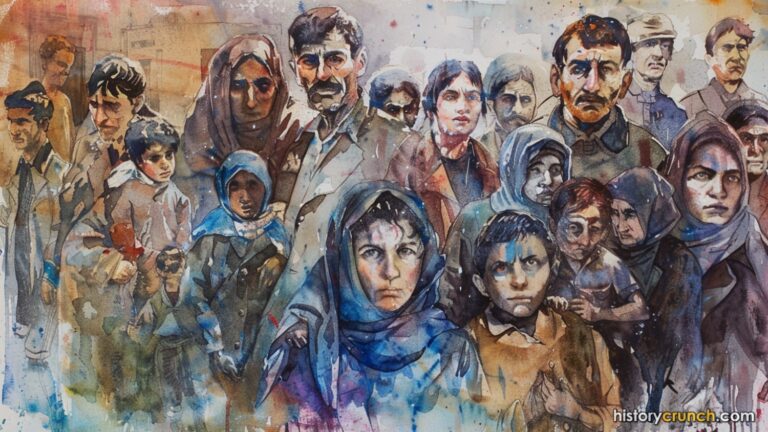
Ottoman police arrested about 250 Armenian leaders in Constantinople, and over the following months the government deported the Armenian population of Anatolia on foot toward the Syrian desert. Most of the men were killed outright; most of the women and children died of hunger, thirst and violence on the marches.
LEARN MORESHOW LESSwhy it matters · key numbers · elsewhereSOCIALAround a million or more Armenians died. The Ottoman leaders used the war as cover, claiming that Armenians were siding with Russia after the Ottoman defeat in the Caucasus. The word genocide was invented in 1944 partly to describe what happened here.
Three days earlier, the Second Battle of Ypres had begun with the first gas attack on the Western Front. The world's attention was there, not in Anatolia.
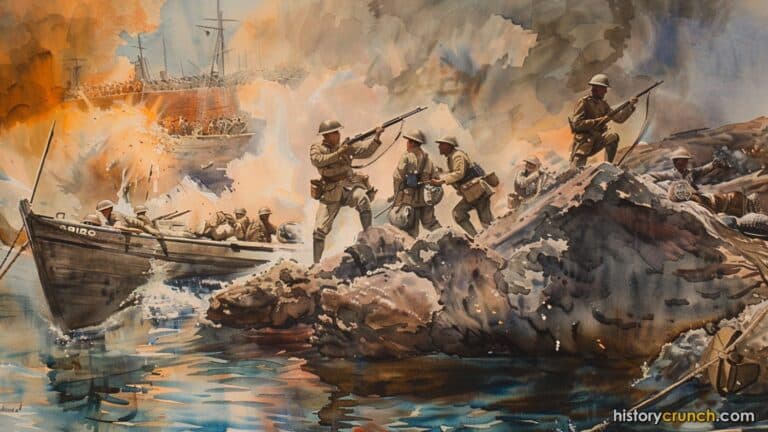
British, French, Australian and New Zealand troops landed on the Gallipoli peninsula to open the Dardanelles, capture Constantinople and knock the Ottoman Empire out of the war. Ottoman troops under Mustafa Kemal held the ridges above the beaches, and the landings never got far off them.
LEARN MORESHOW LESSwhy it matters · key numbers · a sourceMILITARYWinston Churchill, who had pushed the plan, lost his job over it. Australia and New Zealand mark April 25th as Anzac Day, the day their countries' soldiers first fought under their own names, and the campaign made Mustafa Kemal the man who would found modern Turkey.
IN THEIR OWN WORDS“I do not order you to attack, I order you to die.”
Mustafa Kemal, Ottoman commander at Gallipoli, order to the 57th Regiment, April 25th, 1915WHAT TO NOTICEThe 57th Regiment was almost wiped out holding the ridge that day, but it held. Kemal became a national hero and, in 1923, the first president of Turkey.
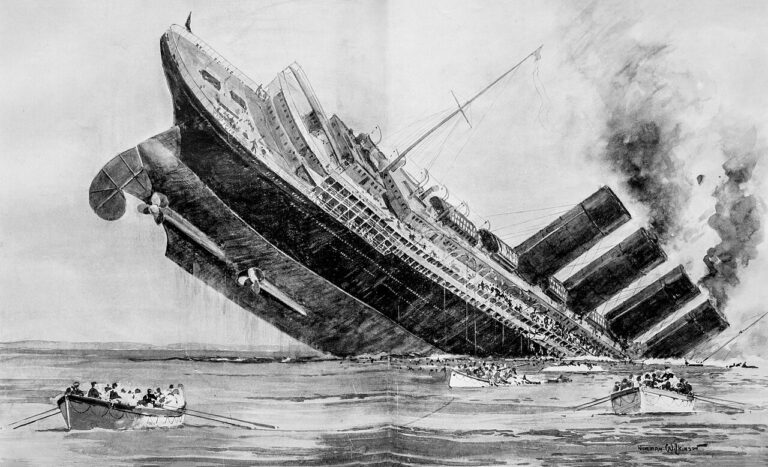
The German submarine U-20 torpedoed the British liner Lusitania off the coast of Ireland. The ship sank in 18 minutes and 1,198 people died, 128 of them Americans. The ship was also carrying rifle ammunition, which Germany used to justify the attack.
LEARN MORESHOW LESSwhy it matters · key numbers · elsewhereMILITARYAmerican opinion turned hard against Germany. President Wilson demanded that Germany stop sinking passenger ships, and to keep the United States out of the war Germany agreed. When it went back on that promise in 1917, the Lusitania was the memory Americans reached for.
Two weeks later Italy joined the war on the Allied side, and in the United States the film The Birth of a Nation was drawing record crowds and protests against its celebration of the Ku Klux Klan.
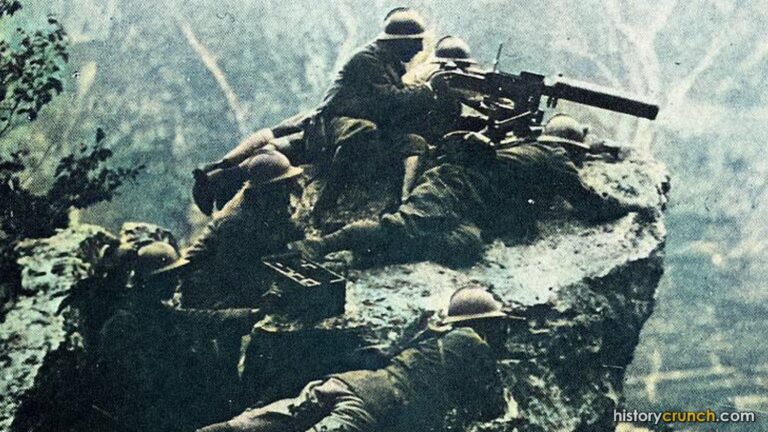
Italy had been Germany's ally on paper since 1882 but stayed neutral in 1914. In the secret Treaty of London, Britain and France promised it Austrian land on the Adriatic and in the Alps, and Italy declared war on Austria-Hungary.
LEARN MORESHOW LESSwhy it matters · key numbersPOLITICALA new front opened in the mountains along the Isonzo River, where Italy attacked eleven times in two years and gained almost nothing. The promises made in London were only partly kept in 1919, and Italian anger about that helped bring Benito Mussolini to power in 1922.
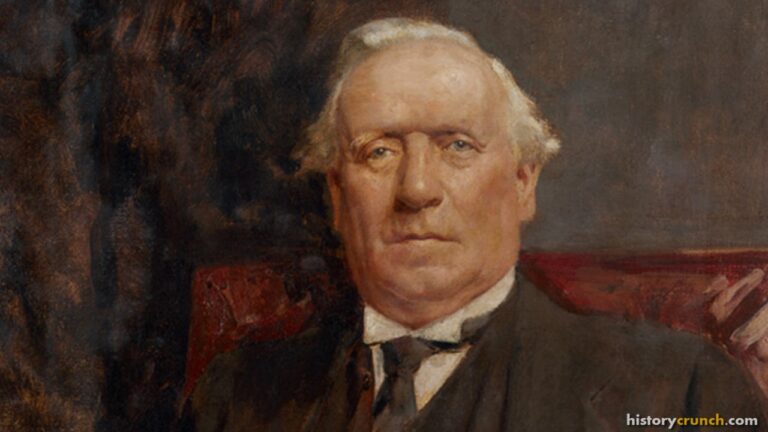
Newspapers reported that British attacks were failing because the army had run out of shells. The scandal, on top of Gallipoli, forced Prime Minister H. H. Asquith to bring the opposition into a coalition government. David Lloyd George took the new job of Minister of Munitions.
LEARN MORESHOW LESSwhy it matters · key numbers · 2 key figuresPOLITICALIt was the moment Britain accepted that the war would be won in the factories as much as in the trenches. Lloyd George built a new munitions industry, brought hundreds of thousands of women into it, and made his own name as the man who got things done.
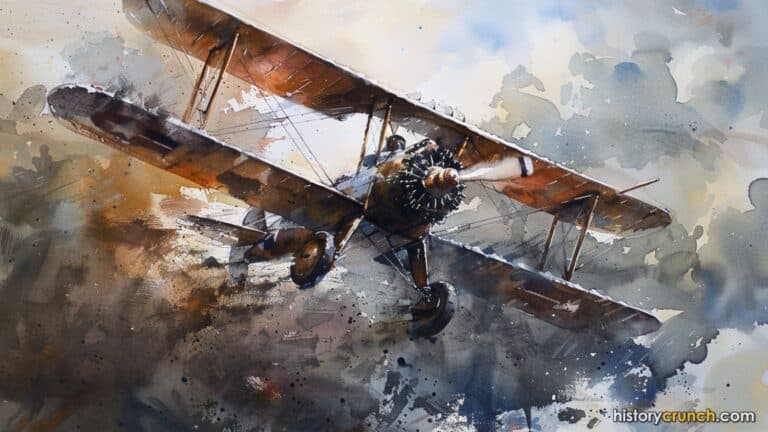
The Fokker Eindecker was the first fighter with a gear that let its machine gun fire through the propeller without hitting the blades. For about six months German pilots could shoot down Allied observation planes almost at will.
LEARN MORESHOW LESSwhy it matters · key numbersSCIENCEAircraft had begun the war as spotters for the artillery. The Fokker turned them into weapons that fought each other, and the fighter, the ace and the dogfight all date from this summer. The Allies caught up by early 1916, and the lead changed hands again and again until 1918.
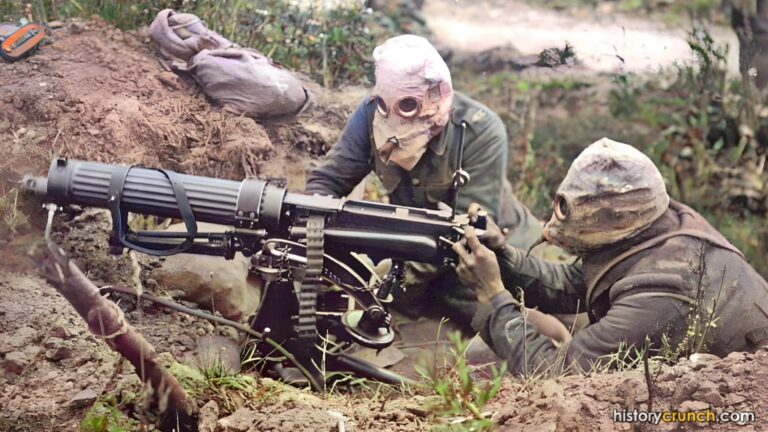
Britain's largest attack of 1915 opened with its own chlorine gas, which in places drifted back over the British trenches. The new volunteer divisions of Kitchener's army took the town of Loos and then were cut down trying to go further.
LEARN MORESHOW LESSwhy it matters · key numbers · 1 key figureMILITARYLoos cost Britain 50,000 casualties for a few hundred yards and finished Sir John French as commander in chief. Douglas Haig replaced him in December and led the British army for the rest of the war.
Bulgaria, promised Serbian land by Germany, declared war on Serbia and attacked from the east while German and Austrian armies attacked from the north. The Serbian army retreated through the mountains of Albania in winter, and tens of thousands of soldiers and civilians died on the way.
LEARN MORESHOW LESSwhy it matters · key numbersMILITARYSerbia, the country the war had begun over, was occupied for three years. With Bulgaria in, Germany had a railway link straight through to Constantinople, and the Central Powers held a solid block of territory from the North Sea to the Persian Gulf.
After eight months on the beaches the Allies gave up and slipped away by night, using rifles rigged to fire by themselves to fool the Ottomans. The evacuation was the best-run part of the whole campaign, and not a single man was lost in it.
LEARN MORESHOW LESSwhy it matters · key numbersMILITARYThe Ottoman Empire stayed in the war for three more years and Russia stayed cut off from its allies. The failure ended the idea that the war could be won by going around the Western Front, and the Allies turned back to it.
For the first time in its history Britain forced men to join the army. The Military Service Act called up single men between 18 and 41, and married men followed in May. About 16,000 men refused on grounds of conscience.
LEARN MORESHOW LESSwhy it matters · key numbers · 1 key figurePOLITICALBritain had raised two and a half million volunteers, more than any country had ever done, and it was still not enough. Conscription meant the whole population belonged to the war, and every belligerent except the United States had reached the same point by 1916.
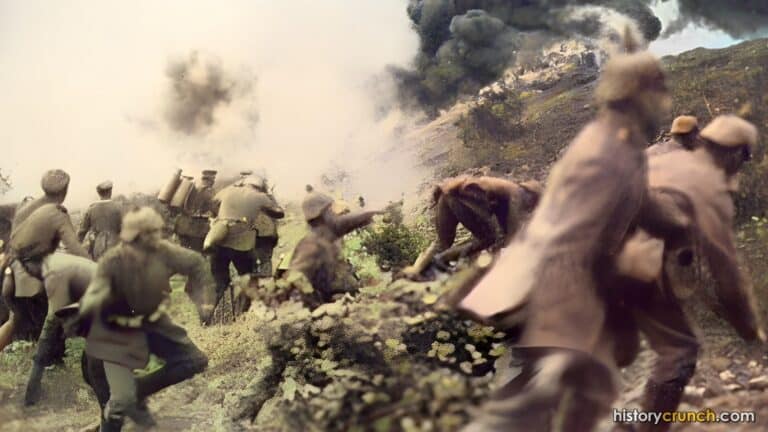
Germany opened the longest battle of the war with a million shells fired in a single day at the French fortress city of Verdun. The German commander, Erich von Falkenhayn, later claimed the aim was not to take the city but to bleed the French army white defending it.
LEARN MORESHOW LESSwhy it matters · key numbers · a sourceMILITARYThe battle lasted ten months and cost about 700,000 casualties, split almost evenly between the two sides. France held, first under Philippe Petain and then under Robert Nivelle, and the slogan 'They shall not pass' became the French motto for the war. But the army that held was worn down to the point where it mutinied a year later.
IN THEIR OWN WORDS“They shall not pass.”
Robert Nivelle, French commander at Verdun, order of the day, June 23rd, 1916WHAT TO NOTICEThe line is often credited to Petain, who commanded at Verdun first. Nivelle issued it in writing. Either way it became the French motto for the whole war.
Did Falkenhayn really plan to bleed France white?
Yes. He wrote after the war that Verdun was chosen because France would have to defend it whatever the cost, and the point was the cost.
No. The memo he claimed to have sent the Kaiser has never been found. He wanted to take Verdun, failed, and invented the bleeding story afterward to make a defeat look like a plan.
About 1,200 Irish republicans seized the General Post Office and other buildings in Dublin and proclaimed an Irish Republic. British troops and artillery crushed the rising in six days. Sixteen of the leaders were executed.
LEARN MORESHOW LESSwhy it matters · key numbersPOLITICALMost Dubliners had jeered the rebels; the executions turned them into martyrs. Within two years the republican party Sinn Fein had swept Ireland, and the war of independence that created the Irish state grew out of a rebellion that had failed.
The only full battle between the British and German fleets was fought off Denmark in a single afternoon and night. Britain lost 14 ships and 6,000 men to Germany's 11 ships and 2,500, and the German fleet escaped back to port in the dark.
LEARN MORESHOW LESSwhy it matters · key numbers · a sourceMILITARYGermany won on the count of ships sunk and lost on everything that mattered. The blockade stayed in place and the German fleet never seriously challenged it again. An American newspaper put it best: the German fleet had assaulted its jailer, but was still in jail.
IN THEIR OWN WORDS“There seems to be something wrong with our bloody ships today.”
Vice-Admiral David Beatty, aboard HMS Lion, after two of his battlecruisers blew up, May 31st, 1916WHAT TO NOTICEThree British battlecruisers exploded when shells reached their magazines. The navy blamed the ships' armor; later research blamed the crews' habit of stacking shells in the open to fire faster.
General Aleksei Brusilov attacked along a 300-mile front without the usual days of warning bombardment, and the Austro-Hungarian line collapsed. In three months Russia took about 400,000 prisoners and advanced up to 60 miles before German reinforcements stopped it.
LEARN MORESHOW LESSwhy it matters · key numbersMILITARYIt was the most successful Allied attack of the year and Austria-Hungary's worst defeat. But it cost Russia at least half a million casualties it could not afford, and the exhaustion that followed fed the revolutions of 1917.
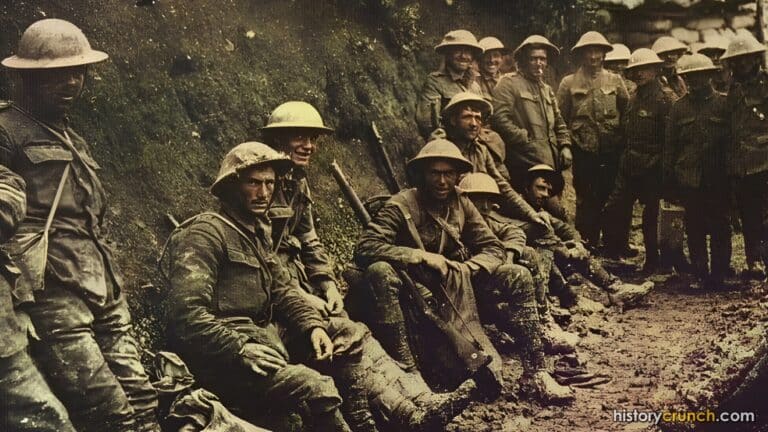
After a week of shelling that was supposed to have destroyed the German trenches, 120,000 British soldiers climbed out and walked toward them. The German machine guns had survived in deep dugouts. By nightfall Britain had 57,470 casualties, 19,240 of them dead.
LEARN MORESHOW LESSwhy it matters · key numbers · a sourceMILITARYNo army has ever lost so many men in one day. The Somme had been meant to relieve Verdun and break the German line; it did the first and not the second, and it changed how Britain remembered the war forever.
IN THEIR OWN WORDS“Two years in the making. Ten minutes in the destroying. That was our history.”
A British soldier of the 10th West Yorkshires on the first day, quoted by historian Martin MiddlebrookWHAT TO NOTICEThe 10th West Yorkshire Regiment lost about 710 men in the first minutes of the attack, the highest losses of any battalion that day.
The same day, the Newfoundland Regiment lost more than 700 of its 800 men in half an hour at Beaumont-Hamel, a loss that Newfoundland, then a separate country, still marks every July 1st.
Encouraged by the Brusilov Offensive and promised Transylvania, Romania joined the Allies and invaded Hungary. Within four months German, Austrian and Bulgarian armies had taken most of the country, including the capital, Bucharest.
LEARN MORESHOW LESSwhy it matters · key numbersMILITARYRomania's oil and wheat fed Germany for the rest of the war, which is exactly what the Allies had wanted to prevent. Russia had to stretch its front to cover its new ally's collapse, adding to the strain that broke it in 1917.
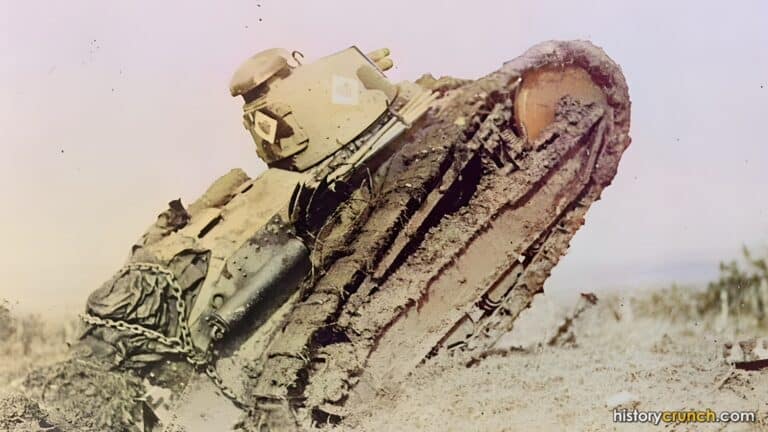
Britain sent 49 of its new armored machines into battle on the Somme. About 32 reached the start line and fewer than a dozen got as far as the German trenches, but where they did, German soldiers ran from them.
LEARN MORESHOW LESSwhy it matters · key numbers · 1 key figureSCIENCEThe tank was the first answer to the machine gun and barbed wire. The 1916 models broke down constantly and crawled at walking pace, but two years later, at Amiens, hundreds of them led the attack that began the end of the war.
The battle was called off in snow and mud on November 18th. The Allies had advanced about six miles at the deepest point. Britain and France had lost about 620,000 men, Germany somewhere between 450,000 and 500,000.
LEARN MORESHOW LESSwhy it matters · key numbers · a debateMILITARYBoth sides could claim something. Both sides also came away with tens of thousands of men suffering from shell shock, which most armies were still treating as cowardice. The Germans had held; the British had learned to fight, and the German army had lost men it could never replace. In the spring the Germans pulled back 25 miles to the new Hindenburg Line rather than fight on the same ground again.
Was the Somme a defeat?
Yes. The aims were to break the German line and win the war in 1916, and neither happened. A million casualties for six miles is a defeat by any measure.
No. The Somme saved Verdun, wore down the German army, and taught the British army the methods it won with in 1918. Germany's own commanders called it the muddy grave of their field army.
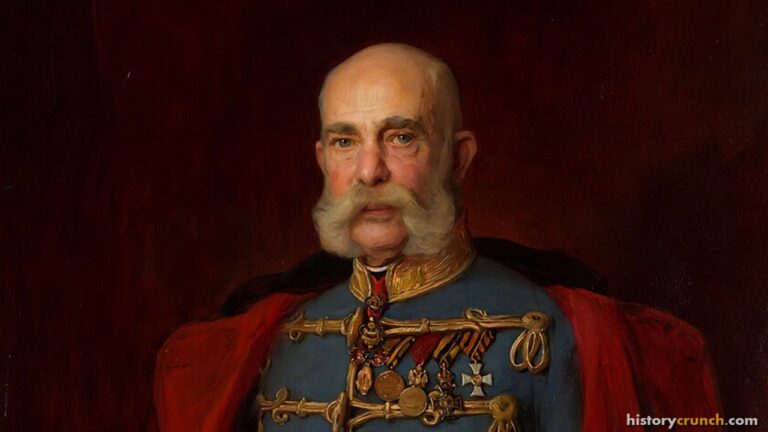
Franz Joseph had ruled Austria-Hungary since 1848 and was 86 when he died. His great-nephew Karl became emperor and almost at once began looking for a way out of the war.
LEARN MORESHOW LESSwhy it matters · key numbers · 1 key figurePOLITICALThe old emperor had been the one thing that held a dozen nationalities together. Karl tried to make a separate peace with France in 1917, was found out, and lost what was left of Germany's trust. Two years after Franz Joseph's death his empire no longer existed.
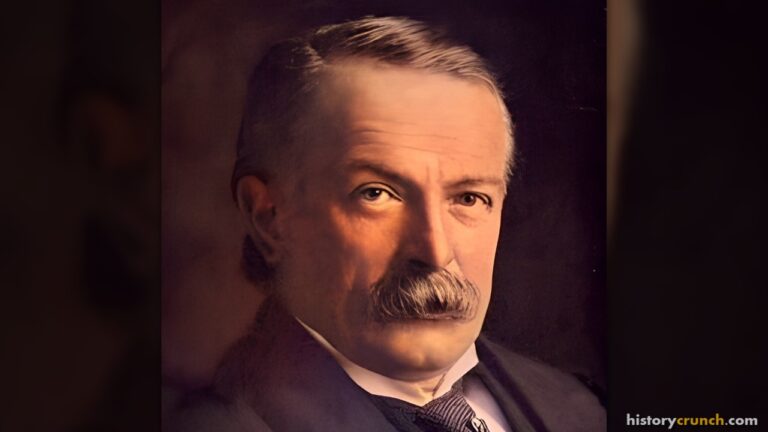
After the Somme and a year of drift, Lloyd George forced Asquith out and took over with a war cabinet of five men who met every day. He promised to run the war with the energy he had brought to munitions.
LEARN MORESHOW LESSwhy it matters · elsewhere · 2 key figuresPOLITICALLloyd George led Britain to victory and then to Versailles. He brought in the convoy system that beat the U-boats, took control of food, shipping and coal, and fought a running battle with his own generals over the cost of their offensives.
Three weeks later, Grigori Rasputin, the faith healer who had gained a hold over the Russian royal family, was murdered by Russian nobles in St. Petersburg.
1917 changed everything. Germany's submarines brought the United States into the war, two revolutions took Russia out of it, and the French army mutinied. By December the Eastern Front was silent and both sides knew that 1918 would decide it.
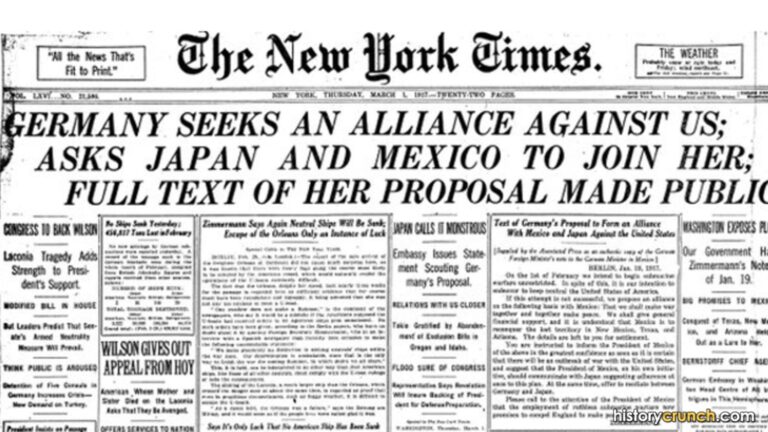
German Foreign Secretary Arthur Zimmermann secretly offered Mexico an alliance: if the United States entered the war, Mexico should attack it and would get Texas, New Mexico and Arizona back. British codebreakers read the message and handed it to Washington.
LEARN MORESHOW LESSwhy it matters · key numbers · a sourcePOLITICALThe telegram was published in American newspapers on March 1st and turned millions of Americans who had wanted to stay out of the war. Zimmermann then admitted it was real, which removed the last doubt.
IN THEIR OWN WORDS“We intend to begin on the first of February unrestricted submarine warfare. We shall endeavor in spite of this to keep the United States of America neutral.”
Arthur Zimmermann, telegram to the German minister in Mexico, January 16th, 1917WHAT TO NOTICEThe telegram went to Mexico over an American cable that Washington had let Germany use for peace messages. Britain had tapped the cable and was reading it.
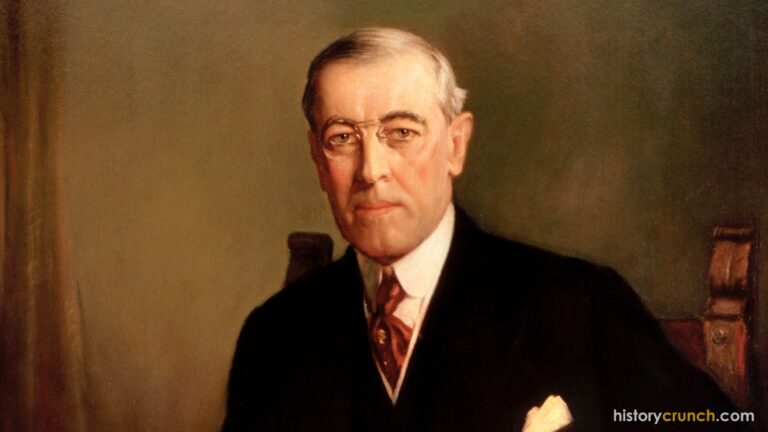
President Wilson told the Senate that the war should end in a peace without victory, because a peace forced on the loser would only breed the next war. He offered the United States as a mediator and a guarantor of a new league of nations.
LEARN MORESHOW LESSwhy it matters · a source · 1 key figurePOLITICALIt was Wilson's last attempt to end the war without joining it. Nine days later Germany announced unrestricted submarine warfare, and the speech became the outline of the peace he tried to build at Versailles instead.
IN THEIR OWN WORDS“Victory would mean peace forced upon the loser, a victor's terms imposed upon the vanquished. It would be accepted in humiliation, under duress, at an intolerable sacrifice, and would leave a sting.”
Woodrow Wilson, address to the Senate, January 22nd, 1917WHAT TO NOTICERead against the Treaty of Versailles two years later, the speech is almost a prediction of what went wrong with it.
Germany's generals persuaded the Kaiser to let U-boats sink every ship, including American ones, in the waters around Britain. They calculated that Britain would starve within five months, before the United States could send an army.
LEARN MORESHOW LESSwhy it matters · key numbers · a debateMILITARYThe gamble almost worked: in April 1917 U-boats sank 860,000 tons of shipping and Britain had six weeks of wheat left. Then convoys cut the losses in half. The gamble also brought the United States into the war, which is what lost it.
Was unrestricted submarine warfare Germany's biggest mistake of the war?
Yes. It brought in the one country with the men and money to decide the war, for a naval campaign that convoys defeated within a year.
No, it was a reasonable bet. Germany was being starved by the blockade and losing the war of numbers anyway. Its leaders knew the risk and took it because every other road also led to defeat.
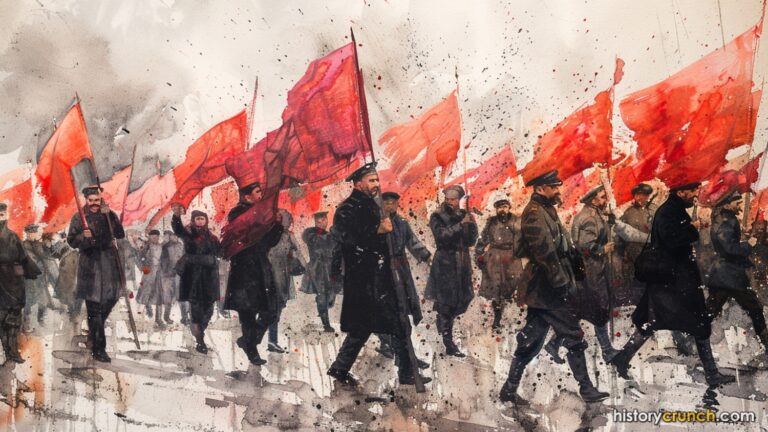
Women marching for bread on International Women's Day were joined by striking workers, and within days the crowds filled the center of Petrograd. When the soldiers sent to fire on them joined them instead, the government lost the capital. Russia still used the old calendar, which is why it is called the February Revolution.
LEARN MORESHOW LESSwhy it matters · key numbersPOLITICALThree years of war had broken Russia's cities: prices had risen four times over and the bread ran out. The Duma, the parliament the Tsar had granted in 1905 and largely ignored since, formed the government that took over. The revolution began with hunger, not ideas, and the government that replaced the Tsar made its fatal mistake by keeping Russia in the war.
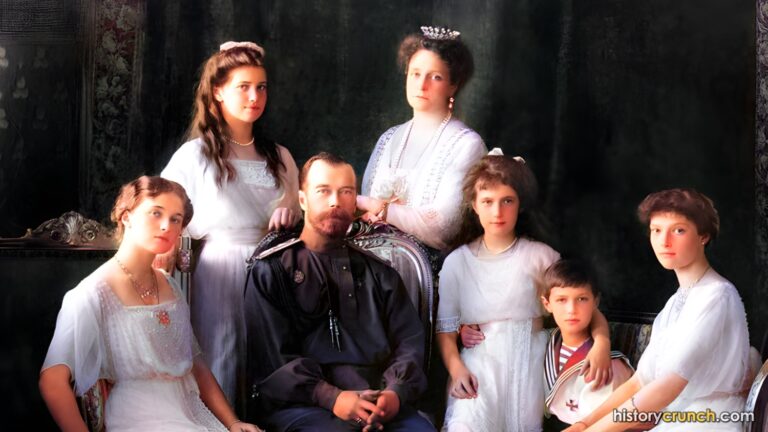
Stuck in his train outside Petrograd, with his generals telling him the army would not fight for him, Nicholas II chose to abdicate for himself and his son. Three hundred years of Romanov rule ended in a railway carriage.
LEARN MORESHOW LESSwhy it matters · key numbers · a sourcePOLITICALA Provisional Government of liberals took over and promised elections, but it also promised the Allies that Russia would fight on. That promise handed the Bolsheviks their best argument, and sixteen months later the Tsar and his whole family were shot.
IN THEIR OWN WORDS“All around me there is treachery, cowardice and deceit.”
Tsar Nicholas II, diary, March 15th, 1917WHAT TO NOTICEIt is the only line about the abdication in his diary for that day. The rest records the weather and that he slept well.
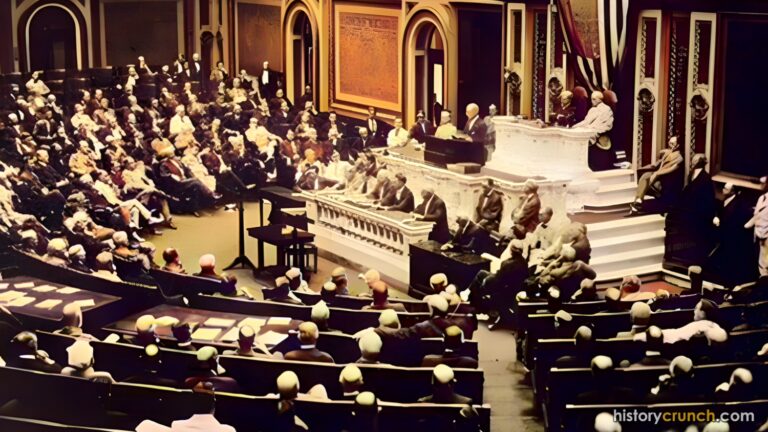
Four days after President Wilson asked Congress to make the world safe for democracy, the House voted 373 to 50 for war and the United States joined the Allies. It had an army of about 130,000 men and no plan for sending it to France.
LEARN MORESHOW LESSwhy it matters · key numbers · a sourcePOLITICALThe United States brought money, food and, within a year, an army growing by 10,000 men a day. Germany's generals had bet that they could win before it arrived. From this day the war was a race against that arrival.
IN THEIR OWN WORDS“The world must be made safe for democracy.”
Woodrow Wilson, address to Congress, April 2nd, 1917WHAT TO NOTICEWilson had won re-election five months earlier on the slogan 'He kept us out of war'. The speech turned a war of empires into a war about what kind of government the world should have, at least in American eyes.
Why did the United States go to war?
Because Germany attacked it. Unrestricted submarine warfare sank American ships and killed American citizens, and the Zimmermann Telegram proposed an invasion of American soil.
Because it had already chosen a side. American banks had lent the Allies more than two billion dollars, American factories armed them, and a German victory would have been a financial disaster.
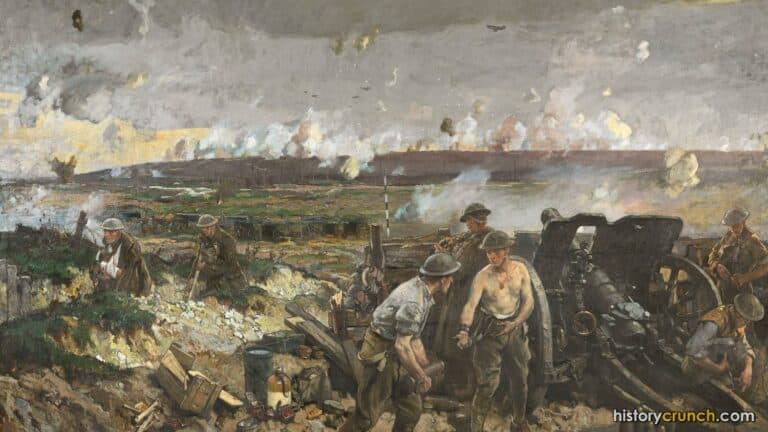
All four Canadian divisions, fighting together for the first time, took the ridge that French and British attacks had failed to take for two years. Every soldier had rehearsed his part on a full-size model, and the infantry advanced behind a wall of shellfire timed to the minute.
LEARN MORESHOW LESSwhy it matters · key numbersMILITARYThe Canadians took in four days a ridge that had cost France 150,000 casualties in 1915, and proved a trench line could be taken if the attack was planned in enough detail. For Canada it became the moment the country felt it had earned a place at the table, and the memorial on the ridge is Canada's national monument to the war.
Robert Nivelle promised to break the German line in 48 hours. The attack along the Chemin des Dames ridge gained a few hundred yards at the cost of 130,000 casualties in ten days. Within weeks soldiers in about half the French divisions refused to attack again.
LEARN MORESHOW LESSwhy it matters · key numbers · 1 key figureMILITARYFor a month the French army could not be relied on to attack, and the Germans never found out. Philippe Petain replaced Nivelle, improved food and leave, and executed 49 men out of more than 500 sentenced. France held the line for the rest of 1917 and let Britain do the attacking.
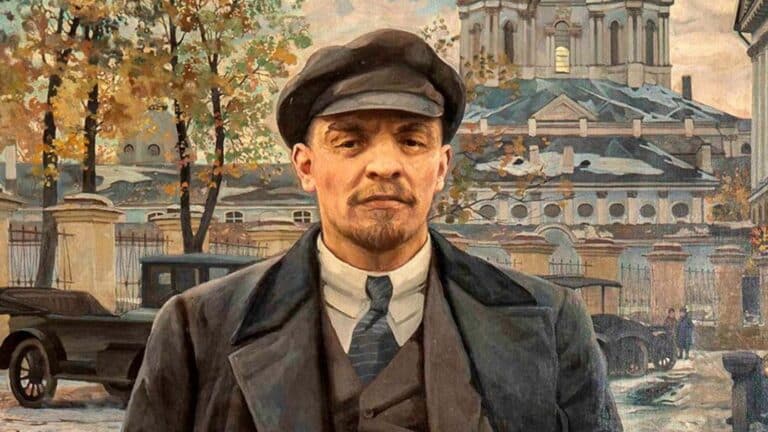
Vladimir Lenin, leader of the Bolsheviks, had spent the war in exile in Switzerland. Germany put him on a sealed train across its territory to Petrograd, calculating that he would take Russia out of the war. He arrived at the Finland Station and demanded an immediate end to the fighting.
LEARN MORESHOW LESSwhy it matters · a source · 1 key figurePOLITICALGermany was right. Seven months later Lenin's party seized power and made peace on any terms. The train ride is one of the strangest decisions of the war: Germany's rulers, the Kaiser and his generals Paul von Hindenburg and Erich Ludendorff, helped create the Soviet Union in order to win a battle.
IN THEIR OWN WORDS“Peace, land and bread.”
Bolshevik slogan, spring 1917WHAT TO NOTICEThree words, each aimed at a group the Provisional Government was failing: soldiers who wanted the war over, peasants who wanted the landlords' land, and workers who could not buy food.
Congress ordered every man between 21 and 30 to register for the draft, later widened to 18 to 45. About 24 million registered and 2.8 million were called up, chosen by lottery in Washington.
LEARN MORESHOW LESSwhy it matters · key numbers · 1 key figurePOLITICALVolunteers alone would never have built an army of four million in eighteen months. The draft made the war a national effort, and the questions it raised about who served, who was exempt and what happened to those who refused came back in every American war after it.
British and Australian tunnelers had spent more than a year digging under the German lines south of Ypres. At 3:10 in the morning 19 mines packed with nearly a million pounds of explosive went off together. The blast was heard in London and about 10,000 German soldiers died in seconds.
LEARN MORESHOW LESSwhy it matters · key numbersMILITARYIt was the most successful British attack of 1917 and one of the largest man-made explosions before the atomic bomb. It cleared the way for the Third Battle of Ypres, which then threw the advantage away in the mud.
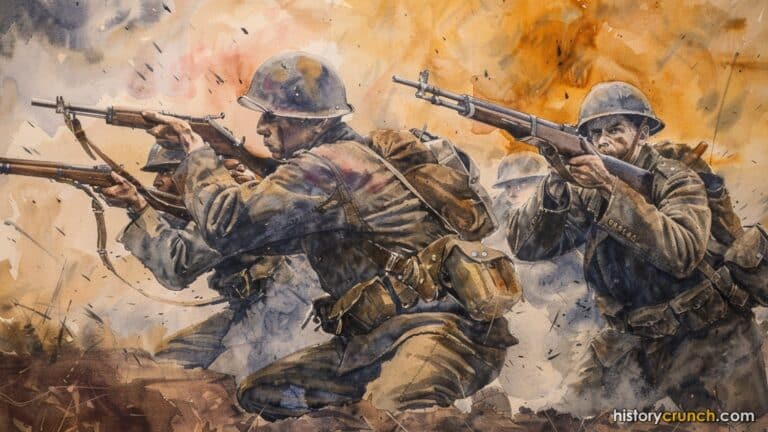
About 14,000 men of the US 1st Division came ashore at Saint-Nazaire, two weeks after their commander, General John Pershing, had reached Paris. On July 4th they paraded through the city to Lafayette's tomb, where an officer said 'Lafayette, we are here'.
LEARN MORESHOW LESSwhy it matters · key numbers · a sourceMILITARYThey were too few and too green to fight, and it was a year before the American army mattered on the battlefield. But every German soldier now knew the Americans were coming, and every Allied soldier knew help was on the way.
IN THEIR OWN WORDS“Lafayette, we are here.”
Colonel Charles Stanton, at the tomb of the Marquis de Lafayette, Paris, July 4th, 1917WHAT TO NOTICELafayette had fought for American independence in 1777. The line, often credited to Pershing, was meant to say that America was paying back a 140-year-old debt.
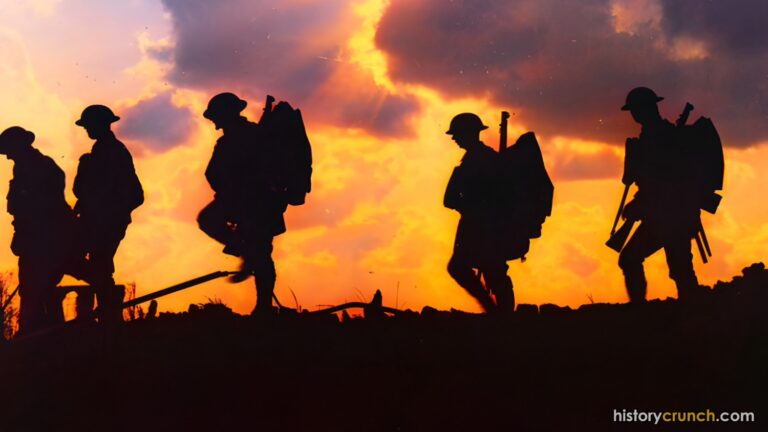
Britain attacked out of the Ypres Salient toward the Belgian coast. The heaviest rain in thirty years turned the shelled ground into a swamp in which men, horses and guns drowned. After three months the Canadians took the ruins of Passchendaele village, five miles from where the attack had started.
LEARN MORESHOW LESSwhy it matters · key numbers · a sourceMILITARYPasschendaele became the name for everything people hated about the war: about 250,000 casualties on each side for a few miles of mud that were given up without a fight the following spring. Lloyd George never forgave Haig for it, and never quite found the nerve to sack him.
IN THEIR OWN WORDS“Good God, did we really send men to fight in that?”
Attributed to a senior British staff officer, seeing the battlefield for the first time, November 1917WHAT TO NOTICEThe story is told of General Launcelot Kiggell, Haig's chief of staff, and may well be a legend. It survives because so many soldiers felt it was true.
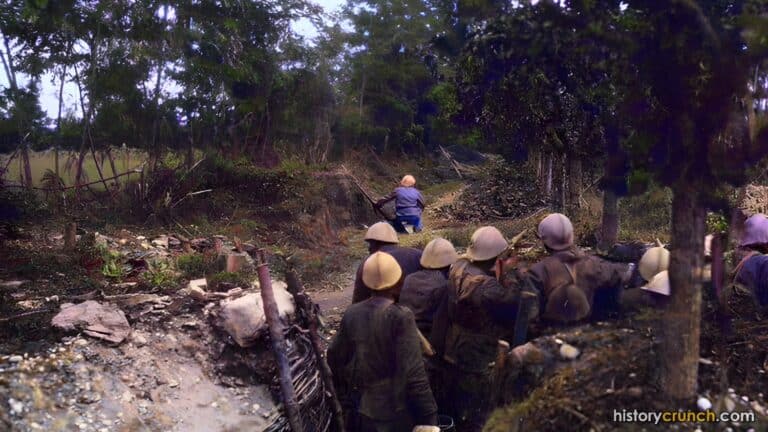
German and Austrian troops, using gas and small groups of stormtroopers who bypassed strongpoints, broke through the Italian line in the mountains and advanced 80 miles in two weeks. The Italian army lost about 300,000 men, most of them prisoners, and fell back to the Piave River.
LEARN MORESHOW LESSwhy it matters · key numbers · elsewhereMILITARYItaly nearly left the war. Britain and France rushed eleven divisions to hold the Piave, the Italian commander Luigi Cadorna was sacked, and the stormtrooper tactics tried here were the ones Germany used against the British in March 1918.
A young American ambulance driver named Ernest Hemingway arrived on the Italian front the following spring. The retreat from Caporetto became the center of his novel A Farewell to Arms.
In a letter of 67 words, British Foreign Secretary Arthur Balfour declared that Britain favored a national home for the Jewish people in Palestine, then Ottoman territory that British troops were about to invade. The letter also said nothing should harm the rights of the people already living there.
LEARN MORESHOW LESSwhy it matters · key numbersPOLITICALBritain had made other promises about the same land, to the Arabs who were fighting the Ottomans and to France in a secret deal. The three promises could not all be kept, and the argument over them has never ended.
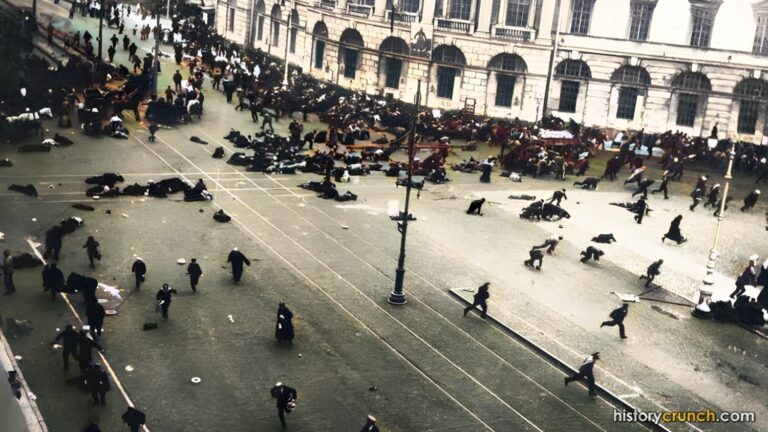
Armed workers and soldiers loyal to Lenin took the bridges, the telephone exchange and the railway stations of Petrograd overnight, and the Provisional Government surrendered in the Winter Palace with almost no fighting. Lenin's first decree offered peace to every warring country.
LEARN MORESHOW LESSwhy it matters · key numbers · a debatePOLITICALRussia was out of the war within weeks, and Germany could move nearly fifty divisions to the west for one last attempt at victory. The revolution also created the first communist state, which shaped the rest of the twentieth century more than the war itself did.
Did the war cause the Russian Revolution?
Yes. Russia had survived a revolution in 1905. It was three years of defeat, hunger and two million dead that finally broke the Tsar's government and then the one that replaced it.
The war only set the date. Russia's peasants wanted the land, its workers wanted bread and its middle class wanted a say, and none of those problems had been solved. The revolution was coming with or without the war.
For the first time tanks led an attack in a mass, without days of warning bombardment. Nearly 400 of them broke through the Hindenburg Line and advanced five miles in a day, and church bells rang in Britain for the first time in the war. A German counterattack ten days later took most of the ground back.
LEARN MORESHOW LESSwhy it matters · key numbersSCIENCECambrai showed what tanks, aircraft and artillery could do when they were used together and the enemy was surprised. Both the British success and the German counterattack were rehearsals for 1918.
After a year-long advance from Egypt, General Edmund Allenby's army took Jerusalem from the Ottomans. The mayor surrendered the city to two British sergeants he found near the walls. Allenby entered on foot two days later, out of respect for the holy city.
LEARN MORESHOW LESSwhy it matters · key numbersMILITARYLloyd George had asked for Jerusalem as a Christmas present for the British people, and the capture was celebrated as the end of 400 years of Ottoman rule there. Britain ran Palestine for the next thirty years, with the promises of the Balfour Declaration hanging over everything it did.
Five weeks after taking power the Bolsheviks signed a ceasefire with Germany and Austria-Hungary at Brest-Litovsk. The fighting on the Eastern Front stopped, and peace talks began the next week.
LEARN MORESHOW LESSwhy it matters · 1 key figurePOLITICALThe Eastern Front had tied down about a third of Germany's army since 1914. With the guns silent there, the trains carrying German divisions west began to run, and the Allies knew the spring of 1918 would bring the biggest attack of the war.
Germany used its last reserves in a spring offensive that came within 50 miles of Paris and then ran out. From August the Allies, with two million Americans arriving, advanced without stopping, and in the autumn Germany's allies surrendered one by one. On November 11th the guns stopped.
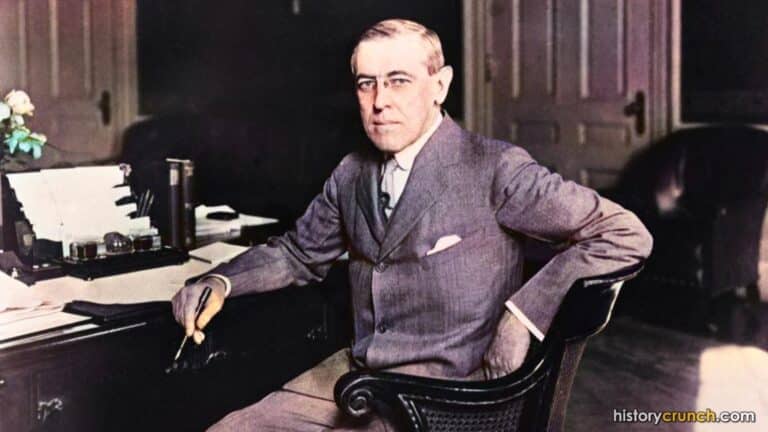
In a speech to Congress, Wilson set out fourteen aims for the peace: open diplomacy instead of secret treaties, freedom of the seas, lower trade barriers, smaller armies, borders drawn by nationality, and a league of nations to keep the peace.
LEARN MORESHOW LESSwhy it matters · key numbers · a sourcePOLITICALGermany asked for an armistice in October on the basis of these points, and the peoples of Eastern Europe took the promise of self-determination as a promise to them. When the Treaty of Versailles fell short of the points, everyone who had believed in them felt cheated.
IN THEIR OWN WORDS“Open covenants of peace, openly arrived at, after which there shall be no private international understandings of any kind.”
Woodrow Wilson, the first of the Fourteen Points, January 8th, 1918WHAT TO NOTICEThe Bolsheviks had just published Russia's secret treaties with the Allies, showing how the war's winnings had been divided in advance. Wilson's first point was an answer to that embarrassment.
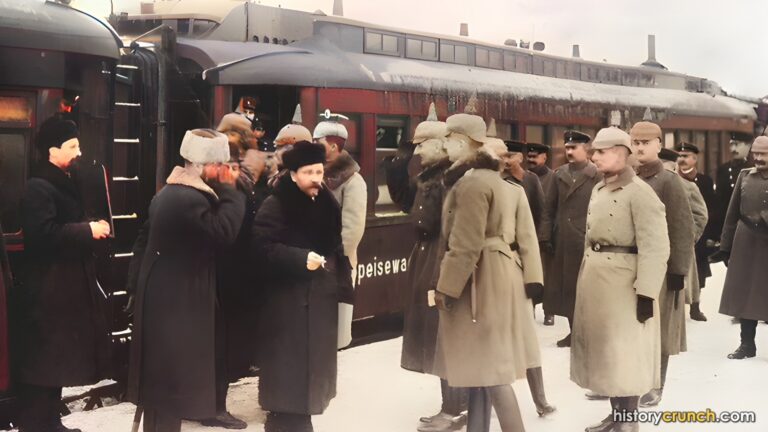
When the Bolsheviks stalled at the peace talks, Germany simply resumed its advance, and Lenin ordered his delegates to sign whatever was put in front of them. Russia gave up Poland, the Baltic lands, Finland and Ukraine: a third of its people, most of its coal and iron, and a quarter of its farmland.
LEARN MORESHOW LESSwhy it matters · key numbers · a debatePOLITICALThe treaty showed what a German victory would look like, and it hardened the Allies against any negotiated peace. It also freed Germany for its last great attack in the west. Germany's own defeat eight months later cancelled every line of it.
Was Lenin right to sign?
Yes. The Russian army no longer existed and Germany could have taken Petrograd. Signing bought the Bolsheviks the time to survive, and Germany's defeat gave most of the land back within a year.
No. Lenin handed Germany the food and factories to fight on and abandoned the Ukrainians, Poles and Balts to German rule. Half his own party voted against him.
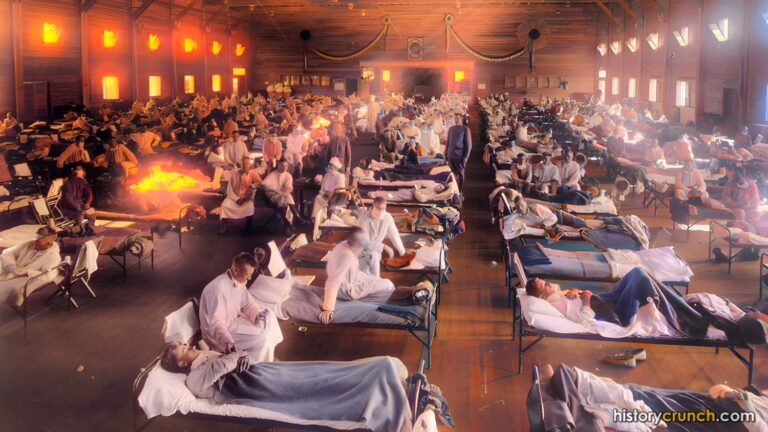
A cook at an army camp in Kansas reported sick with influenza, and within three weeks more than a thousand soldiers at the camp had it. Troopships carried the virus to France, and by autumn a far deadlier second wave was killing people on every continent.
LEARN MORESHOW LESSwhy it matters · key numbers · a debateSOCIALThe pandemic killed somewhere between 50 and 100 million people, several times as many as the war, and unlike most flu it killed the young and strong. It was called Spanish flu because Spain, being neutral, was the only country whose newspapers were allowed to report it.
Where did the 1918 flu come from?
Kansas. The first recorded cases were at Camp Funston in March 1918, and American troopships spread it to Europe.
Nobody knows. Some historians trace it to a British army camp in France in 1916, others to northern China in 1917. Kansas is only where it was first written down.
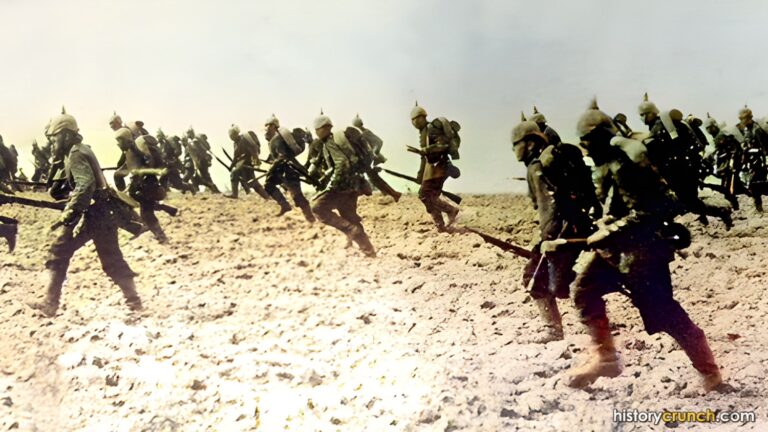
With the divisions freed from Russia, Ludendorff hit the British Fifth Army with 6,500 guns and the heaviest bombardment of the war, then sent stormtroopers through the fog. The British lost 21,000 prisoners on the first day and the Germans advanced 40 miles, further than any attack in the west since 1914.
LEARN MORESHOW LESSwhy it matters · key numbers · a sourceMILITARYIt was Germany's last chance to win before the Americans arrived, and for three weeks it looked like it might. But the Germans outran their supplies, lost their best men, and gained ground they could not hold. The Allies answered by giving one man, Ferdinand Foch, command of all their armies.
IN THEIR OWN WORDS“With our backs to the wall and believing in the justice of our cause, each one of us must fight on to the end.”
Douglas Haig, order of the day to the British army, April 11th, 1918WHAT TO NOTICEHaig wrote it during the second German attack, on the Lys, when the British had been pushed back nearly to the Channel ports. It is the only widely remembered thing he ever wrote.
Manfred von Richthofen, the German ace credited with 80 victories, was killed by a single bullet while chasing a British plane low over the Somme. Australian machine gunners on the ground and a Canadian pilot both claimed the shot. The British buried him with full military honors.
LEARN MORESHOW LESSwhy it matters · key numbers · 1 key figureMILITARYRichthofen was the most famous soldier of the war on any side, and his death was felt in Germany as a sign that the tide had turned. The aces had made the air war look like a sport for knights; the numbers say otherwise, since a new British pilot in the spring of 1917 could expect to live about eleven days.
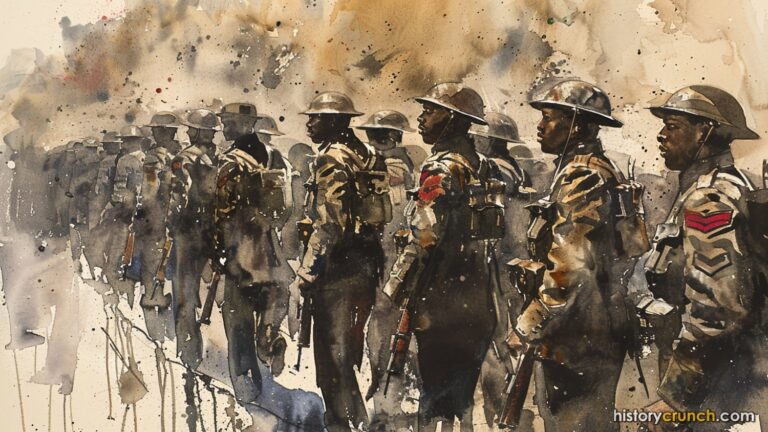
The 369th Infantry, an African American regiment from New York, was handed to the French army because white American units would not serve beside it. Under French command it spent 191 days in the front line, more than any other American regiment, and never lost a foot of ground or a man captured.
LEARN MORESHOW LESSwhy it matters · key numbers · elsewhereMILITARYThe Hellfighters were among the most decorated American soldiers of the war and came home to a country that still denied them the vote across much of the South. Their record became an argument in the long fight for civil rights, and their band brought jazz to France.
The same spring, 'Over There' and other war songs were selling by the million in the United States, and the 369th's regimental band under James Reese Europe was introducing France to ragtime and jazz.
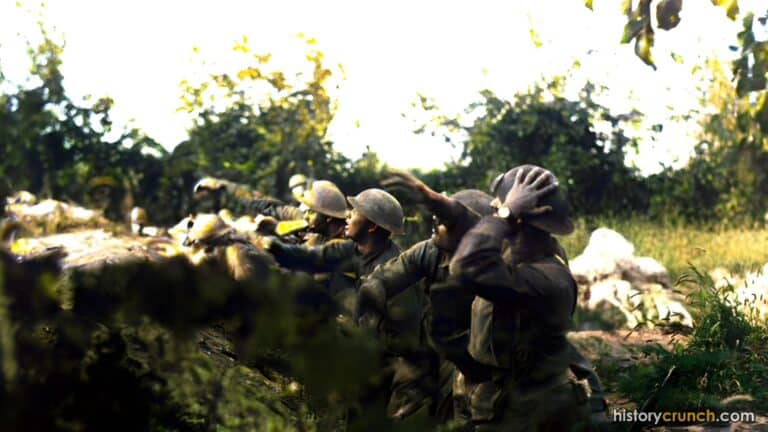
The US 1st Division took the village of Cantigny from the Germans in about half an hour behind a French artillery barrage, then held it against three days of counterattacks. It was a small battle, but it was the first American attack of the war.
LEARN MORESHOW LESSwhy it matters · key numbersMILITARYThe Allies had wanted to use American soldiers as replacements in their own units. Cantigny was Pershing's proof that Americans could plan and win a battle of their own, and it strengthened his hand in keeping the American army together.
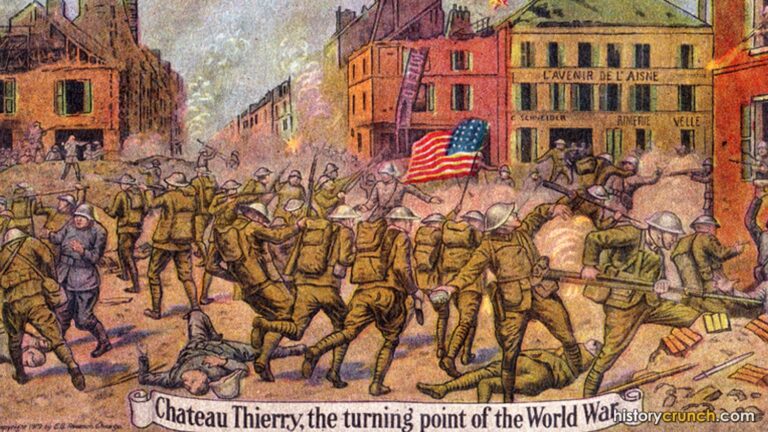
The third German offensive of the spring reached the Marne at Chateau-Thierry, 50 miles from Paris, the closest the Germans had come since 1914. Machine gunners of the US 3rd Division, rushed forward in trucks, held the river crossings and stopped them.
LEARN MORESHOW LESSwhy it matters · key numbersMILITARYThe 3rd Division earned the name Rock of the Marne. More important, Georges Clemenceau's government had been preparing to leave Paris, and the arrival of fresh American troops at the critical point was the first sign that the balance had tipped.
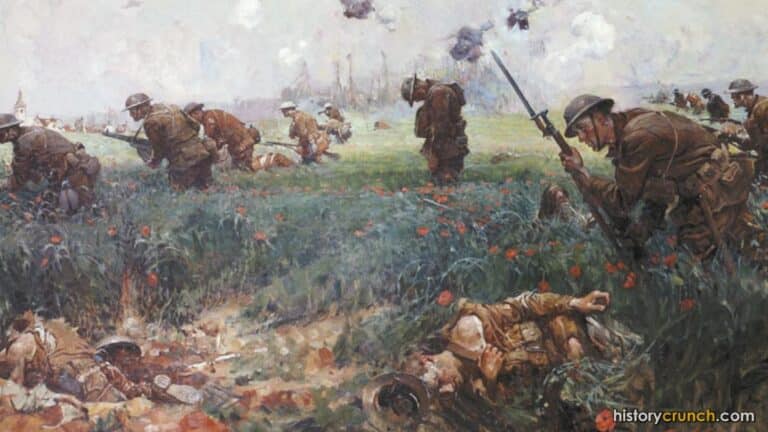
Two regiments of Marines attacked a square mile of dense forest held by German machine guns and took three weeks to clear it. June 6th was the bloodiest day in Marine Corps history until 1943. The French renamed the wood the Wood of the Marine Brigade.
LEARN MORESHOW LESSwhy it matters · key numbers · a sourceMILITARYBelleau Wood was the first battle that showed Germany the Americans would fight, and fight hard. It became the Marine Corps' founding legend, and the German nickname for the Marines, Teufel Hunden or devil dogs, is still used.
IN THEIR OWN WORDS“Retreat? Hell, we just got here.”
Captain Lloyd Williams, US Marine Corps, to a French officer advising withdrawal, June 1918WHAT TO NOTICEWilliams was killed at Belleau Wood on June 12th. His answer is on the Marine Corps memorial there.
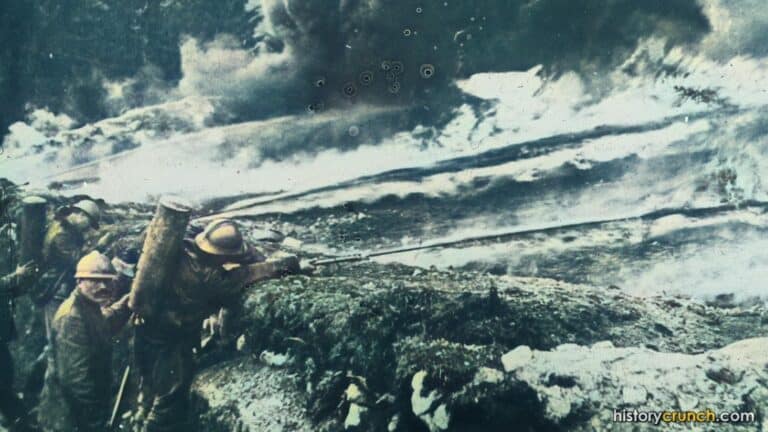
Ludendorff's fifth and final attack crossed the Marne east of Paris and was stopped within three days. On July 18th Foch struck back with French, American and British troops and 350 tanks, and the Germans were driven off the river they had reached in May.
LEARN MORESHOW LESSwhy it matters · key numbersMILITARYFrom this day the Germans never attacked again. Ludendorff had spent his reserves, the Americans were arriving at 250,000 a month, and the Allies held the initiative for the last four months of the war.
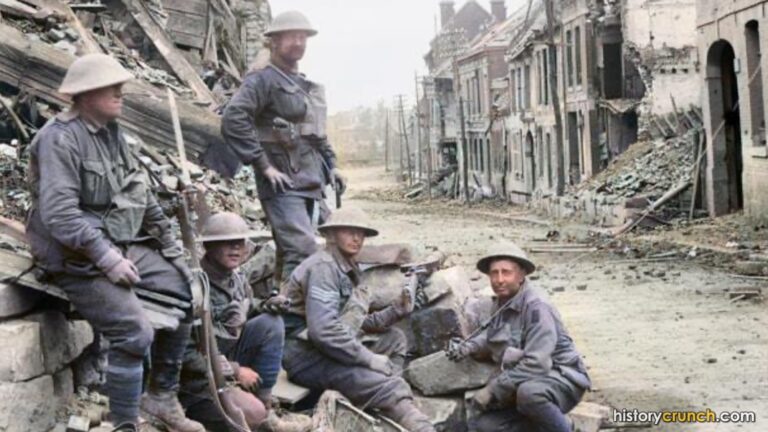
Canadian and Australian troops, with 500 tanks and total surprise, advanced eight miles in a single day and took 15,000 prisoners. Whole German units surrendered to the first tank they saw. Ludendorff called it the black day of the German army and told the Kaiser the war could not be won.
LEARN MORESHOW LESSwhy it matters · key numbers · a sourceMILITARYAmiens opened a hundred days of unbroken Allied advance. The methods first tried at Vimy and Cambrai now worked every time, and the German army, still fighting, began to come apart from the inside.
IN THEIR OWN WORDS“August 8th was the black day of the German army in the history of this war.”
Erich Ludendorff, in his memoirs, 1919WHAT TO NOTICELudendorff meant the collapse of morale more than the ground lost. Retreating troops had shouted 'strikebreakers' at the reinforcements marching up to replace them.
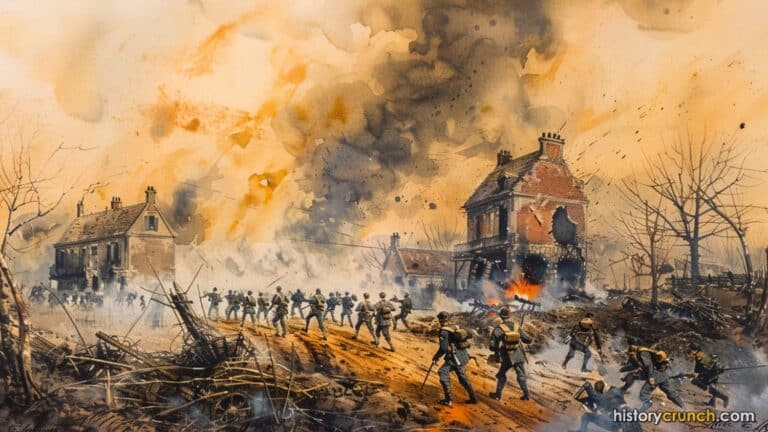
In the first battle planned and fought by the American army as an army, more than half a million American soldiers, supported by 1,400 aircraft, cut off a bulge in the German line that had stood since 1914. The Germans were already pulling out, and the attack took 15,000 prisoners in four days.
LEARN MORESHOW LESSwhy it matters · key numbers · 1 key figureMILITARYSaint-Mihiel proved that the American Expeditionary Force could run a battle on its own. Pershing then moved 600,000 men sixty miles in ten days for the Meuse-Argonne, the biggest battle in American history.
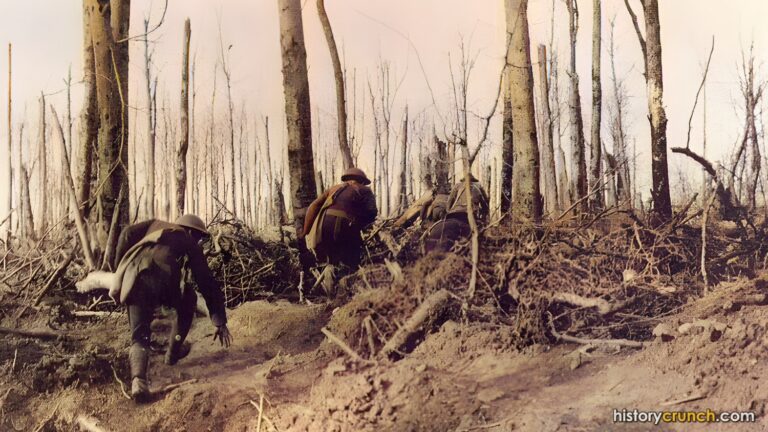
1.2 million American soldiers attacked through the Argonne Forest toward the railway that supplied the whole German front. It took 47 days of fighting through hills, woods and concrete bunkers, and it was still going when the Armistice stopped it.
LEARN MORESHOW LESSwhy it matters · key numbers · 1 key figureMILITARYIt was the largest battle the United States had ever fought and its costliest: 26,277 Americans were killed. The fighting here, with Alvin York, the Lost Battalion and George Patton's tanks, is where the American memory of the war lives.
An Allied army that had sat at Salonika in Greece for three years finally broke the Bulgarian line in the mountains of Macedonia. Bulgaria's army fell apart in two weeks and its government asked for terms.
LEARN MORESHOW LESSwhy it matters · key numbersPOLITICALBulgaria's collapse opened a road to Vienna and Constantinople and cut the railway between Germany and Turkey. It was the day Ludendorff decided Germany must ask for an armistice, and the other Central Powers followed within five weeks.
With Bulgaria gone and the Hindenburg Line broken, Ludendorff told the Kaiser the army could not hold. A new chancellor, Prince Max of Baden, sent a note to President Wilson asking for an armistice and a peace on the Fourteen Points. Wilson's replies over the next month demanded that Germany get rid of the Kaiser first.
LEARN MORESHOW LESSwhy it matters · a debate · 1 key figurePOLITICALThe generals who had run Germany since 1916 handed the defeat to civilian politicians and then spent the 1920s blaming them for it. The 'stab in the back' story, that an undefeated army had been betrayed at home, began with this note.
Was the German army beaten in the field?
Yes. It had lost a million men since March, was retreating everywhere, and its own commander said it could not hold. The armistice came because of that, not because of trouble at home.
It was beaten but not destroyed. It was still on French and Belgian soil on November 11th, and no Allied soldier had crossed the German border. That fact let Germans believe for twenty years that they had not really lost.
With British armies in Damascus and Baghdad and Bulgaria out of the war, the Ottoman government signed an armistice aboard a British battleship at Mudros. Allied ships sailed through the Dardanelles that Gallipoli had failed to open, and British and French troops occupied Constantinople.
LEARN MORESHOW LESSwhy it matters · key numbersPOLITICALSix hundred years of Ottoman power ended here. The Allies spent the next five years dividing the empire's Arab lands into Iraq, Syria, Lebanon, Palestine and Transjordan, and a Turkish national movement under Mustafa Kemal fought them for the rest.
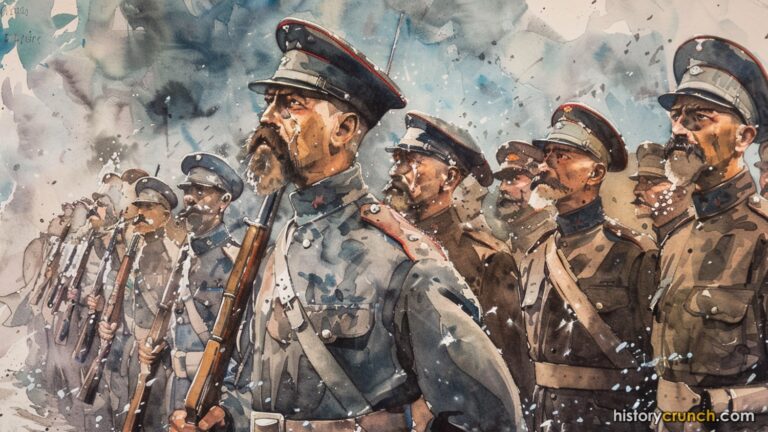
Italy broke the Austrian line at Vittorio Veneto and took 400,000 prisoners from an army that was no longer sure what country it belonged to. Czechs, Poles, Croats and Hungarians had already declared their own states. The armistice was signed at Villa Giusti near Padua.
LEARN MORESHOW LESSwhy it matters · key numbersPOLITICALThe empire that had started the war was the first to disappear. Emperor Karl gave up power eight days later, and the map of central Europe was redrawn into countries, Czechoslovakia, Yugoslavia, Austria and Hungary, that the next war would be fought over.
Ordered to sea for a last battle with the British fleet that could only end in their deaths, the crews of the German battleships refused. At Kiel they took over the town and formed councils of workers and sailors, and within a week the same thing had happened in almost every German city.
LEARN MORESHOW LESSwhy it matters · key numbersPOLITICALThe revolution ended the German monarchy in six days. The fleet Tirpitz had built to challenge Britain never fought its final battle; instead it brought down the government that built it.
With Berlin in the hands of striking workers and the army telling him it would not fight for him, Wilhelm's abdication was announced in Berlin before he had agreed to it. A republic was proclaimed from a balcony of the Reichstag, the parliament building, the same afternoon, and the next morning the Kaiser crossed into exile in the Netherlands.
LEARN MORESHOW LESSwhy it matters · key numbers · 1 key figurePOLITICALWilson had made it a condition of peace, and the Allies got the German republic they had asked for. The new government had to sign the armistice and then the Treaty of Versailles, and it carried the blame for both for the rest of its short life.
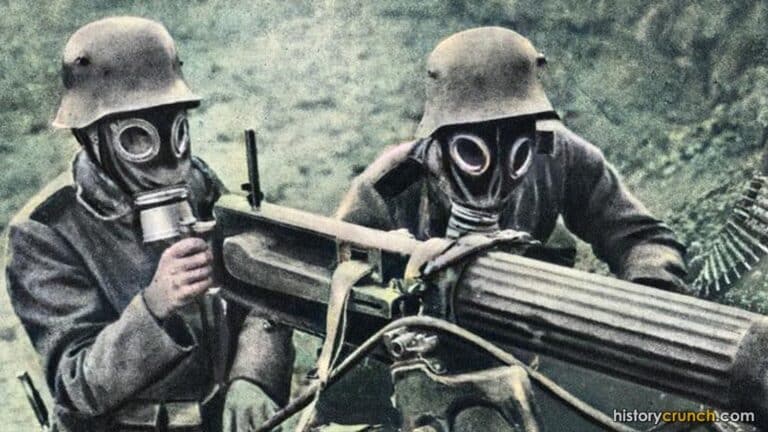
The armistice was signed at five in the morning in Marshal Foch's railway carriage in the forest of Compiegne and took effect at eleven. Germany had to hand over its guns, its submarines and its fleet, and pull its army back across the Rhine. Some units kept attacking until the last minute, and about 2,700 men died on the final morning.
LEARN MORESHOW LESSwhy it matters · key numbers · a sourcePOLITICALAfter four years and three months, the fighting stopped. About 9.5 million soldiers and perhaps 8 million civilians were dead, four empires had fallen, and the peace that followed was already being argued over in every capital.
IN THEIR OWN WORDS“At the eleventh hour of the eleventh day of the eleventh month.”
How the moment came to be remembered across the British Empire, from the first Armistice Day in 1919WHAT TO NOTICEThe same carriage was pulled out of a museum by Hitler in June 1940 so that France could sign its surrender in it. It was destroyed in Germany in 1945.
The same day, Poland declared its independence after 123 years of being divided between Russia, Germany and Austria, and the flu pandemic was killing more people each week than the war had.
Should the Allies have marched on to Berlin?
Yes. Pershing wanted to. A defeat on German soil would have made it impossible for anyone to claim later that the army had never been beaten.
No. It would have cost hundreds of thousands more lives to win a war that was already won, and the flu was killing soldiers faster than the fighting was.
The peace was written in Paris by the winners without the losers in the room. Germany signed the Treaty of Versailles under protest, the United States refused to ratify it, and the League of Nations began its work without the strongest country in the world. The World War II timeline picks up where this one ends.
Communists led by Karl Liebknecht and Rosa Luxemburg tried to turn the German revolution into a Russian one and seized newspaper offices and public buildings in Berlin. The new socialist government called in the Freikorps, gangs of demobilized soldiers, who crushed the rising in a week and murdered both leaders.
LEARN MORESHOW LESSwhy it matters · key numbersPOLITICALThe republic survived its first test by using the far right to destroy the far left, and it never escaped the bargain. The Freikorps veterans who did the killing became the first recruits of the Nazi Party a few years later.
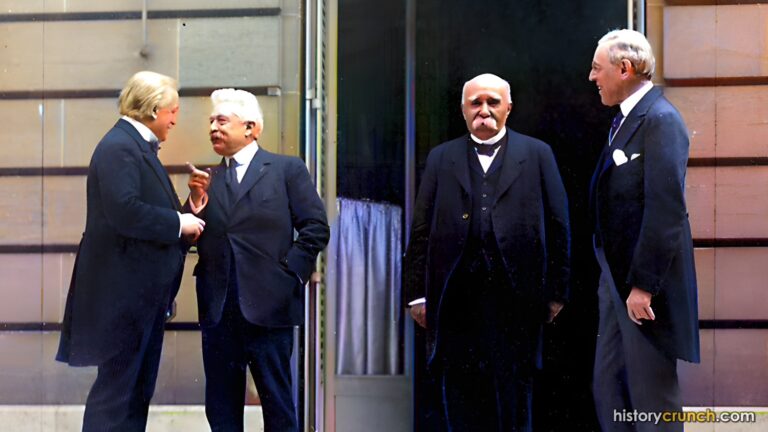
Delegates from 32 countries met in Paris to write the peace. The real decisions were taken by three men, Woodrow Wilson, David Lloyd George and Georges Clemenceau, who wanted different things: a league of nations, a settled empire, and a Germany too weak to attack France again. Germany and Russia were not invited.
LEARN MORESHOW LESSwhy it matters · key numbers · a sourcePOLITICALAlmost every border in Europe and the Middle East was redrawn here, and so were the borders of the next war. Wilson gave up point after point to get his League, and went home to a Senate that rejected both.
IN THEIR OWN WORDS“How can I talk to a fellow who thinks himself the first man in two thousand years to know anything about peace on earth?”
Georges Clemenceau, on Woodrow Wilson, 1919WHAT TO NOTICEClemenceau had watched the Germans take Alsace in 1871 and reach the Marne twice. He wanted guarantees, not principles, and the two men never understood each other.
The German High Seas Fleet had been held at the British naval base of Scapa Flow since the Armistice, waiting to learn which country would get its ships. Rather than see them handed over, the German crews opened the sea valves and sank 52 of the 74 ships in a single afternoon.
LEARN MORESHOW LESSwhy it matters · key numbersMILITARYFifty-two warships went down in one afternoon, more than any navy has lost in a day before or since, and it ended the fleet that had started the naval race with Britain twenty years earlier. Britain was quietly relieved: no rival got the ships either.
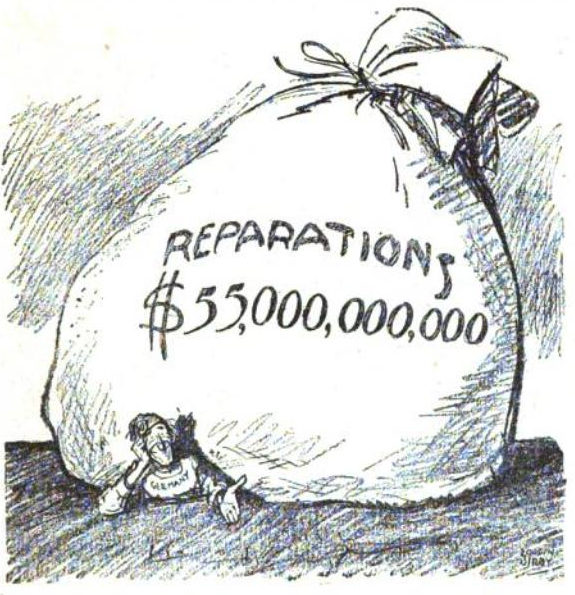
Five years to the day after Sarajevo, in the same Hall of Mirrors where the German Empire had been proclaimed in 1871, two German ministers signed the treaty. Germany lost 13 percent of its land and all its colonies, had its army capped at 100,000 men, accepted responsibility for the war and agreed to pay reparations later set at 132 billion gold marks.
LEARN MORESHOW LESSwhy it matters · key numbers · a sourcePOLITICALGermans of every party called it the Diktat, the dictated peace, and the war guilt clause that made Germany accept responsibility was the part they hated most. The argument over it never stopped. The Nazi Party was built on the promise to tear it up. The World War II timeline on this site begins with this card.
IN THEIR OWN WORDS“Germany accepts the responsibility of Germany and her allies for causing all the loss and damage.”
Article 231 of the Treaty of Versailles, June 28th, 1919WHAT TO NOTICEArticle 231 became known in Germany as the war guilt clause. It was written to give the reparations bill a legal basis, and it did more than any other line in the treaty to poison the peace.
The same month, John Alcock and Arthur Brown flew a converted bomber across the Atlantic without stopping, and the flu pandemic was finally burning out after killing far more people than the war.
Was Versailles too harsh, or not harsh enough?
Too harsh. It humiliated Germany, wrecked its economy and handed extremists a grievance they used for twenty years.
Not harsh enough. Germany kept its industry, its unity and its population, so it stayed strong enough to try again. A settlement that neither crippled nor reconciled was the worst of both.
Germany's new constitution, written in the town of Weimar because Berlin was too dangerous, made Germany a democratic republic with votes for all men and women over 20. It also gave the president the power to rule by decree in an emergency.
LEARN MORESHOW LESSwhy it matters · key numbersPOLITICALThe Weimar Republic was the most democratic government Germany had ever had, and it lasted fourteen years. Its emergency powers, written for a crisis like 1919, were the legal door through which Hitler walked in 1933.
Austria signed a treaty that confirmed what had already happened: its empire of 52 million people was now a republic of 6 million. Czechoslovakia, Yugoslavia and Poland took its lands, Italy took the South Tyrol, and Austria was forbidden to join Germany. Hungary signed its own treaty at Trianon the following June and lost two thirds of its territory.
LEARN MORESHOW LESSwhy it matters · key numbersPOLITICALThe new borders left millions of Germans, Hungarians and others as minorities in countries that had not existed a year before. Hitler's first foreign conquests, Austria and the Sudetenland, were both written into this treaty.
On the second anniversary of the Bolshevik Revolution, Attorney General A. Mitchell Palmer's agents raided radical meeting halls in twelve cities. A bigger wave in January 1920 arrested some 6,000 people in one night, most without warrants, and about 500 foreign-born radicals were deported.
LEARN MORESHOW LESSwhy it matters · key numbersPOLITICALThe war had taught Americans to see enemies at home, and after the Bolshevik Revolution and a year of strikes and bombings, immigrants and socialists became the target. The panic burned out within a year, but the immigration limits it produced lasted for forty.
The Senate voted against the treaty, and with it against joining the League of Nations that Wilson had built the peace around. Wilson had refused every compromise offered by Senate Republicans, and in October a stroke had left him partly paralyzed and hidden from the public.
LEARN MORESHOW LESSwhy it matters · key numbers · a debatePOLITICALThe United States never joined the League, never ratified the treaty, and returned to isolationism for twenty years. The League Wilson designed had to keep the peace without the strongest country in the world.
Who killed the treaty in the Senate?
Wilson. Lodge's reservations were mild, most senators would have accepted them, and Wilson ordered his own party to vote no rather than take a treaty with changes.
The Senate. Lodge hated Wilson and wrote the reservations to be refused, and many senators had decided against any league before they read a word of the treaty.
The Treaty of Versailles came into force and with it the Covenant of the League of Nations, the first organization in history whose members promised to settle disputes without war. Its council met for the first time in Paris six days later. The United States was not a member, and Germany and Russia were not allowed to be.
LEARN MORESHOW LESSwhy it matters · key numbers · 1 key figurePOLITICALThe League settled several small quarrels in the 1920s and failed every large one in the 1930s, because it had no army and its strongest members would not act. Its failure taught the founders of the United Nations what to change.
The Ottoman government signed a treaty that gave its Arab provinces to Britain and France as League of Nations mandates, handed parts of Anatolia to Greece and Italy, and promised an independent Armenia. Turkish nationalists under Mustafa Kemal refused to accept it and fought a three-year war to overturn it.
LEARN MORESHOW LESSwhy it matters · key numbersPOLITICALSevres was the only one of the peace treaties that was torn up by force. Kemal won, and the Treaty of Lausanne in 1923 recognized the Republic of Turkey. The mandates in Iraq, Syria, Lebanon and Palestine stayed, and so did the arguments over them.
On the second anniversary of the Armistice, the body of an unidentified British soldier, chosen at random from the battlefields of France, was buried among the kings in Westminster Abbey. France buried its own unknown soldier under the Arc de Triomphe the same day, and the United States followed at Arlington in 1921.
LEARN MORESHOW LESSwhy it matters · key numbers · elsewhereSOCIALAround half of the British dead had no known grave. The unknown warrior gave every family that had lost someone a place to stand, and the ceremonies, the two minutes of silence and the poppy became the way the war has been remembered ever since.
Four days later, the League of Nations Assembly met for the first time in Geneva, and in the United States Warren Harding had just been elected president on a promise of a 'return to normalcy'.

I'm a passionate history and geography teacher with over 15 years of experience working with students in the middle and high school years. I have an Education Degree with a focus in World History. I have been writing articles for History Crunch since 2015 and love the challenge of creating historical content for young learners!

I'm the founder of History Crunch, which I first began in 2015 with a small team of like-minded professionals. I have an Education Degree with a focus in Social Studies education. I spent nearly 15 years teaching history, geography and economics in secondary classrooms to thousands of students. Now I use my time and passion researching, writing and thinking about history education for today's students and teachers.

K.L. is a content writer for History Crunch. She is a fantastic history and geography teacher that has been helping students learn about the past in new and meaningful ways since the mid-2000s. Her primary interest is Ancient History, but she is also driven by other topics, such as economics and political systems.
To cite this timeline as a source, use one of the formats below.
MLA: Beck, E., et al. “World War I Timeline.” HistoryCrunch, 11 September 2026, https://historycrunch.com/world-war-i-timeline/.
APA: Beck, E., Millar, B., & Woida, K.L. (2026). World War I Timeline. HistoryCrunch. https://historycrunch.com/world-war-i-timeline/
Chicago: Beck, E., B. Millar, and K.L Woida. “World War I Timeline.” HistoryCrunch. September 11, 2026. https://historycrunch.com/world-war-i-timeline/
© History Crunch
How did the alliance system turn a quarrel between Austria-Hungary and Serbia into a war between all the great powers?
Historians disagree about whether the alliances caused the war or delayed it. Some argue they turned a Balkan quarrel into a general war. Others point out that they kept the peace through four earlier crises, and that in 1914 the leaders chose war for their own reasons and used the alliances as the excuse.
Why did France and Germany go into the First World War already hating each other?
Historians disagree about how much Alsace-Lorraine mattered. Some argue France would never have accepted a lasting peace without the provinces. Others note that by 1914 no French leader, including President Raymond Poincare, was willing to start a war over them, and that France fought because Germany attacked.
How did Germany's decision to build a battle fleet bring Britain into the war against it?
Historians disagree about whether the naval race made war inevitable. Some argue it was the single biggest reason Britain took France's side. Others point out that Germany had effectively given up the race by 1912, and that Britain went to war in 1914 over Belgium and the balance of power, not battleships.
Why did a quarrel in the Balkans start a war between the great powers?
Historians disagree about how much Serbia's government knew. Some argue the prime minister, Nikola Pasic, knew of the plot and tried to warn Vienna. Others say the Black Hand acted on its own and Austria used the murder as an excuse for a war it had already decided on.
How did the assassination in Sarajevo lead, in only five weeks, to a war between all the great powers of Europe?
Historians disagree about who bears most of the blame. Some put it on Germany for the blank cheque and the invasion of Belgium. Some put it on Austria for wanting a war with Serbia, or on Russia for mobilizing first. A newer view is that every government in Europe sleepwalked into a war none of them fully intended.
Everyone expected a short war in August 1914. Why did it become a four-year stalemate instead?
Historians disagree about whether the Schlieffen Plan could have worked. Some argue that Moltke wrecked it by weakening the right wing. Others say no army on foot could have kept to its timetable, and that a plan that needed everything to go right was really a gamble.
Britain began the war with an army of 80,000 men. How did it end the war with the one that beat the German army in 1918?
Historians disagree about the British army's generals. One view holds that they wasted the volunteer army in attacks that could not succeed. Another holds that no army in the world had solved the trench problem in 1916, and that the British army of 1918 was the best on the Western Front because of what it learned on the Somme.
France lost more soldiers for its size than any other great power. How did it keep fighting for four years?
Historians disagree about the mutinies of 1917. Some call them a strike, not a mutiny: the soldiers refused to attack but never refused to defend, and never let the Germans know. Others argue that for a month in May 1917 France could have lost the war if the Germans had attacked.
Verdun, the Somme and Passchendaele each cost hundreds of thousands of men for a few miles of ground. Why did the generals keep ordering attacks that failed?
Historians disagree sharply about the generals. The older view is of lions led by donkeys, brave men wasted by commanders who never learned. The newer view is that the British army went through a learning curve from the Somme to Amiens and became the most effective army on the front by 1918. Both views agree about the cost.
How did a war fought in trenches change the lives of people who never went near one?
Historians disagree about whether Germany was beaten at the front or at home. Some argue the army was finished by August 1918 and the revolution only confirmed it. Others say the blockade, hunger and the loss of faith at home ended the war before the army had actually broken.
Canada sent a division of volunteers in 1914. How did it end the war with a corps that led the Allied attack?
Historians disagree about whether Vimy made Canada a nation. Some argue that the victory, and Canada's own signature on the peace treaty, mark the moment the country stepped out from behind Britain. Others point out that the conscription crisis of the same year nearly split Canada in two, and that the war divided the country as much as it united it.
Why did the Allies fight the Ottoman Empire, and what came of it?
Historians disagree about Gallipoli. Some argue it was a sound idea wrecked by slow and cautious commanders. Others say it never had a chance, because a fleet cannot take a city and an army landed on beaches under cliffs cannot climb them.
Why did Italy join the Allies in 1915 instead of its old partners, and what did it get for it?
Historians disagree about whether Italy was cheated at Versailles. Some argue Britain and France broke the Treaty of London. Others say Italy demanded more than it had been promised, including the port of Fiume, and that its anger was manufactured by nationalists for their own ends.
Austria-Hungary began the war to save itself from Serbia. Why did the war destroy it instead?
Historians disagree about whether Austria-Hungary was doomed before 1914. Some argue it was a workable state that the war broke. Others say its nationalities were already pulling away, and that its leaders went to war in 1914 precisely because they knew it.
The borders of Iraq, Syria, Lebanon, Jordan, Israel and Turkey were drawn between 1916 and 1923. How did that happen?
Historians disagree about how much the wartime promises caused the conflicts that followed. Some argue that Britain's three incompatible promises are the root of a century of trouble. Others say the promises were vaguer than either side later claimed, and that the conflicts came from the mandates, not the letters.
How did three years of war turn the Russian Empire into the world's first communist state?
Historians disagree about whether the war caused the revolution or only set its date. Some argue Russia was modernizing and would have survived without the war. Others say the Tsar's government was already failing in 1905 and the war simply finished it.
The United States stayed out of the war for nearly three years. What brought it in?
Historians disagree about why the United States went to war. Some say Germany forced it, by sinking American ships and plotting with Mexico. Others argue that American money and trade had tied the country to the Allies long before 1917, and that a German victory would have ruined American banks.
Nothing was decided on the battlefield in 1917. Why do historians call it the decisive year?
Historians disagree about which mattered more in 1917, America's entry or Russia's exit. Some argue Russia's collapse gave Germany its best chance of the war. Others say that chance was an illusion, because the divisions freed in the east could never match the two million Americans on their way, and that Germany's leaders knew it.
Which new weapons of World War I changed the fighting, and which only added to the killing?
Historians disagree about how much the new weapons decided the war. Some argue that tanks and aircraft broke the stalemate in 1918. Others say the war was won by artillery, which caused most of the casualties, and by the blockade, and that the tank's real importance came twenty years later.
How did a weapon that could not fight a battle come closer than anything else to winning the war for Germany, and then bring in the country that beat it?
Historians disagree about how close Britain came to starving. Some accept the five-month calculation and say convoys saved Britain by weeks. Others argue that German planners counted every ship as lost when many were only damaged, and that Britain would have rationed its way through.
Aircraft began the war watching the enemy. How did they end it bombing cities and leading attacks?
Historians disagree about how much air power mattered in this war. Some argue that spotting for the artillery was its one decisive job and everything else was show. Others say that by 1918 aircraft were an essential part of every attack, and that the bombing of cities, small as it was, changed what war would mean in 1939.
What difference did the American army make on the Western Front in 1918?
Historians disagree about how much the American army mattered in battle. Some argue its attacks in the autumn of 1918 broke the German line. Others say the decisive American contribution was the promise of endless men and money, which convinced German generals in August that the war could not be won.
In March 1918 Germany was closer to winning than at any time since 1914. How did it lose by November?
Historians disagree about why Germany lost in 1918. Some point to the Spring Offensive, which spent Germany's last reserves for ground it could not hold. Some point to the tanks, aircraft and methods of the Hundred Days. Others argue the blockade and the arrival of the Americans made the outcome certain whatever happened on the battlefield.
The war began between five empires. Why did four of them not survive it?
Historians disagree about whether the empires were doomed before 1914. Some argue that Austria-Hungary and the Ottoman Empire were already coming apart and the war only sped it up. Others say all four were reforming and might have survived a peace, and that it was the war's cost, in men and in faith, that brought them down.
Germany won most of its battles and was on enemy soil when the war ended. Why did it lose?
Historians disagree about whether Germany could have won. Some argue it came close twice, in September 1914 and March 1918. Others say the numbers were never there: once Britain was in and the blockade was on, Germany could win battles for years and still lose the war.
About 9.5 million soldiers died in the war. Where did they die, how were they counted, and how did the survivors remember them?
Historians disagree about the totals. Military deaths are counted within a range of about 8.5 to 10 million, because Russia and the Ottoman Empire kept poor records and the empires that fell took their archives with them. Civilian deaths are argued over even more, because hunger, disease and the flu ran into each other.
Influenza killed somewhere between 50 and 100 million people worldwide. It spread through armies, camps and troopships. How much of that is the war's doing?
Historians and epidemiologists disagree about origins and about blame. Candidate starting points include Kansas, France and China, and the evidence is not decisive. What is widely accepted is that troop movements and censorship made it far worse, and that calling it Spanish flu was an accident of which country allowed its newspapers to report it.
The Treaty of Versailles was meant to make another war impossible. Why did it fail?
Historians disagree about the treaty. Some argue it was too harsh to be accepted and too weak to be enforced, the worst of both. Others say it was milder than what Germany imposed on Russia at Brest-Litovsk, and that the peace failed because the winners stopped enforcing it, not because of what it said.
The German army was retreating and its own commander said the war was lost. Why did millions of Germans come to believe the army had been betrayed at home?
Historians disagree about how far the German army was beaten. Some argue that by October 1918 it was collapsing, with whole units surrendering and desertion rising, and that the generals asked for peace to save it. Others note that it was still fighting on foreign soil and in reasonable order on November 11th, which is what made the legend believable.
Woodrow Wilson kept the United States out of the war, then took it in, then designed the peace. Why did his own country reject what he built?
Historians disagree about Wilson. Some see a visionary whose League might have prevented the next war if the United States had joined it. Others see a rigid man who compromised with everyone in Paris and with no one in Washington, and who left Europe a peace he had promised but could not deliver.
No question matches that word.
Research question 1How did the alliance system turn a quarrel between Austria-Hungary and Serbia into a war between all the great powers?
Research question 2Why did France and Germany go into the First World War already hating each other?
Research question 3How did Germany's decision to build a battle fleet bring Britain into the war against it?
Research question 4Why did a quarrel in the Balkans start a war between the great powers?
Research question 5How did the assassination in Sarajevo lead, in only five weeks, to a war between all the great powers of Europe?
Research question 6Everyone expected a short war in August 1914. Why did it become a four-year stalemate instead?
Research question 7Britain began the war with an army of 80,000 men. How did it end the war with the one that beat the German army in 1918?
Research question 8France lost more soldiers for its size than any other great power. How did it keep fighting for four years?
Research question 9Verdun, the Somme and Passchendaele each cost hundreds of thousands of men for a few miles of ground. Why did the generals keep ordering attacks that failed?
Research question 10How did a war fought in trenches change the lives of people who never went near one?
Research question 11Canada sent a division of volunteers in 1914. How did it end the war with a corps that led the Allied attack?
Research question 12Why did the Allies fight the Ottoman Empire, and what came of it?
Research question 13Why did Italy join the Allies in 1915 instead of its old partners, and what did it get for it?
Research question 14Austria-Hungary began the war to save itself from Serbia. Why did the war destroy it instead?
Research question 15The borders of Iraq, Syria, Lebanon, Jordan, Israel and Turkey were drawn between 1916 and 1923. How did that happen?
Research question 16How did three years of war turn the Russian Empire into the world's first communist state?
Research question 17The United States stayed out of the war for nearly three years. What brought it in?
Research question 18Nothing was decided on the battlefield in 1917. Why do historians call it the decisive year?
Research question 19Which new weapons of World War I changed the fighting, and which only added to the killing?
Research question 20How did a weapon that could not fight a battle come closer than anything else to winning the war for Germany, and then bring in the country that beat it?
Research question 21Aircraft began the war watching the enemy. How did they end it bombing cities and leading attacks?
Research question 22What difference did the American army make on the Western Front in 1918?
Research question 23In March 1918 Germany was closer to winning than at any time since 1914. How did it lose by November?
Research question 24The war began between five empires. Why did four of them not survive it?
Research question 25Germany won most of its battles and was on enemy soil when the war ended. Why did it lose?
Research question 26About 9.5 million soldiers died in the war. Where did they die, how were they counted, and how did the survivors remember them?
Research question 27Influenza killed somewhere between 50 and 100 million people worldwide. It spread through armies, camps and troopships. How much of that is the war's doing?
Research question 28The Treaty of Versailles was meant to make another war impossible. Why did it fail?
Research question 29The German army was retreating and its own commander said the war was lost. Why did millions of Germans come to believe the army had been betrayed at home?
Research question 30Woodrow Wilson kept the United States out of the war, then took it in, then designed the peace. Why did his own country reject what he built?