The Cold War was one of the most significant events of the 20th century. Lasting from the end of World War II in 1945 until the early 1990s, it was a prolonged period of intense rivalry and tension between the two superpowersNations with massive military and economic strength that dominate world affairs. that emerged from the wreckage of World War II: the United States and the Soviet Union. Although the two nations never fought each other directly in a large-scale military conflict, the Cold War shaped the politics, economies, and societies of countries around the world for nearly half a century. Its significance can be understood through several major themes, including the threat of nuclear war, the spread of conflict around the globe, the division of Europe, the Space Race, and the eventual reshaping of the world that followed its end.
What Was the Cold War?
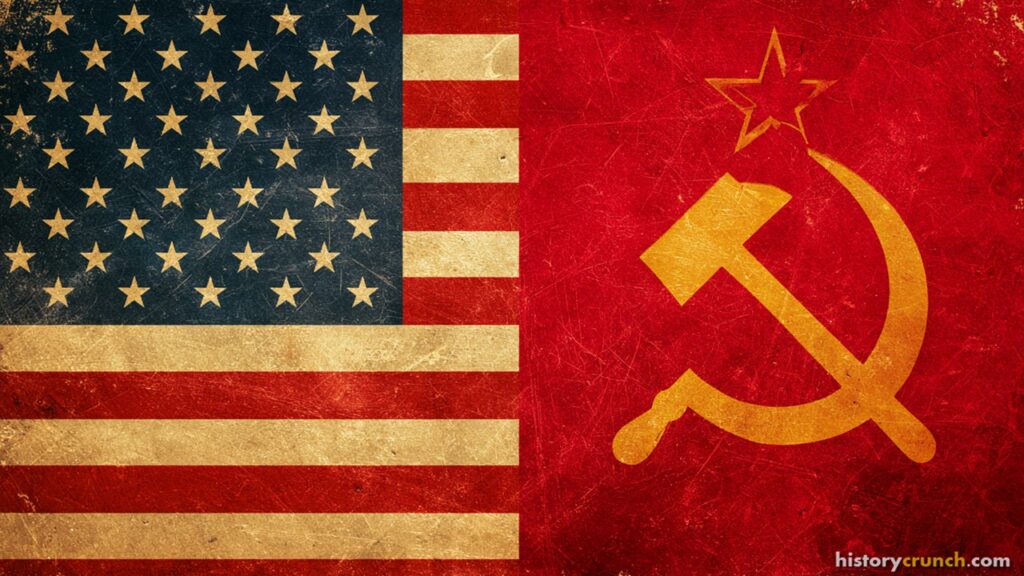
The Cold War was essentially a competition between the United States and the Soviet Union that began at the end of World War II and lasted until the collapse of the Soviet Union in the early 1990s. The two nations represented fundamentally different and opposing ideologies. The United States was a liberal democracy based on capitalism, meaning its economy was built around private ownership, free markets, and individual rights and freedoms. The Soviet Union was a communist dictatorship, meaning its economy was controlled by the government and the rights of individual citizens were severely restricted. These two ideologiesSets of beliefs about how government and society should be organized. were deeply incompatible, and each nation believed its own system was superior and sought to spread it to other parts of the world. This ideological conflict, combined with the enormous military power of both nations and the existence of nuclear weapons, made the Cold War one of the most tense and consequential rivalries in modern history.
Atomic Weapons and Nuclear Destruction
One of the most significant aspects of the Cold War was the very real threat that it could escalate into a nuclear war capable of destroying much of human civilization. At the end of World War II, the United States was the only nation in the world to possess atomic weapons. However, the Soviet Union worked quickly to develop its own, successfully testing its first atomic bomb in August of 1949. From that point forward both nations spent enormous amounts of money and resources building up vast arsenals of nuclear weapons, each trying to maintain an advantage over the other in what became known as the nuclear arms raceThe competition between the US and Soviet Union to build more and more powerful nuclear weapons..
By the 1950s both countries had developed enough nuclear weapons to destroy each other many times over. This gave rise to the concept of Mutual Assured Destruction, often referred to as M.A.D., which held that neither country would dare launch a nuclear attack against the other because doing so would guarantee its own total destruction in return. While this prevented a direct war between the superpowers, it also meant that the entire world lived under the constant shadow of potential nuclear annihilation for decades. The closest the world came to nuclear war during this period was the Cuban Missile Crisis of 1962, in which the United States discovered that the Soviet Union was installing nuclear missiles on the island of Cuba, just 90 miles from the coast of Florida. The crisis brought the two superpowers to the brink of war before a diplomatic agreement was reached to remove the missiles. The nuclear arms race is significant because it fundamentally changed the nature of international relations, making the consequences of any major conflict between the superpowers almost unimaginably catastrophic and forcing both sides to exercise a level of restraint that the world had never seen before.
 FactsthatCrunch
Mutual Assured Destruction, known as M.A.D., was the Cold War logic that kept the United States and the Soviet Union from launching a first nuclear strike by guaranteeing that any attack would bring total destruction on the attacker as well.
Proxy Wars and Ongoing Conflicts
A second major significance of the Cold War was that it spread conflict and instability to countries far beyond the borders of the United States and the Soviet Union. Because the two superpowers could not fight each other directly without risking nuclear war, they instead competed by supporting opposing sides in regional conflicts around the world. These conflicts became known as proxy wars, and they caused enormous suffering for millions of people across Asia, Africa, Latin America, and the Middle East.
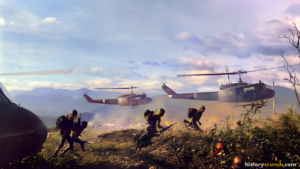
The Korean War of the early 1950s was the first major example of this pattern. When communist North Korea, backed by the Soviet Union and China, invaded South Korea in 1950, the United States led a coalition to defend the South, viewing the conflict as a direct test of its policy of containment. The war lasted until 1953, ended in a stalemate, and left the Korean peninsula divided between a communist North and a democratic South, a division that persists to the present day. The Vietnam War was another devastating proxy conflict, in which the United States became deeply involved in supporting South Vietnam against the communist North, backed by the Soviet Union and China. The United States eventually withdrew from Vietnam in 1973, and the country was reunified under communist rule in 1975. The Vietnam War had profound and lasting effects on American society, contributing to widespread distrust of government and reshaping how the United States approached military involvement abroad for decades afterward. Beyond Korea and Vietnam, Cold War proxy conflicts played out in countries including Angola, Nicaragua, Afghanistan, and many others, leaving behind instability and suffering that in many cases lasted long after the Cold War itself ended.
FactsthatCrunchThe Korean War ended in 1953 with Korea reunited as one country.
Divided Nations and Peoples
Another significant consequence of the Cold War was the physical and political division it imposed on nations and peoples around the world. The most powerful symbol of this division was the Berlin Wall, which was constructed in 1961 by the communist government of East Germany to prevent its citizens from fleeing to the democratic West. The wall divided the city of Berlin in two and became one of the most iconic images of the Cold War era, representing the broader division of Europe between the democratic West and the communist East that Winston Churchill had famously described as an Iron Curtain.
Germany itself was divided into two separate countries, West Germany and East Germany, for the entire duration of the Cold War. Families were separated, and citizens of East Germany lived under a repressive communist government that denied them basic rights and freedoms. The same pattern was repeated across much of Eastern Europe, where countries including Poland, Czechoslovakia, Hungary, Romania, and Bulgaria were placed under Soviet-backed communist governments following World War II. In Asia, the Korean peninsula was divided and remains so to this day. The Cold War is therefore significant for the enormous human cost it imposed through these divisions, which denied millions of people their freedom and separated families and communities for generations.
FactsthatCrunchWhy did East Germany build the Berlin Wall in 1961?
The communist government of East Germany built the Berlin Wall in 1961 to stop its citizens from fleeing to the democratic West. The wall split Berlin in two and separated families for 28 years. It became the clearest symbol of the Iron Curtain until East Germans tore it down in November of 1989, and Germany was reunified the next year.
Technological Progress and the Space Race
A further significance of the Cold War was the extraordinary pace of technological development it drove, particularly in the fields of rocketry, computing, and communications. Much of this technological acceleration came through the Space Race, in which the United States and the Soviet Union competed to achieve milestones in space exploration as a way of demonstrating the superiority of their respective systems and their technological capabilities.
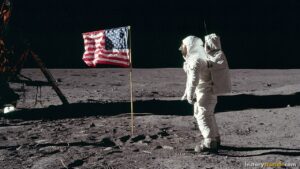
The Space Race began in 1957 when the Soviet Union launched Sputnik, the world’s first artificial satellite, into orbit. This achievement shocked the United States and triggered massive investment in science and technology. The Soviet Union achieved the first human spaceflight in 1961 when cosmonaut Yuri Gagarin completed an orbit of the Earth. The United States responded by committing to landing a human on the moon, a goal it achieved on July 20th, 1969 when astronaut Neil Armstrong became the first person to walk on the lunar surface as part of the Apollo 11 mission. Beyond space exploration, the Cold War also drove advances in radar, satellite communications, computer technology, and military hardware that have had lasting benefits for civilian life around the world. The internet itself has its origins in a Cold War-era American military communications project. The technological legacy of the Cold War therefore extends far beyond the conflict itself and continues to shape modern life in profound ways.
FactsthatCrunchIn 1969, the U.S. Department of Defense funded a communications network called ARPANET, designed so that military and research computers could share information even if part of the network was destroyed in a nuclear attack. The network first connected four universities: UCLA, Stanford Research Institute, UC Santa Barbara, and the University of Utah. It used a method called packet switching, which broke messages into small chunks and sent them along multiple paths, making the system harder to knock out.
ARPANET was decommissioned in 1990, but the technical standards it developed became the foundation for the modern internet. Today, approximately 5 billion people use the internet for communication, education, business, and daily life. The same core idea, routing information across many connected paths, still drives how data moves around the world.
A military project built to survive nuclear war became the foundation of a global network that connects approximately two thirds of all people on Earth.
Reshaping the Modern World
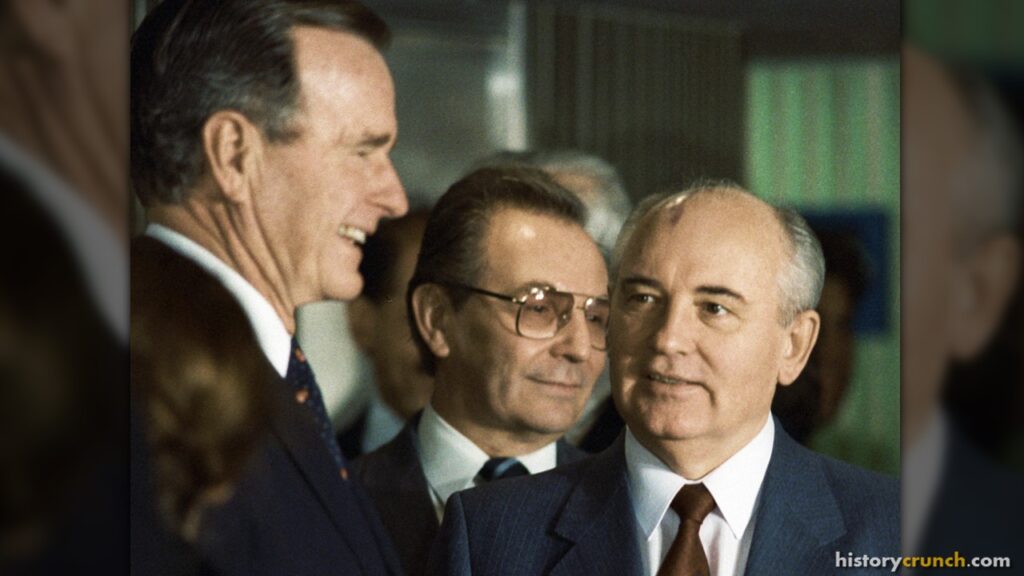
Perhaps the most significant consequence of the Cold War was the sweeping transformation of the world that occurred when it ended. By the 1980s the Soviet Union was in serious decline, struggling economically after decades of enormous military spending and facing growing unrest among its citizens and the peoples of Eastern Europe. In 1985 Mikhail Gorbachev became the leader of the Soviet Communist Party and introduced two major reform policies in an attempt to save the Soviet system. Glasnost, meaning openness, allowed for greater freedom of information and public debate. Perestroika, meaning restructuring, aimed at rebuilding the Soviet political and economic systems. Rather than saving the Soviet Union, these reforms set in motion a chain of events that led to its collapse.
As citizens of the Soviet Union and Eastern Europe gained more access to information about the failures of their governments, popular uprisings swept across the region. Communist governments in Romania, Hungary, Czechoslovakia, Bulgaria, and East Germany fell one after another. In November of 1989 the Berlin Wall was torn down as East Germans stormed it, and Germany was reunified. The Soviet Union itself collapsed in 1991, breaking apart into Russia and a series of newly independent nations. The significance of this transformation was enormous. Millions of people who had lived under communist rule gained their freedom. The political map of Europe and Asia was redrawn. The United States emerged as the world’s sole superpower, and a new era of international relations began. The end of the Cold War was therefore not just the conclusion of a rivalry between two nations but a turning point in the history of the entire world.
FactsthatCrunchHow did the Soviet Union collapse from Gorbachev's reforms to the final fall in 1991?
Key Vocabulary
Superpowers
Ideologies
Nuclear arms race
Mutual Assured Destruction
Proxy wars
Containment
Glasnost
Perestroika
Frequently Asked Questions
When did the Cold War start and end?
The Cold War lasted from the end of World War II in 1945 until the collapse of the Soviet Union in 1991. It was a long rivalry between the United States and the Soviet Union. The two superpowers never fought each other directly in a large war.
Why was the Cold War called “cold”?
It was called “cold” because the United States and the Soviet Union never fought each other directly in open battle. Instead, they competed through an arms race, a space race, and support for opposing sides in other conflicts. The threat of nuclear war kept both sides from striking first.
What was Mutual Assured Destruction?
Mutual Assured Destruction, or M.A.D., meant neither side could attack without facing its own total destruction. By the 1950s both nations had enough nuclear weapons to destroy each other many times over. This grim balance helped prevent a direct war between the superpowers.
What were Cold War proxy wars?
Proxy wars were regional conflicts where the superpowers backed opposing sides instead of fighting each other. The Korean War and the Vietnam War were the largest examples. Similar conflicts also struck Angola, Nicaragua, and Afghanistan, causing great suffering for millions of people.
How did the Cold War end?
The Cold War ended as the Soviet Union weakened and finally collapsed in 1991. Reforms by Mikhail Gorbachev called glasnost and perestroika gave people more freedom and information. This led to the fall of the Berlin Wall in 1989 and the breakup of the Soviet Union.
What was the closest the world came to nuclear war?
The Cuban Missile Crisis of 1962 was the closest the world came to nuclear war. The United States found that the Soviet Union was placing nuclear missiles in Cuba, just 90 miles (145 km) from Florida. A diplomatic deal removed the missiles and ended the standoff.
Cite This Article
To cite this article as a source, use one of the formats below.
MLA: Millar, B. “Significance of the Cold War: A Detailed Summary.” HistoryCrunch, 13 October 2026, https://historycrunch.com/significance-of-the-cold-war/.
APA: Millar, B. (2026). Significance of the Cold War: A Detailed Summary. HistoryCrunch. https://historycrunch.com/significance-of-the-cold-war/
Chicago: Millar, B. “Significance of the Cold War: A Detailed Summary.” HistoryCrunch. October 13, 2026. https://historycrunch.com/significance-of-the-cold-war/
Sources
- Vladislav Zubok, A Failed Empire.
- Odd Arne Westad, The Global Cold War.
- State Department — Office of the Historian