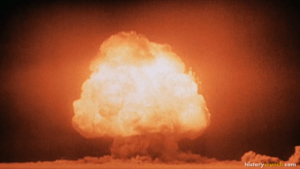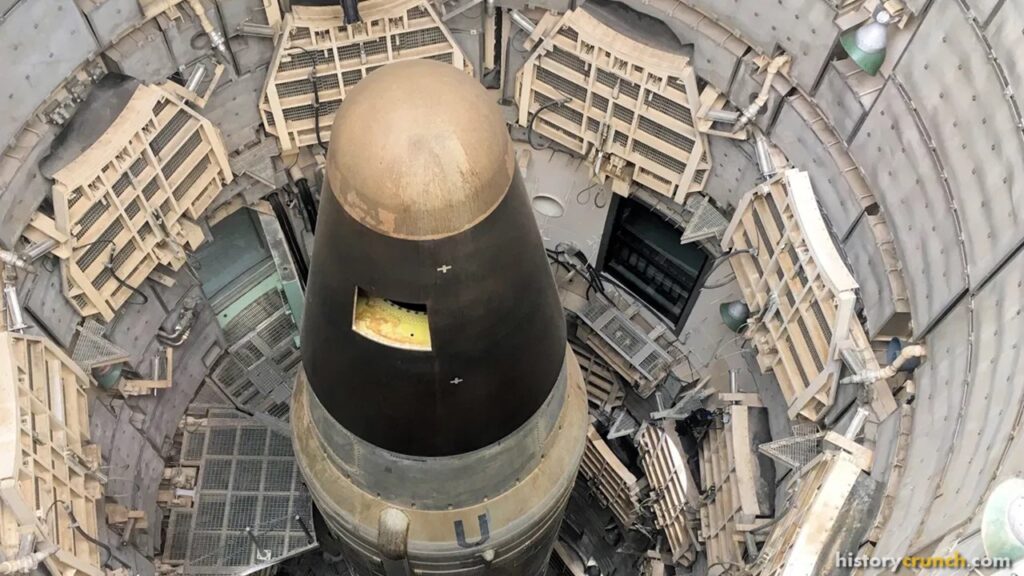
Mutual Assured Destruction (M.A.D.) is a concept related to the Cold War and the nuclear arms race of the Cold War. World War II ended in Europe in 1945 with the defeat of Nazi Germany by the Allied Powers, but the war did not officially end in the Pacific Theater until the atomic bombing of Japan in August of 1945. The United States had developed its atomic weaponry through its secretive program called the Manhattan Project. With the atomic bombing of Japan, the United States had begun the era of nuclear weapons and the nuclear arms raceCompetition between countries to build more and more powerful atomic weapons than their rivals..
What Was the Cold War?
The Cold War was a major world event that took place from approximately 1945 until 1991. In general, the Cold War was a period of increased tensions and hostility between the superpowers of the United States and the Soviet Union (USSR). It was characterized by a global struggle between capitalism and communism, with both sides competing for influence around the world. Although it never escalated into direct war between the superpowers, it involved proxy wars, nuclear arms races, and ideological confrontations. Many of the major events of the Cold War increased the tensions between the two nations, including: Cuban Missile Crisis, Vietnam War, Korean War and the nuclear arms race.
Mutual Assured Destruction – Summary
At the outset of the Cold War, the United States was the only nation in the world to have atomic weapons, such as those used against Japan in 1945. As such, the Soviet Union was not able to militaristically challenge the United States and worked to develop their own atomic weapons. However, on August 29th, 1949, the Soviet Union performed a test of their first atomic bomb codenamed ‘First Lightning’.
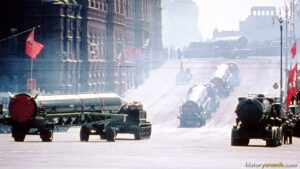
Throughout the remaining years of the Cold War, each superpower worked to develop an ever larger arsenal of atomic weapons including bombs and missiles. For example, the United States’ stockpile peaked at over 30,000 weapons while the Soviet Union’s peaked at about 40,000. As well, both superpowers amassed vast stockpiles of intercontinental ballistic missiles (ICBMs) and strategic bombers. These methods were capable of delivering nuclear warheads across continents.
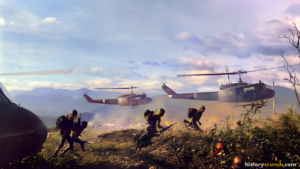
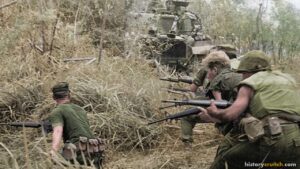
Having established such large stockpiles of weapons, the two countries had essentially created the means of totally destroying each other and the rest of the planet. Neither side could hope to win a nuclear war, so the best deterrentSomething that discourages an enemy from attacking because the consequences would be too costly. was to ensure both had the capability to destroy each other completely. As such, historians refer to the nuclear arms race of the Cold War as an example of ‘Mutual Assured Destruction’ since it was clear to both the United States and the Soviet Union that if either attacked the other, then it would ultimately lead to total destruction for both. As such, it is generally argued that the superpowers both avoided engaging in direct warfare out of fear that it would lead to total destruction for both the United States and the Soviet Union. This can be seen in the proxy warsConflicts where superpowers fight indirectly by supporting opposing sides in a third country’s war. of the Cold War, such as the Korean War and the Vietnam War. In both of these instances, the United States and the Soviet Union avoided direct warfare and instead fought through a third nation.
 FactsthatCrunch
How did second-strike capability and fear of total destruction funnel the Cold War superpowers away from fighting each other directly?
Mutual Assured Destruction – Significance
As stated above, Mutual Assured Destruction was a strategy during the Cold War, based on the idea that if either the United States or the Soviet Union launched a nuclear attack, the other would retaliate with equal or greater force, resulting in total destruction for both. This concept was built on the development of the concept of ‘second-strike capabilityA country’s ability to launch a devastating nuclear counterattack even after being hit first.‘. In short, this was the ability of a country to respond to a nuclear attack with its own devastating retaliation, even after being hit first.
Furthermore, the strategy of Mutual Assured Destruction impacted American and Soviet military planning, foreign policy, and disarmament negotiations, such as the Strategic Arms Limitation Talks (SALT) and the Anti-Ballistic Missile (ABM) Treaty. For instance, the nuclear arms race had caused both the United States and the Soviet Union to build massive stockpiles of nuclear weapons. As such, this eventually resulted in both nations seeking ways to limit or reduce the proliferationThe rapid spread or increase in the number of nuclear weapons among nations. of atomic weapons.
Overall, the concept of Mutual Assured Destruction was controversial. Some have criticized it for being morally and ethically troubling since it caused widespread fear among the general public. This was due to the fear of atomic warfare, which was common during the timeframe of the Cold War. With that said, some have also credited the strategy of Mutual Assured Destruction with preventing direct conflict between nuclear-armed superpowers. It remained a key feature of the Cold War until the late 1980s, when improved relations, detenteA period of easing tensions and improved relations between rival nations., disarmament agreements, and the eventual collapse of the Soviet Union began to shift foreign policy strategies.
FactsthatCrunchWhich definition fits each Cold War nuclear strategy term?
Key Vocabulary
Nuclear arms race
Deterrent
Second-strike capability
Proxy wars
Proliferation
Detente
Frequently Asked Questions
What is Mutual Assured Destruction in simple terms?
Mutual Assured Destruction was the idea that a nuclear attack by one superpower would bring total destruction to both. The United States and the Soviet Union each held enough weapons to wipe out the other. Because neither side could truly win, both avoided launching a first strike.
Why did Mutual Assured Destruction prevent war?
It worked as a deterrent because any attack would trigger a devastating response, leaving no real winner. This depended on second-strike capability, meaning a country could still hit back even after being struck first. Knowing this, the superpowers chose not to fight each other directly.
When did the Soviet Union get its first atomic bomb?
The Soviet Union tested its first atomic bomb on August 29th, 1949, in a test codenamed First Lightning. Before that, the United States was the only nation with atomic weapons. This Soviet success began the full nuclear arms race between the two powers.
How did Mutual Assured Destruction shape the Cold War?
It pushed both nations to build huge stockpiles of nuclear weapons while avoiding direct war. Instead, they clashed through proxy wars like the Korean War and the Vietnam War. The strategy also led to arms control efforts, including the Strategic Arms Limitation Talks and the Anti-Ballistic Missile Treaty.
Why was Mutual Assured Destruction controversial?
Critics saw it as morally troubling because it relied on the threat of destroying entire populations. The fear of nuclear war caused widespread anxiety among ordinary people during the Cold War. Still, supporters argue it helped stop direct conflict between the two nuclear-armed superpowers.
Cite This Article
To cite this article as a source, use one of the formats below.
MLA: Beck, Elias. “Mutual Assured Destruction: A Detailed Summary.” HistoryCrunch, 9 October 2026, https://historycrunch.com/mutual-assured-destruction/.
APA: Beck, E. (2026). Mutual Assured Destruction: A Detailed Summary. HistoryCrunch. https://historycrunch.com/mutual-assured-destruction/
Chicago: Beck, Elias. “Mutual Assured Destruction: A Detailed Summary.” HistoryCrunch. October 9, 2026. https://historycrunch.com/mutual-assured-destruction/
Sources
- Wilson Center Digital Archive
- John Lewis Gaddis, The Cold War: A New History.