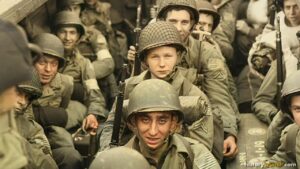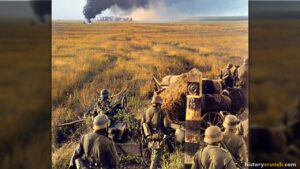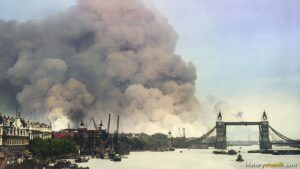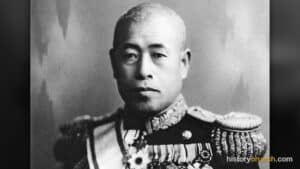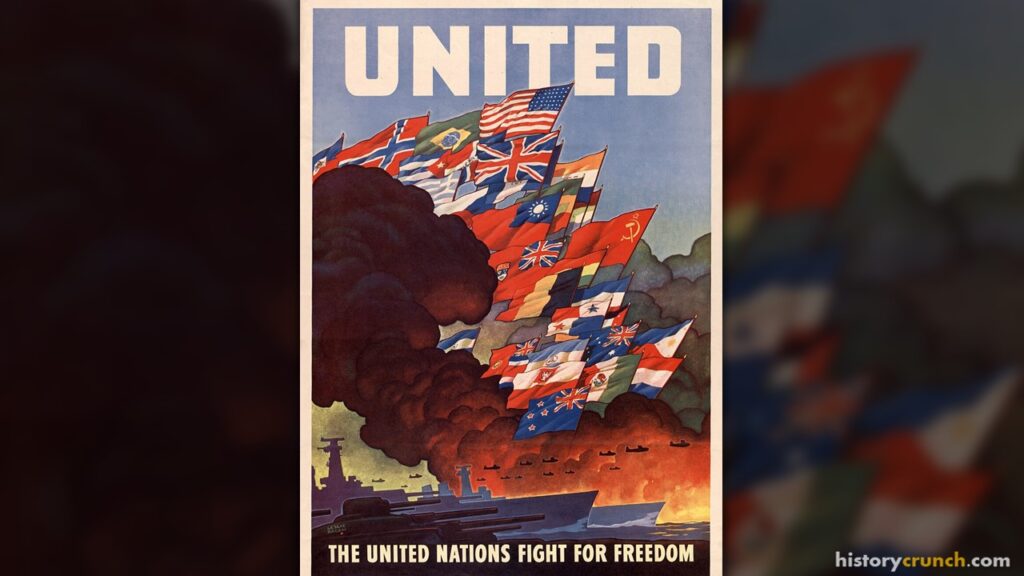
The Allied Powers of World War II were Britain, the Soviet Union, the United States and China. Together, these four nations are often called the ‘Big Four’ of the Allied Powers. With that said, Free France, led by Charles de Gaulle, also became an important part of the Allied cause after France fell to Nazi Germany in 1940. Together, these nations formed the coalitionA group of different countries or parties that join together for a shared goal. that ultimately defeated the Axis Powers of World War II, which included Nazi Germany, fascist Italy and Imperial Japan.
 FactsthatCrunch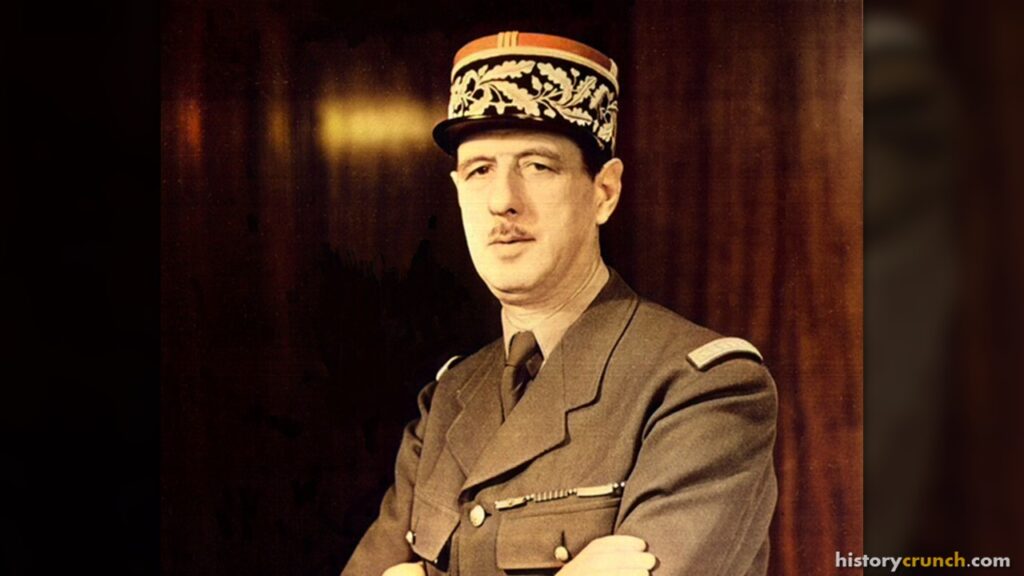
What Was World War II?
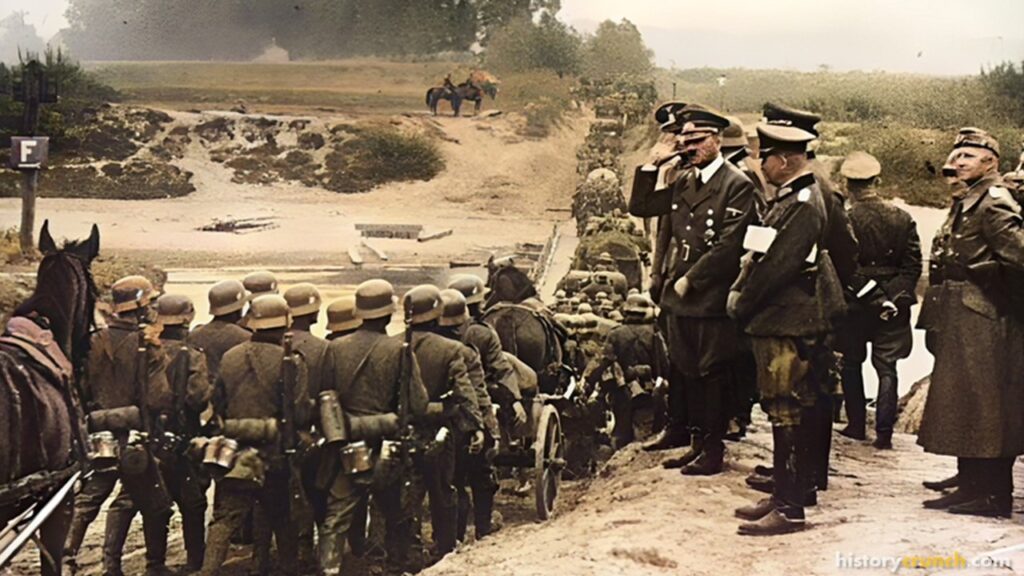
World War II lasted from 1939 to 1945 and became the largest and deadliest war in all of human history. World War II began on September 1st, 1939 when Nazi Germany, under the leadership of Adolf Hitler, invaded the country of Poland. The war unfolded as a series of major battles that spanned both the European and Pacific Theaters of war. In Europe, the early years of World War II were dominated by battles, such as: Battle of France, Battle of Britain, Operation Barbarossa and the Battle of Stalingrad. The later years saw the Allies liberate Europe through the invasion of Sicily and the Normandy Landings on D-Day. In the Pacific, the United States faced off against Imperial Japan in major conflicts, such as the Battle of Midway and the Battle of Iwo Jima.
FactsthatCrunchGermany Invades Poland, Starting World War II
In the early morning of September 1st, 1939, German forces attacked Poland from three directions using more than 1.5 million soldiers, over 2,000 tanks, and nearly 900 bombers. The German battleship Schleswig-Holstein opened fire on the small Polish military depot at Westerplatte, near the port of Danzig, at around 4:43 a.m., while Luftwaffe bombers struck the Polish town of Wielun at roughly the same time with no military targets present. Britain and France declared war on Germany two days later, on September 3rd, 1939, turning the invasion into a global conflict.
Allied Powers of World War II – History and Member Nations
The Allied Powers were a military and political coalition of countries that opposed the Axis Powers during World War II, and their shared purpose was to defeat the aggressive expansion of Nazi Germany, Italy and Imperial Japan. However, the Allies were not united because they all believed the same things or shared a united vision for the world. In fact, the alliance brought together democracies such as Britain and the United States, the communist Soviet Union under Joseph Stalin, and Nationalist China under Chiang Kai-shek. These countries often disagreed with one another and sometimes deeply distrusted one another, but they understood that none of them could defeat the Axis Powers alone.
The Allied coalition also included many other nations, colonies, and governments-in-exileGovernments that were forced out of their home countries by enemy military occupation and operated from abroad. that had been forced from their homelands by Axis military aggression. For example, after France was defeated by Nazi Germany during the Battle of France in June of 1940, Charles de Gaulle called on the French people to continue resisting Nazi rule. His efforts helped create the Free French movement.
As mentioned above, the ‘Big Four’ nations of the Allied Powers were Britain, the Soviet Union, the United States and China. Britain, under Prime Minister Winston Churchill, remained in the war even after the fall of France in 1940 and became the main base of resistance against Nazi Germany in Western Europe. The Soviet Union, led by Joseph Stalin, carried much of the ground fighting against Nazi Germany in eastern Europe after Adolf Hitler launched Operation Barbarossa on June 22nd, 1941. The United States, led first by Franklin D. Roosevelt and later by Harry S. Truman, provided enormous industrial power, military strength, weapons, ships and financial support. The United States officially joined the war effort of World War II on the side of the Allies, following the surprise attack that Japan carried out against Pearl Harbor. At the same time, China, under Chiang Kai-shek, continued resisting Japan and tied down large numbers of Japanese troops in Asia.
The Allied war effort was shaped not only by battles but also by important meetings among Allied leaders, because strategy had to be coordinated across multiple continents and fronts. One of the most important of these meetings was the Tehran Conference, which took place from November 28th to December 1st, 1943. This was the first major face-to-face meeting of Churchill, Roosevelt, and Stalin, and during the conference they discussed how to defeat Germany and agreed on the need for a major Allied invasion of western Europe.
Another crucial meeting was the Yalta Conference, which was held from February 4th to February 11th, 1945, when Allied victory in Europe was approaching. At Yalta, the ‘Big Three’ (Churchill, Roosevelt, and Stalin) discussed the final defeat of Nazi Germany, the occupation of German territory, the future of Poland, and the creation of a new international organization that would later become the United Nations. Last was the Potsdam Conference, which was held from July 17th to August 2nd, 1945.
FactsthatCrunchWhich governments kept fighting after Axis forces seized their countries, and how did governments-in-exile operate during World War II?
Allied Powers of World War II – How Did It Form?
Another major step came after the Japanese attack on Pearl Harbor on December 7th of 1941. For instance, just weeks later on January 1st, 1942, representatives of 26 nations signed the ‘Declaration by United NationsA January 1942 agreement signed by 26 nations committing them to keep fighting the Axis and not make a separate peace.’ in Washington, D.C.. This agreement committed them to continue fighting the Axis Powers and to avoid making a separate peace. This was very significant because it gave the Allied war effort a clearer sense of unity and purpose. In fact, the term ‘United Nations’ was first used during World War II to describe the countries fighting together against the Axis Powers.
The Allied alliance developed over time as World War II grew larger and more destructive. In the early stage of the conflict, the main powers resisting Nazi Germany were Britain and France, but this changed as Adolf Hitler’s conquests spread across Europe and as other major powers were drawn into the war. One important step in the formation of the Allied partnership came in August of 1941, when Franklin D. Roosevelt and Winston Churchill issued the Atlantic CharterA joint statement issued by Roosevelt and Churchill in August 1941 describing Allied goals, including freedom and self-government for peoples., which was released on August 14th, 1941. This statement described wide Allied goals, including the defeat of Nazi tyranny, freedom of the seas and the right of people to choose their own government.
Allied Powers of World War II – Issues
Although the Allied Powers worked together effectively enough to win the war, the alliance was never free of tension, and many of its members distrusted one another from the very beginning. For instance, Winston Churchill worried deeply about Soviet expansion into Eastern Europe, while Joseph Stalin believed that Britain and the United States had waited too long to open a second major front in western Europe. Franklin D. Roosevelt often tried to keep the alliance united, but even he understood that the wartime partnership included serious disagreements about ideology, military strategy and the future of the world after the war.
These tensions became especially important as Allied victory approached in 1945, because the leaders had to decide what would happen to Germany, Poland, and the rest of Europe once the fighting ended. In many ways, the disagreements that appeared during the final years of the war helped create the mistrust that would soon lead to the Cold War between the United States and the Soviet Union. Therefore, the Allied alliance was both a great military success and a temporary partnership that contained the seeds of future conflict. As such, historians often consider the Yalta Conference and Potsdam Conference to be important causes of the Cold War.
FactsthatCrunchAllied Powers of World War II – Victory
By 1945, the Allied Powers had defeated fascist Italy, Nazi Germany and Imperial Japan. Although, it should be noted that the fighting in Europe ended before the war in Asia and the Pacific. In Europe, Allied armies pushed toward Germany from both east and west, while German cities (such as Dresden) were heavily bombed and Hitler’s military position collapsed. Adolf Hitler died by suicide in Berlin, Germany on April 30th, 1945, and Nazi Germany officially surrendered on May 8th, 1945, which became known as V-E DayThe day Nazi Germany officially surrendered, May 8th, 1945, marking victory in Europe., or Victory in Europe Day.
However, the war continued against Imperial Japan for several more months. Japan was already under enormous pressure from American bombing, naval blockadeThe use of naval forces to cut off a country’s access to supplies and trade by sea., and battlefield defeat, but the final stage of the war was sealed with the American atomic bombings of Hiroshima on August 6th, 1945, and Nagasaki on August 9th, 1945. After these two bombings and the Soviet Union’s declaration of war on Japan on August 8th, 1945, Japan formally surrendered on September 2nd, 1945, which was the formal end of the fighting in World War II. The Allied Powers had proven victorious over the Axis Powers.
FactsthatCrunchAllied Powers of World War II – Significance
The Allied Powers were significant because they defeated the Axis Powers and prevented Nazi Germany, fascist Italy, and Imperial Japan from gaining lasting control over large parts of Europe, Africa, Asia and the Pacific. Their victory brought an end to some of the most aggressive and destructive regimes in modern history, and it also made possible the liberation of many countries that had been conquered and occupied during the war. As well, the Allied Powers helped put an end to terrible atrocities such as the Holocaust.
The Allied Powers are also historically important because they show how countries with very different governments, leaders, and beliefs can cooperate when facing a common enemy. Britain, the United States, the Soviet Union, China, and Free France did not agree on everything, and in some cases they disagreed very strongly, but they were still able to combine their military strength, industrial production, resources, and leadership in a way that changed world history.
FactsthatCrunchWhat did Allied cooperation in World War II show about governments working together across major political differences?
Key Vocabulary
Coalition
Governments-in-exile
Operation Barbarossa
Atlantic Charter
Declaration by United Nations
V-E Day
Naval blockade
Frequently Asked Questions
Who were the main Allied Powers of World War II?
The main Allied Powers were Britain, the Soviet Union, the United States, and China. Together these four nations are often called the “Big Four.” Free France, led by Charles de Gaulle, also became an important part of the Allied cause after France fell in 1940.
When did the United States join the Allied Powers?
The United States officially joined the war after Japan’s surprise attack on Pearl Harbor on December 7th, 1941. Before that, the country had supplied the Allies with weapons, ships, and money. Once in the war, American industrial power and military strength became a major reason the Allies won.
Who were the “Big Three” Allied leaders?
The “Big Three” were Winston Churchill of Britain, Franklin D. Roosevelt of the United States, and Joseph Stalin of the Soviet Union. These three men met at major wartime conferences to plan how to defeat the Axis. They first met face to face at the Tehran Conference in late 1943.
Why did the Allied Powers distrust each other?
The Allies distrusted each other because they had very different governments and goals for the postwar world. Churchill worried about Soviet expansion into Eastern Europe, while Stalin felt Britain and the United States opened a second front too late. These tensions helped lead to the Cold War once the fighting ended.
When did the Allied Powers win World War II?
Nazi Germany surrendered on May 8th, 1945, a day known as V-E Day. The war in the Pacific continued until Japan formally surrendered on September 2nd, 1945. The atomic bombings of Hiroshima and Nagasaki in August helped bring about Japan’s defeat.
Cite This Article
To cite this article as a source, use one of the formats below.
MLA: Millar, B. “Allied Powers of World War II: A Detailed Summary.” HistoryCrunch, 4 October 2026, https://historycrunch.com/allied-powers-of-world-war-ii/.
APA: Millar, B. (2026). Allied Powers of World War II: A Detailed Summary. HistoryCrunch. https://historycrunch.com/allied-powers-of-world-war-ii/
Chicago: Millar, B. “Allied Powers of World War II: A Detailed Summary.” HistoryCrunch. October 4, 2026. https://historycrunch.com/allied-powers-of-world-war-ii/
Sources
- Imperial War Museum
- The National WWII Museum
- Gerhard L. Weinberg, A World at Arms.
- Antony Beevor, The Second World War.