The Industrial Revolution is one of the most significant events in all of world history and had a profound impact on the modern world. It began first in Britain in the 1700s but soon expanded to the rest of Europe and North America. Historians have identified several reasons for why the Industrial Revolution began first in Britain, including: the effects of the Agricultural Revolution, large supplies of coal, geography of the country, a positive political climate, and a vast colonial empire.
 FactsthatCrunch
Which fuel powered the steam engines that drove Britain's Industrial Revolution?
Society Transformed
The Industrial Revolution is a significant event in world history because it transformed European and North American societies from being based on agriculture production to industrial production. This caused a mass migration of people from the rural countryside to the city-centers as people moved in search of work in the newly developed factories of the time.
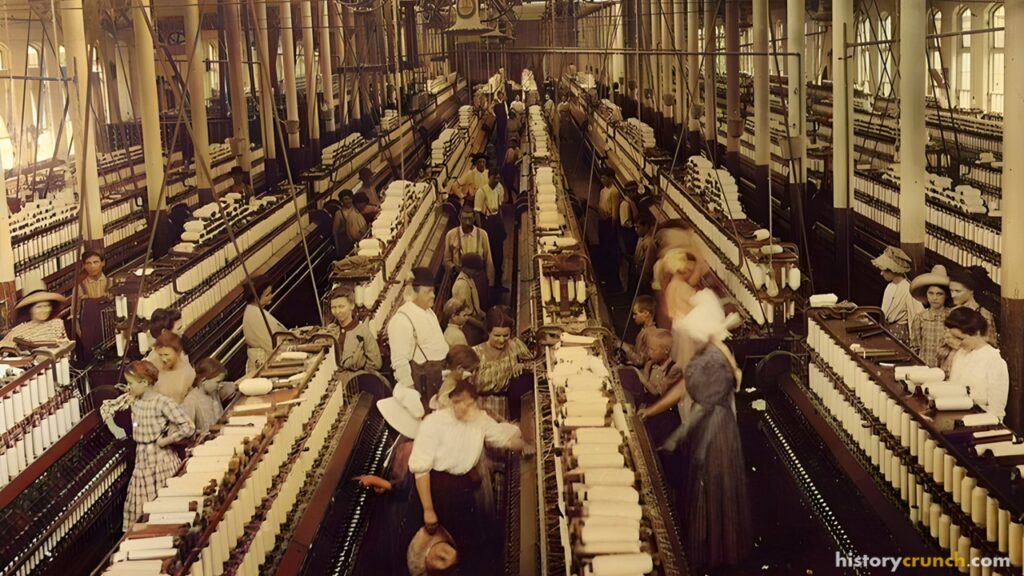
Before the start of the Industrial Revolution, the production of goods was done on a very small scale. Historians refer to this method of production as the ‘cottage industry’. Simply put, the cottage industryA pre-factory period when goods for sale were made on a small scale, usually inside a person’s home or farm. refers to a period of time in which goods for sale were produced on a small scale, usually in a home. In this system, people produced goods, such as wool, in their homes or on their own farms and then sold them to local communities since long distance transportation was uncommon. This method of production was slow and inefficient and struggled to keep pace with the growing demand caused by the increased population. As a result, entrepreneurs and inventors sought ways to increase production, which ultimately led to the creation of the factory system. The factory systemThe shift to large, centralized buildings where goods were produced on a mass scale instead of in homes. is a term that historians use to refer to the development of centralized factories or mills that produced goods on a mass scale.
FactsthatCrunchThe cottage industry was a pre-factory system in which families made goods at home and sold them to nearby buyers.
New Inventions in the Industrial Revolution
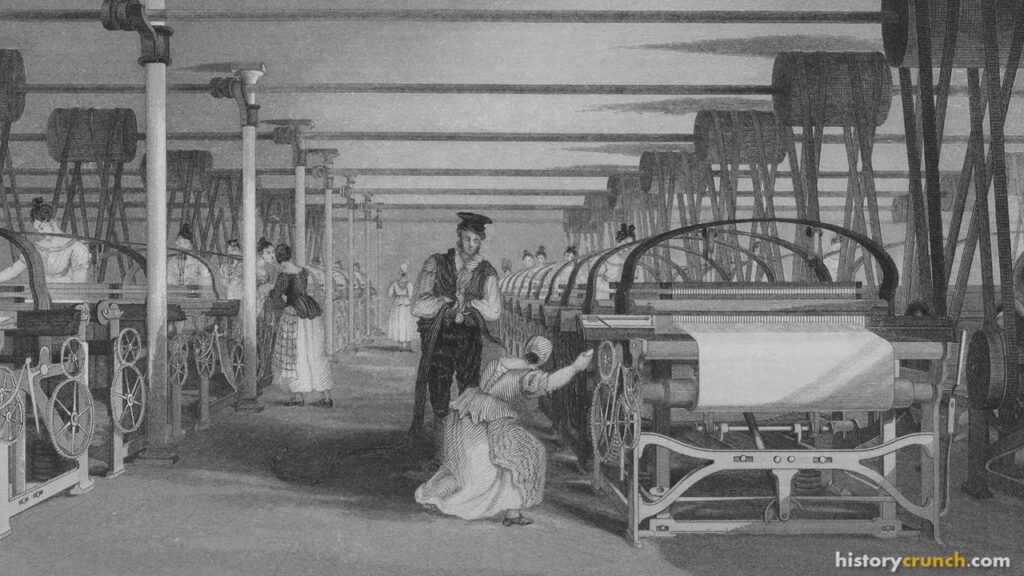
Throughout the 1700s, inventors such as Richard Arkwright, Eli Whitney, James Hargreaves, and Edmund Cartwright, developed machines and techniques that helped improve production, especially in terms of the textile industry. The textile industry was based on the development of cloth and clothing, and was the main industry that benefitted from the early developments of the Industrial Revolution. For example, James Hargreaves created the spinning jenny in 1764, which was a machine that allowed many spindles of thread to be spun at one time. Richard Arkwright added to this by developing the water frame in 1769. The water frame allowed dozens of spindles of thread to be spun at one time but was so large and needed so much energy that he built it next to rivers and creeks in order to use the force of the water to spin the machine. For his part, Edmund Cartwright developed the power loom in 1785 which allowed quicker production of cloth. Finally, American inventor, Eli Whitney developed the cotton gin in 1793, which allowed for quicker production of cotton. Previously, cotton had to be cleaned by hand to separate the seeds from the fibers. Whitney’s cotton gin sped up this process and allowed cotton to be cleaned and prepared for market much faster. In all, these inventions mechanized the textile industry and led to the establishment of factories throughout Britain, which was the first country to industrialize.
The invention of the steam engine during the Industrial Revolution is perhaps one of the most significant events during the time period. The first practical steam engine was invented by Thomas Newcomen, in 1712. Newcomen worked as an ironmonger in Devon, England and produced mining items for Cornish tin and coal mine owners who often complained that they were struggling to deal with flooding in their mines. Traditional methods of removing water from the mines were slow and hard work. Newcomen realized that he could help the tin mine owners, so he developed a pump engine that used a piston in a cylinder; it was the first of its kind. Therefore, the first main use of the steam engine in the Industrial Revolution was for the purposes of removing water from mines in a more efficient manner to allow quicker removal of important minerals.
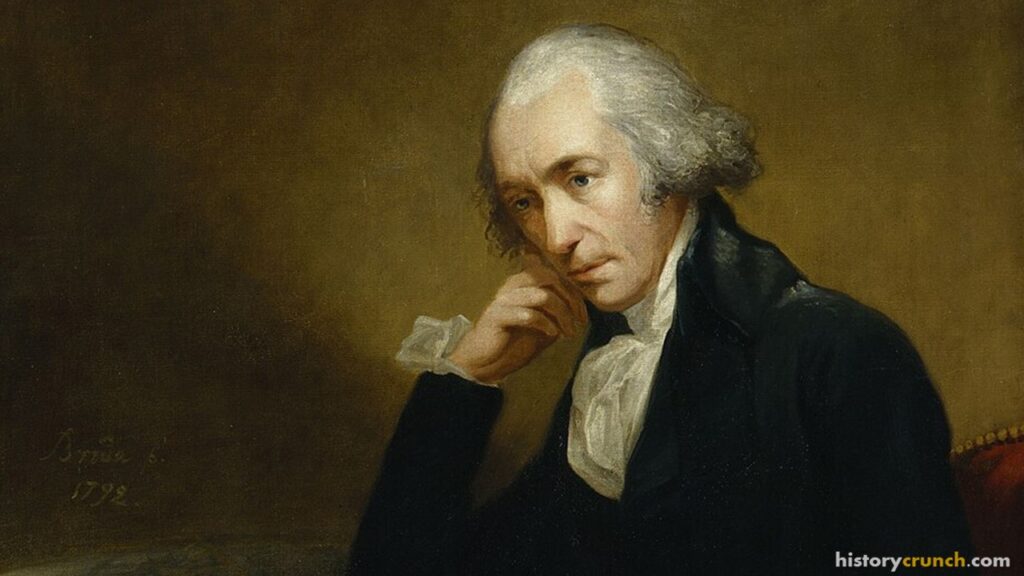
The steam engine was later improved by British inventor, James Watt. In 1764, Watt was given a Newcomen steam engine to repair. He started working on it and soon realized that it was inefficient. As a result, Watt wanted to improve the design. He was successful, and found a way to stop wasting heat and fuel by adding a separate condensing chamber. Watt patented his new steam engine design, and it paved the way for other mechanical design work. With Watt’s improvements steam engines were soon used in many different industries and for many purposes. They were bought by mine owners, cotton mills, and waterworks and as a result, the steam engines helped to power the Industrial Revolution, allowing once very manual work to be replaced by engines. Steam engines helped to improve productivity and increase efficiency. For example, later innovations, such as the steam train and boat used steam engine technology to revolutionize transportation. As such, Industrialization sped up transportation by land and sea and allowed for goods and people to be transported much longer distances.
 FactsthatCrunch
Which definition fits each textile machine of the Industrial Revolution?
Economics in the Industrial Revolution
None of these technological and societal changes would have been possible without the emergence and development of capitalism, which played an important role in the economics in the Industrial Revolution. The European empires of the 16th through the 18th centuries were empires that existed primarily to increase trade and the wealth of the European nations. During this time, powerful European nations such as Spain, Portugal, England and France participated in intense economic and exploration based rivalries. The Age of Exploration shows this rivalry in the massive colonies that each European nation amassed, as they competed with each other for territories in the New World. At their height, these countries controlled large sections of the world as part of their vast empires.
At the foundation of these rivalries existed the economic system of mercantilism, which was the idea that colonies and trade should be strictly controlled to benefit the economy of the home (European) nation. MercantilismAn economic system in which colonies and trade were tightly controlled by the government to benefit the home European nation. was an economic system that was heavily regulated and controlled by the government and allowed very little freedom for individual people. This all changed with the introduction of capitalistic beliefs and values in the late 1700s.
As the 18th century went along, some people began to reject the principles of mercantilism. For example, in 1776 Scottish economist Adam Smith published his famous written work “An Inquiry into the Nature and Causes of the Wealth of Nations” which is just often shortened to “Wealth of Nations”. The book challenged the idea that the government should control the economy and instead proposed the idea of free trade and competition with a lesser role of the government. The ideas of this book would eventually lay the foundation for the principles of capitalismAn economic system that supports free trade and individual choice as the way to create prosperity., which is an economic system that supports the idea of free trade and choice as a way of achieving prosperity. The emergence of capitalism was vitally important to the start of industrialization and the Industrial Revolution.
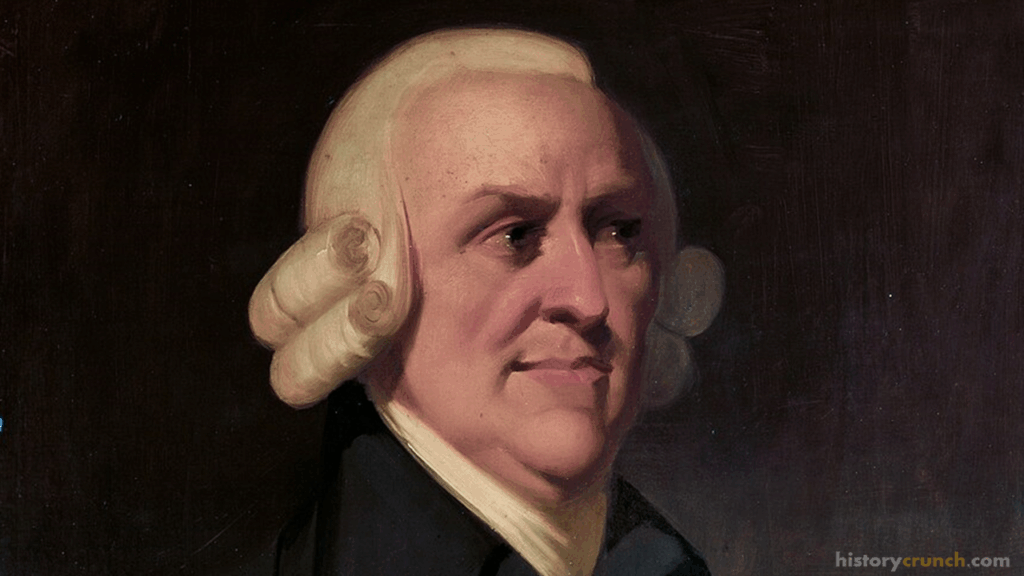
Capitalism caused the Industrial Revolution because industrialization required significant work and investment from individuals and not necessarily the government. For example, in Britain, where the Industrial Revolution began, wealthy entrepreneurs were important because they used their wealth to create factories and mines. This investment from individuals, whose actions were guided by the profit motiveThe personal drive of individuals to invest money and effort in order to earn financial gain., would not have been possible without the emergence of capitalism. Furthermore, as the Industrial Revolution began the individualistic principles of capitalism helped create a climate wherein industrialization exploded, and eventually spread worldwide.
FactsthatCrunchPositive Impacts of the Industrial Revolution
As an event, the Industrial Revolution had both positive and negative impacts for society. One of the main positives of the Industrial Revolution was the introduction of the many new inventions listed above, including: spinning jennyA machine invented in 1764 that could spin many spindles of thread at the same time, speeding up cloth production., power loom, flying shuttle and the steam engine. These inventions increased industrial output and allowed the creation of new goods which improved life for people at the time. As well, the development of factories and mines in the Industrial Revolution also provided jobs for the working class people. While the jobs had many issues, they provided the people with a basic income that helped cover the costs of daily life. Furthermore, the wealthy business owners who established the factories and mines in the Industrial Revolution were able to earn large amounts of wealth by selling the goods. This allowed industrialized countries such as Britain to become very wealthy. Finally, many historians consider the Industrial Revolution to be a positive event in history because it led to the modern lifestyles that most people enjoy today.
FactsthatCrunchThe Industrial Revolution changed how goods were made and how people lived, and historians debate whether its effects were mostly positive or mostly negative.
Negative Impacts of the Industrial Revolution
Although there are several positives to the Industrial Revolution there were also many negative elements, including: poor working conditions, poor living conditions, low wages, child labor, and pollution.
One of the primary causes of these negative impacts was the emergence of laissez-faire capitalism as an economic system, which was also one of the causes of the Industrial Revolution. Laissez-faire capitalismA highly individualistic form of capitalism in which the government plays as little a role as possible in economic decisions. is a highly individualistic ideology in which the government plays as little a role as possible in the economic decisions of a country. Historians often refer to the ideology of the Industrial Revolution as classical liberalism since it included the principles of laissez-faire capitalism while also still allowing basic individual rights. This political and economic climate created a situation in which wealthy factory and mine owners were able to exploit working-class people. As a result, this led to horrible working conditions for the people of the Industrial Revolution. For example, child labor was a common feature of the Industrial Revolution with children as young as four working in dirty and dangerous conditions without protection from the government. These negative impacts obviously also had negative consequences for the daily lives of people during the Industrial Revolution.
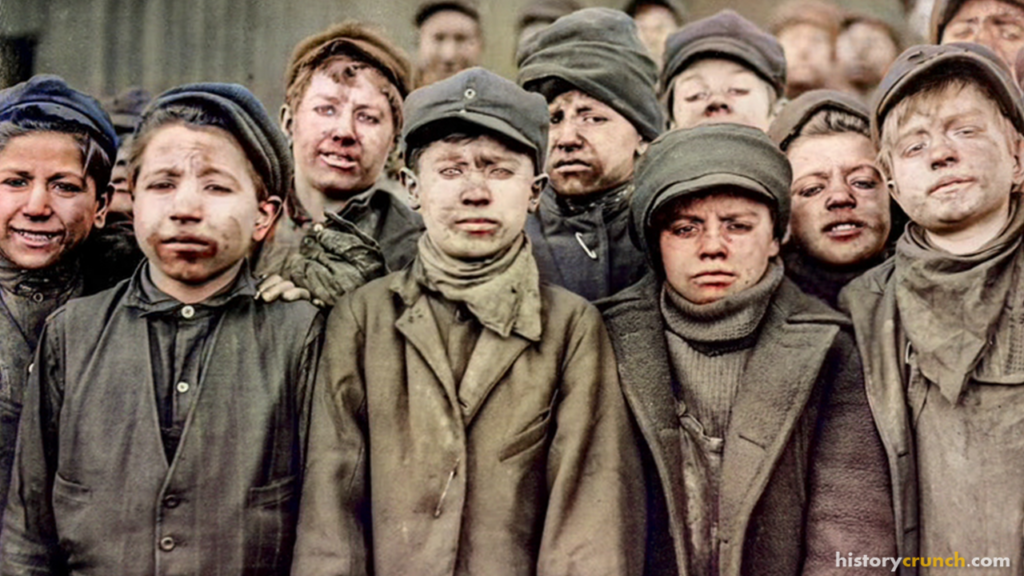
A common feature of industrial cities and towns was the construction of inexpensive and poorly built row housing, intended for working-class people. Wealthy factory owners and entrepreneurs constructed the homes for their workers but also used the homes as a means of making more profit. The homes were often referred to as back-to-back terraces because they were literally built side-by-side and connected to one another. The only part of the home that was not connected to another was the front. The homes were made with the cheapest materials available and had windows on only one side and lacked proper ventilation. As well, most of the homes were built without running water or sanitation. As a result, many people were unable to properly bathe and thus suffered from very poor hygiene.
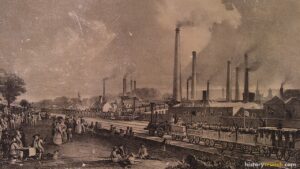
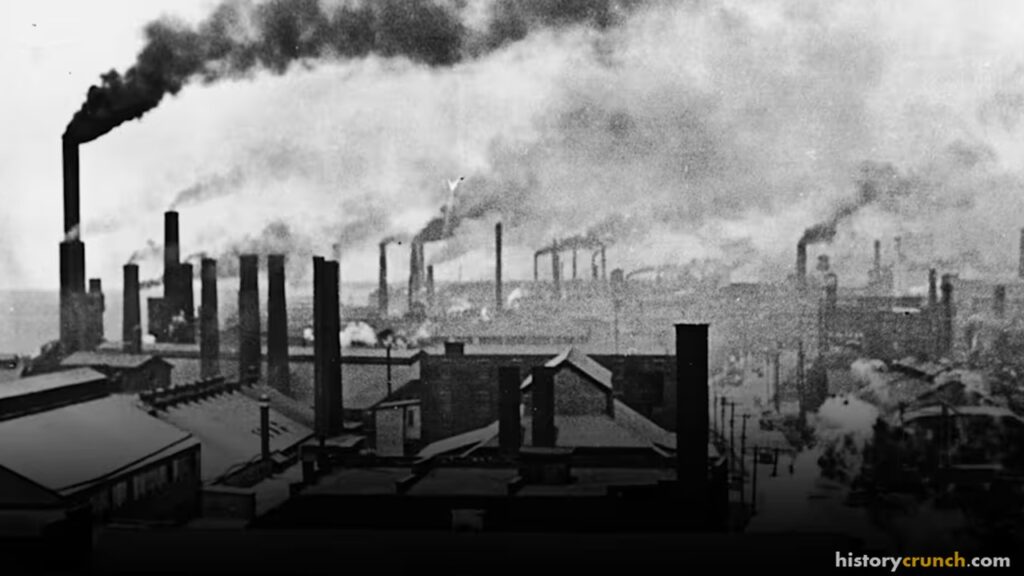
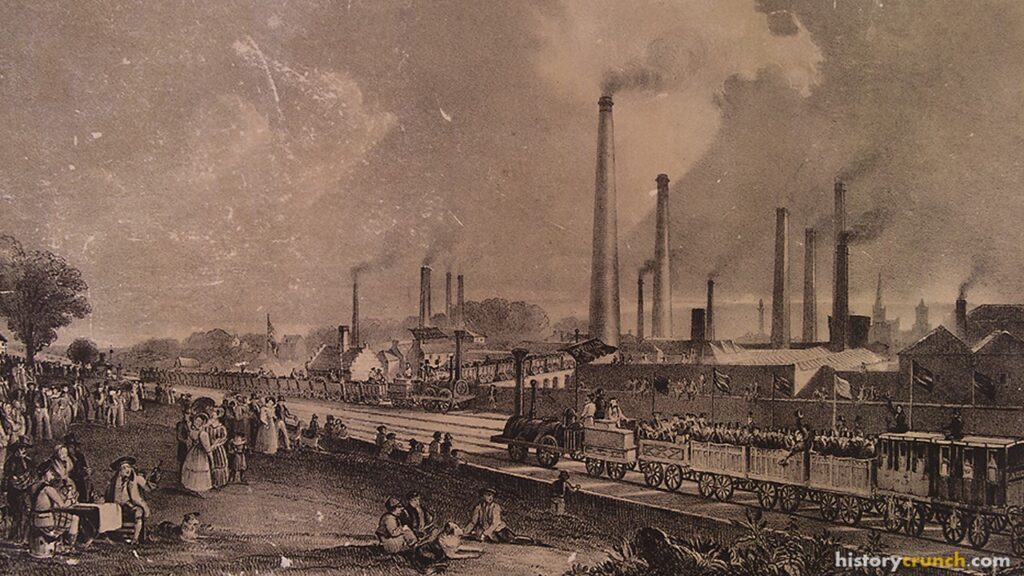
Pollution was one of the most recognizable aspects of industrial cities and towns. Not only were the streets and waterways heavily polluted with human waste and garbage, but the air was also heavily polluted. Throughout the 18th and 19th centuries, wealthy businessmen established countless factories and mines throughout Britain. These factories produced large amounts of air pollution from the burning of coal. Coal was easily the most used fuel during the Industrial Revolution, since it was needed to power the newly developed steam engines. However, coal is also known as a heavy air pollutant since when it is burned it sends small particles into the air. As a result, the numerous factories in the city centers caused the air quality to be horrible and gave industrial cities and towns a characteristic ‘smogA thick, dirty haze of air pollution that hung visibly over industrial cities and towns due to burning coal.’ that seemed to hover over them.
 FactsthatCrunch
Industrialization in the United States
Although the Industrial Revolution first began in the 18th century in Britain, it quickly spread to other areas of Europe and North America and had a profound impact on those regions. For example, the United States advanced dramatically during its own period of industrialization. At the start of the Industrial Revolution in Britain, the United States was a society based on agriculture and resource production. Most of the work was done by human or animal labor as the country lacked the machine-driven production methods that were emerging in Europe at the time. However, the United States’ wealth of natural resources meant that it was well positioned to undergo its own Industrial Revolution. In fact, historians have identified two stages of industrialization in the history of the United States: the First Industrial Revolution and the Second Industrial Revolution. Regardless, by the early 20th century, the United States had become the leading industrial nation in the world.
In conclusion, the Industrial Revolution was a major event in world history and had a profound impact on the lives of people. For instance, it led to major societal changes, new inventions and, over time, improved living and working conditions. As well, it spread out from its beginning in Britain and became a major force in most countries of the world.
 FactsthatCrunch
The United States was the first country to industrialize during the Industrial Revolution.
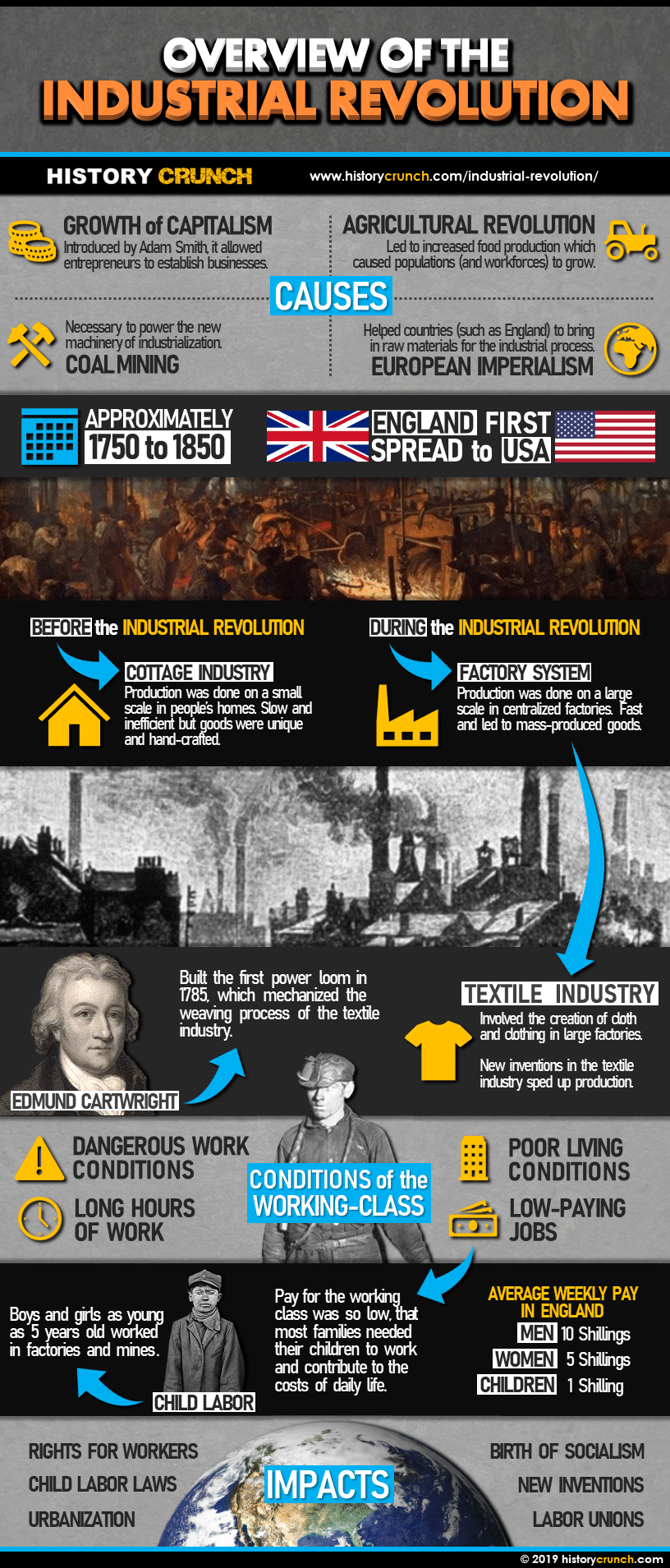
Industrial Revolution Overview – Infographic
Industrial Revolution timeline · 1760 – 1840
Key Vocabulary
Cottage industry
Factory system
Spinning jenny
Mercantilism
Laissez-faire capitalism
Profit motive
Smog
Frequently Asked Questions
When and where did the Industrial Revolution begin?
The Industrial Revolution began in Britain in the 1700s. It later spread to the rest of Europe and North America. Historians point to several reasons why Britain led the way, including the Agricultural Revolution, large coal supplies, helpful geography, a positive political climate, and a large colonial empire.
What was the cottage industry?
The cottage industry was the small-scale way that goods were made before factories existed. People produced items like wool in their own homes or farms and sold them to local communities. This method was slow and could not keep pace with the demand caused by a growing population.
What inventions were important during the Industrial Revolution?
Many key inventions improved the textile industry, such as the spinning jenny, water frame, power loom, and cotton gin. James Hargreaves built the spinning jenny in 1764, and Richard Arkwright added the water frame in 1769. The steam engine was perhaps the most important invention of the era, powering many industries and transportation.
How did capitalism connect to the Industrial Revolution?
Capitalism made industrialization possible because it relied on private investment rather than the government. Wealthy entrepreneurs used their money to build factories and mines in search of profit. Adam Smith’s 1776 book “Wealth of Nations” challenged government control and helped lay the foundation for these ideas.
What were the negative impacts of the Industrial Revolution?
The Industrial Revolution brought poor working conditions, low wages, child labor, poor housing, and heavy pollution. Children as young as four worked in dirty and dangerous places without government protection. Cheap row housing often had windows on only one side and lacked running water and sanitation, while coal smoke created thick smog over cities.
How did the Industrial Revolution affect the United States?
The Industrial Revolution spread from Britain to the United States and changed it dramatically. The country began as an agricultural society but had rich natural resources that helped it industrialize. Historians describe two stages, the First and Second Industrial Revolutions, and by the early 1900s the United States was the leading industrial nation.
Cite This Article
To cite this article as a source, use one of the formats below.
MLA: Beck, Elias. “Industrial Revolution: A Detailed Overview.” HistoryCrunch, 24 September 2026, https://historycrunch.com/industrial-revolution-overview/.
APA: Beck, E. (2026). Industrial Revolution: A Detailed Overview. HistoryCrunch. https://historycrunch.com/industrial-revolution-overview/
Chicago: Beck, Elias. “Industrial Revolution: A Detailed Overview.” HistoryCrunch. September 24, 2026. https://historycrunch.com/industrial-revolution-overview/
Sources
- Joel Mokyr, The Enlightened Economy.
- Robert C. Allen, The Industrial Revolution: A Very Short Introduction.
- Fordham Modern History Sourcebook