The Industrial Revolution is one of the most significant events in human history and had a profound effect on many nations throughout the world. While the Industrial Revolution first began in Britain in the 18th century, and took place throughout the centuries that followed, its impacts can still be seen in our lives today. As an event, the Industrial Revolution had both positive and negative impacts for society.
 FactsthatCrunch
James Watt Patents the Improved Steam Engine, Helping Launch Britain's Industrial Revolution
On the 5th of January 1769, Scottish engineer James Watt received a British patent for his improved steam engine. Its separate condenser let it burn far less coal than the older Newcomen engines. Later improvements in the 1780s let Watt engines turn wheels, so they could power factories and mills, not just pump water out of mines. Together with inventions like the spinning jenny in the 1760s, the steam engine helped launch the Industrial Revolution in Britain.
What Led to the Negative Impacts of the Industrial Revolution?
Although there are several positives to the Industrial Revolution there were also many negative elements, including: poor working conditions, poor living conditions, low wages, child labor, and pollution. One of the primary causes of these negative impacts was the emergence of laissez-faire capitalism as an economic system, which was also one of the causes of the Industrial Revolution. Laissez-faire capitalismAn economic system where the government stays out of business decisions as much as possible, letting owners do as they please. is a highly individualistic ideology in which the government plays as little a role as possible in the economic decisions of a country. Historians often refer to the ideology of the Industrial Revolution as classical liberalism since it included the principles of laissez-faire capitalism while also still allowing basic individual rights. This political and economic climate created a situation in which wealthy factory and mine owners were able to exploitTo use people unfairly for personal gain, taking advantage of their powerless position. working-class people. As a result, this led to horrible working conditions for the people of the Industrial Revolution.
 FactsthatCrunch
What were the main principles of classical liberalism during the Industrial Revolution?
Child Labor
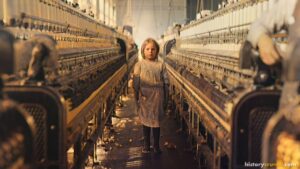
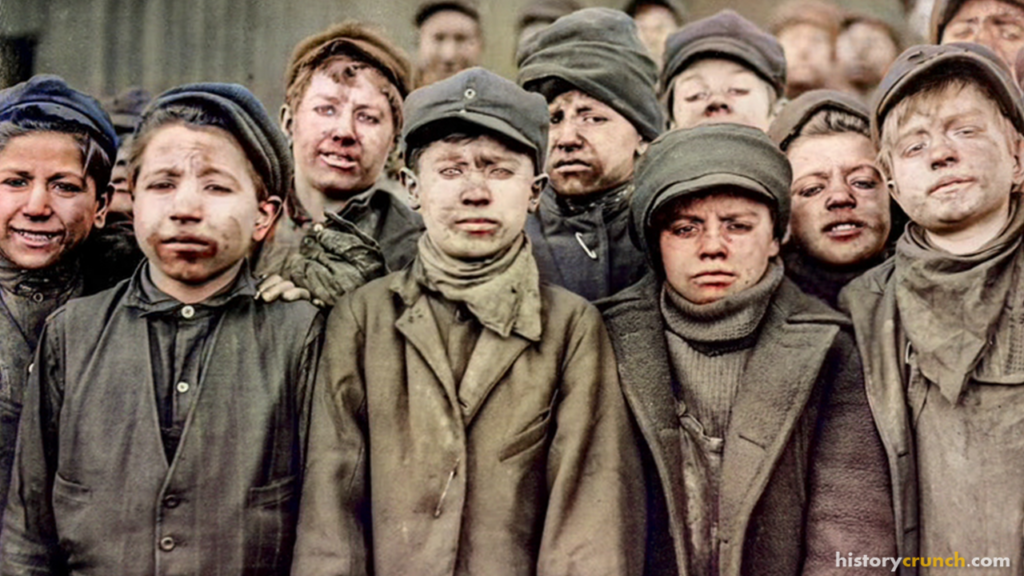
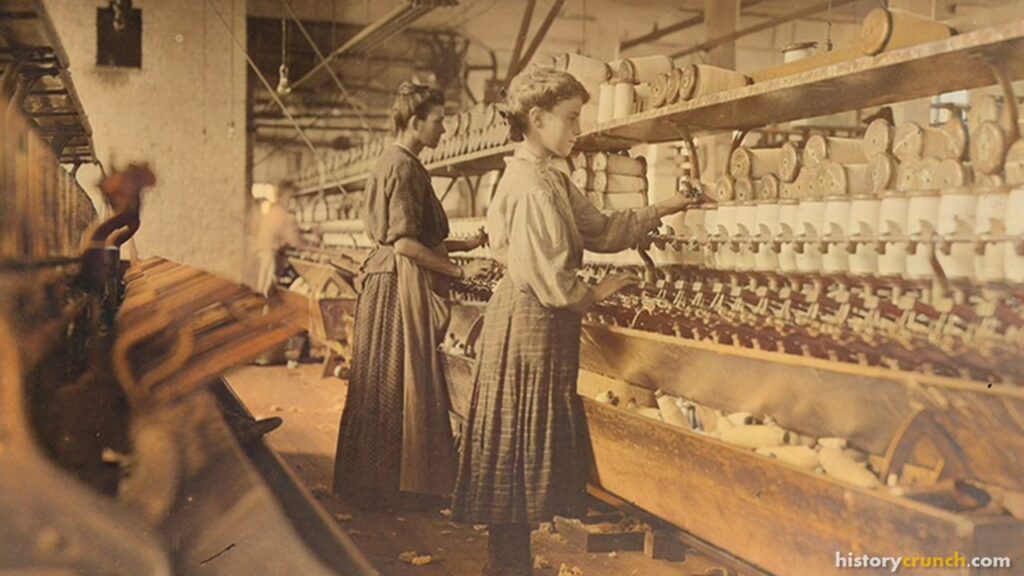
One of the main negative impacts of the Industrial Revolution was the use of child labor. Child labor was a common feature of the Industrial Revolution with children as young as four working in dirty and dangerous conditions without protection from the government.
Child labor was especially common in the late 18th century, during the early years of the Industrial Revolution. At the time, industrial cities and towns grew dramatically due to the migration of farmers and their families who were looking for work in the newly developed factories and mines. The living conditions in the cities and towns were miserable and characterized by: overcrowding, poor sanitationSystems for safely removing waste and keeping living areas clean enough to prevent disease., spread of diseases, and pollution. As well, workers were paid low wages that barely allowed them to afford the cost of living associated with their rent and food. As a result, many of these working-class families needed the extra income that their children earned while working.
 FactsthatCrunch
Five numbers that show why factory owners hired children and what it cost the children.
Working Conditions
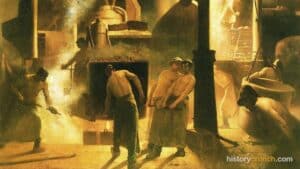
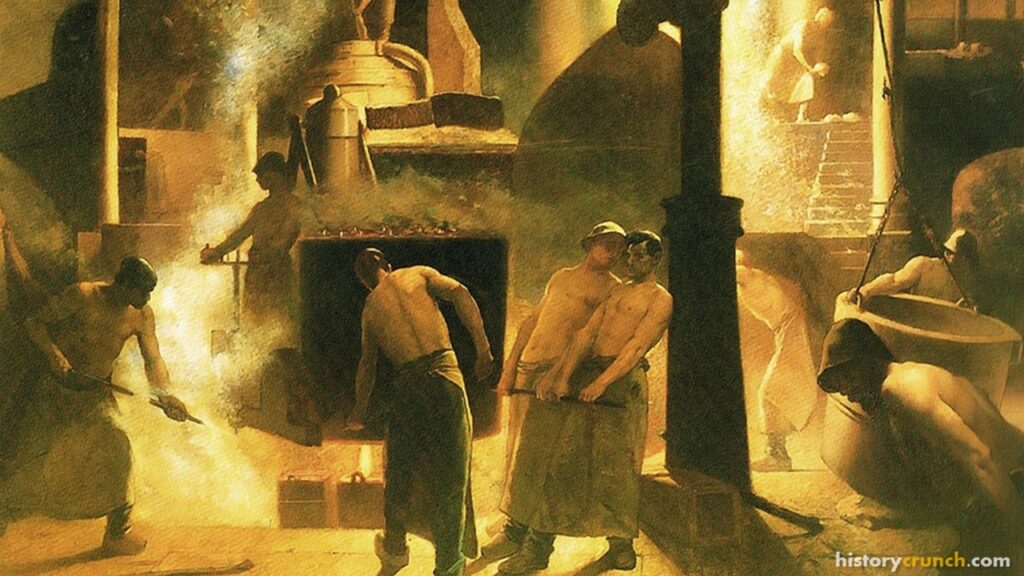
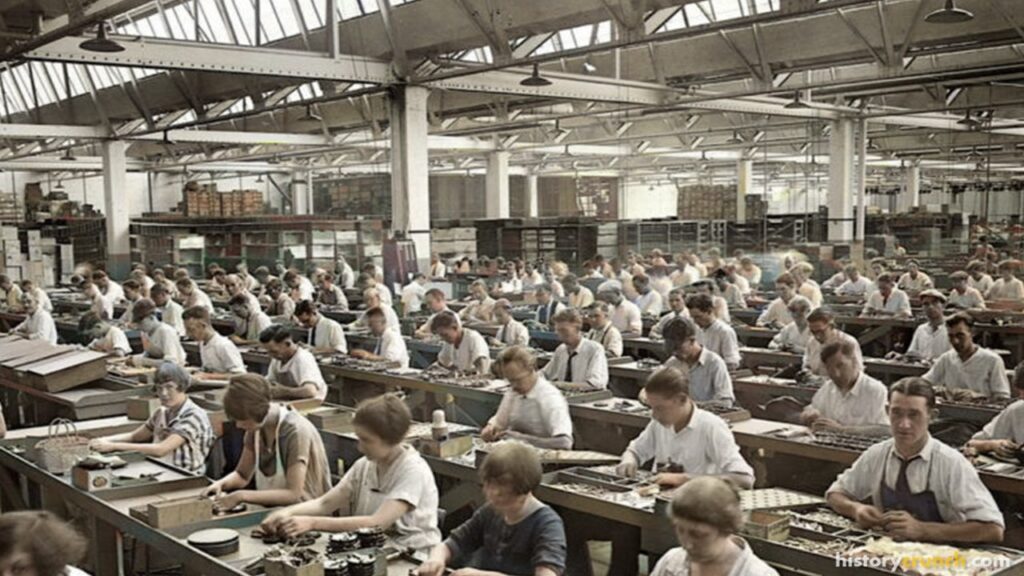
One of the main features of the Industrial Revolution was the horrendous working conditions that people faced. At the time, industrial cities and towns grew dramatically due to the migration of farmers and their families who were looking for work in the newly developed factories and mines. These factories and mines were dangerous and unforgiving places to work in. The working conditions that working-class people faced were known to include: long hours of work (12-16 hour shifts), low wages that barely covered the cost of living, dangerous and dirty conditions and workplaces with little or no worker rights. To better understand the situation, its first important to understand the political ideology of the time, which historians refer to as classical liberalismThe political and economic ideology of the Industrial Revolution that combined laissez-faire capitalism with basic individual rights.. Classical liberalism is an ideology characterized by laissez-faire capitalism, which means that the government played as little a role in the economy as possible. As a result, there were little to no rules in place for workers in the Industrial Revolution, and the wealthy owners could act in any manner that they wanted. For example, the factories and mines were incredibly dangerous places with very few safeguards.
 FactsthatCrunch
The British government followed classical liberalism, a political idea that kept the government out of the economy, so factory owners faced no laws limiting how many hours workers had to be on the job.
Classical liberalism supported laissez-faire capitalism, meaning the government left business owners free to set their own rules. Workers had no legal protections, so long shifts and dangerous conditions went unchecked until labor reform movements pressed governments to act.
Living Conditions
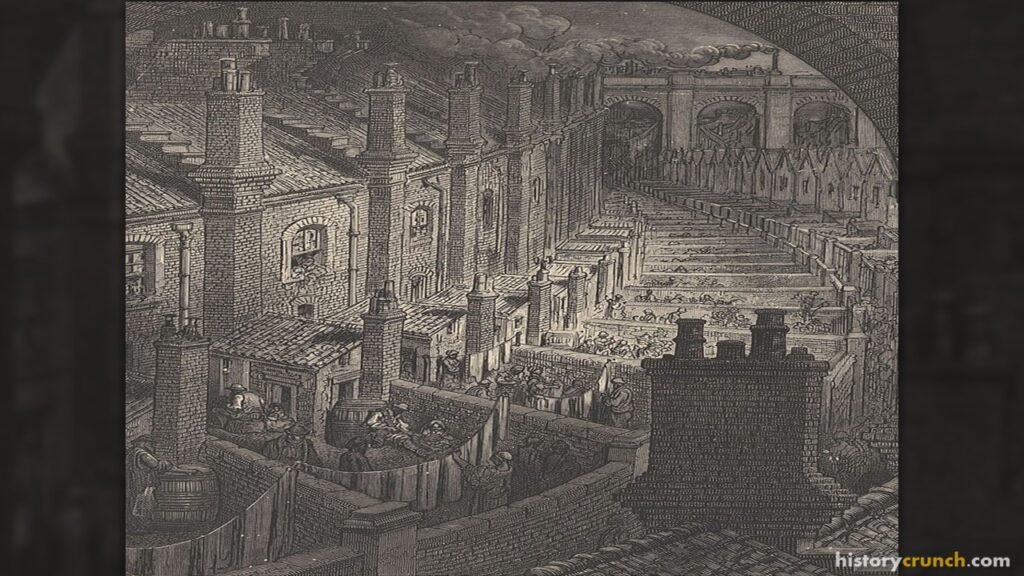
A common feature of industrial cities and towns was the construction of inexpensive and poorly built row housing, intended for working-class people. Wealthy factory owners and entrepreneurs constructed the homes for their workers but also used the homes as a means of making more profit. The homes were often referred to as back-to-back terracesCheap row houses built side-by-side and connected on all sides except the front, made with the poorest materials. because they were literally built side-by-side and connected to one another. The only part of the home that was not connected to another was the front. The homes were made with the cheapest materials available and had windows on only one side and lacked proper ventilationThe movement of fresh air through a building, which many workers’ homes lacked.. As well, most of the homes were built without running water or sanitation. As a result, many people were unable to properly bathe and thus suffered from very poor hygiene.
 FactsthatCrunch
Pay / Wages
In general, industrial workers were paid very small amounts and struggled to survive. For example, adult men were paid around 10 shillings per week, while women were paid 5 shillings for the same work, and children were paid just 1 shilling. In comparison, families were usually charged a few shillings per week for rent. This did not usually leave much left over for food, clothes and luxury items. As a result, they often struggled to cover their cost of living and had to also endure difficult living conditions. As well, workers often had their pay deducted for being late or for taking a break during their shift. The level of pay was so poor that many working-class families needed their children to work as well, in order to help cover the costs of the family.
 FactsthatCrunch
Men were paid roughly twice what women received and about ten times what children received, yet even men's wages left little for a family once rent and food were paid. The gap shows how factory and mine owners used gender and age to keep overall labor costs as low as possible. No legal minimum wage existed to protect any of these workers from being underpaid.
Pollution
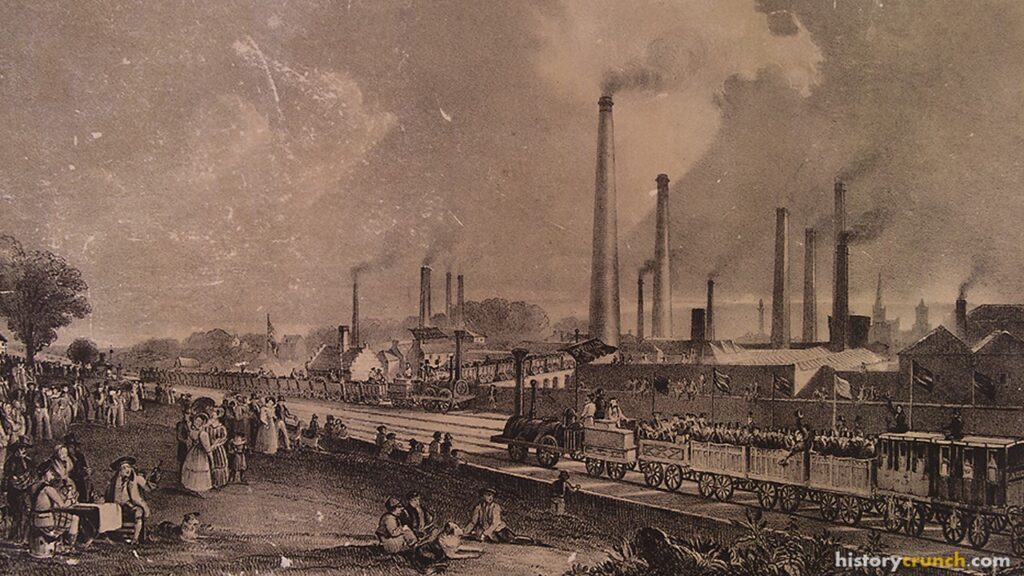
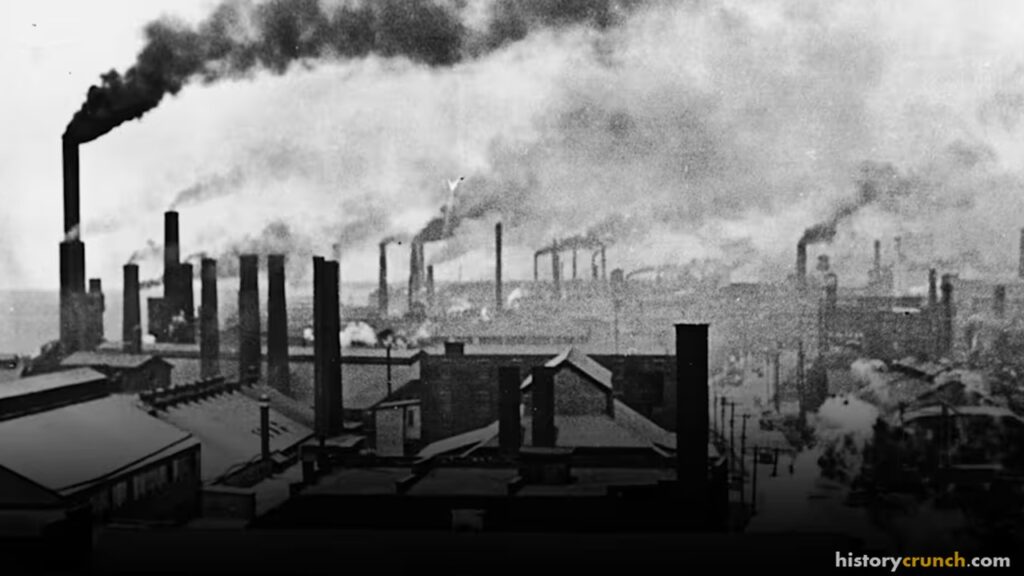
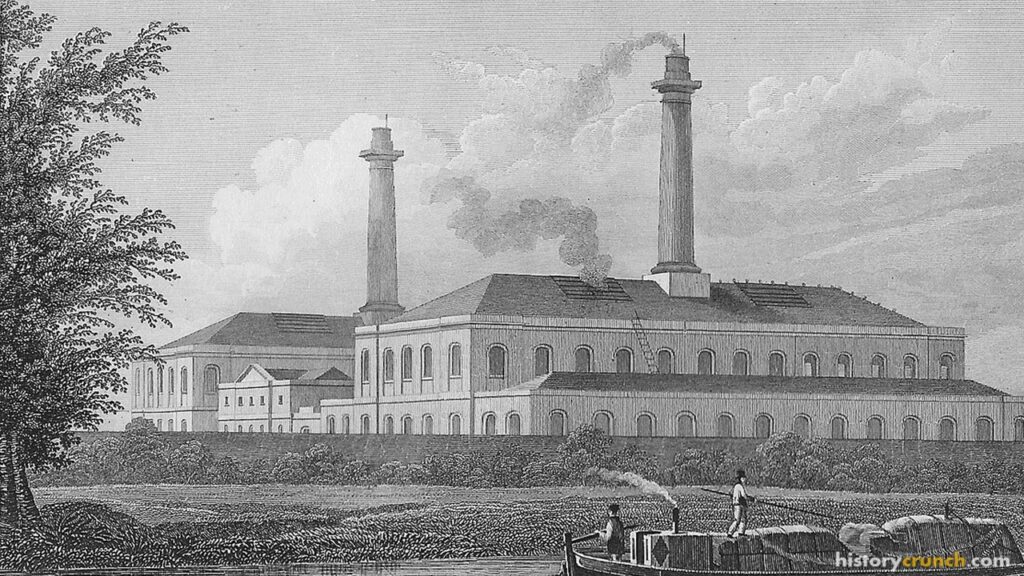
Pollution was one of the most recognizable aspects of industrial cities and towns. Not only were the streets and waterways heavily polluted with human waste and garbage, but the air was also heavily polluted. Throughout the 18th and 19th centuries, wealthy businessmen established countless factories and mines throughout Britain. These factories produced large amounts of air pollution from the burning of coal. Coal was easily the most used fuel during the Industrial Revolution, since it was needed to power the newly developed steam engines. However, coal is also known as a heavy air pollutant since when it is burned it sends small particles into the air. As a result, the numerous factories in the city centers caused the air quality to be horrible and gave industrial cities and towns a characteristic ‘smogA thick, dirty haze of polluted air that hung visibly over industrial cities when coal was burned.’ that seemed to hover over them.
 FactsthatCrunch
What was the main cause of smog that hung over industrial cities during the Industrial Revolution?
Key Vocabulary
Laissez-faire capitalism
Classical liberalism
Exploit
Sanitation
Ventilation
Smog
Back-to-back terraces
Frequently Asked Questions
What were the main negative impacts of the Industrial Revolution?
The main negative impacts were poor working conditions, poor living conditions, low wages, child labor, and pollution. These problems mostly affected working-class families who moved to cities for jobs. Wealthy factory and mine owners often gained wealth while workers suffered.
Why was child labor so common during the Industrial Revolution?
Child labor was common because families needed the extra money that children earned to survive. Wages were so low that adult workers alone could not cover rent and food. Children as young as four worked in dirty and dangerous factories and mines with no government protection.
How much were workers paid during the Industrial Revolution?
Adult men earned about 10 shillings per week, while women earned 5 shillings for the same work and children earned just 1 shilling. Rent and food took up most of that pay. Pay was often cut for being late or taking a break, leaving little for food or clothes.
What were working conditions like in factories and mines?
Working conditions were dangerous, dirty, and exhausting, with shifts lasting 12 to 16 hours. Workers had few or no rights and faced machines with very few safety guards. This happened because the government played almost no role in the economy under laissez-faire capitalism.
Why did the Industrial Revolution cause so much pollution?
Pollution grew because factories burned huge amounts of coal to power steam engines. Burning coal sent tiny particles into the air and created a heavy smog over industrial cities. Streets and waterways were also filled with human waste and garbage, which spread disease.
What were living conditions like for working-class families?
Working-class families often lived in cheap, poorly built row houses called back-to-back terraces. These homes had windows on only one side and usually lacked proper ventilation, running water, and sanitation. Overcrowding and poor hygiene helped diseases spread quickly through industrial towns.
Cite This Article
To cite this article as a source, use one of the formats below.
MLA: Beck, Elias. “Negative Impacts of the Industrial Revolution: A Detailed Summary.” HistoryCrunch, 27 September 2026, https://historycrunch.com/negative-impacts-of-the-industrial-revolution/.
APA: Beck, E. (2026). Negative Impacts of the Industrial Revolution: A Detailed Summary. HistoryCrunch. https://historycrunch.com/negative-impacts-of-the-industrial-revolution/
Chicago: Beck, Elias. “Negative Impacts of the Industrial Revolution: A Detailed Summary.” HistoryCrunch. September 27, 2026. https://historycrunch.com/negative-impacts-of-the-industrial-revolution/
Sources
- Joel Mokyr, The Enlightened Economy.
- Robert C. Allen, The Industrial Revolution: A Very Short Introduction.
- Fordham Modern History Sourcebook
- Emma Griffin, A Short History of the British Industrial Revolution.