Individualism is an important concept in both economics and politics. Similar to collectivism it is a foundational principle to understand most ideological systems. At its heart, individualism is a set of principles centered on the belief in the moral worth of the individual. This means that economic or political systems based on the principles of individualism favor policies that limit the control of the government and instead allow more freedoms for the individual person.
 FactsthatCrunch
Individualism holds that the government should take care of each citizen's basic needs.
What Is Individualism?
On the economic or political spectrums, individualism is positioned on the right side. This is because the right side of the spectrum is most often associated with limited government intervention in both economic and political affairs. Therefore, people who support the principles of individualism argue in favor of self-relianceThe concept upon which people take care of their own interests without assistance from government or any outside agency. and independence. This means that they support the idea that individual people should be responsible for their own wellbeing and not count on the government (or any other outside agency) to assist them in their lives. Self-reliance is best understood as the concept upon which people take care of their own interests without assistance. Economically, this would mean that people should not rely on the government for programs such as welfare and instead support themselves financially. As such, it is generally agreed that individualism is made up of several different main principles, including:
- Rule of Law
- Economic Freedom
- Private OwnershipThe principle that individuals should have the ability to own property such as land, businesses, products, or ideas.
- Competition
- Self-Interest
- Self-Reliance
- Individual Rights and Freedoms
FactsthatCrunchThe word individualism spread in English through an 1840 translation of Alexis de Tocqueville's Democracy in America.
The French writer Alexis de Tocqueville used the word to describe how Americans tended to focus on themselves and their families. His translator, Henry Reeve, kept the French word, and it soon became a common term in English political and economic writing.
Political Individualism
To understand individualism and these principles it’s first important to understand its impact on politics and economics. Political individualism is centered on the idea of freedom for the individual person in political decision-making. For example, the concept of liberalism is often associated with the right-side of the spectrum, along with individualism. While liberalism can take different forms such as classical liberalism or modern liberalism, it is most often associated with countries that value democracy as the political system of choice. Democracy is a political system that is associated with the idea that power or authority in a society rests with the people. In general, the people exercise their authority through elections in which they choose others to represent their interests in a formal legislative structure.
Liberalism in the Age of Enlightenment
The ideas of liberalism emerged out of the tumult of the Age of Enlightenment and famous revolutions from the 18th century such as the American Revolution and French Revolution. The Age of Enlightenment was an important time in the history of the world and modern Western societies. The Age of Enlightenment, or just the Enlightenment, occurred during the 17th and 18th centuries and is known as a time period of great change and new ideas. Specifically, the Enlightenment involved an intellectual movement, in which famous thinkers and philosophers challenged some of the basic foundations of society, including: role of the government, basic human nature, sources of authority and ideas centered on liberty. For instance, at the time, Europe was based on the political principles of feudalism and absolute monarchy. FeudalismA rigid, hierarchical form of government common in medieval Europe where a king shared power with nobles and people were born into fixed classes. was a form of government common during medieval Europe that involved society being structured in a very rigid and hierarchical way. It was popular in European society from the 9th century until the 15th century and was the form of government in which the country was ruled by a king who shared power with powerful nobles. The monarch would rule over the country while the rest of the people were bound by a hierarchical system in which people were placed into classes in which they were born. The monarch’s power depended on the support of the nobles. As such, people in the lower classes of feudal society were unable to question the king because they were bound to serve their lords. However, during the Enlightenment, many different philosophers began to question this state and some offered alternative theories for how society could and should be structured. For example, John Locke, a famous Enlightenment thinker, questioned the authority of absolute monarchs and instead advocated for a monarch who held the support or consent of the people. In this way, Locke was arguing for the idea of basic rights and freedoms of the individual and a limitation of the power of the monarch. Locke is often credited with the emergence of classical liberal values and his ideas were important factors in the American Revolution. For instance, the American Declaration of Independence is often cited as being heavily inspired by the works of John Locke. Similarly, the Declaration of the Rights of Man from the French Revolution echoed the individualistic values present in the American Declaration of Independence and the ideas of Locke.
Central to the concept of liberalism is the notion of individual rights and freedoms. As stated above, famous 18th century revolutions saw the creation of documents that supported the idea that all individuals possess some basic rights and freedoms. For example, the American Declaration of Independence, which was written by Thomas Jefferson, states ‘all men are created equal; that they are endowed by their Creator with certain unalienable rights; that among these are life, liberty, and the pursuit of happiness; that to insure these rights, governments are instituted among men, deriving their just powers from the consent of the governed’. Further to this idea, countries that embrace liberal values usually include basic rights, such as: freedom of speech, freedom of the press, freedom of religion, freedom of association and the right to vote. All of these rights center on the freedom of the individual person and the limitation of power or authority for a centralized government such as an absolute monarchy. As such, individual rights and freedoms are an important principle of liberalism and therefore individualism. As such, modern democracies are based in part on individualism, such as: United States, Canada, Australia, France, England, Germany, etc.
Economic Individualism
Economic individualism is centered on the idea of less government involvement or intervention in the economy. People who support individualism prioritize the principles of economic freedom, private ownership, competition, self-interest and self-reliance. Similar to political individualism, discussed above, the principles of economic individualism are foundational elements of liberalism, which is the idea that individual people should be free from government control and intervention. Because of this, economic individualism is best positioned on the right side of the economic spectrum. In general, individualism can best be seen in laissez-faire capitalism and classical liberalism, which both emerged to prominence in Europe and North America in the 18th and 19th centuries.
FactsthatCrunchAdam Smith and Economic Individualism
One of the most important figures in economic individualism is the famous Scottish economist, Adam Smith. His ideas, along with others, are credited with laying the foundation for laissez-faireA French phrase meaning ‘leave us alone,’ indicating that government should stay out of the economy and let individuals manage their own affairs. capitalism. Often, laissez-faire capitalism is also referred to as free market capitalism or market capitalism. Simply put, laissez-faire translates to ‘leave us alone’ meaning that the government should remain out of the economy and instead allow individuals to freely carry out their own economic affairs. Historically, laissez-faire capitalism was most common during the 18th and 19th centuries in the timeframe of the Industrial Revolution. At the time, it was a revolutionary idea, because in the previous centuries, mercantilismAn economic system that favored heavy government control and regulation, dominant before capitalism emerged. had been the dominant economic system. In general, mercantilism is viewed as an economic system that favored heavy government control and regulation. At the time, absolute monarchs ruled over vast empires and controlled almost all aspects of the economy. However, prominent thinkers, including Adam Smith, began to argue against mercantilism in favor of an economic system with more freedom for individuals. The development of capitalism as an economic system sought to reject the idea of government control of the economy and instead put the focus on individuals.
Adam Smith expressed his economic ideas in his famous work titled ‘An Inquiry into the Nature and Causes of the Wealth of Nations’ which is just often shortened to ‘Wealth of Nations’. The book was published in 1776 and became one of the most influential economic writings of all time. It challenged the idea that the government should control the economy and instead proposed the idea of free trade and competition with a lesser role of the government. The ideas of this book would eventually lay the foundation for the principles of capitalism, which is an economic system that supports the idea of free trade and choice as a way of achieving prosperity. Like the physiocrats, Smith argued against mercantilism and government control of the economy and instead proposed the idea of the ‘invisible handThe idea that market forces of supply and demand, not government, should drive a country’s economy.’. Simply put, the invisible hand is the idea that the market forces of supply and demand should drive the economy of a country. As such, historians consider Adam Smith and the ideas expressed in ‘Wealth of Nations’ as vital to the understanding of economic individualism, laissez-faire capitalism and classical liberalismA right-wing ideology that emerged in 19th-century Europe favoring individual liberty in both government and economic matters..
Classical Liberalism and Economic Individualism
Classical liberalism is a form of liberalism that emerged during the 18th and 19th centuries in Europe and North America but was most notable in England. As an ideology it is based heavily on both political and economic individualism. This means that classical liberalism is a right-wing ideology that heavily favors liberty of the individual in both matters pertaining to government and the economy. For instance, the following people are considered to be prominent classical liberal thinkers from the time: Adam Smith, John Locke, Baron de Montesquieu and John Stuart Mill. Each of these thinkers argued for less government intervention and for the protection of rights and freedoms for individuals.
Main Principles of Economic Individualism
As stated previously, economic individualism focuses on a few central principles, such as: economic freedom, private ownership, competition, self-interest and self-reliance. Each of these principles demonstrates why economic individualism and its related ideologies of laissez-faire capitalism and classical liberalism are all right-wing systems.
The first main principle of economic individualism is economic freedom. Economic freedom is an important element of capitalist or classical liberal societies because it allows people individual choice in their economic decision-making. For instance, economic freedom in classical liberal societies (ex. England during the Industrial Revolution), is largely centered around free trade and free market economy. Under these systems, government intervention is low and instead most economic decisions are determined by individual consumers and producers. As such, people are given the freedom and choice on how to earn and spend their money, and on what goods and services they would like to produce or consume.
The second main principle of economic individualism is private ownership. It is the idea that individuals should have the ability to own property, which could include: land, businesses, products, ideas, etc. For example, during the Industrial Revolution, entrepreneurs began to use their wealth to establish privately owned factories, mines and mills. This allowed individuals to control what they produced, how it was produced and for whom they were producing it. Before the development of capitalism, these decisions would have been controlled by the government. Thus, private ownership shifted the economic decision-making from the government to the people. Private ownership can be seen in modern societies in that people own their own homes, businesses or other forms of property.
Competition is another central principle of economic individualism. Under more collectivist systems, the government controls the means of production and therefore there is little to no competition. Laissez-faire capitalism introduced the idea that individuals and businesses should compete against each other and their success should be determined by the market forces of supply and demand. Therefore, consumers had the ability to decide the success of a business based upon whether they purchased the good or service. Supporters of economic individualism argue that competition benefits society in a number of ways, including: it lowers the price of goods and services as producers compete for the business of consumers, and it fosters innovation of goods and services as companies compete to outdo each other. For example, modern companies such as Apple and Samsung compete for consumers’ business which causes them to innovate their phones with new features, while still trying to keep costs as low as possible.
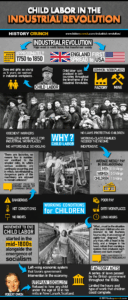
Another important principle of economic individualism is self-interest. Self-interest is the idea that individuals should act, economically, in their own best interest. Further to this idea, supporters of economic individualism argue that individuals should constantly seek to improve their own well-being over that of the collective society. For example, self-interest is apparent in the decision-making process of most business owners during the Industrial Revolution. They generally made decisions to increase their own wealth over the economic or personal well-being of their workers. While this method of thinking led to issues such as child labor, the business owners of the time benefitted greatly. Regardless, supporters of economic individualism argue that self-interest was positive for society as a whole through its indirect impacts. For instance, when wealthy business owners acted based on self-interest they were working to improve the economic standing of their overall company. If the company gained more income, it could then use that income to hire more workers and provide more goods or services. Therefore, the belief was that everyone acting in their own self-interest would in the end create more jobs and economic activity to improve the overall economy of a society.
The final main principle of economic individualism is self-reliance. Similar to self-interest, it is the idea that individuals should be responsible for their own well-being and should not rely on the government for assistance. For example, in modern welfare capitalist states, the government provides many social programs to assist citizens. A social program is a government-funded program that is, in general, universally provided to all citizens of the country. There are many examples of social programs in modern democratic nations, including: old age pensions, some form of government funded healthcare, public education, welfare, etc. However, as stated previously, economic individualism like laissez-faire capitalism is in favor of people being responsible for themselves and therefore the government should not intervene in the economy in order to provide assistance. It was argued that self-reliance would push individuals to work harder and would therefore benefit the society more as a whole.
Industrial Revolution timeline · 1760 – 1840
Key Vocabulary
Self-reliance
Feudalism
Laissez-faire
Mercantilism
Invisible hand
Classical liberalism
Frequently Asked Questions
What is individualism?
Individualism is a set of principles based on the belief in the moral worth of the individual. It favors policies that limit government control and give more freedom to each person. Both economic and political systems can be built on these ideas.
What are the main principles of individualism?
The main principles are rule of law, economic freedom, private ownership, competition, self-interest, self-reliance, and individual rights and freedoms. These ideas all place the individual person above a central government. Together they help explain why individualism sits on the right side of the political spectrum.
How did John Locke influence individualism?
John Locke questioned the power of absolute monarchs and argued that a ruler needed the consent of the people. He supported basic rights and freedoms for the individual, which shaped classical liberal values. His ideas strongly influenced the American Declaration of Independence.
How is Adam Smith connected to economic individualism?
Adam Smith was a Scottish economist whose ideas helped lay the foundation for laissez-faire capitalism. In his 1776 book “Wealth of Nations,” he argued against government control and for free trade and competition. He introduced the idea of the “invisible hand,” where supply and demand guide the economy.
What is the difference between political and economic individualism?
Political individualism centers on freedom for the person in political decision-making, such as the right to vote and free speech. Economic individualism centers on less government involvement in the economy through free trade and private ownership. Both are foundational parts of liberalism.
What does self-reliance mean in individualism?
Self-reliance is the idea that individuals should take care of their own needs without outside help. In economic terms, this means people should support themselves rather than depend on government programs like welfare. Supporters argue that self-reliance pushes people to work harder and helps society overall.
Cite This Article
To cite this article as a source, use one of the formats below.
MLA: Beck, Elias. “Individualism: A Detailed Overview.” HistoryCrunch, 28 September 2026, https://historycrunch.com/individualism-overview/.
APA: Beck, E. (2026). Individualism: A Detailed Overview. HistoryCrunch. https://historycrunch.com/individualism-overview/
Chicago: Beck, Elias. “Individualism: A Detailed Overview.” HistoryCrunch. September 28, 2026. https://historycrunch.com/individualism-overview/
Sources
- Emma Griffin, A Short History of the British Industrial Revolution.
- Joel Mokyr, The Enlightened Economy.