Economics in Ancient Rome played an important role in the daily lives of the Roman people and had a profound impact on the history of the Roman Empire. The economy of Ancient Rome was the foundation of an empire that stretched across regions of Europe, Asia, and Africa. As well, the economy supported millions of people for centuries. Economics in Ancient Rome was based on a few key aspects, including: agriculture, trade, taxation and slave labor.
ECONOMICS IN ANCIENT ROME – AGRICULTURE
As stated above, agriculture was one of the most important aspects of economics in Ancient Rome. In fact, the vast majority of Romans at the time, lived in rural areas and worked on farms. For instance, the most popular crops of the time were different grains, olives and grapes. Grain was the main staple food for Roman citizens, while olives provided oil for cooking, lighting and trade. Finally, grapes were used to make wine, one of Rome’s most profitable exports. Farming was difficult work, but the agriculture industry was vital to the overall economy of Ancient Rome.
Further to this idea, wealthy Roman landowners controlled massive estates that were often worked by slaves captured in Rome’s many wars of conquest. These large farms produced extra goods and foods that were sold in markets across the numerous cities and towns of the vast Roman Empire. Meanwhile, small farmers often struggled to compete and often eventually became tenant farmers who worked on the estates of the rich in exchange for a portion of the crops. As such, while agriculture was an important aspect of the ancient Roman economy, it also showcased the divide between the rich and poor that existed at the time.
ECONOMICS IN ANCIENT ROME – TRADE
Trade was another important aspect of economics in Ancient Rome. In fact, an important part of Roman society was its shops and markets that contained goods from across the vast Roman Empire. Roman cities were lined with marketplaces where craftsmen created and sold their goods. These shops were small rooms on the lower floor of a house that the craftsmen either owned themselves or rented as a space to sell their goods. In early Roman history, most of the goods sold in these shops were made by the person selling them, however, this changed as Rome grew. Over time, a class of ‘middlemen’ began to sell the products of others and acted as a wholesaler for many types of goods
The Roman Empire’s network of roads, ports and sea routes connected regions that included: modern-day Britain, Egypt, Italy, Spain, Syria and more. Furthermore, Roman merchants traded a wide variety of goods. From the eastern provinces came luxury items, such as: silk, spices, glass and perfumes. Meanwhile, the western provinces exported good, such as: metals, wine, oil and grain. The city of Rome, with its population of over one million people at its peak, was the empire’s largest market for goods and resources. In fact, the biggest shopping complex in Ancient Rome was the Market of Trajan which was built around 110 AD. It had five stories of shops and contained many different types of goods, including: fresh fish, herbs and spices, wine and oil and much more.
ECONOMICS IN ANCIENT ROME – TAXATION
The government of Ancient Rome depended heavily on a complex system of taxation to fund its army, public works and administration. As such, taxes were collected on land, trade and personal income. Also, Roman provinces were required to send a portion of their produce to Rome.
However, this system was not always fair or efficient. For instance, over time, corruption and over taxation placed heavy burdens on small Roman farmers and merchants. This was especially true during the later stages of the Roman Empire, when constant warfare and inflation weakened the Roman economy. Regardless, taxation and government administration played an important role in the economics of Ancient Rome.
ECONOMICS IN ANCIENT ROME – SLAVE LABOR
A key feature of the ancient Roman economy was its use of slave labor. In fact, slaves worked in nearly every aspect of ancient Roman society. For instance, slaves were often found to be working on farms, in households, in mines and even as teachers and accountants. Many of these slaves were prisoners of war or born into slavery, though some could earn or buy their freedom. The widespread use of slaves allowed Rome’s wealthy to gain even more wealth. As such, slave labor was an important aspect of economics in Ancient Rome.
As military conquests slowed in the later stages of the Roman Empire, the supply of new slaves declined. This essentially forced ancient Romans to rely more on free labor and tenant farming. This shift contributed to the gradual transformation of the economy and the rise of the feudal system in the medieval period. In fact, many historians view this as one of the main aspects that transformed European society into the Middle Ages.
DECLINE OF THE ECONOMY IN ANCIENT ROME
As stated above the economy of Ancient Rome played a significant role in the history of the Roman Empire.
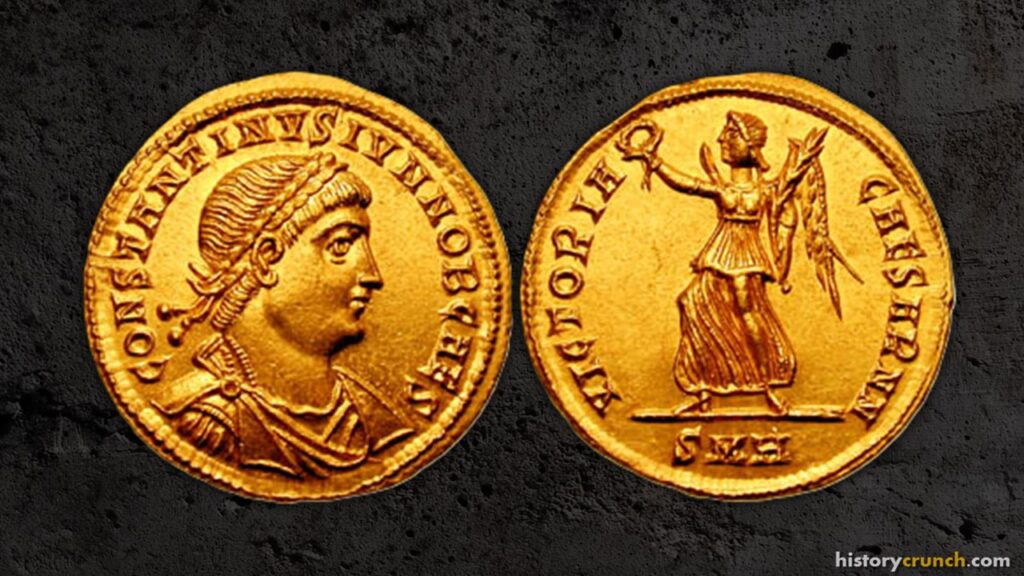
In fact, economics was a key aspect of the success of the ancient Romans and helped establish the Roman Empire throughout the regions of the Mediterranean Sea. Despite this, it’s important to note that the ancient Roman economy eventually began to decline. More specifically, the 3rd century CE was a period of economic crisis. It was marked by political instability, invasions and inflation. Emperors devalued the currency by reducing the silver content in coins, which caused prices to rise and trade to slow. The empire also faced labor shortages due to plagues and fewer conquests to supply new slaves.
As the economy weakened, the Roman government increased taxes, further burdening ordinary Roman citizens. For example, many farmers fled their land or became tied to large estates for protection. In fact, by the time of the Western Roman Empire’s fall in 476 CE, the once thriving economy had become fragmented and struggled to maintain its prior success.