The emperors of Ancient Rome were among the most powerful rulers in human history, and their decisions shaped the lives of tens of millions of people across three continents. For nearly five centuries in the west, and far longer in the east, a single emperor stood at the head of the Roman world. These men led armies, built cities, made laws, and were sometimes even worshipped as gods. The story of the Roman emperors is really the story of the Roman Empire itself, from its founding under Augustus in 27 BCE to the fall of the last western emperor in 476 CE.
A Roman emperor was the supreme ruler of the Roman Empire, holding final authority over the government, the army, the courts, and the state religion. The title did not come from a single office but from a collection of powers and honors that Augustus gathered together, including the name Augustus and the older military title imperator, from which the English word “emperor” comes. In theory the emperor shared power with the Senate, but in reality he ruled alone.
What Was Ancient Rome?
Ancient Rome was a civilization that grew from the city of Rome in what is now Italy. It began as early as the 8th century BCE and lasted until the end of the 5th century CE. Over that long span, Rome passed through three main stages of government. First came the period of kings, then the Roman Republic, which began around 509 BCE and was governed mainly by the Senate and elected officials called consuls. The final stage was the Roman Empire, which began in 27 BCE when power shifted to a single ruler.
During the years of the Republic, Rome grew from a small city-state into a power that controlled much of the Mediterranean world. However, this growth also brought problems. In fact, the last century of the Republic was filled with violent civil wars and struggles between rival generals and political factions. As stated above, this instability set the stage for the rise of the emperors. When the fighting finally ended, one man, Octavian, stood alone at the top, and the age of the emperors began.
Who Was the First Emperor of Ancient Rome?
The first emperor of Ancient Rome was Augustus, who is also known by his earlier name Octavian. He was the adopted heir of Julius Caesar, the famous Roman general and statesman who was assassinated in 44 BCE. After Caesar’s death, Octavian fought a long series of wars against his rivals, including Mark Antony and Cleopatra, the queen of Egypt. He finally defeated them and became the sole ruler of the Roman world.
In 27 BCE, the Senate gave Octavian the name Augustus, which meant “the honored one,” and this date is usually seen as the beginning of the Roman Empire. Augustus was careful not to call himself a king, because many Romans hated the idea of a monarchy. Instead, he called himself princeps, meaning “first citizen,” and pretended to restore the old Republic while keeping real power for himself. This clever system of government became known as the Principate.
The reign of Augustus began a long period of peace and prosperity known as the Pax Romana, or “Roman Peace.” During this time, Rome enjoyed relative stability, and the empire grew in wealth and size. Augustus reformed the tax system, created a standing professional army, and founded services such as a fire brigade and a police force for the city of Rome. He was also a great builder, and he famously boasted that he had found Rome a city of brick and left it a city of marble.
How Did the Roman Emperors Rule?
Roman emperors held enormous power, but that power did not come with clear rules about who should rule next. There was no firm law of succession, which means there was no set way to decide who would become the next emperor. Some emperors passed the throne to a son or an adopted heir, while others were chosen by the army or seized power by force. This lack of clear rules was one of the greatest weaknesses of the whole system.
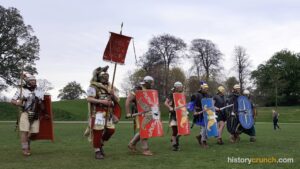
The army played a huge role in deciding who would rule. In fact, soldiers often proclaimed their own commander as emperor, and control of the legions was the true key to power. Because of this, the history of the emperors is filled with civil wars, plots, and assassinations. Very few emperors died peacefully of old age, and many were murdered by rivals, by their own guards, or even by members of their own families.
Historians usually group the emperors into families or dynasties. The first was the Julio-Claudian dynasty, which included Augustus and the four emperors who followed him: Tiberius, Caligula, Claudius, and Nero. More specifically, some of these rulers, such as Caligula and Nero, became famous for their cruelty and strange behavior, while others, such as Claudius, were capable administrators who expanded the empire, including the conquest of Britain.
Who Were the Most Famous Roman Emperors?
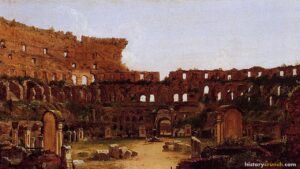
After the death of Nero in 68 CE, Rome fell into chaos during a period known as the Year of the Four Emperors, when four different men claimed the throne in a single year. Order was finally restored by Vespasian, who founded the Flavian dynasty. His reign brought stability and funded a huge building program, including the famous Colosseum in Rome, which could hold tens of thousands of spectators.
The greatest age of the emperors is often called the time of the “Five Good Emperors.” These rulers governed well and generally chose their successors based on ability rather than family ties. One of the most important was Emperor Trajan, who ruled from 98 CE to 117 CE. Under Trajan, the Roman Empire reached its largest size in history, stretching from Britain in the west to the Persian Gulf in the east. He was also a great builder who used the wealth from his conquests to improve the lives of Roman citizens.
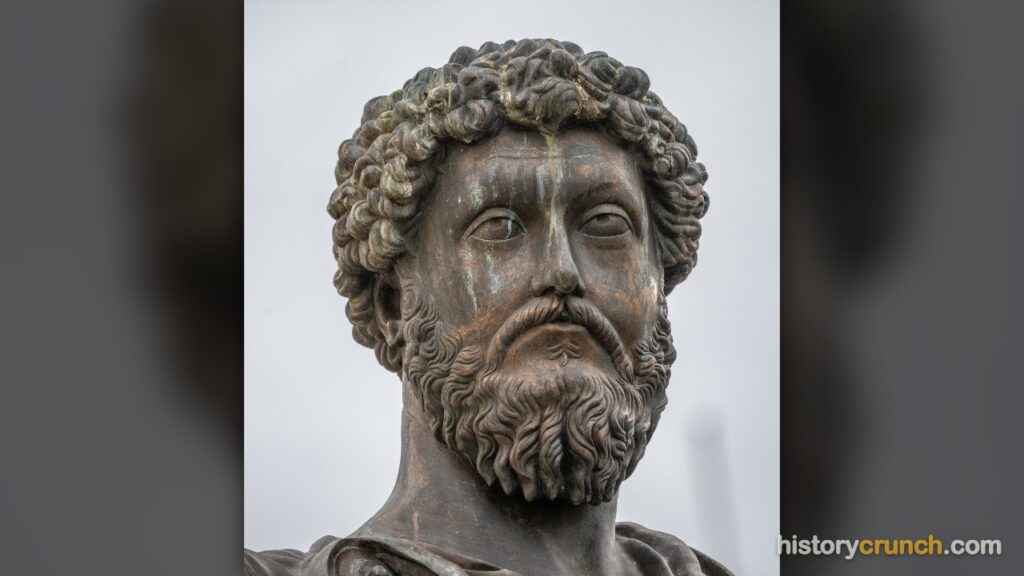
Another famous ruler of this era was Marcus Aurelius, who is often remembered as the philosopher-king. He was not only the emperor of Rome but also one of the most important thinkers of the Stoic school of philosophy. His death in 180 CE is usually seen as the end of the Pax Romana. Unfortunately, he broke with the recent practice of choosing the best successor and instead passed the throne to his son Commodus, whose poor rule ended in his assassination and helped push the empire toward crisis.
How Did the Empire and Its Emperors Change Over Time?
During the 3rd century CE, the Roman Empire suffered a long and dangerous period of trouble known as the Crisis of the Third Century. In reality, this was a time of near-constant civil war, plague, invasions, and economic problems. In just fifty years, more than twenty different emperors rose and fell, and almost none of them died of natural causes. The empire even broke apart for a time before it was reunited by strong military rulers.
Order was finally restored by the emperor Diocletian, who came to power in 284 CE. Diocletian understood that the empire had grown too large for one man to rule alone. As a result, he created a new system called the Tetrarchy, in which power was shared among four rulers, two senior emperors called Augusti and two junior emperors called Caesars. This system divided the empire into eastern and western halves, each with its own court, and it helped bring stability back for a time.
The next great ruler was Constantine the Great, who reunited the empire under his own rule in the early 4th century CE. Constantine made two changes that would shape the future of the world. For instance, he became the first Roman emperor to support Christianity, and his Edict of Milan in 313 CE made Christian worship legal across the empire. He also founded a new capital in the east on the site of the Greek city of Byzantium, which he renamed Constantinople.
Who Was the Last Emperor of Ancient Rome?
In its final centuries, the empire was permanently split into two halves. The Western Roman Empire, based in Italy, grew weaker as it faced repeated invasions by Germanic peoples and struggled with economic decline. The Eastern Roman Empire, ruled from Constantinople, remained far stronger and wealthier. As the west grew weak, its emperors were often little more than figureheads controlled by powerful generals.
The last emperor of the Western Roman Empire was a young boy named Romulus Augustulus. In 476 CE, a Germanic leader named Odoacer removed him from power and declared himself king of Italy. No new western emperor was named to replace him, and for this reason historians usually mark the year 476 CE as the fall of the Western Roman Empire. The Eastern Roman Empire, however, survived for nearly another thousand years until the fall of Constantinople in 1453 CE.
Significance of Emperors of Ancient Rome
The emperors of Ancient Rome were among the most significant rulers in world history, and their impact can still be felt today. Under their leadership, Rome grew into a vast empire that spread its language, laws, roads, and culture across Europe, North Africa, and the Middle East. Many ideas that shaped later governments, including systems of law and citizenship, were developed or strengthened during the age of the emperors.
The emperors also changed the story of religion. Constantine’s support of Christianity helped that faith grow from a small movement into one of the largest religions in the world. In addition, the buildings, monuments, and artwork created during the reigns of the emperors have inspired architects and artists for centuries. Structures such as the Colosseum and the many Roman roads and aqueducts remain famous symbols of Roman power.
Finally, the history of the Roman emperors offers powerful lessons about both the strengths and the dangers of one-man rule. Strong and wise emperors brought peace and prosperity, while weak or cruel ones brought war and suffering. In all, the emperors of Ancient Rome played a central role in shaping the ancient world and the modern one that followed it.
Frequently Asked Questions
How many Roman emperors were there?
There were roughly 70 emperors who are usually counted as legitimate rulers of the Roman Empire, though the exact number depends on how they are counted. This is because many men claimed the throne during civil wars and ruled for only a few weeks or months. Some lists also include the emperors who ruled only in the east after the empire split, which raises the total even higher.
Was Julius Caesar a Roman emperor?
No, Julius Caesar was never officially a Roman emperor. He lived during the final years of the Roman Republic and held the title of dictator, not emperor. His adopted heir, Augustus, became the first true emperor several years after Caesar’s assassination. Even so, Caesar’s actions helped bring an end to the Republic and paved the way for the age of the emperors.
What powers did a Roman emperor have?
A Roman emperor held control over the army, the government, the courts, and the state religion, making him the most powerful person in the empire. He could make laws, appoint officials, declare war, and command the legions. Emperors also served as the chief priest of Rome, and after death many were officially declared to be gods.
Why were so many Roman emperors murdered?
Many Roman emperors were murdered because there was no clear and peaceful way to pass power from one ruler to the next. Ambitious generals, palace guards, and family members often saw violence as the fastest way to seize the throne. The powerful Praetorian Guard, the emperor’s own bodyguards, killed several emperors and helped choose their replacements.
Which Roman emperor made Christianity legal?
Constantine the Great made Christianity legal across the Roman Empire through the Edict of Milan in 313 CE. He was the first Roman emperor to openly support the Christian faith, which had often been persecuted before his reign. His decision was a turning point that helped Christianity spread throughout the Roman world and beyond.
Cite This Article
To cite this article as a source, use one of the formats below.
MLA: Millar, B. “Emperors of Ancient Rome: A Detailed Summary.” HistoryCrunch, 9 July 2026, https://historycrunch.com/emperors-of-ancient-rome/.
APA: Millar, B. (2026). Emperors of Ancient Rome: A Detailed Summary. HistoryCrunch. https://historycrunch.com/emperors-of-ancient-rome/
Chicago: Millar, B. “Emperors of Ancient Rome: A Detailed Summary.” HistoryCrunch. July 9, 2026. https://historycrunch.com/emperors-of-ancient-rome/
Sources
- The Met (Heilbrunn Timeline) — Roman art
- Adrian Goldsworthy, How Rome Fell / Caesar (military and political).
- H.H. Scullard, From the Gracchi to Nero.