Ancient Roman theater was one of the most important forms of public entertainment in the Roman world, and it played a major role in the culture and daily life of the people. For hundreds of years, Romans of all social classes gathered to watch comedies, tragedies, and lively performances that were often connected to religious festivals. These shows shaped how Romans understood their gods, their history, and even their politics.
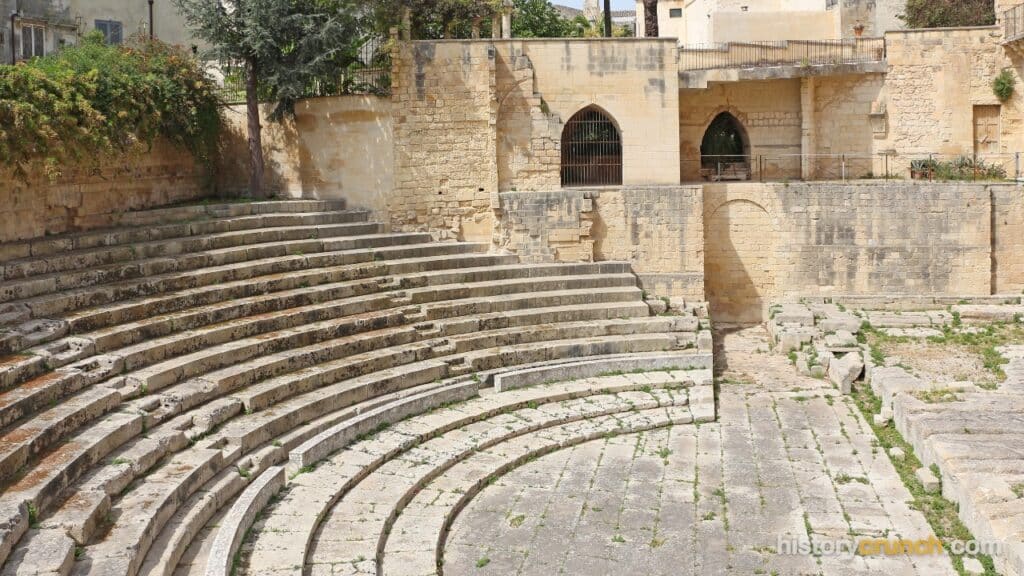
Roman theater refers to the many types of dramatic performance that took place across Ancient Rome, including scripted plays, dances, and comic sketches. The term also describes the buildings where these performances happened, which were large open-air structures shaped like a half circle. Over time, Roman theater grew from simple religious offerings into grand public spectacles enjoyed by tens of thousands of people at once.
What Was Ancient Rome?
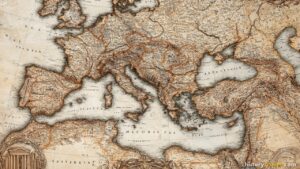
Ancient Rome was a civilization that grew from the city of Rome, located on the Italian peninsula in what is today the country of Italy. It began as a small settlement in the 8th century BCE and slowly grew into one of the most powerful empires in world history. At its height, Rome controlled much of Europe, North Africa, and parts of the Middle East.
The history of Ancient Rome is usually divided into different periods. Rome was first ruled by kings, then became a republic around 509 BCE, when power was shared among elected officials called magistrates. Later, beginning in 27 BCE, Rome became an empire ruled by a single emperor. Roman theater developed and changed throughout all of these periods, and it remained popular for centuries.
How Did Roman Theater Begin?
Roman theater had its roots in religion and in the cultures of the peoples who lived near Rome. Early Romans borrowed ideas about singing, dancing, and public shows from the Etruscans, a civilization to the north of Rome that loved music and athletic competitions. In fact, the Latin word for a stage performer came from an Etruscan term, showing just how strong this influence was.
Theater also grew out of Roman religious ceremonies. Around 364 BCE, during an outbreak of deadly plague, Romans began adding theatrical games and dances to their religious festivals in the hope of pleasing the gods. Over time, these dances and games developed into organized performances with early scripts, music, and choreography. In this way, theater became a regular part of Roman worship long before it became pure entertainment.
A major turning point came in 240 BCE, when a former Greek slave named Livius Andronicus produced the first Latin translations of Greek plays for a Roman audience. These plays were performed as part of the Ludi Romani, a large festival held each September in honor of the god Jupiter. After this, many Roman performances over the next century were adaptations of Greek plays, and Andronicus is often remembered as Rome’s first playwright.
How Did Greek Theater Influence Rome?
Greek culture had a powerful effect on Roman theater, especially during the years of the Roman Republic. As Rome expanded and fought wars across Italy and the Mediterranean, Roman soldiers and generals came into contact with Greek cities that had rich traditions of drama. When they returned home, they brought Greek ideas about theater with them.
Roman playwrights did not simply copy Greek plays. Instead, they adapted them by adding Latin dialogue, Roman jokes, and references that Roman audiences would understand. This process is sometimes described as “Romanizing” the drama. As a result, Roman theater gained new variety and sophistication while still keeping a distinctly Roman flavor.
Greek influence went far beyond the theater. The Romans also borrowed Greek ideas in architecture, art, and science. In reality, much of Roman culture was directly taken and reshaped from the Greek world, and theater was one of the clearest examples of this blending of traditions.
Who Were the Famous Roman Playwrights?
Several Roman playwrights became famous for their work, and a number of their plays still survive today. Plautus was a comic playwright of the 3rd century BCE who wrote lively, funny plays filled with witty jokes and clever plots. His comedies, which were based on Greek originals, remained popular for generations and were later studied by writers during the Renaissance.
Terence was another important comic playwright who wrote between about 170 and 160 BCE. His plays had more complex plots than those of Plautus and often invited the audience to think carefully about human behavior. For instance, his works explored family relationships and the difficulties of everyday life.
In the field of tragedy, the most famous name was Seneca the Younger, a writer of the 1st century CE. Seneca created Roman versions of ancient Greek tragedies, including serious stories drawn from myth. Other early writers, such as Ennius, wrote both comedy and tragedy and helped shape the earliest works of literature written in the Latin language.
What Were Roman Theaters Like?
For much of Rome’s early history, plays were performed on temporary wooden stages that were built quickly in a public space, such as the forum, and then torn down after a festival ended. In fact, there was no permanent stone theater in the city of Rome until 55 BCE, when the general Pompey the Great built one. This building, known as the Theater of Pompey, could hold up to 20,000 spectators and rose to a height of roughly 148 feet (45 m).
Roman theaters were built in the shape of a half circle, with rows of seats rising upward around a flat area in front of the stage. This area, called the orchestra, was often used for important members of the audience. The stage itself stood in front of a tall, decorated wall known as the scaena. Because these theaters were outdoors, builders used their design to help carry sound and, in some cases, hung large cloth coverings to provide shade for the crowd.
Unlike Greek theaters, which were usually built into hillsides, Roman theaters could be constructed almost anywhere, even on flat ground, because the Romans raised the entire structure using stone and concrete. This allowed builders to add many entrances and exits so that huge crowds could enter and leave quickly. The Theater of Pompey became a model that was copied in cities across the empire for nearly three centuries.
How Did Roman Theater Change Over Time?
As the Roman Empire grew, the style of theater changed to match the tastes of the audience. By the 1st century CE, the number of new tragedies and comedies being written dropped sharply. More and more, Roman audiences favored spectacle and entertainment over serious drama, and they wanted shows that were exciting to watch.
Two forms of performance became especially popular during this period. Pantomime was a kind of solo dance set to music that often retold famous myths without spoken words. Mime, by contrast, was a rowdier form of performance that used spoken dialogue, humor, and sometimes crude jokes. These shows sometimes included large casts of dancers, acrobats, and musicians, making them feel more like a modern circus than a play.
The social status of actors in Rome was very low, which was different from the way actors were respected in ancient Greece. Many Roman actors were slaves, and the profession was often viewed with suspicion. As stated above, some emperors even placed limits on contact between actors and the upper classes, and educated Romans often criticized the performances as vulgar.
Significance of Ancient Roman Theater
Ancient Roman theater was significant because it was a central part of Roman public life for many centuries. Theatrical performances were closely tied to religious festivals, which meant that theater helped Romans honor their gods and celebrate important events. In this way, drama connected religion, culture, and community in a single shared experience.
Theater was also important for politics. Wealthy Romans and emperors often paid for public performances as a way to win the favor of the people. By providing free entertainment, leaders could show their generosity, keep the public happy, and reduce the chances of unrest. This idea was part of the larger Roman practice of offering “bread and circuses” to the masses.
Finally, Roman theater left a lasting mark on the world. The plays of writers such as Plautus and Terence survived and were studied and performed long after the fall of Rome, especially during the Renaissance. The design of Roman theaters also influenced the way stages and seating are built even today. For these reasons, Roman theater remains one of the most important cultural achievements of Ancient Rome.
Frequently Asked Questions
When did Roman theater begin?
Roman theater is thought to have begun in the 4th century BCE, not long after the founding of the Roman Republic. Early performances grew out of religious ceremonies, and the first formal drama was recorded at a festival in 240 BCE. From there, theater slowly developed into a regular part of Roman festivals and public life.
What is the difference between a Roman theater and an amphitheater?
A Roman theater was a half-circle building used for plays and other stage performances, while an amphitheater was a full oval-shaped arena used for events such as gladiator fights. The two buildings looked different and were used for different purposes. The famous Colosseum in Rome, for example, was an amphitheater rather than a theater.
Who could attend Roman theater performances?
People of all social classes could attend Roman theater performances, and admission was usually free. Because shows were often paid for by wealthy citizens or the state, ordinary Romans did not have to pay to watch. Seating was often arranged by social class, however, with the best spots reserved for important people.
Did Roman theater use masks?
Yes, Roman actors often wore masks during performances, a practice they borrowed from Greek theater. Masks helped the audience recognize different types of characters, and some sources describe dozens of different comic masks alone. Colors and costumes were also used to show which role each actor was playing.
Why did serious Roman drama decline?
Serious Roman drama declined because audiences increasingly preferred spectacle and light entertainment over tragedy and comedy. By the imperial period, forms such as mime and pantomime, which featured dancing, music, and humor, drew larger crowds. As tastes shifted, fewer new tragedies and comedies were written, even though older plays continued to be remembered.
Cite This Article
To cite this article as a source, use one of the formats below.
MLA: Millar, B. “Ancient Roman Theater: A Detailed Summary.” HistoryCrunch, 7 July 2026, https://historycrunch.com/ancient-roman-theater/.
APA: Millar, B. (2026). Ancient Roman Theater: A Detailed Summary. HistoryCrunch. https://historycrunch.com/ancient-roman-theater/
Chicago: Millar, B. “Ancient Roman Theater: A Detailed Summary.” HistoryCrunch. July 7, 2026. https://historycrunch.com/ancient-roman-theater/
Sources
- Fordham Ancient History Sourcebook
- The Met (Heilbrunn Timeline) — Roman art
- H.H. Scullard, From the Gracchi to Nero.
- Mary Beard, SPQR: A History of Ancient Rome.