Roman Gaul was one of the most important regions of the Roman world, a vast western territory that stretched across what is now France, Belgium, Luxembourg, and parts of Switzerland, Germany, and the Netherlands. For nearly five centuries, this land of Celtic tribes was transformed by Roman conquest, government, and culture into a prosperous and heavily Romanized corner of the empire. The story of Roman Gaul begins with Julius Caesar‘s brutal conquest in the first century BCE and continues through the peaceful, city-building years of the Roman Empire until Germanic peoples took control in the fifth century CE.
In simple terms, Roman Gaul refers to the period during which the region called Gaul was ruled as part of the Roman state. Rome divided the territory into provinces, which were regions outside Italy governed by Roman officials. Over time, the native population blended their own Celtic traditions with Roman customs, language, and ways of life, creating a mixed culture that historians call Gallo-Roman.
What Was Ancient Rome?
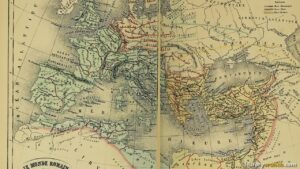
Ancient Rome was one of the most powerful civilizations in world history. It began as a small city-state on the Italian peninsula and grew over many centuries into a vast empire that stretched from Britain in the northwest to Egypt in the southeast. Roman civilization is remembered for its contributions to law, government, architecture, language, and culture.
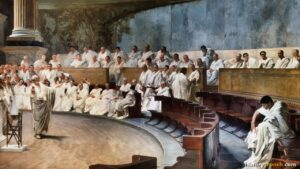
Roman history is usually divided into major periods. The Roman Republic lasted from 509 BCE to 27 BCE and was governed by elected officials rather than a king. After a series of civil wars, the Republic gave way to the Roman Empire, which was ruled by emperors beginning with Augustus. The conquest of Gaul happened at the very end of the Republic, and the peaceful development of Roman Gaul took place mostly during the age of the empire.
As Rome expanded, it turned conquered lands into provinces. Each province was governed by Roman officials, taxed, protected by soldiers, and gradually introduced to Roman customs. This process, known as Romanization, spread Roman language, buildings, and public life across the empire. Gaul became one of the richest and most successful examples of this process.
Who Were the Gauls Before Roman Rule?
Before the Romans arrived, Gaul was home to many different Celtic peoples known collectively as the Gauls. Ancient Rome had a long and fearful history with these tribes. Gaul was never united under a single ruler or government, but the Gallic tribes were capable of joining their armies together in large military operations. Instead, the region was made up of dozens of separate tribes, each with its own leaders and territory.
The Gauls were far from primitive. Many of them built large fortified settlements called oppida, such as Bibracte, and minted their own coins. They were skilled farmers, metalworkers, and traders, and they belonged to a rich Iron Age culture. Their priests, known as druids, held great religious and social authority.
The Romans both respected and feared these northern neighbors. In 390 BCE, the Gauls had sacked Rome itself, which left a lasting dread of barbarian conquest that the Romans never forgot. This memory shaped Roman attitudes for centuries. In reality, Rome had already begun to move into southern Gaul long before the famous wars of conquest. The Roman colony of Narbo Martius, modern Narbonne, was founded on the coast in 118 BCE, and the southern province became known as Gallia Narbonensis.
How Did Rome Conquer Gaul?
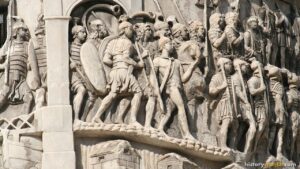
The full conquest of Gaul came during a series of campaigns known as the Gallic Wars. These were the campaigns from 58 to 50 BCE in which the Roman proconsul Julius Caesar conquered Gaul. Caesar had been made governor of the Roman provinces near Gaul, and he saw the region as a chance to win military glory, enormous wealth, and political power back in Rome.
The wars began with a conflict over the migration of the Helvetii in 58 BCE, which drew in neighboring tribes and the Germanic Suebi. Caesar defeated the Helvetii and then turned against other peoples across the region. For instance, by 57 BCE he had resolved to conquer all of Gaul and led campaigns in the east, where the Nervii nearly defeated him, and in 56 BCE he defeated the Veneti in a naval battle and took most of northwest Gaul.
The most famous moment of the war came when the Gauls united in a great rebellion. The Gauls staged a mass revolt under the leadership of Vercingetorix in 52 BCE, and although Gallic forces won a notable victory at the Battle of Gergovia, the Roman siege works at the Battle of Alesia utterly defeated the Gallic coalition. As stated above, the internal divisions among the tribes helped Caesar. Though the collective Gallic armies were as strong as the Roman forces, internal divisions among the Gallic tribes eased victory for Caesar.
The conquest was extremely violent. Untold numbers of Gauls were killed, enslaved, or mutilated, including large numbers of civilians. By 51 and 50 BCE most organized resistance had ended, and Gaul lay open to Roman rule. In fact, Caesar’s success in Gaul made him so wealthy and famous that it helped him win the civil war that followed and eventually end the Roman Republic.
How Was Roman Gaul Organized and Governed?
Even after Caesar’s victory, Gaul did not immediately become a formal set of provinces. Gaul was not made formally into Roman provinces until the reign of Augustus in 27 BCE, and several rebellions happened afterward, so Roman troops were kept stationed throughout the region. Once peace was secured, the emperor organized the territory into a clear administrative system.
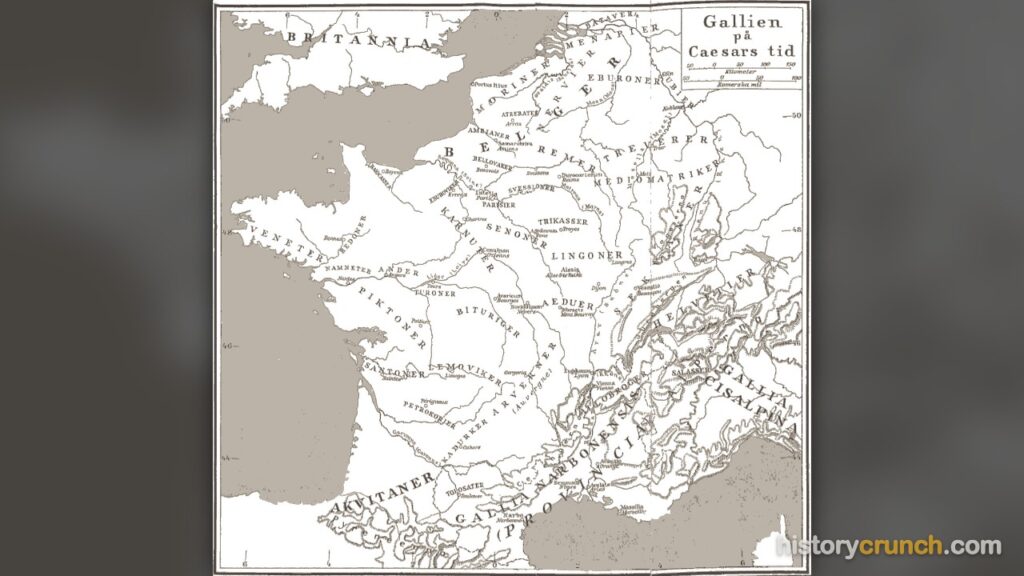
The country was divided into four provinces, Narbonensis, Aquitania to the west and south of the Loire, Celtica, also called Lugdunensis, in central France between the Loire and the Seine, and Belgica in the north and east. The city of Lyon became the center of Roman rule in the region. A former religious center of Gallic society, Lugdunum, modern Lyon, became the capital of Roman Gaul.
Roman rule reached into daily life through taxation and local government. The Romans built roads and towns throughout Gaul and taxed the old Gallic landowning class, while encouraging the growth of a middle class of merchants and tradesmen. Many local Gallic leaders kept their positions and wealth by cooperating with Rome and adopting Roman ways.
How Did Roman Culture Change Gaul?
The most lasting change in Roman Gaul was the slow blending of Gallic and Roman culture. This process of Romanization touched language, religion, architecture, and everyday habits. It did not happen everywhere at the same speed, and much of the older Gallic way of life survived alongside the new Roman customs.
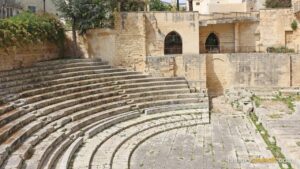
Roman rule brought a long period of peace and construction. Roman rule brought a period of relative peace known as the Pax Romana, which fostered economic growth and urbanization, and existing urban centers were developed into Greco-Roman cities with forums, baths, and amphitheatres. Towns across Gaul gained the same public buildings found in Italy, along with aqueducts, temples, and paved streets.
Language changed as well, though slowly. After Julius Caesar’s conquest, Vulgar Latin, the everyday spoken form of Latin used by Roman soldiers and settlers, gradually replaced the native Gaulish language, and this Vulgar Latin later evolved into the Romance languages, including French. More specifically, the wealthy upper classes adopted Roman customs faster than ordinary people. After the conquest, Romanization of the Celtic upper classes proceeded more rapidly than the Romanization of the lower classes.
Religion changed too. The druids, who had held great power in Gallic society, were suppressed under Roman rule, and in later centuries Christianity spread through the region. In this way, the older Celtic beliefs slowly faded, though some local traditions survived within the new Gallo-Roman world.
How Did Roman Gaul Come to an End?
Roman Gaul lasted for roughly five centuries, but by the 400s CE Roman control was collapsing. Weakness at the center of the empire left the frontier along the Rhine River poorly defended. The result was Germanic invasion, most dramatically the mass crossing of the Rhine in 405 to 406, and by 418 Franks and Burgundians were established west of the Rhine while the Visigoths settled in Aquitania.
At first these Germanic peoples served as allies of Rome, but as imperial power faded they carved out their own kingdoms. The death of the Roman general Aetius in 454 and the growing weakness of the western government created a power vacuum in Gaul. By the late fifth century, Roman authority in the region had effectively ended.
Even so, the Roman way of life did not vanish overnight. At least in the center and south of the country, the Gallo-Roman cultural legacy was passed on largely intact to the successor kingdoms. The Germanic rulers who took over Gaul often kept Roman laws, Latin, and local officials, so much of Roman Gaul lived on inside the new kingdoms that would eventually become France.
Significance of Roman Gaul
Roman Gaul was one of the most important regions in the history of the Roman world, both for Rome and for the future of Europe. Its conquest reshaped Roman politics, and its long period of Roman rule reshaped western European culture for centuries to come.
For Rome itself, the conquest of Gaul changed the course of history. Julius Caesar’s wealth and military reputation from the Gallic Wars gave him the power to challenge his rivals. The Gallic Wars were a key factor in Caesar’s ability to win the civil war and make himself dictator, which led to the end of the Roman Republic and the establishment of the Roman Empire. In this way, events in Gaul helped end one era of Roman government and begin another.
For Europe, the deepest legacy of Roman Gaul was cultural. The blending of Celtic and Roman life created a Gallo-Roman society whose language, towns, roads, and laws became the foundation of medieval France. In reality, the modern French language grew directly out of the Latin brought to Gaul, and many French cities began as Roman towns. Roman Gaul therefore stands as one of the clearest examples of how Roman conquest and Romanization shaped the modern world.
Frequently Asked Questions
Where was Roman Gaul located?
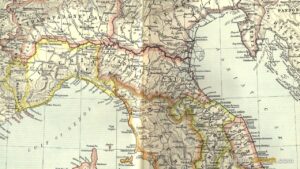
Roman Gaul covered most of modern France along with parts of Belgium, Luxembourg, Switzerland, the Netherlands, and western Germany. It was bordered by the Rhine River to the east, the Alps to the southeast, the Pyrenees Mountains to the southwest, and the Atlantic Ocean and English Channel to the west and north. This large territory placed Gaul in a key position between Italy, Britain, Spain, and the Germanic lands.
How long did Roman Gaul last?
Roman Gaul lasted roughly five centuries, from the conquest in the 50s BCE until Roman control collapsed in the late 400s CE. Julius Caesar completed the conquest by 50 BCE, and Augustus organized the region into formal provinces in 27 BCE. Roman authority then held for about 400 years before Germanic peoples took over in the fifth century.
Who was Vercingetorix?
Vercingetorix was a chieftain of the Arverni tribe who united many Gallic peoples in a great revolt against Julius Caesar in 52 BCE. He is remembered as a symbol of Gallic resistance and later became a national hero in France. After his defeat at the siege of Alesia, he surrendered to Caesar and was eventually executed in Rome.
What language did people in Roman Gaul speak?
People in Roman Gaul spoke a mix of the native Celtic language, called Gaulish, and Latin brought by Roman soldiers, settlers, and officials. Over the centuries Latin slowly replaced Gaulish, especially in towns and among the wealthy. The everyday Latin spoken in Gaul later developed into the French language.
What was the capital of Roman Gaul?
The main center of Roman Gaul was the city of Lugdunum, which is now Lyon in modern France. It had once been an important Gallic religious site and became the administrative heart of the region under Roman rule. From Lyon, Roman officials managed government, taxes, and communication across the Gallic provinces.
Cite This Article
To cite this article as a source, use one of the formats below.
MLA: Millar, B. “Roman Gaul: A Detailed Summary.” HistoryCrunch, 7 July 2026, https://historycrunch.com/roman-gaul/.
APA: Millar, B. (2026). Roman Gaul: A Detailed Summary. HistoryCrunch. https://historycrunch.com/roman-gaul/
Chicago: Millar, B. “Roman Gaul: A Detailed Summary.” HistoryCrunch. July 7, 2026. https://historycrunch.com/roman-gaul/
Sources
- H.H. Scullard, From the Gracchi to Nero.
- Adrian Goldsworthy, How Rome Fell / Caesar (military and political).
- The Met (Heilbrunn Timeline) — Roman art
- Mary Beard, SPQR: A History of Ancient Rome.