Roman Britain was one of the most important chapters in the early history of the British Isles, a period of nearly four centuries when much of the island of Great Britain was ruled as a province of the mighty Roman Empire. During this time, the Romans built roads, towns, forts, and walls that reshaped the landscape and introduced a new way of life to the peoples living there. The province was known to the Romans as Britannia, and its story stretches from the first Roman invasions in the 1st century BCE to the final withdrawal of Roman troops in the early 5th century CE.
More specifically, Roman Britain refers to the territory of Great Britain that came under the direct control of Rome after the conquest that began in 43 CE. It covered most of what is now England and Wales, while the far north of the island, roughly modern Scotland, was never fully conquered. The period is remembered for the meeting of two very different worlds, the Iron Age tribal societies of the Britons and the organized, urban civilization of Rome.
What Was the Roman Empire?
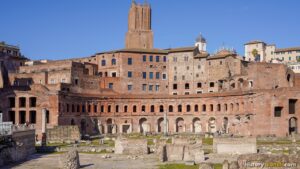
The Roman Empire was one of the most powerful civilizations in world history. It began as a small city-state on the Italian peninsula and grew over many centuries into a vast empire that stretched from Britain in the northwest to Egypt in the southeast. At its height, the empire controlled much of Europe, North Africa, and parts of the Middle East, and it is remembered for its lasting contributions to law, government, architecture, language, and culture.
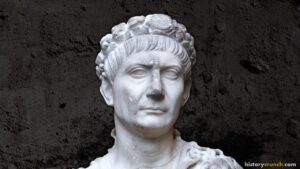
The Roman Empire is usually dated from 27 BCE, when a leader named Augustus became the first emperor, to 476 CE, when the last emperor in the west was removed from power. Before the empire, Rome had been governed as a republic, in which elected officials rather than a single ruler held authority. Under the emperors, Rome reached its greatest size, and it was during this imperial period that the conquest of Britain took place.
How Did the Romans First Reach Britain?
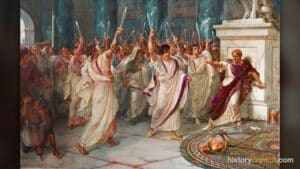
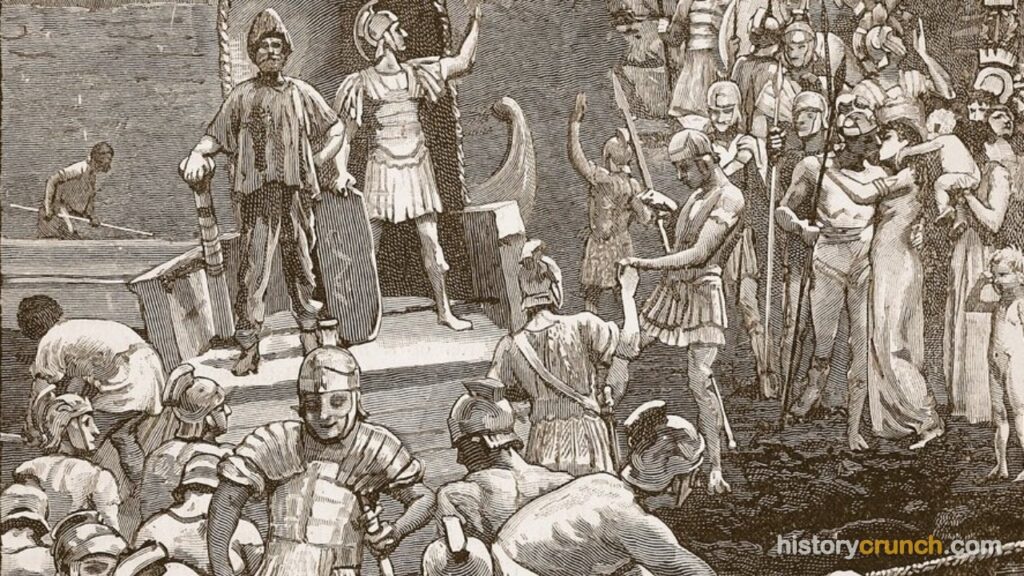
The first Roman contact with Britain came through the famous general Julius Caesar. During his conquest of Gaul, the region of modern France, Caesar led two expeditions across the English Channel in 55 and 54 BCE. He believed the Britons were helping their neighbors in Gaul resist Rome, and he wanted to punish them and learn more about the mysterious island to the north.
These early expeditions were not a true conquest. Caesar did not take any land or leave soldiers behind, but he did force some local British kings to pay tribute and give hostages in return for peace. In fact, his visits brought Britain into Rome’s circle of influence, opening up trade and diplomacy that would last for almost a hundred years before Rome returned in force.
Who Conquered Britain for Rome?
The full Roman conquest of Britain began in 43 CE under the emperor Claudius. Claudius wanted the prestige of a great military victory to strengthen his position as ruler, and Britain offered exactly that opportunity. He sent a general named Aulus Plautius across the Channel with an army of around 40,000 soldiers, who landed in Kent in the southeast of the island.
The Roman army advanced north across the River Thames and defeated the powerful British tribes of the southeast. Claudius himself traveled to Britain to take part in the capture of Camulodunum, the modern town of Colchester, which became the first Roman capital of the new province. After his victory, the emperor returned to Rome to celebrate, leaving his generals to continue the conquest across what is now England and Wales.
What Was Boudica’s Rebellion?
Not all of the Britons accepted Roman rule peacefully. Around 60 or 61 CE, a queen named Boudica led one of the most famous uprisings against Rome. She was the ruler of the Iceni, a tribe in eastern Britain, and she was angered by the seizure of her land and the brutal treatment of her family by Roman officials.
Boudica raised a large army, joined by neighboring tribes, and destroyed three Roman towns, including Camulodunum, Londinium, and Verulamium, the towns known today as Colchester, London, and St. Albans. For a short time, the rebellion threatened Roman control of the entire province. In the end, however, the disciplined Roman army defeated Boudica’s forces in a major battle, and Roman rule was firmly restored.
Why Did the Romans Build Hadrian’s Wall?
One of the most famous features of Roman Britain was Hadrian’s Wall, built on the orders of the emperor Hadrian beginning in 122 CE. The wall stretched roughly 73 miles (117 km) across the north of the province, from one coast to the other. It was made mainly of stone and was strengthened by a series of forts, gates, and watchtowers along its length.
The purpose of the wall was to guard the northern frontier of the province and to control the movement of people crossing between Roman Britain and the unconquered lands to the north. Later, under the emperor Antoninus Pius, the Romans built a second barrier further north called the Antonine Wall, made largely of turf and timber. This wall was soon abandoned, however, and Hadrian’s Wall remained the lasting northern edge of the Roman world in Britain.
How Did the Romans Change Life in Britain?
Roman rule brought major changes to daily life in Britain. The Romans built towns of stone and brick across the province, such as Eboracum, Verulamium, and Londinium, the towns now known as York, St. Albans, and London. These towns were laid out in a grid pattern around a central square called the forum, and they contained public baths, temples, theaters, and grand buildings in the Roman style.
The Romans were also famous for their engineering. They built thousands of miles of straight, paved roads that allowed soldiers to march quickly and made it much easier to move goods across the country. Many of these routes remained in use long after Roman rule ended, and some still form part of the modern road network today.
Beyond towns and roads, the Romans introduced their language, Latin, along with new styles of clothing, food, and religion. Wealthy Britons often adopted Roman customs, living in large country houses called villas that were decorated with mosaics and heated by hidden furnaces. As stated above, one important reason Rome valued Britain was its natural resources, and the Romans mined lead, tin, copper, and even gold across the province.
Why Did Roman Rule in Britain End?
By the 4th century CE, Roman Britain had reached a peak of prosperity, but the wider empire was beginning to struggle. Across its frontiers, the Roman Empire faced growing pressure from outside groups, and Britain was no exception. Raiders such as the Picts from the north, the Scots from Ireland, and Saxon pirates from across the North Sea increasingly threatened the province.
To defend against these attacks, the Romans built a chain of strongholds known as the Saxon Shore forts along the eastern and southern coasts. Even so, the empire was stretched thin, and troops were repeatedly pulled out of Britain to fight in conflicts elsewhere. In reality, this steady loss of soldiers left the province more and more exposed.
The final break came around 410 CE, when the emperor Honorius told the cities of Britain to see to their own defense, as Rome could no longer protect them. This moment is usually seen as the end of Roman Britain. Not everyone left, however, and many former soldiers and settlers who had married local people remained behind as Roman authority faded away.
Significance of Roman Britain
Roman Britain was significant because it connected a distant island to one of the greatest civilizations of the ancient world for nearly four centuries. The Romans introduced towns, roads, writing, and organized government to a land that had been made up of separate Iron Age tribes. Many of these changes left marks that can still be seen and studied today.
The physical remains of the period, including Hadrian’s Wall, the baths at Bath, and the ruins of forts and villas, are among the most important historical sites in Britain. In fact, much of what is known about the period comes from these ruins, along with coins, tombstones, and objects such as the letters found at the fort of Vindolanda. These finds help modern readers picture the lives of both the Romans and the Britons who lived under their rule.
Perhaps most importantly, Roman Britain shows how deeply the Roman Empire shaped the wider world beyond Italy. The mixing of Roman and British ways of life created a new culture that lasted for generations, and the memory of Rome influenced Britain long after the last legions had gone. For this reason, Roman Britain remains one of the most studied periods in the early history of the British Isles.
Frequently Asked Questions
How long did the Romans rule Britain?
The Romans ruled Britain for nearly four centuries, from the conquest in 43 CE until the withdrawal of Roman authority around 410 CE. This means that many generations of people were born, lived, and died as subjects of Rome. Over such a long time, Roman customs became a deeply rooted part of life in the province.
What did the Romans call Britain?
The Romans called their British province Britannia. The name was also given to a goddess who became a symbol of the island, often shown as a woman with a shield and spear. Britannia remained a popular symbol of Britain for centuries after Roman times.
Did the Romans conquer all of Britain?
No, the Romans never conquered all of the island of Great Britain. They controlled most of what is now England and Wales, but the far north, roughly modern Scotland, remained outside their firm control. This is why the Romans built Hadrian’s Wall to mark and defend their northern frontier.
What language did people speak in Roman Britain?
Latin was the official language of Roman Britain and was used in government, trade, and writing. Wealthy Britons and town dwellers often learned Latin, while many ordinary people continued to speak their older Celtic languages in daily life. Over time, the two languages existed side by side across the province.
What happened to Britain after the Romans left?
After the Romans left, Britain entered a period sometimes called Sub-Roman Britain, during which local kingdoms took over from Roman rule. Without the protection of Roman soldiers, the island faced raids and settlement by groups such as the Angles, Saxons, and Jutes. These newcomers gradually changed the language and culture of much of Britain in the centuries that followed.
Cite This Article
To cite this article as a source, use one of the formats below.
MLA: Millar, B. “Roman Britain: A Detailed Summary.” HistoryCrunch, 7 July 2026, https://historycrunch.com/roman-britain/.
APA: Millar, B. (2026). Roman Britain: A Detailed Summary. HistoryCrunch. https://historycrunch.com/roman-britain/
Chicago: Millar, B. “Roman Britain: A Detailed Summary.” HistoryCrunch. July 7, 2026. https://historycrunch.com/roman-britain/
Sources
- The Met (Heilbrunn Timeline) — Roman art
- Mary Beard, SPQR: A History of Ancient Rome.