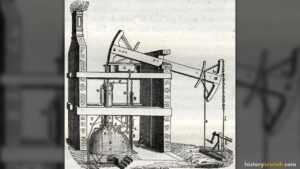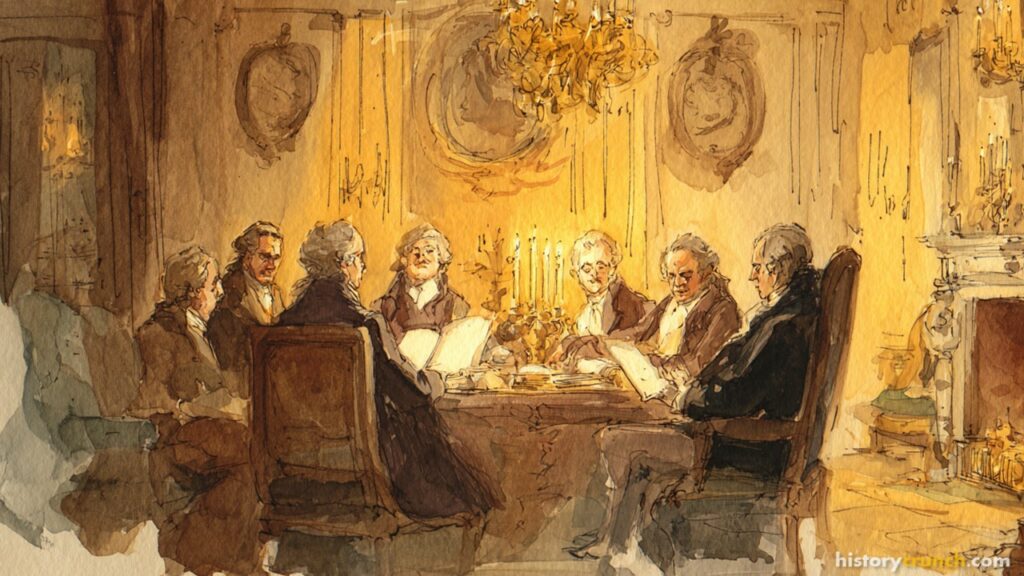
Classical liberalism emerged out of the ideas of several prominent thinkers and writers during the timeframe of the Age of Enlightenment between the 17th and 19th centuries. It first developed in Europe and North America and has had a profound impact on the histories of these continents. In general, classical liberalism is a right-wing ideology and based upon the values of political and economic individualism. This means that it highly values individual freedoms and limited government intervention in the lives of citizens. To fully understand the significance of these individualistic values, it’s first important to understand the systems that existed before. The development of classical liberalism at the time was a revolutionary idea because Europe had previously been based on the following: feudalism, absolute monarchy, and mercantilism.
 FactsthatCrunch
Classical liberals wanted governments to set minimum wages and limit working hours.
Before Classical Liberalism
In short, feudalism was a class system common in European societies throughout the time period of the Middle Ages in which society was divided into a clear set of classes. For example, feudal societies were often structured with clergy as the top class, followed by the nobility and then the peasant class. FeudalismA class system dividing European medieval society into clergy, nobility, and peasants, with little freedom for common people. was often combined with absolute monarchy which was a form of government in which all authority rested in one single person; a king or queen. Under this system of government, the monarch had total control over society and made all of the decisions pertaining to the society. Countries that were based on feudalism and absolute monarchies usually practiced mercantilismAn economic system where governments heavily controlled trade, pushing countries to export as much and import as little as possible. as an economic system. In general, mercantilism is an economic system that was common throughout Europe during the Middle Ages and up to the 18th century. It was a system based on heavy government (monarch) intervention in the economy, and involved countries trying to maximize their exports and minimize their imports.
The three systems of feudalism, absolute monarchy and mercantilism combined to make up a society that was based on a strong central government that controlled most aspects of life for its citizens of the country. This meant that average people in these societies lacked basic political and economic freedoms that we enjoy today in modern democratic countries.
FactsthatCrunchClassical Liberalism and the Age of Enlightenment
As stated previously, the ideals of liberalism first emerged out of the Age of Enlightenment and the new ideas that were expressed at that time. The Enlightenment occurred during the 18th century and is known as a time period of great change and new ideas. Specifically, the Enlightenment involved an intellectual movement, in which famous thinkers and philosophers challenged some of the basic foundations of society including the role of the government.
The Enlightenment built on the earlier work of the Scientific Revolution which occurred in the centuries before the Enlightenment. The Scientific Revolution involved a movement in society towards modern science based on using logic and reason to come to informed conclusions. Enlightenment thinkers would then apply these same values to society and authority and begin to question all aspects of societal structure. The ideas of the Enlightenment can best be seen in the work of several influential philosophers, including: John Locke, Jean-Jacques Rousseau, and Baron de Montesquieu. Each offered a particular view on human nature and the role of the government in society in their important essays and other writings. For example, they argued against the idea of an absolute monarch and feudalism and instead promoted the idea of limited government authority, combined with more liberty and rights for individuals.
FactsthatCrunchIn 1784, German philosopher Immanuel Kant summed up the Enlightenment with a two-word motto: Dare to know!
In his essay "What Is Enlightenment?" Kant urged people to think for themselves instead of simply obeying kings and church leaders. That trust in individual reason helped shape classical liberal ideas about rights and limited government.
Classical Liberalism and John Locke
For instance, a key area that Locke developed was the social contract theoryThe view that people must agree to follow an authority’s rules in order to form a functioning community., which is the view that people have to agree to follow the rules, and regulations set by an authority figure in order to form a functioning community. In his famous work, ‘Two Treaties on Government’, he argued against the rule of an absolute monarchy, which was common at the time, and instead favored a monarch that ruled with the consent of the citizens. According to Locke, the monarch’s role was to ensure the security of the individual and the protection of rights in society. In fact, he argued that it was the responsibility of citizens to remove a leader if they no longer represented the will of the people. As well, he argued that people had a natural right to life, liberty and property. These ideas were considered revolutionary in his time and generally viewed as major inspirations for both the American and French Revolutions. As well, they clashed with the previous notions of feudalism, absolute monarchy and mercantilism. Today, historians consider John Locke to have founded the main principles of liberalism as a distinct ideology.
John Locke’s ideas, along with the ideas of other influential thinkers, laid the foundation for two central principles of classical liberalism, which were: individual rights and freedoms and rule of lawThe principle that all people, including rulers, are equal before a clear set of laws rather than subject to one person’s decisions.. The idea of citizens holding rights and freedoms was revolutionary in European society in the 17th century, as at the time the absolute monarchs held all of the authority and wielded it without much concern for the rights of their citizens. Typical rights and freedoms that classical liberalism supported include: freedom of speech, freedom of association, freedom of religion, etc. As well, classical liberal societies functioned on the belief in democracy and the right for people to vote.
Next, classical liberal thinkers supported the idea of rule of law, which is a concept that supports the idea that all individuals in society are equal before the law. Furthermore, countries that support rule of law are governed primarily by those laws and less so by the political intervention of a singular person or authority figure. These two principles (individual rights and freedoms and rule of law) can best be seen in both the American and French Revolutions, which are considered to be foundational events in the emergence of liberalism in the world.
In general, both revolutions saw the birth of rights and freedoms for individual citizens while also fighting against and ending the reign of strong central authorities. In the case of the American Revolution, American citizens gained their freedom from the British monarchy, which led to the Declaration of Independence. In the French Revolution, it led to the death of Louis XVI, the absolute monarch of France, and the creation of the Declaration of the Rights of Man.
FactsthatCrunchLocke argued that people have natural rights to life, liberty, and property, and that citizens have the right to remove a leader who no longer represents their will. His ideas shaped the thinking behind both the American and French Revolutions and are considered the foundation of liberalism as a political ideology.
Classical Liberalism and John Stuart Mill
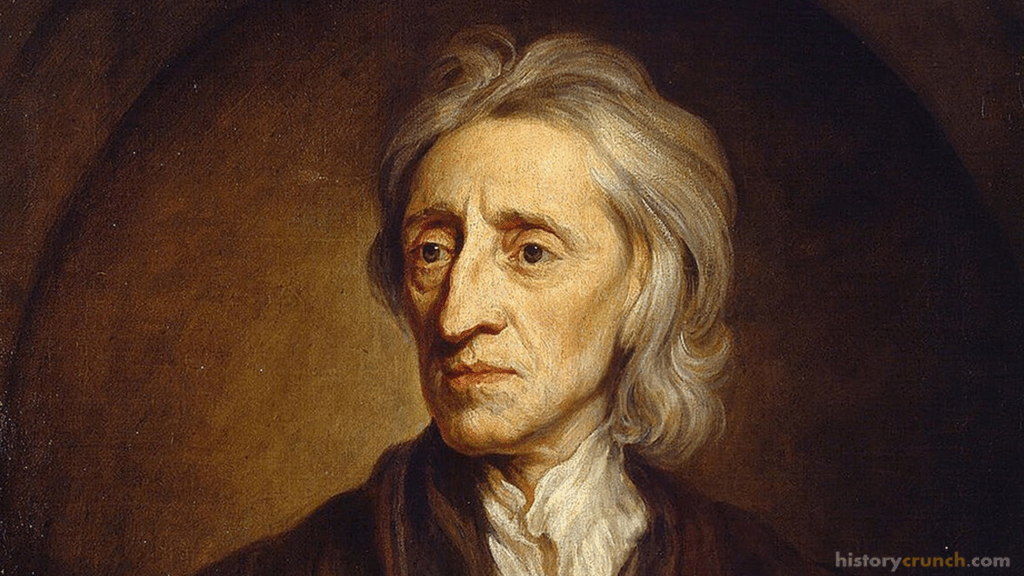
Furthermore, the ideas of John Stuart Mill played an important role in the development of liberalism. Mill, who was a British philosopher, published a famous essay in 1859 on the idea of individual rights and the role of government. Titled ‘On Liberty’, the essay expresses Mill’s beliefs that the rights of individuals should be extended to the greatest extent possible. For example, he argued for limited government intervention in the lives of citizens and promoted the idea that the government should only seek to protect: rule of law, private ownership, and the security of the individual. For example, in ‘On Liberty’ he famously stated that: “the sole end for which mankind are warranted, individually or collectively, in interfering with the liberty of action of any of their number, is self-protection. That the only purpose for which power can be rightfully exercised over any member of a civilized community, against his will, is to prevent harm to others. His own good, either physical or moral, is not sufficient warrant. He cannot rightfully be compelled to do or forbear because it will be better for him to do so, because it will make him happier, because, in the opinion of others, to do so would be wise, or even right…The only part of the conduct of anyone, for which he is amenable to society, is that which concerns others. In the part which merely concerns him, his independence is, of right, absolute. Over himself, over his own body and mind, the individual is sovereign”.
Further to this idea, Mill was a strong supporter of freedom of speech. He argued against governments censoring the views of citizens and supported the idea that people should be allowed to express their views regardless of if they are supported by the rest of society. For example, in ‘On Liberty’ he stated that: “if all mankind minus one were of one opinion, mankind would be no more justified in silencing that one person than he, if he had the power, would be justified in silencing mankind.” In this way, Mill is suggesting that it is dangerous to suppress the views of others because they have a right to express their views just as does anyone else. Because of his views on liberty and freedom of speech, along with others, Mill is viewed as a classical liberal thinker in the same realm as earlier writers such as John Locke.
Classical Liberalism and Economic Individualism
Classical liberalism was also based on economic individualism and the principles of: economic freedom, private ownership, competition, self-interest and self-reliance. In general, all of these principles focused on little or no government intervention in the economy and as much economic liberty for individuals as possible. This contrasted with the previously mentioned mercantilism, which favored heavy government regulation and intervention. The economic ideals of classical liberalism first emerged in the 18th and 19th centuries and quickly shifted European society from left-sided mercantilism to right-sided capitalism.
Classical liberal societies were based on the economic principles of laissez-faire capitalism. Often, laissez-faireA French phrase meaning roughly ‘leave us alone,’ referring to an economy run by individuals with little or no government involvement. capitalism is also referred to as free market capitalism or market capitalism. Simply put, laissez-faire translates to ‘leave us alone’ meaning that the government should remain out of the economy and instead allow individuals to freely carry out their own economic affairs. Historically, laissez-faire capitalism was most common during the 18th and 19th centuries in the timeframe of the Industrial Revolution. As such, England during the Industrial Revolution is considered to be an example of a classical liberal society. At the time, it was a revolutionary idea, because in the previous centuries, mercantilism had been the dominant economic system which was discussed previously. However, prominent thinkers, including Adam Smith, began to argue against mercantilism in favor of an economic system with more freedom for individuals. The development of capitalism as an economic system, sought to reject the idea of government control of the economy and instead put the focus on individuals. On the economic spectrum, laissez-faire capitalism is a right-wing ideology that is fundamentally based on private ownership, competition, free trade, self-reliance, self-interest, and the principles of supply and demand.
FactsthatCrunchWhat were the main goals of mercantilism as an economic system in pre-industrial Europe?
Classical Liberalism and Adam Smith
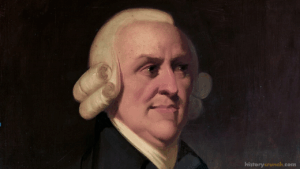
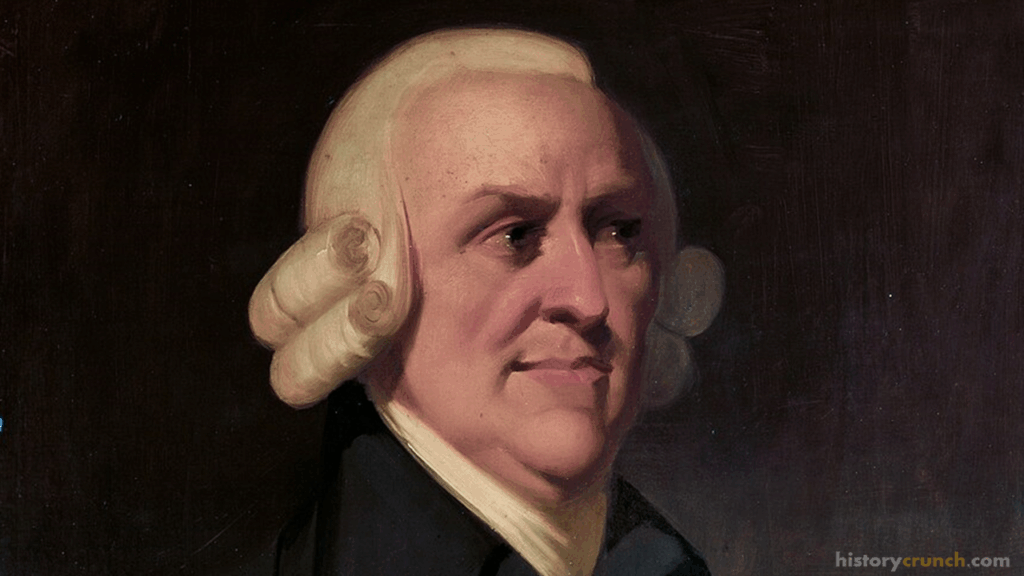
Adam Smith is best known for laying the foundation of capitalism in his most famous work. Its full title was ‘An Inquiry into the Nature and Causes of the Wealth of Nations’ which is just often shortened to ‘Wealth of Nations’. The book was published in 1776 and became one of the most influential economic writings of all time. It challenged the idea that the government should control the economy and instead proposed the idea of free trade and competition with a lesser role of the government. Like the physiocrats, Smith argued against mercantilism and government control of the economy and instead proposed the idea of the ‘invisible handAdam Smith’s idea that the natural forces of supply and demand, not government, should drive a country’s economy.’. Simply put, the invisible hand is the idea that the market forces of supply and demand should drive the economy of a country. These ideas became significant to classical liberal societies, especially in Europe and the United States, and today Adam Smith is considered to be an important early figure in the development of classical liberalism.
Positives of Classical Liberalism
As an ideology, classical liberalism is associated with the right-side of the economic and political spectrums because it favored limited government intervention in society, combined with individual rights and freedoms and the principle of rule of law. It was most common during the 19th century and the early 20th century in England and the United States during the time frame of the Industrial Revolution. As such, when people today consider the positives and negative aspects of classical liberalism they often use the impacts of industrialization to determine their response.
First off, there were several positive aspects of classical liberalism. Previous to classical liberalism, European society was based primarily on absolute monarchs who ruled over their citizens as authoritarians. This means that the king or queen had total control over all aspects of society and did not provide their citizens with basic rights or freedoms. An important development of liberalism was the idea that all people contain certain natural rights. For example, famous philosophers and thinkers from the Age of Enlightenment, such as John Locke, expressed the idea that all people possessed some form of basic individual rights. Later, in the 19th century, British philosopher John Stuart Mill built on this idea with his famous work ‘On Liberty’ in which he argued that there should be very little limits placed on people’s rights. For classical liberals these rights included: freedom of speech, freedom of religion, freedom of association, the right to vote, etc. The first major development of rights in American and European society was related to the American and French revolutions. In both, the people overthrew the monarchy that ruled over them and established basic sets of rights for themselves. The Americans did so with the Declaration of Independence, while the French did so with the Declaration of the Rights of Man. As such, many people consider the development of individual rights and freedoms as a positive for classical liberalism. It extended the right to vote to more people and ended the reign of brutal monarchs. As well, it led to the development of modern democratic societies where people are protected from oppression by rights and freedoms.
Another positive development of classical liberalism was the emergence of rule of law. Similar to the development of rights and freedoms, rule of law protected citizens from the authoritarian rule of absolute monarchs. For example, the concept of rule of law is based on the idea that a country should be ruled by a distinct and clear set of laws instead of the individual rule of a singular person. Rule of law also holds that all people are equal before the law, including the rulers. As such, the development of rule of law in societies across Europe and the United States was positive because they limited the rule of the government and protected the security and well-being of individual people.
Many people also consider classical liberalism to have been positive for the economic impacts it created. On the economic spectrum, classical liberalism is considered to be a right-sided ideology that favors limited government intervention. Therefore, classical liberalism is based upon the principles of capitalism. In fact, classical liberal societies are considered to have been laissez-faire capitalism, meaning they favored as little government as possible.
The writings of Adam Smith, a famous Scottish economist, formed the basis of classical liberal societies and included elements such as: competition, supply and demand, self-interest, economic freedom, private ownership and self-reliance. Taken together, these principles combined to form a free market economy. In all, the development of laissez-faire capitalism and free market economy led to many positives for society. For example, a free market economy benefits society because it focuses on competition and economic freedom as its main principles. Competition is important because it allows privately owned businesses to compete for the money of consumers. This leads to several different things including: lower prices for goods and services, increased innovation and a wider selection of products. Consumers benefit from this system because they receive low prices for high quality goods and services. In general, the concept of competition pushes individuals and businesses to use resources in an efficient manner in order to maximize profits. Therefore, free market economies are generally less wasteful.
The next positive aspect of a free market economy is that it leads to high levels of economic output. The competition present in a free market economy is not just limited to businesses but also drives individuals to work as hard as possible to earn money. This incentive for profit and wealth benefits the overall economy because it causes a high level of economic output that means the economic system is producing many goods and services in an efficient manner. All of these impacted the economics of classical liberal societies during the Industrial Revolution and caused business owners to take a financial risk in the creation of a new product. As such, during the 1800s, many new inventions were created that benefited society and led to different kinds of improvements for people. For example, the textile industry benefited greatly due to advancements during the Industrial Revolution.
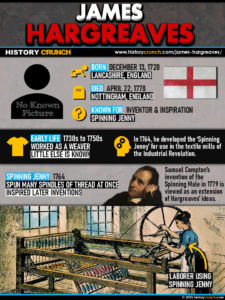
Throughout the 1700s, inventors such as Richard Arkwright, Eli Whitney, James Hargreaves, John Kay and Edmund Cartwright, developed machines and techniques that helped improve production, with inventions including: flying shuttle, water frame, cotton gin, spinning jenny and power loom. All of the inventions improved life for people because they sped up production and improved the standard of living for people. None of this would have been possible without the economic impacts of laissez-faire capitalism and the ideology of classical liberalism.
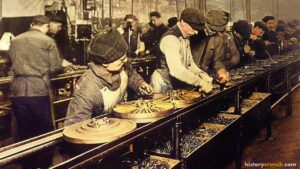
FactsthatCrunchClassical liberalism promoted limited government and individual freedom during the Industrial Revolution, bringing real gains but also serious problems for ordinary people.
Negatives of Classical Liberalism
With that said, there are also several negatives associated with classical liberalism. For instance, since there is little or no government intervention in a classical liberal society, that is based on laissez-faire capitalism, the opportunity exists for the wealthy to exploit certain aspects. While limited government may be beneficial in promoting economic freedom and choice, it also has the ability to cause large income gaps in society. For example, during the Industrial Revolution in Britain, which had a free market economy, the business owners were able to amass large fortunes while the working class people struggled. Because the government did not intervene in the economy, working class people suffered with low wages, a lack of worker rights and horrible working conditions. As such, the issue of workers’ rights during the Industrial Revolution is important in relation to this topic. The lack of a government to protect the working class people meant that wealthy entrepreneurs could take advantage of the poor.
The next problem associated with classical liberal societies is that they often lead to higher levels of unemployment. The nature of a free market or laissez-faire economy is such that individuals cannot count on the government to protect or help them in a time of need. As such, most countries based on a free market economy have some level of unemployment. This means, that at some points a certain percentage of the population will be struggling with poverty and be unable to support themselves. Further to this idea, because the government does not intervene in a classical liberal society, monopolies may also form. A monopolyWhen one corporation dominates and controls an entire industry, removing consumer choice and allowing prices to rise unchecked. is when one corporation dominates and controls an entire industry. This is bad for consumers, because without the benefit of choice, the corporation would increase prices to whatever they wanted.
Finally, free market economies are usually reliant on the forces of supply and demand. While this provides a framework for economic freedom to exist it also creates a system of ‘boom and bust’ in the overall economy. As such, free market economies are often susceptible to changing economic conditions, which could be difficult to endure for many average consumers.
Two prominent examples of exploitation during the height of classical liberalism in the time of the Industrial Revolution were the use of child labor and the degree of pollution. Because the societies of the time adopted the principles of classical liberalism, it allowed business owners to act without much government regulation. As such, child labor was common in classical liberal societies of the time and often the children suffered from horrible abuse and conditions. As well, Industrial Revolution cities and towns suffered from horrible living conditions, in part due to pollution, from the industrial output of the new factories, mines and mills. Therefore, while classical liberalism allows economic freedom, it struggles to handle societal problems related to exploitation.
Because of these negative aspects, classical liberalism societies began to transform throughout much of the 19th and 20th centuries. In general, countries such as England began to shift more left on the economic spectrum to include elements of socialism, which began to emerge in response to the horrible conditions present during the Industrial Revolution. As such, classical liberal societies shifted to the center of the spectrum and became modern liberal societies.
FactsthatCrunchKey Vocabulary
Feudalism
Mercantilism
Social contract theory
Rule of law
Laissez-faire
Invisible hand
Monopoly
Frequently Asked Questions
What is classical liberalism in simple terms?
Classical liberalism is a political and economic ideology built on individual freedom and limited government. It values personal rights, rule of law, and free market capitalism over strong central control. The ideology first grew in Europe and North America during the Age of Enlightenment.
Who were the main thinkers of classical liberalism?
John Locke, John Stuart Mill, and Adam Smith were among the most important thinkers behind classical liberalism. Locke shaped ideas about natural rights and the social contract, while Mill defended individual liberty and free speech. Adam Smith laid the foundation of free market capitalism.
What systems did classical liberalism replace?
Classical liberalism challenged feudalism, absolute monarchy, and mercantilism. These older systems placed nearly all power in a monarch and gave average people few rights or freedoms. Classical liberal ideas offered individual rights and free markets as revolutionary alternatives.
How is classical liberalism connected to laissez-faire capitalism?
Classical liberalism relies on laissez-faire capitalism, which means little or no government control of the economy. The phrase roughly means “leave us alone,” letting individuals run their own economic affairs. This system rests on competition, private ownership, self-interest, and supply and demand.
What were the negatives of classical liberalism?
Classical liberalism could allow the wealthy to exploit workers because the government rarely stepped in. During the Industrial Revolution in Britain, this led to low wages, child labor, poor conditions, and heavy pollution. It also allowed large income gaps, monopolies, and unstable boom and bust cycles.
Cite This Article
To cite this article as a source, use one of the formats below.
MLA: Beck, Elias. “Classical Liberalism: A Detailed Summary.” HistoryCrunch, 28 September 2026, https://historycrunch.com/classical-liberalism/.
APA: Beck, E. (2026). Classical Liberalism: A Detailed Summary. HistoryCrunch. https://historycrunch.com/classical-liberalism/
Chicago: Beck, Elias. “Classical Liberalism: A Detailed Summary.” HistoryCrunch. September 28, 2026. https://historycrunch.com/classical-liberalism/
Sources
- Emma Griffin, A Short History of the British Industrial Revolution.
- Robert C. Allen, The Industrial Revolution: A Very Short Introduction.