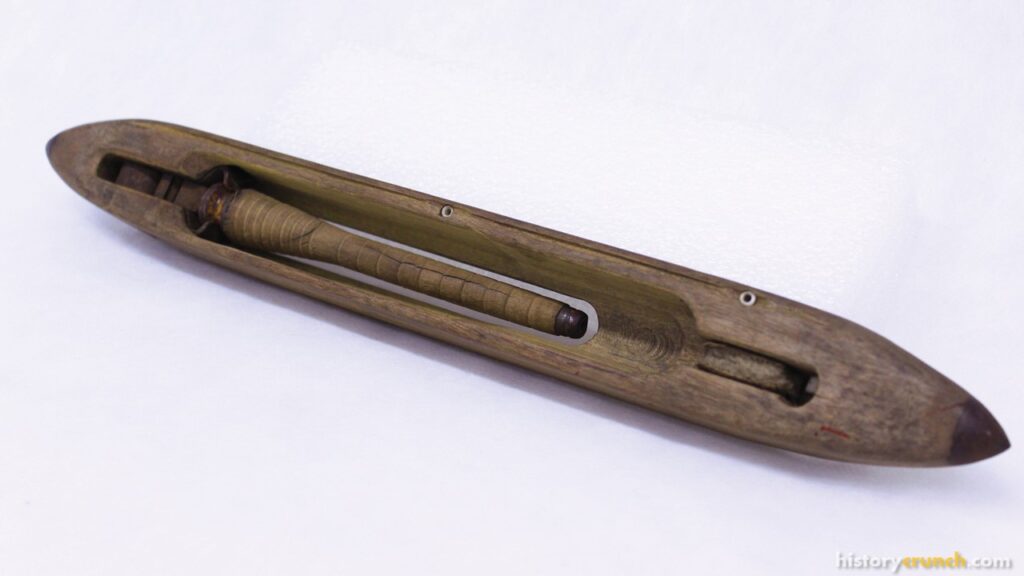
The invention of the flying shuttle by John Kay in 1733 was a pivotal development in the textile industry during the Industrial Revolution. This innovative device allowed a single weaver to operate a loom more efficiently by quickly sending the shuttle carrying the weftThe crosswise thread carried through a loom when weaving cloth. thread through the warpThe lengthwise threads stretched across a loom that the weft thread passes through. threads. The flying shuttle significantly increased weaving speed and productivity, leading to larger-scale textile production. It also set the stage for subsequent advancements in textile machinery, driving the rapid expansion of the industry.
 FactsthatCrunch
The weft is the thread that runs crosswise through a loom when cloth is being made. A weaver passes the weft back and forth over and under the lengthwise threads, called the warp, to build up fabric. Together, the weft and the warp lock together to form a finished piece of cloth.
When John Kay's flying shuttle was introduced in 1733, it sent the weft thread across the loom far faster than a weaver could do by hand, which greatly increased how much cloth could be produced in a day.
Innovations in the Industrial Revolution
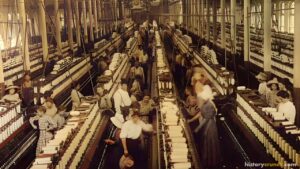
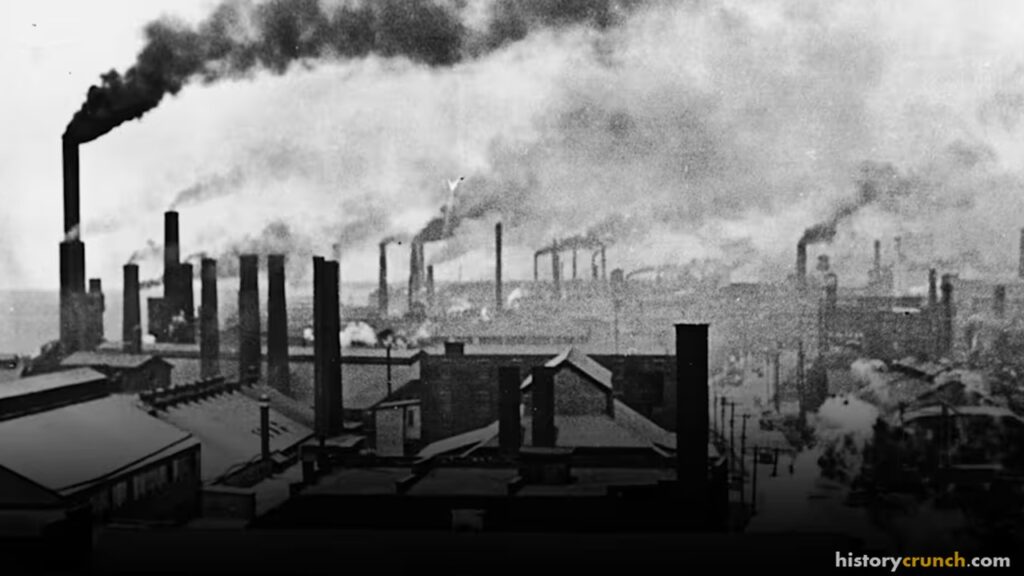
The Industrial Revolution is one of the most significant events in all of world history and had a profound impact on the modern world. It began first in Britain in the 1700s but soon expanded to the rest of Europe and North America. Before the innovations of the Industrial Revolution, most production depended on water, wind or human energy. The businesses that existed at this time were called cottage industriesHome-based businesses where workers produced a small amount of goods before large factories existed.. Cottage industries were an early stage of economic development in society in which workers produce a limited amount of goods in home-based businesses. However, by the mid-1700’s, new methods of production were being developed across Europe, especially in Great Britain. This transition led to the factory system, which was the creation of factories in centralized locations such as industrial towns and cities. This period of innovation continued throughout the 19th century and led to many new inventions by now famous inventors. In fact, one of the key features of the Industrial Revolution is the development of new inventions that led to more automationUsing machines to do work that people previously did by hand. by machines. Significant inventions or innovations of the Industrial Revolution included: flying shuttle, spinning jenny, power loom, water frame, cotton gin, steam engine, telephone, light bulb, automobile, assembly line production and interchangeable parts.
 FactsthatCrunch
Invention of the Flying Shuttle by John Kay
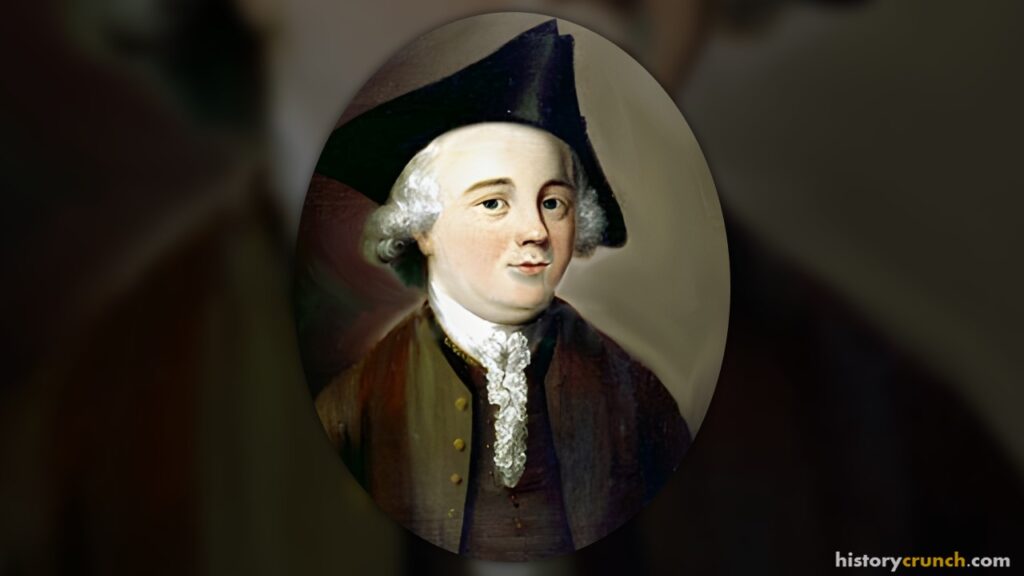
A significant invention of the Industrial Revolution was the flying shuttle, which was invented by John Kay in 1733. John Kay was an English inventor and is remembered today for inventing the flying shuttle along with other devices important to the textile industry in England. In 1733, he developed a wheel shuttle, later known as a flying shuttle. The flying shuttle was used with the traditional handloom and helped improve weaving efficiency and reduced labor needs because it could be operated with only one operator. Weaving was the process of creating cloth out of many different strands of thread. In fact, the flying shuttle was the first device in the modern era that significantly improved the productivity and efficiency of the textile process. One of the main industries that benefitted from the Industrial Revolution was the textile industry. The textile industry was based on the development of cloth and clothing. There were many prominent inventions for the textile industry created during the Industrial Revolution, of which the flying shuttle was one.
Kay left England in 1747 because France was known to support textile innovations. Kay sold his patentA legal right giving an inventor ownership and control over their invention. to the flying shuttle to French manufacturers and it allowed for the mechanizationThe process of replacing human labor with machines in production. in French textile production which allowed the French to make lots of fabric and textiles to clothe the population. In return, he was paid an ongoing pension. As such, the flying shuttle was developed and used throughout both England and France during the late 1700s.
 FactsthatCrunch
Tap each impact to read what it led to.
Industrial Revolution timeline · 1760 – 1840
Key Vocabulary
Cottage industries
Factory system
Automation
Weft
Warp
Patent
Mechanization
Frequently Asked Questions
Who invented the flying shuttle and when?
John Kay, an English inventor, created the flying shuttle in 1733. He first called it a wheel shuttle before it became known by its later name. Kay is remembered for this and other tools that helped the English textile industry.
How did the flying shuttle work?
The flying shuttle carried the weft thread quickly through the warp threads on a loom. It let one weaver do work that once needed two people at a handloom. This made weaving faster and cut down on the labor needed.
Why was the flying shuttle important to the Industrial Revolution?
The flying shuttle was the first modern device to greatly boost the speed of the weaving process. It allowed larger amounts of cloth to be made in less time. Its success also pushed inventors to design more textile machines that followed.
Why did John Kay leave England for France?
Kay left England in 1747 because France was known to support textile inventions. The French government paid him a pension to introduce the flying shuttle to French weavers. This helped machine-based textile production spread in France during the late 1700s.
What is weaving and how does it make cloth?
Weaving is the process of making cloth by crossing many strands of thread. The lengthwise threads are the warp, and the crosswise threads are the weft. The flying shuttle sped up this process on the traditional handloom.
What other inventions came from the Industrial Revolution?
The Industrial Revolution produced many machines that changed how goods were made. Textile examples include the spinning jenny, the power loom, and the water frame. Other key inventions were the steam engine, the cotton gin, and interchangeable parts.
Cite This Article
To cite this article as a source, use one of the formats below.
MLA: Beck, Elias. “Flying Shuttle Invention in the Industrial Revolution: A Detailed Summary.” HistoryCrunch, 25 September 2026, https://historycrunch.com/flying-shuttle-invention-in-the-industrial-revolution/.
APA: Beck, E. (2026). Flying Shuttle Invention in the Industrial Revolution: A Detailed Summary. HistoryCrunch. https://historycrunch.com/flying-shuttle-invention-in-the-industrial-revolution/
Chicago: Beck, Elias. “Flying Shuttle Invention in the Industrial Revolution: A Detailed Summary.” HistoryCrunch. September 25, 2026. https://historycrunch.com/flying-shuttle-invention-in-the-industrial-revolution/
Sources
- Joel Mokyr, The Enlightened Economy.
- The Science Museum Group