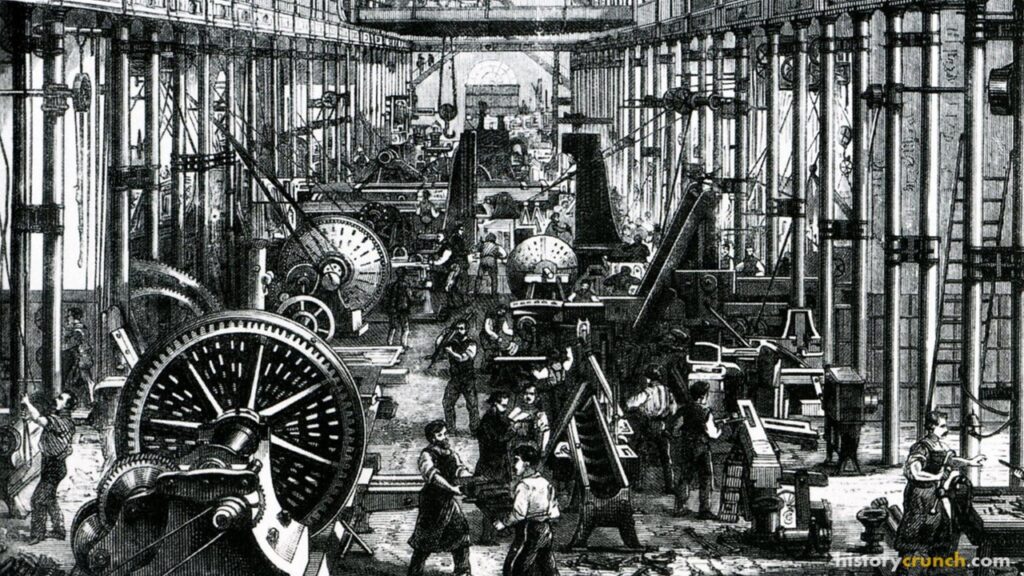
The Industrial Revolution is one of the most significant events in human history and had a profound effect on many nations throughout the world. While the Industrial Revolution first began in Britain in the 18th century, and took place throughout the centuries that followed, its impacts can still be seen in our lives today. For example, the Industrial Revolution led to many of the following: the growth of socialist movements and labor movements, feminist movements, urbanizationThe process by which more and more people move from rural areas into cities and towns., and our modern consumer society.
 FactsthatCrunch
Growth of Socialist Movements
One of the primary causes of the Industrial Revolution was the emergence of laissez-faire capitalismAn economic system where the government interferes as little as possible in business and economic decisions. as an economic system. Laissez-faire capitalism is a highly individualistic ideology in which the government plays as little a role as possible in the economic decisions of a country. Historians often refer to the ideology of the Industrial Revolution as classical liberalism since it included the principles of laissez-faire capitalism while also promoting basic individual rights.
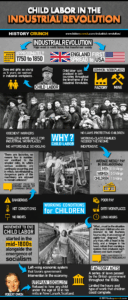
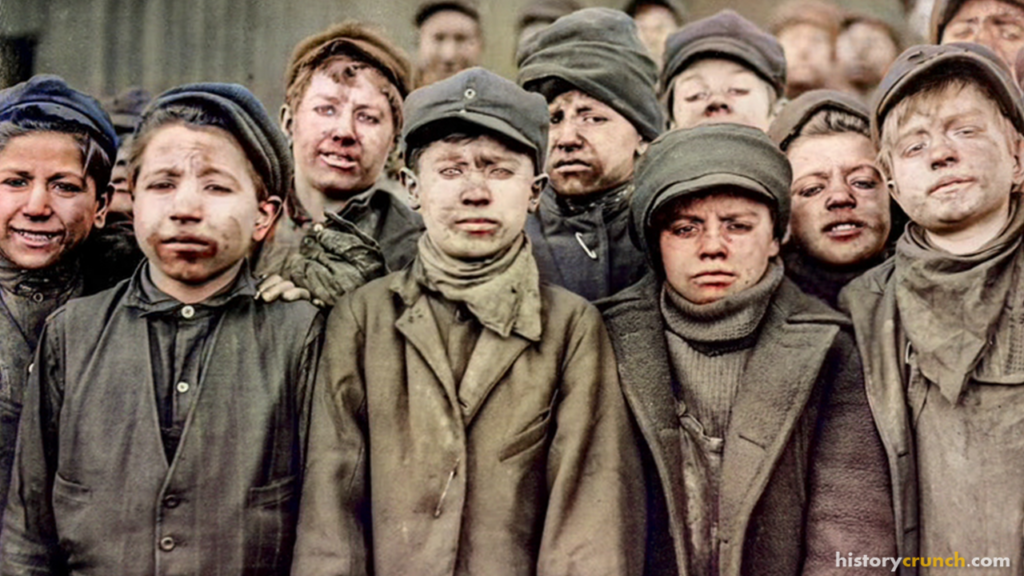
This political and economic climate created a situation in which wealthy factory and mine owners were able to exploit working-class people. As a result, this led to horrible working conditions for the people of the Industrial Revolution. For example, child labor was a common feature of the Industrial Revolution with children as young as four working in dirty and dangerous conditions without protection from the government.
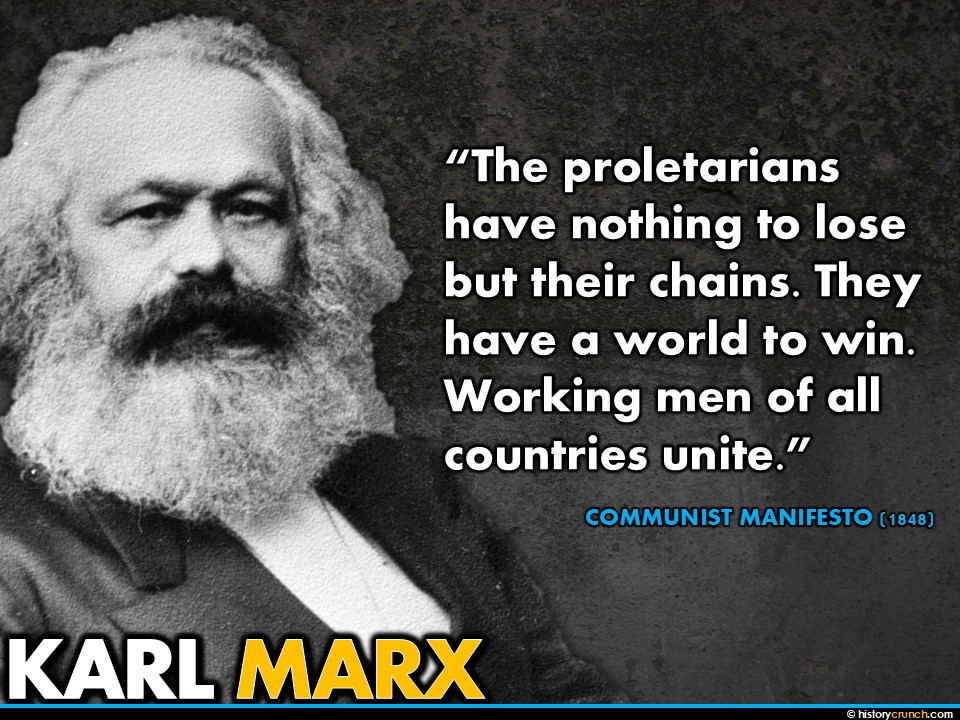
As time passed, socialist ideologies emerged in response to this exploitation. Several prominent socialist ideologies that emerged at the time included: Marxism and utopian socialismA socialist idea, linked to Robert Owen, that profitable businesses could still treat workers fairly and share wealth.. Marxism is best associated with Karl Marx and the system of ideas he established in his books ‘The Communist Manifesto’ and ‘Das Kapital’. In each book, he argues against the exploitation of the working-class and for a more equitable society in which there are no class divisions.
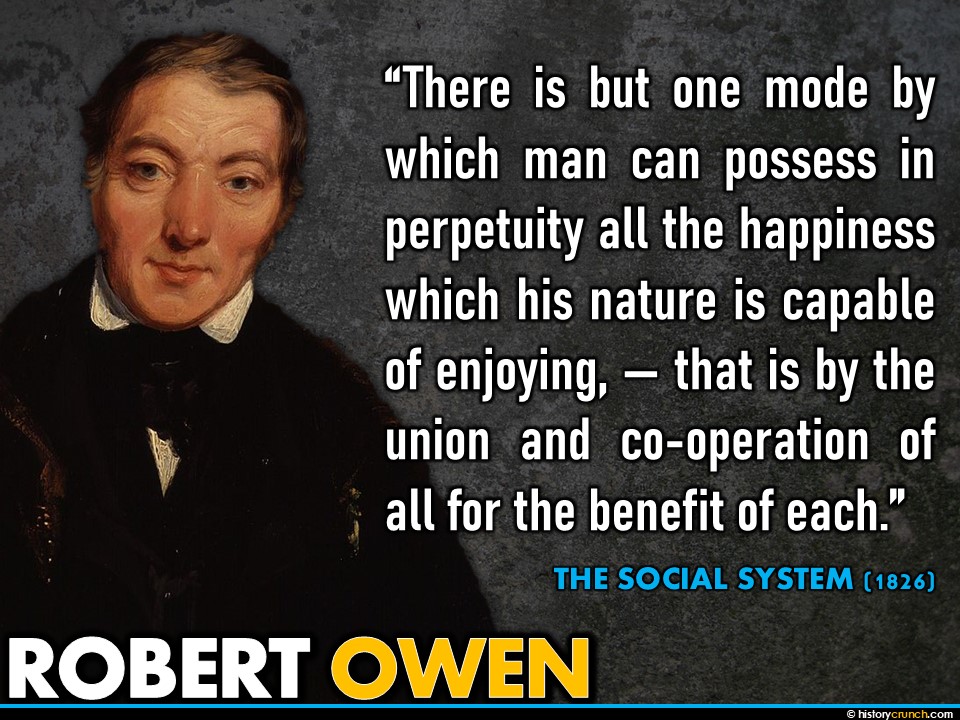
Utopian socialism is best associated with Robert Owen, who owned a factory in New Lanark, Scotland, during the time period of the Industrial Revolution. He operated the profitable business while also treating his workers well. For example, he provided basic education and healthcare to his workers while also paying them a decent wage. He proved it was possible for wealthy owners to still make a healthy profit while sharing their wealth with their workers.
The growth of these socialist movements was significant because of the impact they had on the world in the decades and centuries that followed. For example, throughout the 20th century socialist ideologies transformed classical liberal societies and laissez-faire capitalism to a more mixed economy based upon the principles of the welfare state and modern liberalism. As such, most modern democracies include elements from both sides of the economic spectrum.
FactsthatCrunchUtopian socialist Robert Owen ran his factory in New Lanark, Scotland, at a loss in order to pay for worker benefits.
Growth of Labor Unions
Another feature of the Industrial Revolution that has left an impact on the world was the emergence and growth of labor unionsA group of workers in the same job or industry who organize together to demand better pay and conditions.. A labor union is a group of people within a particular job or industry that join together to fight for improved working conditions. During the time period of the Industrial Revolution, working-class people were often exploited by wealthy owners. As stated in the previous paragraph, the dominant ideology of the Industrial Revolution centered on individualistic values such as classical liberalismThe dominant ideology of the Industrial Revolution combining laissez-faire economics with protection of basic individual rights. and laissez-faire capitalism. As such, there were very few government regulations in place to protect workers. Out of this emerged different socialist movements that focused on improving the lives and conditions for industrial workers.
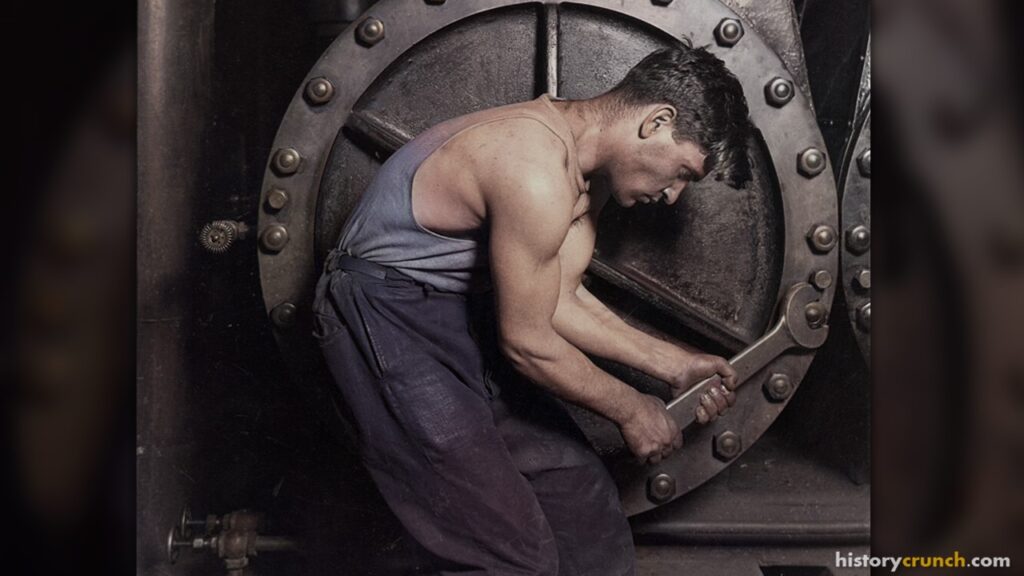
At the same time, the idea of labor unions became popular across industrial societies, as the labor movement of the Industrial Revolution developed. Workers formed and used unions in order to protest for a variety of things, including: shorter hours of work, higher rates of pay, safe working conditions, basic education and healthcare. Today, labor unions remain an important part of many modern democratic societies. They continue to fight for the same things that workers did in the Industrial Revolution, and have played a vital role in improving life for workers.
 FactsthatCrunch
The Knights hoped to reform society as a whole, while the AFL focused on winning better deals for its members through bargaining and strikes. The AFL's approach lasted longer and shaped American unions in the 20th century.
Feminist Movement
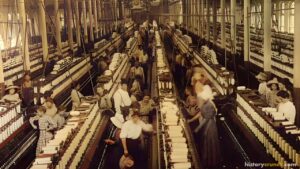
The third impact of the Industrial Revolution was the establishment of early feminist movements and the role of the revolution on women. The Industrial Revolution had a profound impact on the lives of women. Before the advent of industrialization women were often tasked with traditional jobs such as making and repairing clothing. However, since the textile industry benefitted greatly from the numerous inventions that were created during the time period, clothing shifted from a traditional role of women to a mass produced good in factories. As a result of their shifting role, women entered the workforce in textile mills and coal mines in large numbers.
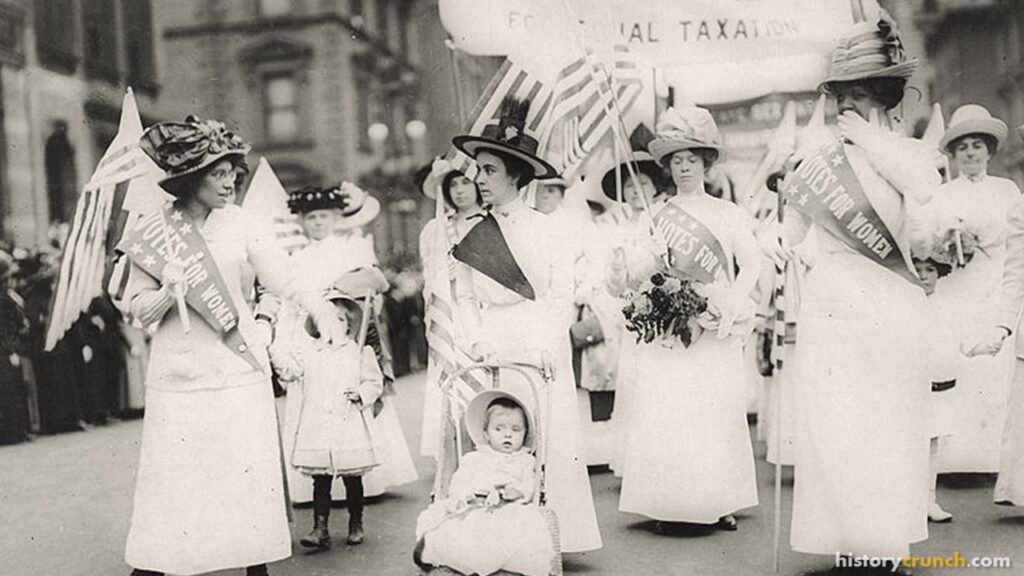
Women were not valued the same as men in the workplace, and were therefore often paid much less than men. For example, while male British industrial workers were often paid 10 shillings per week, women were paid half that. At the same time, socialist values were emerging in the Industrial Revolution, as workers began to protest and fight for more equal rights. The early feminist movements also emerged out of this time period, as women began to organize and protest for more equality in society. One of the first things that women began to fight for was the right to vote. Throughout the 1800s, women were denied the right to vote, but this changed in most industrial societies in the early 1900s, as the governments began to extend rights to women. Today, the feminist movement continues as women fight for equal pay, maternity rights and more.
 FactsthatCrunch
Some of the first women in America to go on strike were the Lowell mill girls, young women who worked in Massachusetts textile mills.
In 1834, and again in 1836, hundreds of these workers walked out to protest pay cuts and higher boarding-house rents. Many later joined the Lowell Female Labor Reform Association, founded in 1845, which fought for a ten-hour workday. Their activism helped show that working women could organize and speak out for their rights.
Urbanization
Another impact of the Industrial Revolution was its contribution to urbanization. The Industrial Revolution first began in Britain in the 18th century due in part to an increase in food production, which was the key outcome of the Agricultural Revolution. As such, the Agricultural Revolution is considered to have begun in the 17th century and continued throughout the centuries that followed, alongside the Industrial Revolution. Through different measures, such as the Enclosure Movement, many farmers and their families were forced from their land and moved to more populated centers in search of work. As a result, industrial cities and towns grew dramatically due to the migration of farmers and their families who were looking for work in the newly developed factories and mines. For example, in 1750 nearly 80% of the population in Britain lived on farms, but by 1850 that number was cut to just 50%.
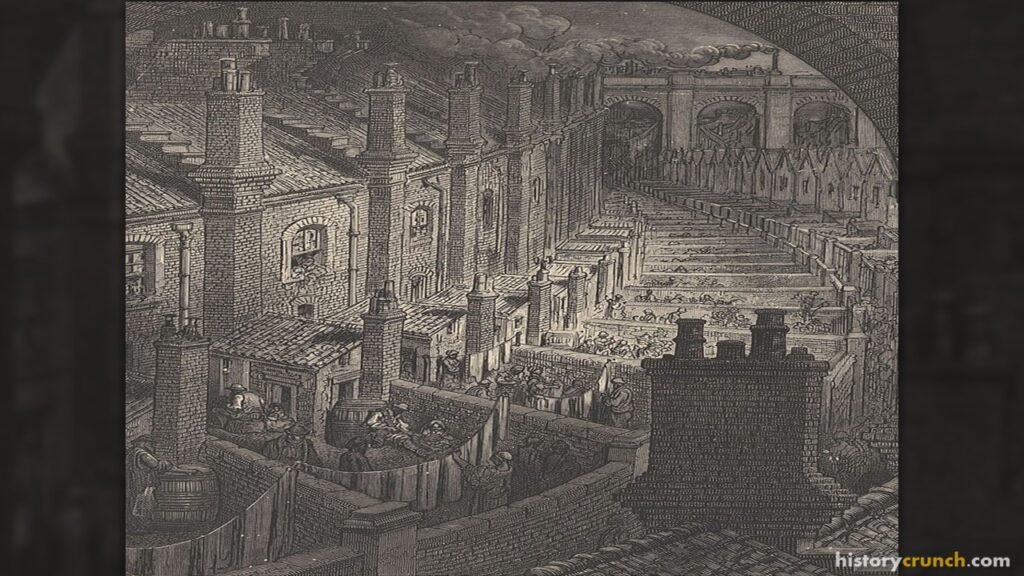
Along with the mass migration of people, Britain also experienced a rather large population boom in the early years of the Industrial Revolution. The increased food production of the Agricultural Revolution led to this increase, and allowed British families to expand. For example, in 1700 the total population of Britain was around 5.5 million people, but it soon expanded. Just 100 years later the population had increased to over 9 million and by 1840 it was nearly 16 million. Due to the increased population and the poverty of most working-class families, it was common for large families to live in relatively small rooms. This population increase combined with the mass migration of people greatly impacted the living conditions for people in the industrial towns and cities. Urbanization was one of the key features of the Industrial Revolution and continues still today. For example, the United Nations reported in 2009 that for the first time in history there were more people living in urban areas than rural areas. The trend continues still.
 FactsthatCrunch
The population of England and Wales grew from roughly 5.5 million in 1700 to nearly 16 million by 1841, even as disease and dangerous conditions killed large numbers of working-class people in industrial towns.
More food from the Agricultural Revolution helped more families survive and grow. By the first census in 1801 the population was already close to 9 million, so it had nearly doubled in about a century. That rapid rise packed more people into towns where poor sanitation and disease kept death tolls high, yet births continued to outpace deaths across the period.
Modern Consumer Societies
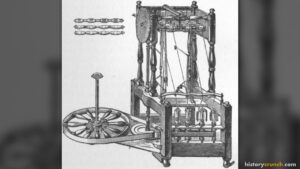
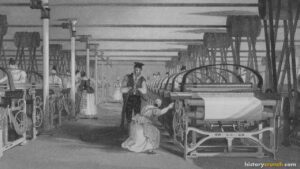
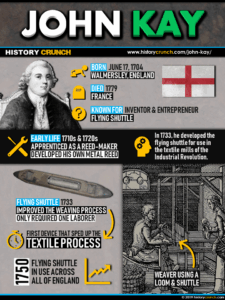
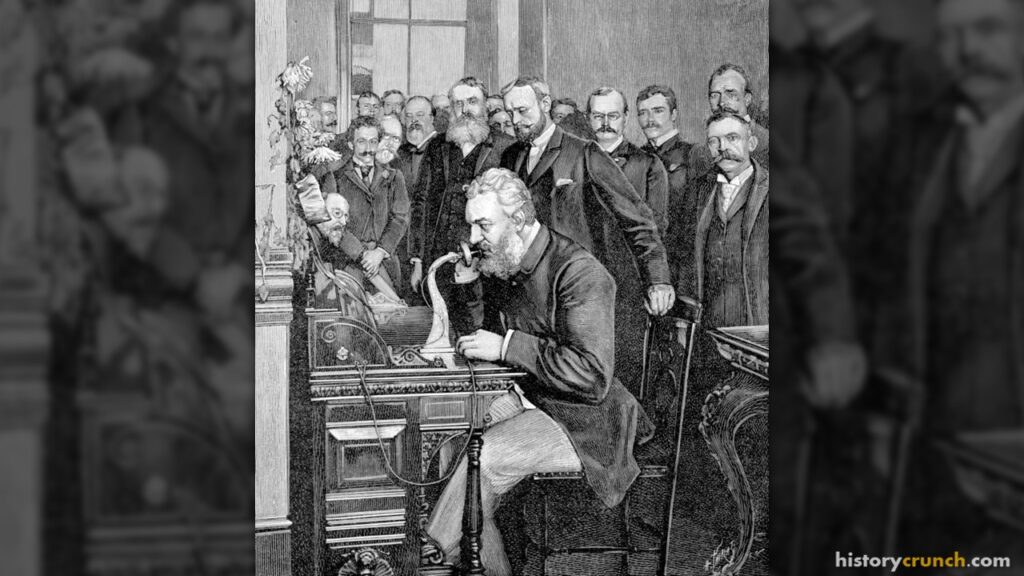
One of the final impacts of the Industrial Revolution was the numerous inventions and innovations from that time period, which still impact our world today. The modern consumer lifestyles of people in most Western democracies would not be possible without the advances made in the Industrial Revolution. For example, the textile industry benefited greatly from several important inventions. The textile industry was based on the development of cloth and clothing. Before the start of the Industrial Revolution, which began in the 1700s, the production of goods was done on a very small scale. Historians refer to this method of production as the ‘cottage industry’. Simply put, the cottage industryThe pre-industrial system in which goods were made on a very small scale, usually inside a home. refers to a period of time in which goods for sale were produced on a very small scale, usually in a home. In this system, people produced goods, such as wool, in their homes or on their own farms and then sold it to local communities since long distance transportation was uncommon. In contrast, industrialization allowed goods to be produced in a central location and on a mass scale. It also led to the creation of inventions that helped speed up the production method of many goods, but most noticeably in the textile industry. Throughout the 1700s, inventors such as Richard Arkwright, Eli Whitney, James Hargreaves, John Kay and Edmund Cartwright, developed machines and techniques that helped improve production, especially in terms of the textile industry. They allowed quick and efficient mass production which is a key feature of modern systems of production and trade. As well, other key inventions, such as the telephone, steam engine, and automobile have transformed our modern lives. Without these inventions, our society would lack the current convenience and efficiency that we enjoy.
 FactsthatCrunch
Impacts of the Industrial Revolution – Summary
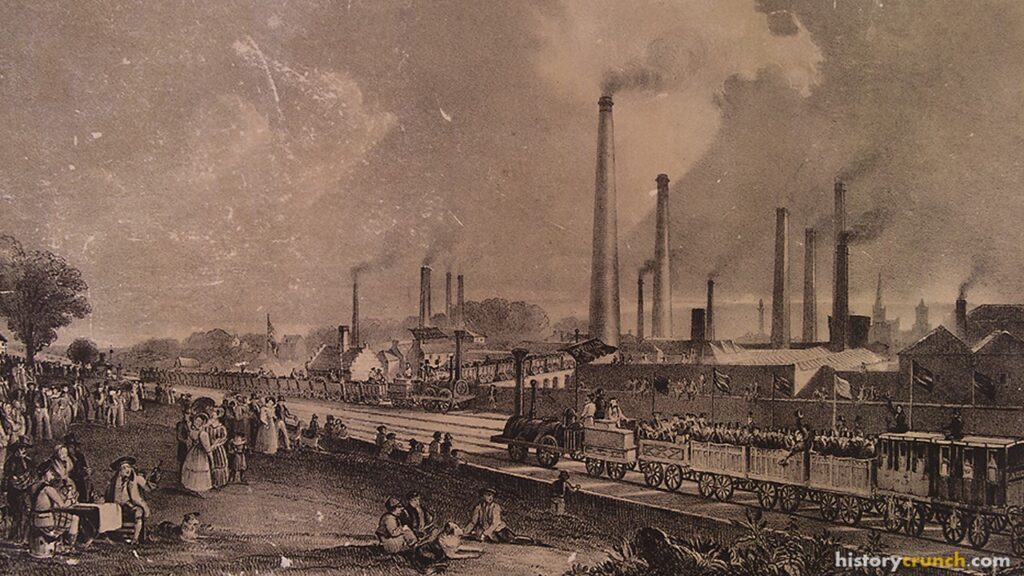
In conclusion, there were several important impacts that emerged from the major events of the Industrial Revolution. For example, the growth of socialist movements and labor unions led to increased rights for working-class people, which has left a legacy of rights enjoyed by modern people. For example, these movements helped establish basic rights such as child labor laws and minimum wage laws. Next, the economic opportunities created by the Industrial Revolution allowed entrepreneurs and inventors to take risks and establish businesses. This process helped create a strong middle class, since the benefits were no longer exclusively held by the wealthy. Finally, the rights movements of the workers in the Industrial Revolution extended to other groups, including women, who protested and won the right to vote in the early 20th century. As such, historians recognize both the positive and negative impacts of the Industrial Revolution.
 FactsthatCrunch
Tap each impact to read what it led to.
Key Vocabulary
Laissez-faire capitalism
Classical liberalism
Utopian socialism
Labor union
Enclosure Movement
Cottage industry
Urbanization
Frequently Asked Questions
What were the main impacts of the Industrial Revolution?
The Industrial Revolution led to the growth of socialist movements, labor unions, feminist movements, urbanization, and modern consumer society. These changes began in Britain in the 18th century but still shape daily life today. They affected how people work, where they live, and the rights they hold.
Why did socialist movements grow during the Industrial Revolution?
Socialist movements grew because wealthy factory and mine owners exploited working-class people under laissez-faire capitalism. Poor pay, long hours, and child labor were common because the government did little to protect workers. Thinkers like Karl Marx and Robert Owen offered new ideas for a fairer society.
How did the Industrial Revolution affect women?
The Industrial Revolution moved many women into textile mills and coal mines in large numbers. However, women earned far less than men, often only half as much for the same work. This unfair treatment helped spark early feminist movements, including the fight for the right to vote.
What caused urbanization during the Industrial Revolution?
Urbanization happened as farmers and their families moved to cities to find work in new factories and mines. Measures like the Enclosure Movement forced many people off their land. In Britain, farm population fell from nearly 80% in 1750 to about 50% by 1850.
What is a labor union and why did unions form?
A labor union is a group of workers in a job or industry who join together to fight for better conditions. Unions formed because few government rules protected workers from exploitation during the Industrial Revolution. They pushed for shorter hours, higher pay, safer workplaces, and access to education and healthcare.
What inventions came from the Industrial Revolution?
Key inventions included textile machines, the steam engine, the telephone, and the automobile. Inventors like Richard Arkwright, James Hargreaves, and Edmund Cartwright transformed cloth production from home workshops to factories. These advances made mass production possible and shaped the modern consumer world.
Cite This Article
To cite this article as a source, use one of the formats below.
MLA: Beck, Elias. “Impacts of the Industrial Revolution: A Detailed Summary.” HistoryCrunch, 27 September 2026, https://historycrunch.com/impacts-of-the-industrial-revolution/.
APA: Beck, E. (2026). Impacts of the Industrial Revolution: A Detailed Summary. HistoryCrunch. https://historycrunch.com/impacts-of-the-industrial-revolution/
Chicago: Beck, Elias. “Impacts of the Industrial Revolution: A Detailed Summary.” HistoryCrunch. September 27, 2026. https://historycrunch.com/impacts-of-the-industrial-revolution/
Sources
- Joel Mokyr, The Enlightened Economy.
- Robert C. Allen, The Industrial Revolution: A Very Short Introduction.
- Emma Griffin, A Short History of the British Industrial Revolution.
- The Science Museum Group