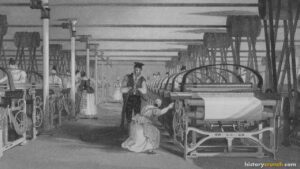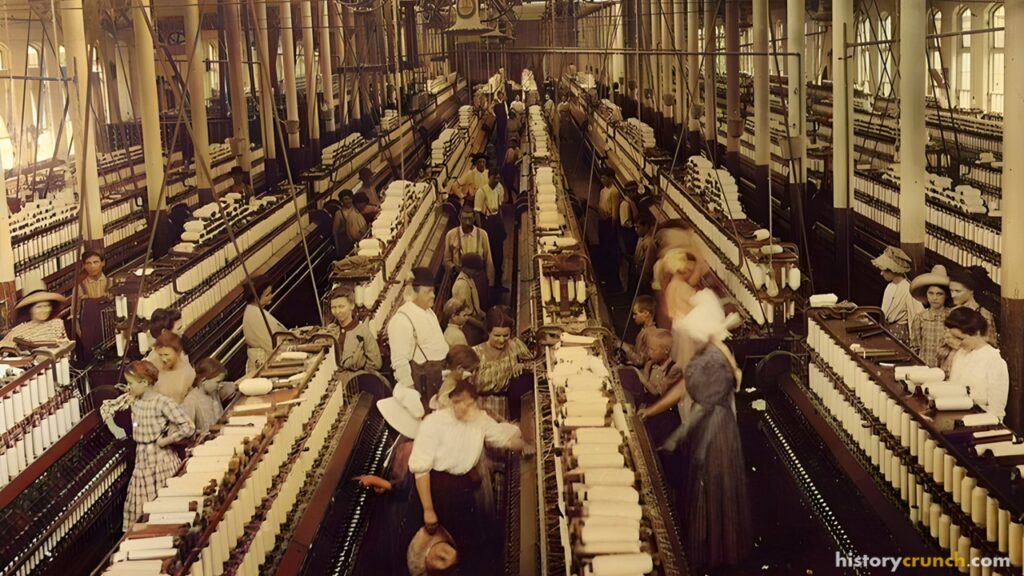
The Industrial Revolution first began in Britain in the 18th century but soon spread throughout Europe and North America. Historians have identified several causes for the Industrial Revolution, including: the emergence of capitalism, European imperialism, efforts to mine coal, and the effects of the British Agricultural Revolution.
 FactsthatCrunch
What were the four main causes of the Industrial Revolution?
Causes of the Industrial Revolution – Emergence of Capitalism
Capitalism was a central component necessary for the rise of industrialization. Historians refer to the form of capitalism common during the Industrial Revolution as laissez-faire capitalism. Often, laissez-faire capitalismAn economic system where the government stays out of the economy and lets individuals run their own economic affairs freely. is also referred to as free market capitalism or market capitalism. Simply put, laissez-faire translates to “leave us alone” meaning that the government should remain out of the economy and instead allow individuals to freely carry out their own economic affairs. At the time, it was a revolutionary idea, because in the previous centuries, mercantilism had been the dominant economic system. In general, mercantilismAn older economic system that gave governments heavy control and regulation over a country’s economy. is viewed as an economic system that favored heavy government control and regulation. Under mercantilism, absolute monarchs ruled over vast empires and controlled almost all aspects of the economy. However, prominent thinkers, including Adam Smith, began to argue against mercantilism in favor of an economic system with more freedom for individuals.
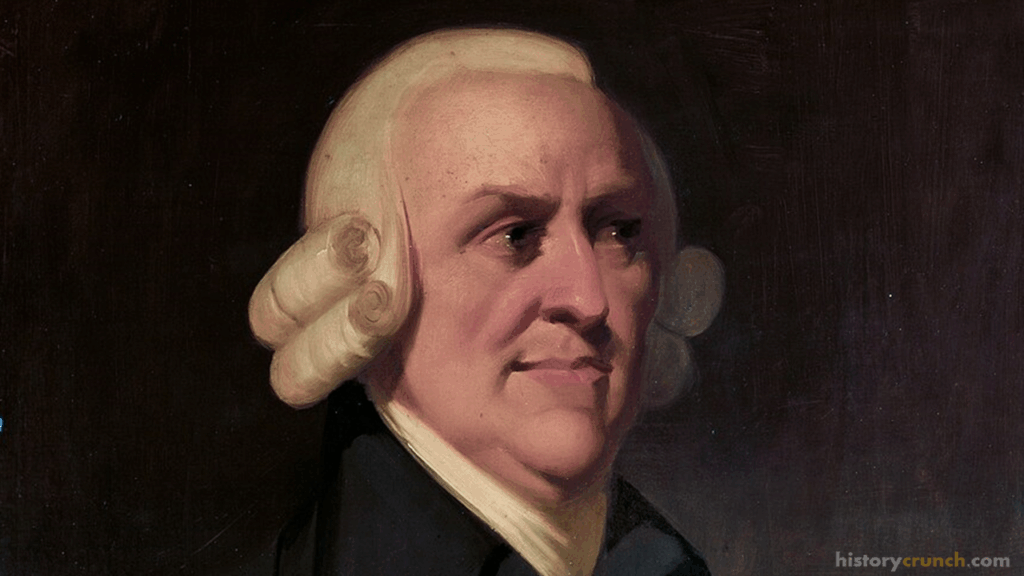
Adam Smith was the famous Scottish writer and economist who is credited with laying the foundation for capitalist theory in his 1776 book titled ‘Wealth of Nations’. In the book, he challenged the role of the government in economics. Smith argued against mercantilism and government control of the economy and instead proposed the idea of the ‘invisible handAdam Smith’s idea that the natural forces of supply and demand, not government, should guide a country’s economy.’. Simply put, the invisible hand is the idea that the market forces of supply and demand should drive the economy of a country. Capitalism caused the Industrial Revolution because industrialization required significant work and investment from individuals and not necessarily the government. For example, in Britain, where the Industrial Revolution began, wealthy entrepreneurs were important because they used their wealth to create factories and mines. This investment from individuals, whose actions were guided by the profit motiveThe drive to make money that pushes individuals to invest and build businesses., would not have been possible without the emergence of capitalism. Furthermore, as the Industrial Revolution began the individualistic principles of capitalism helped create a climate wherein industrialization exploded, and eventually spread worldwide.

Causes of the Industrial Revolution – European Imperialism
The next major factor that helped the development of the Industrial Revolution was the impact of European ImperialismWhen one nation takes control of another region through military, political, or economic power.. While not directly a cause of the start of the Industrial Revolution, imperialism as a concept was linked with the growth of industrialization. Imperialism is generally defined as when one nation controls another’s region through military, political or economic control. Following the Age of Exploration, powerful European countries (Britain, France, Spain, Portugal, Germany, Belgium, etc.) undertook large imperial campaigns in order to create vast empires. During this period of time, which historians refer to as the Age of Imperialism, large sections of the world came under European control, including: North America, South America, Africa, India, Australia, and China.
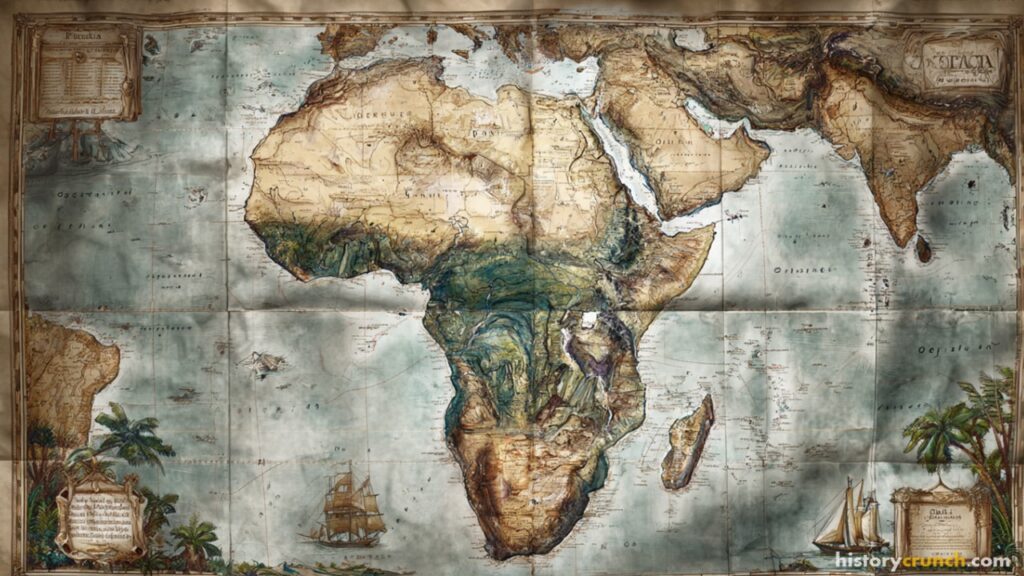
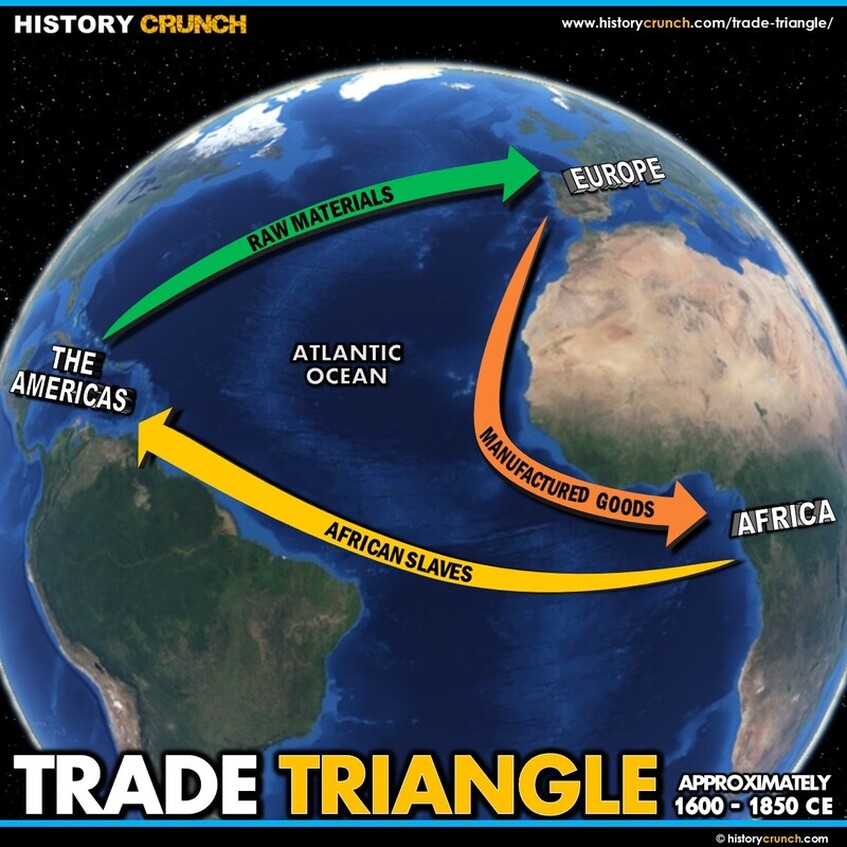
In general, the Age of Imperialism occurred prior to and during the rise of industrialization. For example, European nations began colonizing North and South America in the 15th century, beginning with Christopher Columbus’ famous four voyages to the New World. Other areas of the world were taken over in the centuries that followed. For instance, Africa wasn’t colonized until the late 19th century and early 20th century. As a result, historians often view the Industrial Revolution as a cause of the later stages of the Age of Imperialism. Regardless, European imperialism was vital to the start of the Industrial Revolution (especially in Britain) for several reasons. First, the colonies created during the Age of Imperialism supplied the European countries with large amounts of raw materials that could then be used to produce goods in the factories. For example, the Trade Triangle developed in the Atlantic Ocean during this time. In the Trade Triangle, European factories were fed with resources from North and South America. In turn, the goods produced were shipped and sold in Africa in exchange for slaves. The slaves were then transported to North and South America to work on plantations producing raw materials such as cotton, which would then be taken again to European factories. Therefore, European imperialism provided the resources necessary to begin mass production of goods.
The second reason is that European imperialism created a large market for goods. For example, as European countries colonized areas of the world, they established trade routes. This meant that any goods produced in European factories could then be shipped and sold to markets around the world. This helped expand industrialization as it allowed European factories to produce goods on a much larger scale. For example, Britain was the first country to undergo the effects of the Industrial Revolution, and it used its vast empire to both gather resources and sell its newly manufactured goods.
 FactsthatCrunch
What is the correct order of steps in the Atlantic trade triangle that fed Britain's factories?
Causes of the Industrial Revolution – Efforts to Mine Coal
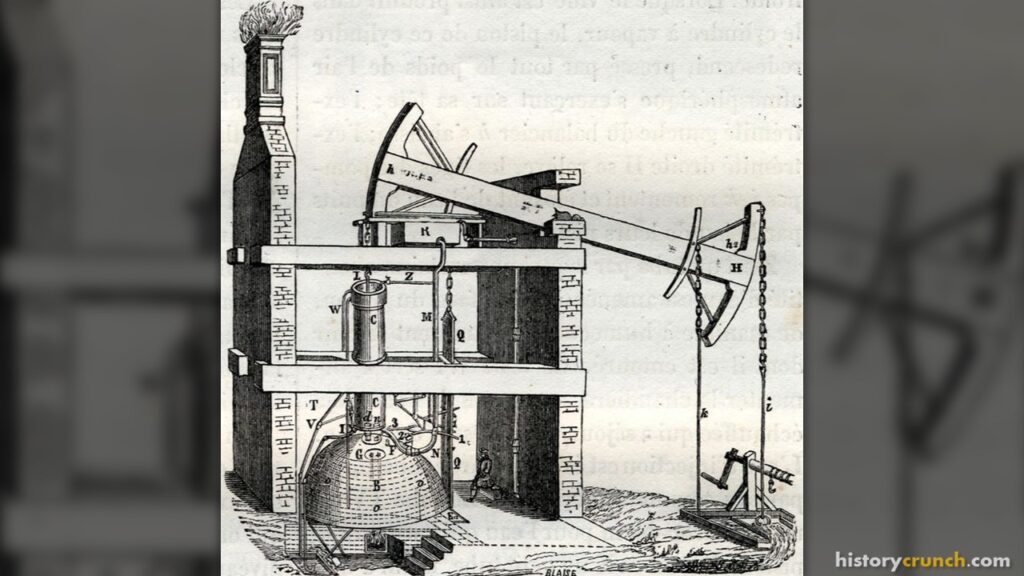
The next main reason for the start of the Industrial Revolution was the mining of resources such as coal, which were vital to the processes of industrialization. For instance, Britain was the first to industrialize and had large supplies of coal present in the country. Coal was a necessary ingredient in the industrial process as it fueled the steam engines that were used in trains, ships and all other sorts of machinery. Not only did Britain have large supplies of the resource, but it was also easily obtainable. Unlike other European nations, coal in Britain was relatively close to the surface and was therefore relatively easy for miners to find and extract it. The mining of coal became even easier after the invention of the steam engine by Thomas Newcomen, which was originally used to pump water out of coal mines.
 FactsthatCrunch
Britain's coal deposits sat unusually close to the earth's surface, making them easier and cheaper to reach than coal in most other European countries.
Causes of the Industrial Revolution – British Agricultural Revolution
The final cause of the Industrial Revolution was the effects created by the British Agricultural Revolution. As previously stated, the Industrial Revolution began in Britain in the 18th century due in part to an increase in food production, which was the key outcome of the British Agricultural Revolution. As such, the Agricultural Revolution is considered to have begun in the 17th century and continued throughout the centuries that followed, alongside the Industrial Revolution. In general, the British Agricultural Revolution involved new farming techniques, the use of machinery in farming, and the increase of private land ownership. For example, Charles Townshend introduced the concept of crop rotationA farming method of growing different crops in sequence on the same land to produce more food faster. which allowed British farmers to produce more food faster. This led to a dramatic increase in the population of the country which in-turn created a large workforce for the factories and mines.
Also, Jethro Tull invented the seed drill which allowed farmers to plant crops faster and in straight rows. This also led to an increase in food production, while also allowing the same amount of work to be done by fewer people. Therefore, people were able to leave the farms and move to the towns and cities where factories and mines were being established. Finally, the Enclosure Movement in Britain led to increased private ownership of farms, and forced smaller farmers off of their traditional land. This caused a mass migration of farmers to the town and cities in search of work. As a result, this created a large workforce that factory and mine owners could then exploit. In all, the Agricultural Revolution was an important cause of the Industrial Revolution.
The British Agricultural Revolution took place in Britain in the 1700s and involved inventions and innovations that led to an increase in food production. As stated previously, the increased food production allowed Britain’s population to also increase which benefitted the Industrial Revolution in two ways. First, the increased population helped produce workers for the factories and mines that were so important to the Industrial Revolution. Second, the larger population created a market for goods to be sold to which helped the owners of the factories to make a profit off of the sale of their goods.
 FactsthatCrunch
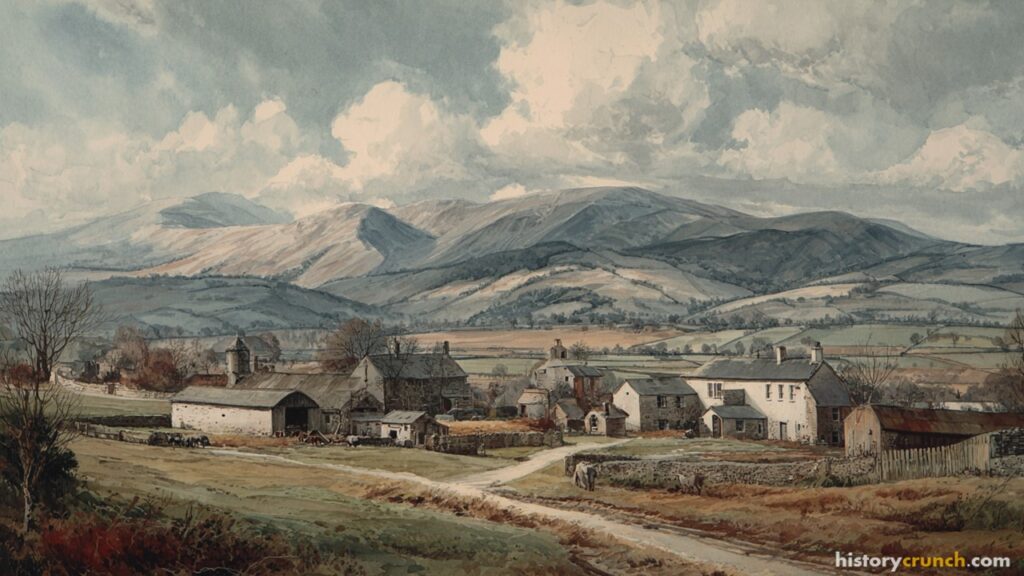
The Enclosure Movement in Britain transferred common farmland into private ownership, forcing small farmers off the land they had worked for generations.
The Enclosure Movement was a political and legal process in which landowners and Parliament transferred shared farmland to private hands. This shift away from common land was a key factor in driving workers into industrial cities during the 18th and 19th centuries.
Causes of the Industrial Revolution – Summary
In conclusion, there are several main causes of the Industrial Revolution. The first main cause was the emergence of capitalism as an economic theory, since it helped wealthy individuals to start their own businesses. The next major cause was the expansion of European imperialism around the world. By taking over other areas of the world, European countries gained access to important resources and created large markets in which they could sell goods produced in their factories. Finally, the last cause of the Industrial Revolution was the effects of the British Agricultural Revolution. The revolution led to an increase in food production and helped increase the population in European societies. As a result, this created a large workforce for use in industrial towns and cities.
FactsthatCrunchThese two economic systems clashed during the Industrial Revolution as thinkers debated how much governments should control trade and business.
Key Vocabulary
Laissez-faire capitalism
Mercantilism
Invisible hand
Profit motive
Imperialism
Crop rotation
Enclosure Movement
Frequently Asked Questions
What were the main causes of the Industrial Revolution?
The main causes were the rise of capitalism, European imperialism, the mining of coal, and the British Agricultural Revolution. Each of these factors gave Britain the money, resources, and workers needed for industry to grow. Together they helped factories and machines spread quickly across the country.
Why did the Industrial Revolution begin in Britain?
Britain had a rare mix of conditions that made it the first country to industrialize. It held large, easy to reach supplies of coal, a growing supply of workers, and a huge empire for resources and trade. These advantages helped factories and mines start there before anywhere else.
How did capitalism help cause the Industrial Revolution?
Capitalism let wealthy individuals invest their money in building factories and mines. This new system, called laissez-faire capitalism, kept the government out of the economy and rewarded people for taking risks. Adam Smith explained these ideas in his 1776 book, and they encouraged industry to expand.
Why was coal so important to the Industrial Revolution?
Coal was important because it fueled the steam engines used in trains, ships, and factory machines. Britain had large coal supplies that sat close to the surface, so miners could reach them easily. The steam engine designed by Thomas Newcomen even helped pump water out of the mines.
How did the British Agricultural Revolution lead to industry?
The British Agricultural Revolution raised food production through new tools and farming methods. Crop rotation and the seed drill let fewer farmers grow more food, which caused the population to rise. Many people then moved to towns and cities, creating a large workforce for factories and mines.
How did imperialism connect to the Industrial Revolution?
Imperialism gave European nations both raw materials and large markets for their goods. Colonies supplied resources like cotton, while trade routes let factories sell products around the world. Britain used its vast empire to gather supplies and sell the goods made in its factories.
Cite This Article
To cite this article as a source, use one of the formats below.
MLA: Beck, Elias. “Causes of the Industrial Revolution: A Detailed Summary.” HistoryCrunch, 24 September 2026, https://historycrunch.com/causes-of-the-industrial-revolution/.
APA: Beck, E. (2026). Causes of the Industrial Revolution: A Detailed Summary. HistoryCrunch. https://historycrunch.com/causes-of-the-industrial-revolution/
Chicago: Beck, Elias. “Causes of the Industrial Revolution: A Detailed Summary.” HistoryCrunch. September 24, 2026. https://historycrunch.com/causes-of-the-industrial-revolution/
Sources
- The Science Museum Group
- Fordham Modern History Sourcebook
- Robert C. Allen, The Industrial Revolution: A Very Short Introduction.