The Industrial Revolution is one of the most significant events in human history and had a profound effect on many nations throughout the world. While the Industrial Revolution first began in Britain in the 18th century, and took place throughout the centuries that followed, its impacts can still be seen in our lives today. As an event, the Industrial Revolution had both positive and negative impacts for society.
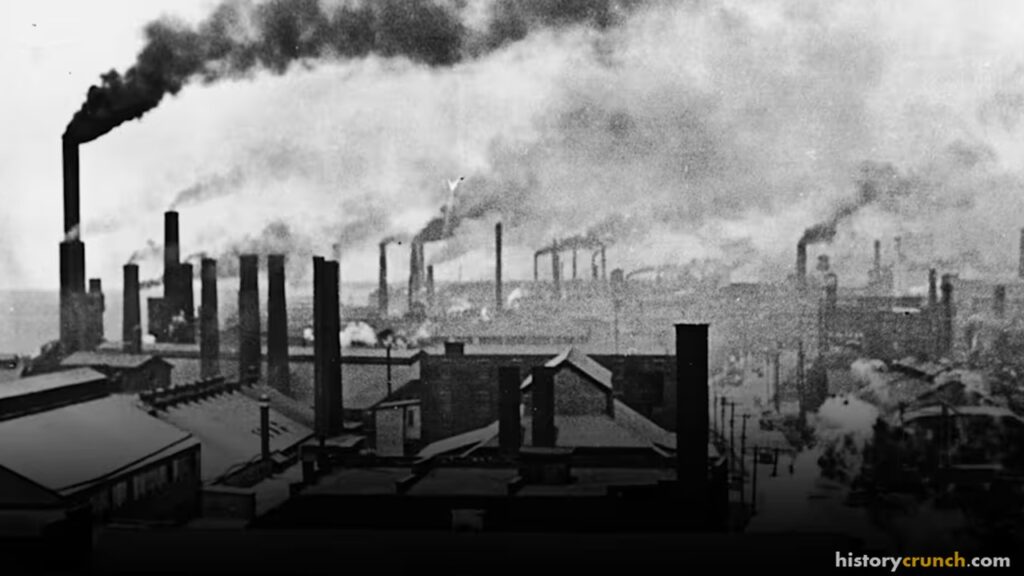
The Industrial Revolution is a controversial event in history because it involved so many negative aspects, such as: child labor, poor living conditions and poor working conditions. However, it’s important to note that several positive elements also emerged from the time period of industrialization. The main positive factor of the Industrial Revolution was that it led to the improved quality of life for people today. This improvement can be seen in our modern access to many different types of mass produced goods. A main feature of the Industrial Revolution was that it introduced the factory system.
 FactsthatCrunch
Changes to Manufacturing
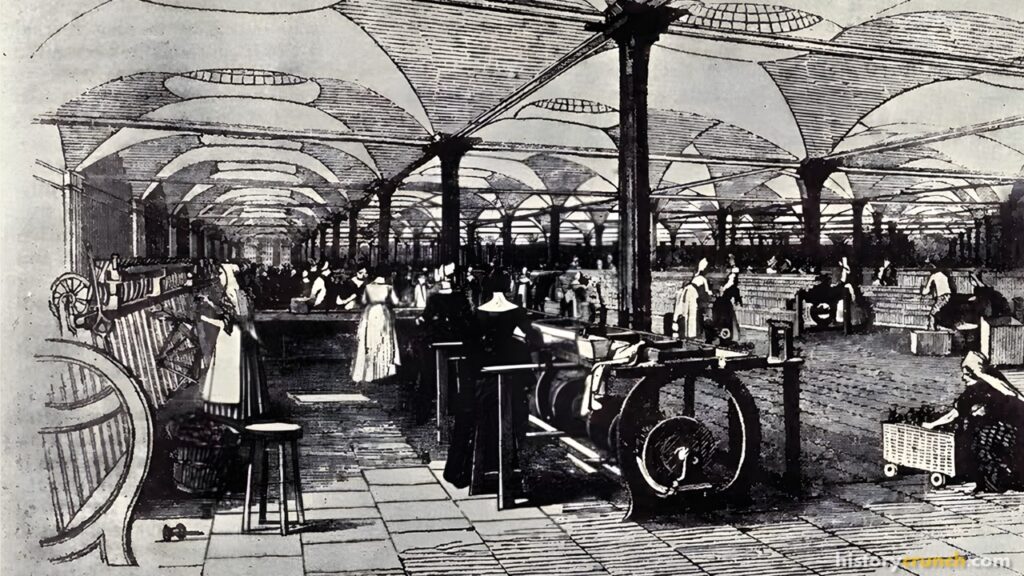
Before the start of the Industrial Revolution, the production of goods was done on a very small scale. Historians refer to this method of production as the ‘cottage industry’. Simply put, the cottage industryA period when goods for sale were made on a small scale, usually inside a home or farm, before factories existed. refers to a period of time in which goods for sale were produced on a small scale, usually in a home. In this system, people produced goods, such as wool, in their homes or on their own farms and then sold them to local communities since long distance transportation was uncommon. This method of production was slow and inefficient and struggled to keep pace with the growing demand caused by the increased population. As a result, entrepreneursPeople who seek new ways to do business or create inventions, often to increase production or earn wealth. and inventors sought ways to increase production, which ultimately led to the creation of the factory system. The factory systemThe development of centralized factories or mills that produced goods on a large, mass scale instead of in homes. is a term that historians use to refer to the development of centralized factories or mills that produced goods on a mass scale. Ultimately, the factory system led to faster production, which has helped mass produce everything from cell phones to healthcare equipment. As a result, this has improved the lives of most people and allowed them access to a greater variety of goods that has enhanced their quality of life.
 FactsthatCrunch
What really pushed Britain's cottage industry toward the factory system during the Industrial Revolution?
Technological Innovations
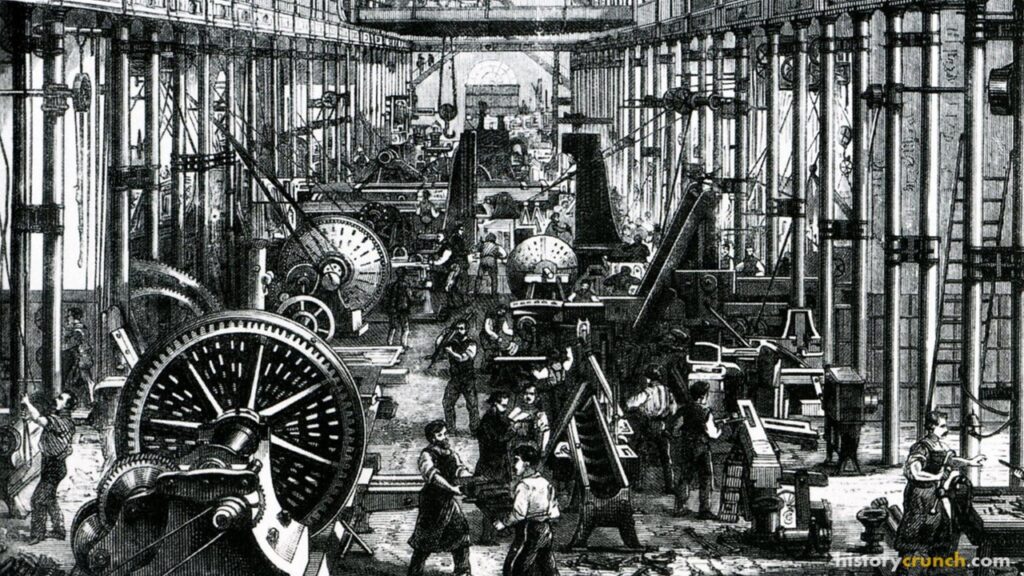
Furthermore, as part of the development of the factory system, the Industrial Revolution also led to many new technological innovations. This trend continues still today with entrepreneurs constantly working to develop new technologies and inventions. For example, the following inventions were introduced during the timeframe of the Industrial Revolution: spinning jenny, power loom, flying shuttle, water frame and the steam engine. These inventions increased industrial outputThe total amount of goods that industry is able to produce using machines and factories. and allowed the creation of new goods which improved life for people at the time. As well, the development of factories and mines in the Industrial Revolution also provided jobs for the working class people. While the jobs had many issues, they provided the people with a basic income that helped cover the costs of daily life. Furthermore, the wealthy business owners who established the factories and mines in the Industrial Revolution were able to earn large amounts of wealth by selling the goods. This allowed industrialized countries such as Britain to become very wealthy.
 FactsthatCrunch
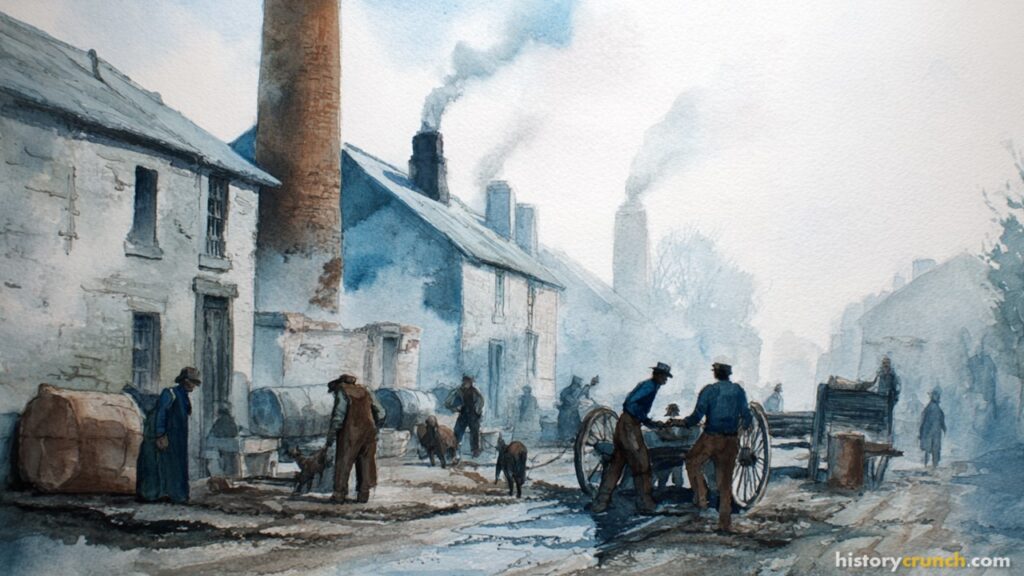
The Industrial Revolution changed everyday life for working-class people in Britain and beyond, bringing new jobs and goods but also harsh conditions and serious costs.
Growth of Labor and Rights Movements
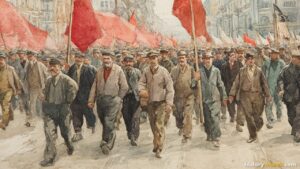
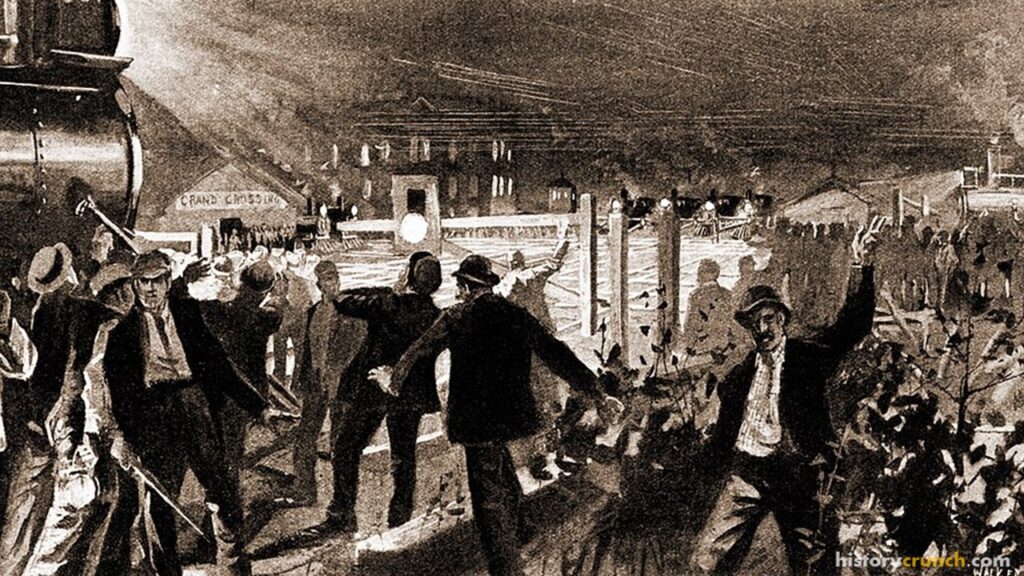
Finally, as stated above, there were many negative elements in the Industrial Revolution, such as: child labor, poor working conditions and poor living conditions. However, a positive outcome of the Industrial Revolution was the societal changes that occurred to correct these issues. For example, the Industrial Revolution led to many of the following: the growth of socialist movements and labor movements, feminist movements, improved worker’s rights, and improved pay. These major impacts of the Industrial Revolution led to many societal improvements such as: ending child labor, improved working and living conditions, worker’s rights and the growth of labor unionsGroups formed by workers to collectively push for improved working conditions, pay, and rights from employers.. Click on the previous links to learn more about each.
 FactsthatCrunch
What did labor unions form to do during the Industrial Revolution?
Key Vocabulary
Cottage industry
Factory system
Entrepreneurs
Industrial output
Labor movements
Labor unions
Frequently Asked Questions
What were the main positive impacts of the Industrial Revolution?
The Industrial Revolution improved quality of life by making mass produced goods widely available. It also created the factory system, sparked many new inventions, and provided jobs for working class people. Over time, it led to labor movements and stronger workers’ rights.
How did the factory system change the way goods were made?
The factory system moved production from homes into large, centralized factories and mills. Before this change, goods were made slowly in homes through the cottage industry. Factories allowed goods to be made faster and on a much larger scale, which met the growing demand from a rising population.
What inventions came from the Industrial Revolution?
Key inventions included the spinning jenny, power loom, flying shuttle, water frame, and steam engine. These machines increased how much industry could produce and helped create new goods. The push to invent new technology still continues in the modern world today.
How did the Industrial Revolution lead to better workers’ rights?
The harsh conditions of the era caused people to push for change, which led to stronger workers’ rights. This included the growth of labor unions, socialist movements, and feminist movements. These efforts helped end child labor and improved both working and living conditions.
Where and when did the Industrial Revolution begin?
The Industrial Revolution first began in Britain during the 18th century. It then spread through the following centuries and reshaped many nations around the world. It changed European and North American societies from farming based economies to ones based on industrial production.
Cite This Article
To cite this article as a source, use one of the formats below.
MLA: Beck, Elias. “Positive Impacts of the Industrial Revolution: A Detailed Summary.” HistoryCrunch, 27 September 2026, https://historycrunch.com/positive-impacts-of-the-industrial-revolution/.
APA: Beck, E. (2026). Positive Impacts of the Industrial Revolution: A Detailed Summary. HistoryCrunch. https://historycrunch.com/positive-impacts-of-the-industrial-revolution/
Chicago: Beck, Elias. “Positive Impacts of the Industrial Revolution: A Detailed Summary.” HistoryCrunch. September 27, 2026. https://historycrunch.com/positive-impacts-of-the-industrial-revolution/
Sources
- Fordham Modern History Sourcebook
- The Science Museum Group
- Joel Mokyr, The Enlightened Economy.