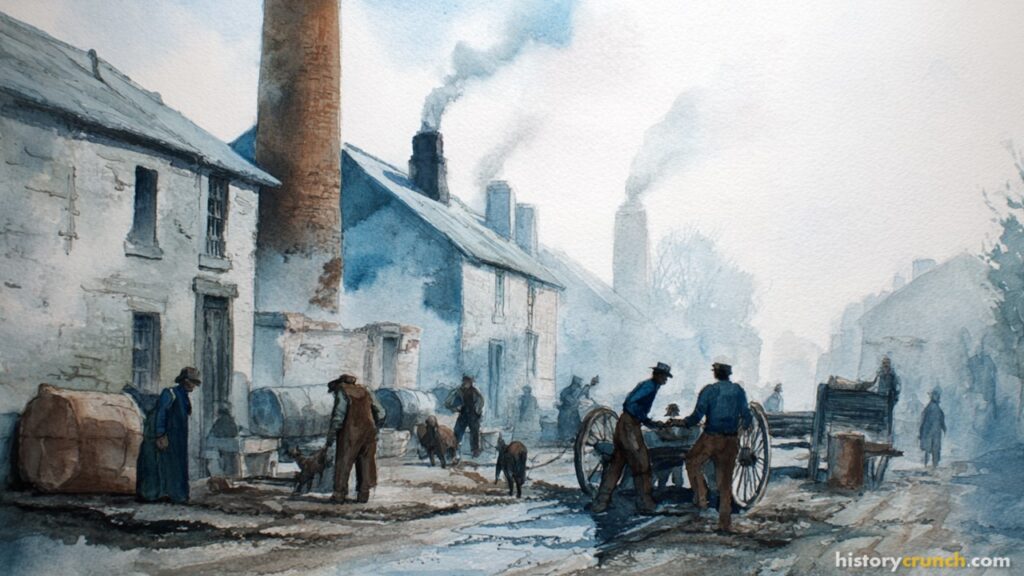
Daily life in the Industrial Revolution was difficult for the working-class people of the time. The Industrial Revolution, which began in the late 18th century and continued into the centuries that followed, brought about profound changes in society, technology, and the economy. While it led to significant advancements and increased productivity, it also had a profound impact on the daily lives of working-class people. This article explores into the day-to-day experiences of these individuals, focusing on their working conditions, living conditions, and family experiences.
 FactsthatCrunch
 Black & whiteColor
Daily Life in the Industrial Revolution – Working Conditions
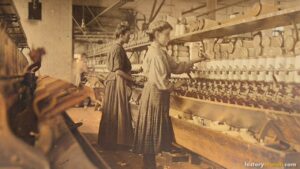
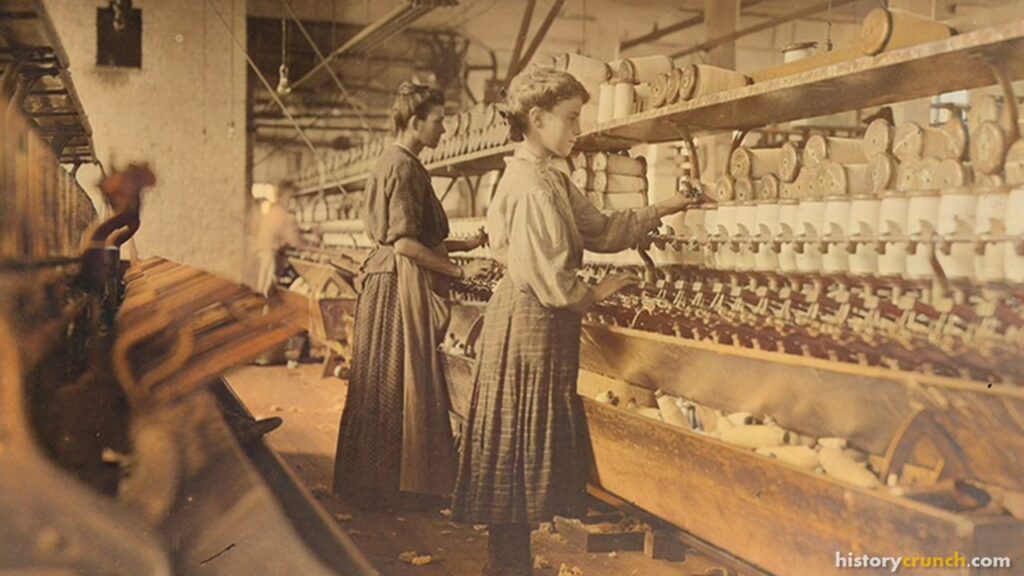
For the working class, the Industrial Revolution meant long hours in factories, mills, and mines. Factories were often dangerous places, with machinery that could cause serious injuries. Workers, including women and children, typically worked 12 to 16 hour days with minimal breaks. The monotonousSo repetitive and unchanging that it becomes exhausting and dulling over long periods. and grueling nature of factory work, combined with poor ventilation and unsafe conditions, made these environments particularly harsh.
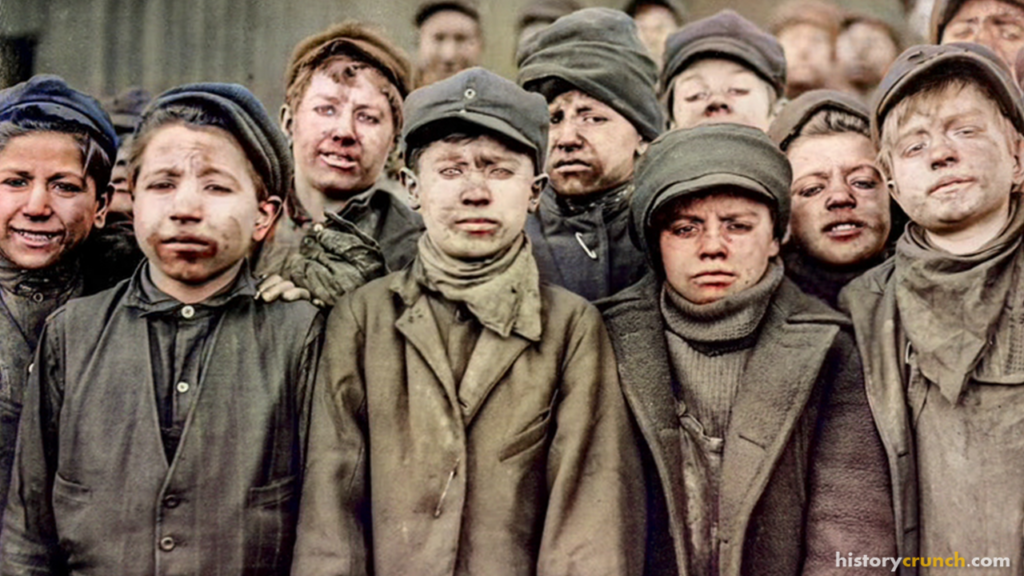
Working in mines was another common occupation for the working-class. Miners faced extreme dangers, including cave-ins, explosions, and respiratory diseasesIllnesses that damage the lungs and breathing, often caused by inhaling harmful substances like coal dust. caused by coal dust. The physically demanding and dangerous nature of mining work, combined with long shifts underground, made it one of the most challenging jobs of the era.
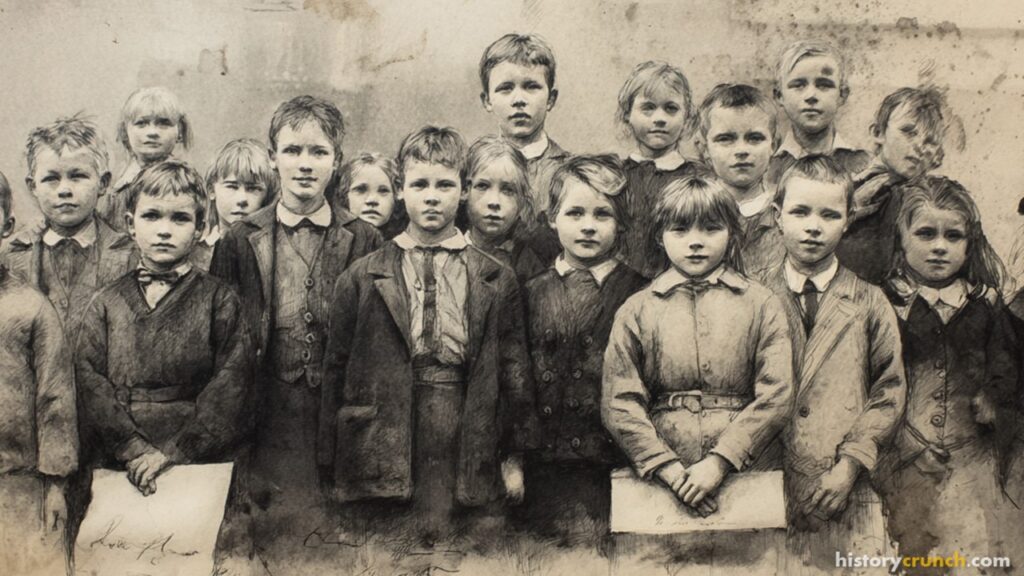
Child labor was a grim reality during the Industrial Revolution. Children as young as five or six were employed in factories and mines due to their small size and the ability to pay them lower wages. They performed various tasks, from operating machinery to crawling into narrow mine shafts to retrieve coal. The long hours and hazardous conditions took a severe toll on their health and development.
Daily Life in the Industrial Revolution – Living Conditions
Daily life in the Industrial Revolution also included the difficult living conditions experienced by the working-class people. For instance, they often faced crowded housing, poor health standards, a lack of proper sanitationSystems and practices for managing sewage and clean water to prevent the spread of disease., and poor diet and nutrition.
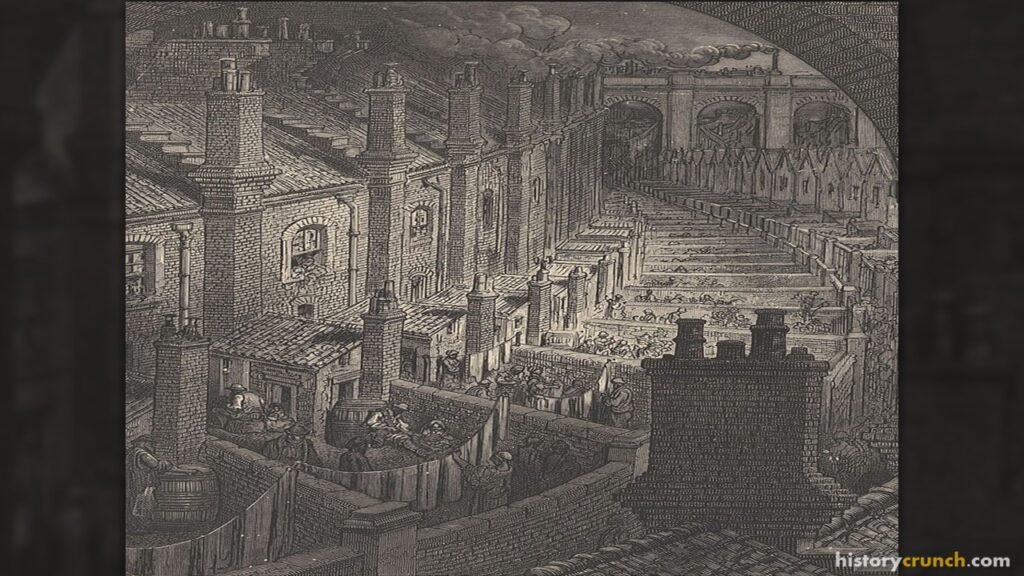
Rapid urbanizationThe rapid growth of cities as large numbers of people move from rural areas to urban ones to find work. during the Industrial Revolution led to overcrowded and unsanitary living conditions for the working class. Families often lived in cramped, poorly constructed tenementsPoorly built, overcrowded apartment buildings that housed many working-class families with shared and inadequate facilities. with inadequate ventilation and sanitation. Multiple families might share a single room, and facilities like bathrooms and kitchens were communal and often insufficient for the population.
The poor living conditions contributed to widespread health problems. For instance, a lack of clean water and proper sewage systems led to frequent outbreaks of diseases such as cholera, typhoid, and tuberculosis. High infant mortality rates were common, and life expectancy for working-class individuals was significantly lower compared to the wealthier classes.
The diet of working-class families was typically poor and lacked nutritional variety. Bread, potatoes, and occasional meat were the staples, while fruits and vegetables were rare or not possible. MalnutritionA condition caused by not eating enough of the right foods, leading to serious health problems especially in children. was prevalent, particularly among children, which further increased health issues and reduced the ability of individuals to withstand the requirements of their work environments.
 FactsthatCrunch
Daily Life in the Industrial Revolution – Family Experiences
Industrialization brought about significant changes in family dynamics. Unlike agrarian societies where families worked together on farms, industrial work often separated family members for long periods. Men, women, and children worked in different factories or mines, and the long hours meant that family interactions were limited.
Women played a crucial role in the industrial workforce. They were employed in factories, particularly in the textile industry, and often worked the same long hours as men for lower wages. Despite their contributions, women faced significant challenges, including exploitation and lack of rights. The dual burden of factory work and domestic responsibilities placed immense strain on their lives.
With both parents working, childcare became a significant issue. Older children often took care of their younger siblings, or families relied on informal networks of neighbors and relatives. Education for working-class children was limited, with many receiving only a few years of schooling before entering the workforce. However, the growing recognition of the importance of education eventually led to the establishment of Sunday schools and early forms of public schooling.
 FactsthatCrunch
Daily Life in the Industrial Revolution – Social Life
Despite the hardships, working-class communities developed strong social networks. These networks provided mutual support and solidarityA sense of unity and mutual support shared among people facing similar hardships or challenges., helping individuals cope with their challenging circumstances. For instance, community gatherings, religious services, and local events offered moments of socialization.
Leisure activities for the working class were limited but important for their well-being. Pubs and music halls were popular venues for relaxation and entertainment. Sports, particularly football and cricket, gained popularity and provided a sense of community and identity. The few leisure hours workers had were precious and often spent with family and friends.
Finally, religion played a significant role in the lives of the working-class. Churches and chapels were centers of community life, offering not only spiritual guidance but also practical support.
 FactsthatCrunch
Which two team sports grew into major working-class pastimes in industrial Britain during the 1800s?
Key Vocabulary
Monotonous
Sanitation
Tenements
Malnutrition
Respiratory diseases
Urbanization
Solidarity
Frequently Asked Questions
How many hours did factory workers work during the Industrial Revolution?
Working-class people usually worked 12 to 16 hours a day with very few breaks. This was true for men, women, and children alike. Factories were often hot, loud, and poorly ventilated. The long shifts and dangerous machines made the work exhausting and unsafe.
Why were children used as workers in factories and mines?
Children were hired because they were small and could be paid much less than adults. Some were only five or six years old. Their size let them crawl into narrow mine shafts or reach into machines. The long hours and hazards badly harmed their health and growth.
What were living conditions like for the working class?
Working-class families often lived in crowded, poorly built tenements with little fresh air. Several families might share one room, and bathrooms and kitchens were shared. There was rarely clean water or proper sewage. These conditions spread disease and made daily life very hard.
What diseases were common among industrial workers?
Cholera, typhoid, and tuberculosis were common because of dirty water and poor sanitation. Crowded housing let sickness spread quickly from person to person. Infant deaths were high, and workers often died younger than wealthy people. A poor diet made these health problems even worse.
How did the Industrial Revolution change family life?
The Industrial Revolution often separated family members for long hours each day. In farming life, families had worked together, but now they labored in different factories or mines. Older children often cared for younger siblings while parents worked. This left little time for families to spend together.
What did workers do for fun during the Industrial Revolution?
Leisure time was short, but pubs and music halls were popular places to relax. Sports like football and cricket grew and gave people a sense of community. Churches and chapels also brought neighbors together for support. These few free hours were valued and usually spent with family and friends.
Cite This Article
To cite this article as a source, use one of the formats below.
MLA: Woida, K.L. “Daily Life in the Industrial Revolution: A Detailed Summary.” HistoryCrunch, 25 September 2026, https://historycrunch.com/daily-life-in-the-industrial-revolution/.
APA: Woida, K. L. (2026). Daily Life in the Industrial Revolution: A Detailed Summary. HistoryCrunch. https://historycrunch.com/daily-life-in-the-industrial-revolution/
Chicago: Woida, K.L. “Daily Life in the Industrial Revolution: A Detailed Summary.” HistoryCrunch. September 25, 2026. https://historycrunch.com/daily-life-in-the-industrial-revolution/
Sources
- The Science Museum Group
- Emma Griffin, A Short History of the British Industrial Revolution.
- Robert C. Allen, The Industrial Revolution: A Very Short Introduction.