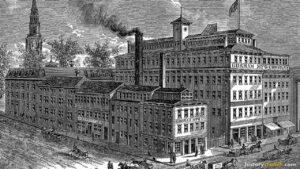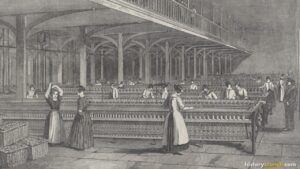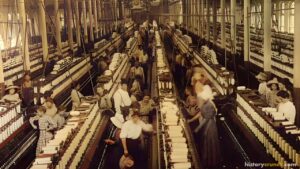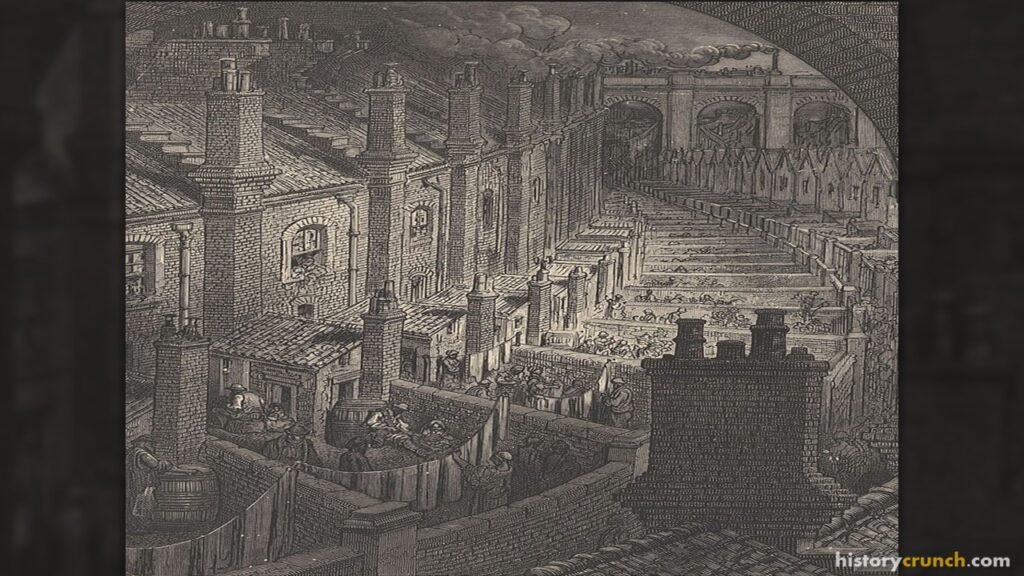
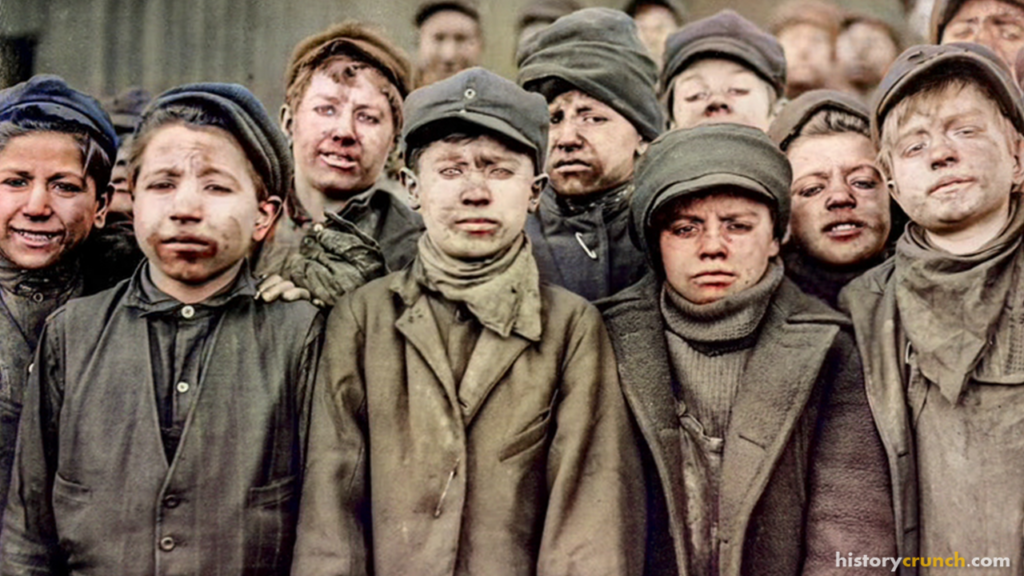
The Industrial Revolution began in Britain in the 1700s and had a profound impact on the world. One of the main impacts it had was how it changed life for working-class people. First, the workers were exposed to horrendous working conditions in the factories and mines that emerged in the early years of the revolution. These factories and mines were dangerous and unforgiving places to work in. The working conditions that working-class people faced were known to include: long hours of work (12-16 hour shifts), low wages that barely covered the cost of living, dangerous and dirty conditions and workplaces with little or no worker rights. The next issue that working people had to face was the equally horrible living conditions in industrial towns and cities. The living conditions in the cities and towns were miserable and characterized by: overcrowding, poor sanitationSystems for safely removing human waste and keeping living areas clean enough to prevent disease., spread of diseases, and pollution. As well, workers were paid low wages that barely allowed them to afford the cost of living associated with their rent and food.
 FactsthatCrunch
Cholera first reached Britain in 1831 and killed tens of thousands of people, yet Parliament did not pass a national Public Health Act until 1848, when a second cholera epidemic was already on its way.
Cholera spread rapidly through industrial towns because sewage ran openly into the same rivers and wells that people drank from. The disease killed victims within hours and hit working-class neighborhoods hardest, yet many members of Parliament resisted a national health law for years, arguing it interfered with local control and private property. The arrival of a new cholera epidemic in 1848 finally forced Parliament to act, creating the General Board of Health to oversee sanitation across England and Wales.
Living Conditions in Industrial Towns – Overcrowding
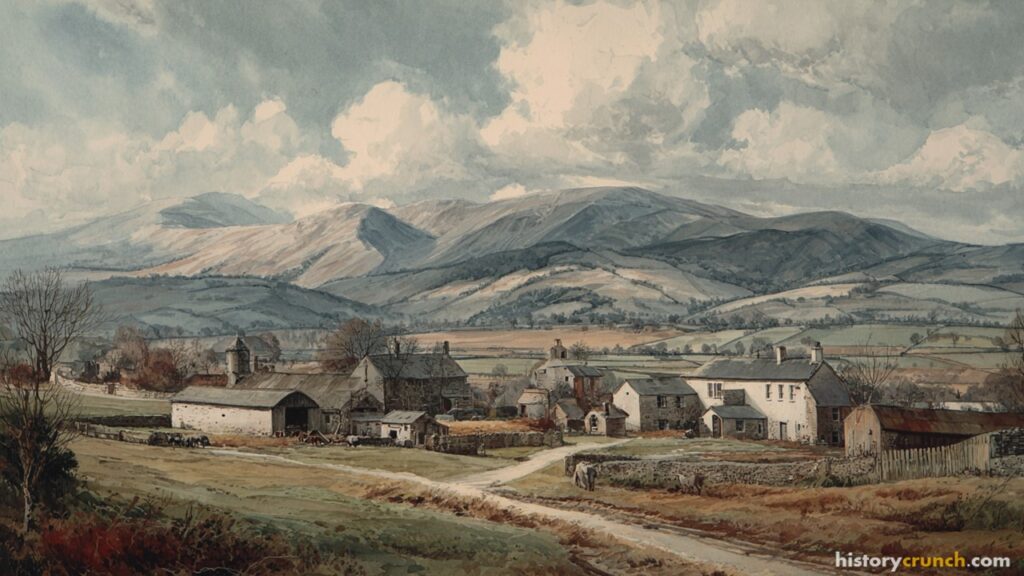
The Industrial Revolution began in Britain in the 18th century due in part to an increase in food production, which was the key outcome of the British Agricultural Revolution. As such, the Agricultural Revolution is considered to have begun in the 17th century and continued throughout the centuries that followed, alongside the Industrial Revolution. Through different measures, such as the Enclosure Movement, many farmers and their families were forced from their land and moved to more populated centers in search of work. As a result, industrial cities and towns grew dramatically due to the migrationThe movement of large numbers of people from one place to another, here from farms to industrial cities. of farmers and their families who were looking for work in the newly developed factories and mines. For example, in 1750 nearly 80 percent of the population in Britain lived on farms, but by 1850 that number was cut to just 50%. Along with the mass migration of people, Britain also experienced a rather large population boom in the early years of the Industrial Revolution. The increased food production of the Agricultural Revolution led to this increase, and allowed British families to expand. For example, in 1700 the total population of England and Wales was around 5.5 million people, but it soon expanded. Just 100 years later the population had increased to over 9 million and by 1840 it was nearly 16 million. Due to the increased population and the poverty of most working-class families, it was common for large families to live in relatively small rooms. This population increase combined with the mass migration of people greatly impacted the living conditions for people in industrial Britain.
 FactsthatCrunch
The population of England and Wales grew from roughly 5.5 million in 1700 to nearly 16 million by 1841, even as disease and dangerous conditions killed large numbers of working-class people in industrial towns.
More food from the Agricultural Revolution helped more families survive and grow. By the first census in 1801 the population was already close to 9 million, so it had nearly doubled in about a century. That rapid rise packed more people into towns where poor sanitation and disease kept death tolls high, yet births continued to outpace deaths across the period.
Living Conditions in Industrial Towns – Poor Sanitation
A common feature of industrial cities and towns was the construction of inexpensive and poorly built row housing, intended for working-class people. Wealthy factory owners and entrepreneurs constructed the homes for their workers but also used the homes as a means of making more profit. The homes were often referred to as back-to-back terracesCheaply built row houses joined on all sides except the front, with poor ventilation and no running water. because they were literally built side-by-side and connected to one another. The only part of the home that was not connected to another was the front. The homes were made with the cheapest materials available and had windows only at the front, with no proper ventilationThe circulation of fresh air through a building, which these homes lacked entirely.. As well, most of the homes were built without running water or sanitation. As a result, many people were unable to properly bathe and thus suffered from very poor hygiene.
 FactsthatCrunch
What were the key features of back-to-back terraces in Industrial Revolution Britain?
Living Conditions in Industrial Towns – Spread of Diseases
The lack of sanitation during the Industrial Revolution also led to the spread of diseases. Since most homes did not have running water or sanitation, people resorted to dumping their filth and waste into the street. This made the streets of industrial towns incredibly dirty places to live but also allowed communicable diseasesAn illness that passes easily from one person to another, spread here by filth in the streets. to spread easily from one individual to another. Pits were sometimes established in communities to accommodate the building waste, and property owners would sometimes pay to remove the filth. However, often, much of the filth was emptied into the local rivers, making them horribly polluted.
Why did communicable diseases spread so easily in industrial towns?
Living Conditions in Industrial Towns – Pollution
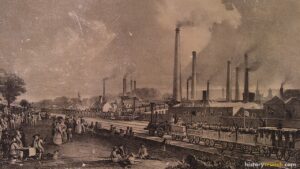
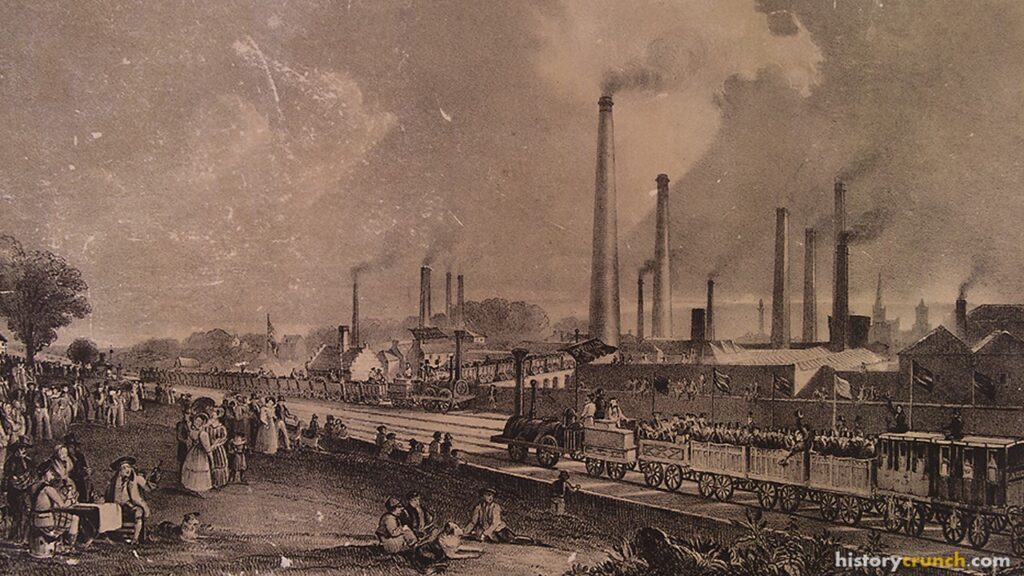
Pollution was one of the most recognizable aspects of industrial cities and towns. Not only were the streets and waterways heavily polluted with human waste and garbage, but the air was also heavily polluted. Throughout the 18th and 19th centuries, wealthy businessmen established countless factories and mines throughout Britain. These factories produced large amounts of air pollution from the burning of coal. Coal was easily the most used fuel during the Industrial Revolution, since it was needed to power the newly developed steam engines. However, coal is also known as a heavy air pollutant since when it is burned it sends small particles into the air. As a result, the numerous factories in the city centers caused the air quality to be horrible and gave industrial cities and towns a characteristic ‘smogA thick, dirty haze of air pollution caused by burning coal in factories that hung over industrial cities.’ that seemed to hover over them.
 FactsthatCrunch
Living Conditions in Industrial Towns – Summary
In conclusion, life in the towns and cities of the Industrial Revolution was difficult for working-class people. They were often forced to live in cramped conditions that lacked basic sanitation and running water. As a result, this led to the easy spread of diseases among the people and worsened the pollution that was already a large problem in the city. The people had little ability to solve these problems as they paid so little that they struggled to even afford their current lifestyles.

Industrial Revolution timeline · 1760 – 1840
Key Vocabulary
Enclosure Movement
Sanitation
Back-to-back terraces
Ventilation
Communicable diseases
Smog
Frequently Asked Questions
What were living conditions like in industrial towns?
Living conditions in industrial towns were miserable and overcrowded for most working-class families. Homes lacked running water, sanitation, and proper ventilation, which caused poor hygiene. Disease spread easily, and thick smog from coal-burning factories filled the air. Low wages left families unable to fix any of these problems.
Why did industrial towns and cities become so overcrowded?
Towns became crowded because huge numbers of people moved there in search of factory work. The Enclosure Movement pushed many farmers off their land, so they migrated to cities. England and Wales also had a population boom, growing from about 5.5 million in 1700 to nearly 16 million by 1841. Poor families often crowded into small rooms.
What were back-to-back terraces?
Back-to-back terraces were cheap row houses built side-by-side and joined together for working-class people. Only the front of each home was not connected to another building. Factory owners built them with the cheapest materials to make extra profit. Windows could only face the front, so most had poor ventilation, and most had no running water or sanitation.
Why did diseases spread so easily in industrial towns?
Diseases spread easily because most homes had no running water or proper sanitation. People dumped their waste directly into the streets, which became filthy and dirty. This let sicknesses pass quickly from one person to the next. Much of the waste was also emptied into local rivers, polluting the water supply.
What caused the pollution in industrial cities?
Pollution came mainly from factories burning coal to power steam engines. Coal was the most common fuel of the Industrial Revolution, but it releases tiny particles when burned. This gave cities a heavy smog that seemed to hang over them. Human waste and garbage also polluted the streets and waterways.
How long were working hours during the Industrial Revolution?
Workers often labored for 12 to 16 hours each shift in factories and mines. These workplaces were dangerous, dirty, and offered little or no worker rights. Wages were so low that they barely covered rent and food. Poor pay meant families struggled to escape their harsh living conditions.
Cite This Article
To cite this article as a source, use one of the formats below.
MLA: Beck, Elias. “Living Conditions in Industrial Towns: A Detailed Summary.” HistoryCrunch, 25 September 2026, https://historycrunch.com/living-conditions-in-industrial-towns/.
APA: Beck, E. (2026). Living Conditions in Industrial Towns: A Detailed Summary. HistoryCrunch. https://historycrunch.com/living-conditions-in-industrial-towns/
Chicago: Beck, Elias. “Living Conditions in Industrial Towns: A Detailed Summary.” HistoryCrunch. September 25, 2026. https://historycrunch.com/living-conditions-in-industrial-towns/
Sources
- Fordham Modern History Sourcebook
- Emma Griffin, A Short History of the British Industrial Revolution.
- The Science Museum Group