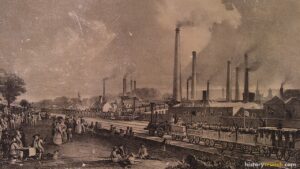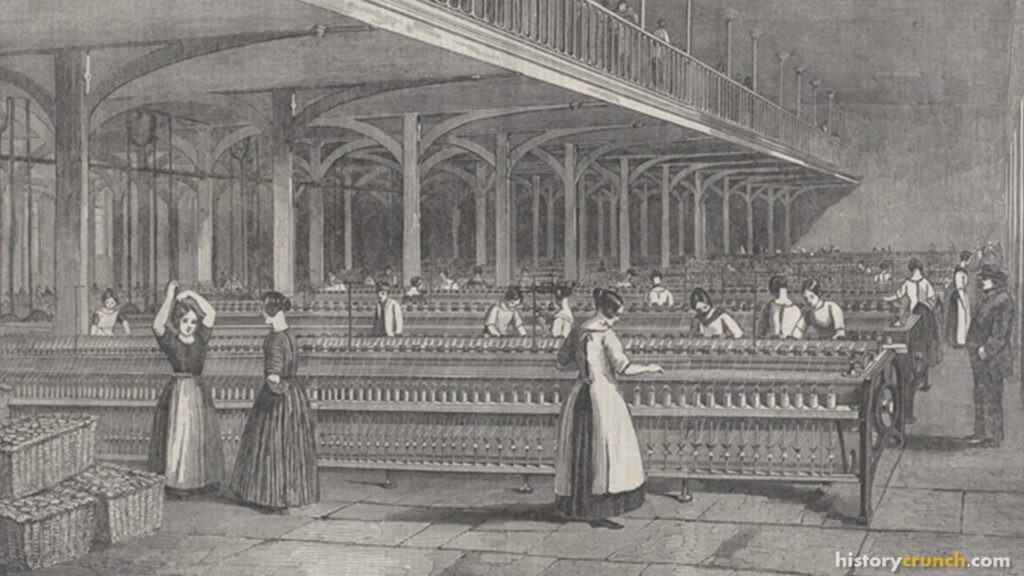
The Factory Acts in the Industrial Revolution were developed in response to the dire working conditions that emerged in industrial cities of the time. They were a series of legislative acts known as the ‘Factory Acts’ and were introduced in Britain, which was the first country to undergo industrialization. These acts were important in improving working conditions, regulating child labor, and laying the groundwork for modern labor laws.
What Led to the Factory Acts in the Industrial Revolution?
The Industrial Revolution began in Britain in the 18th century and had several different causes. One of the primary causes of the Industrial Revolution was the emergence of laissez-faire capitalism as an economic system. Laissez-faire capitalismAn economic system where the government stays out of economic decisions as much as possible, letting businesses act freely. is a highly individualistic ideology in which the government plays as little a role as possible in the economic decisions of a country. Historians often refer to the ideology of the Industrial Revolution as classical liberalism since it included the principles of laissez-faire capitalism while also still allowing basic individual rights.
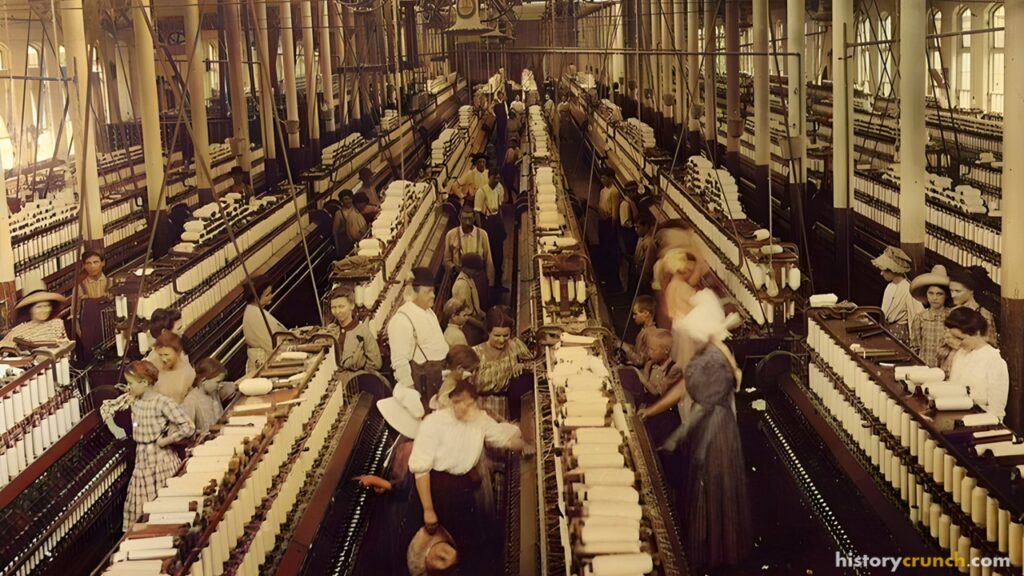
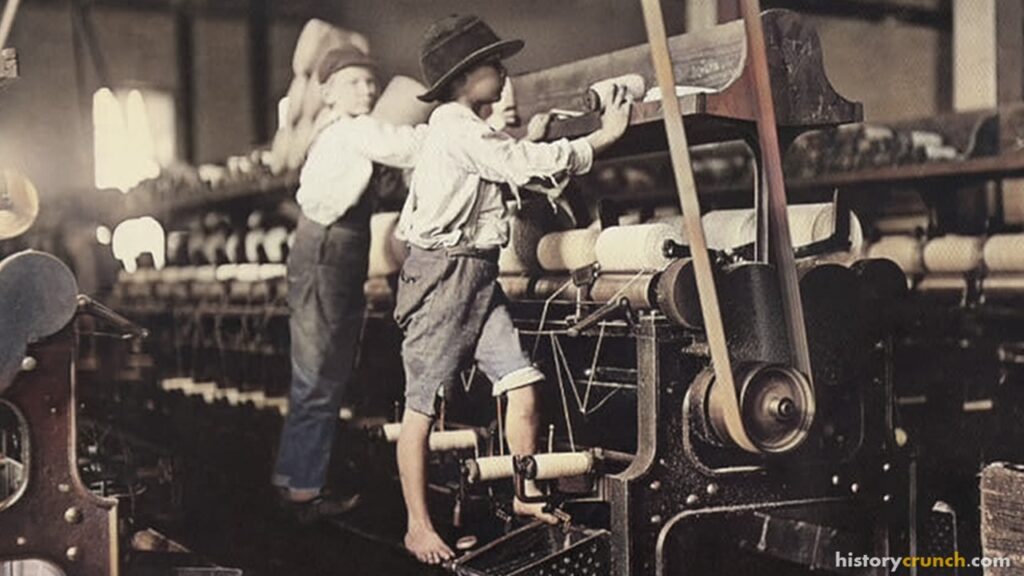
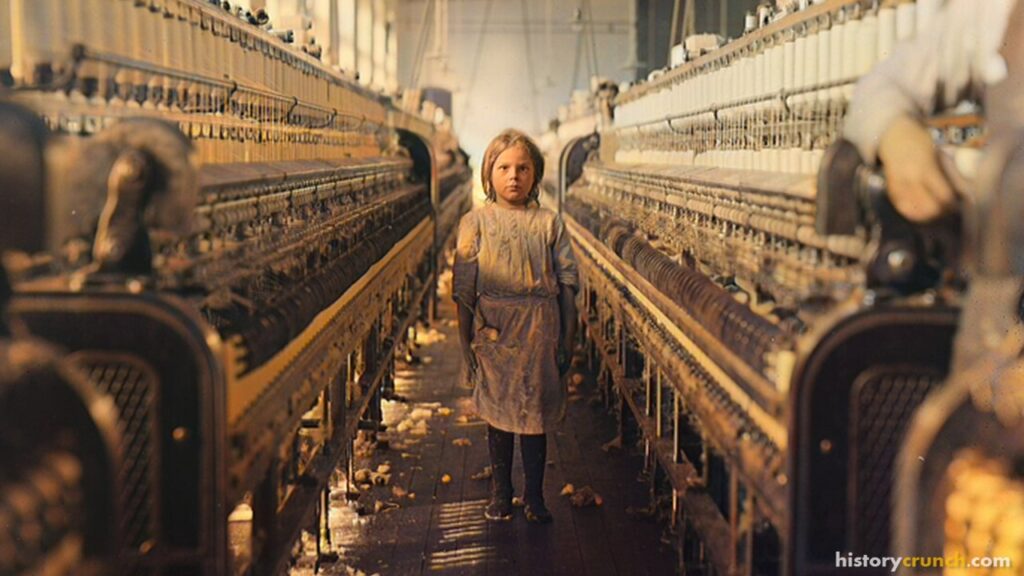
This political and economic climate created a situation in which wealthy factory and mine owners were able to exploitTo use people unfairly for one’s own gain, as factory owners did with working-class laborers and children. working-class people. As a result, this led to horrible working conditions for the people of the Industrial Revolution. For example, child labor was a common feature of the Industrial Revolution with children as young as four working in dirty and dangerous conditions without protection from the government. As time passed, the government was pressured to place limits on this exploitation.
 FactsthatCrunch
Summary of the Factory Acts in the Industrial Revolution
The first major legislation created to place limits on child labor were a series of Factory Acts passed by the British parliament throughout the 1800s. These acts limited the number of hours that children could work and placed regulations on workplaces in terms of safety and cleanliness. For example, by 1819, the Factory Acts limited the workday for British children at 12 hours. By 1833, child labor was further regulated when it became illegal for children under 9 years old to work, and children under 13 were not allowed to work more than nine hours a day (48 hours a week).
FactsthatCrunchFactory Act of 1802
The earliest of these acts was the Factory Act of 1802. The act included the following basic principles:
- The master or mistress of the factory must observe the law.
- All rooms in a factory are to be lime-washedCoated with a whitening solution made from lime, required twice a year in factories to maintain cleanliness. twice a year and duly ventilatedSupplied with fresh air through openings or airflow, required in factory rooms under the 1802 act..
- Every apprenticeA young worker bound to a master to learn a trade, regulated under the Factory Act of 1802. is to be supplied with two complete suits of clothing with suitable linen, stockings, hats and shoes.
- The hours of work of apprentices are not to exceed twelve a day, nor commence before six in the morning, nor end after nine at night.
- They are to be instructed every working day during the first four years of apprenticeship in reading, writing and arithmetic.
FactsthatCrunchThe Factory Act of 1802 set the first legal rules for child apprentices in British factories, but it left many gaps that factory owners could easily avoid.
Factory Act of 1833
There were several more Factory Acts that occurred throughout the rest of the 1800s, but they all generally focused on reducing the working hours of children and improving the conditions of industrial workers. For example, the Factory Act of 1833 included the following provisionsSpecific rules or requirements written into a law, such as those listed in the Factory Act of 1833.:
- Children under the age of nine could not be employed in textile factories.
- Children under eighteen years of age must not work after 8:30 pm and before 5:30 am.
- Children between the ages of nine and thirteen must not work more than nine hours a day (48 hours a week) and must be provided with an hour lunch break.
- Children between the ages of nine and thirteen could only be employed provided they also had two hours of education per day.
- Children between the ages of thirteen and eighteen must not work more than twelve hours per day and they must also be given an hour lunch break.
- Factories were to be subject to regular inspections.
Under the Factory Act of 1833, did each rule below apply to children aged 9 to 12, or to young people aged 13 to 17?
Industrial Revolution timeline · 1760 – 1840
Key Vocabulary
Laissez-faire capitalism
Classical liberalism
Exploit
Apprentice
Lime-washed
Ventilated
Provisions
Frequently Asked Questions
What were the Factory Acts?
The Factory Acts were a series of laws passed in Britain during the 1800s to improve working conditions. They limited the hours that children could work and set rules for safety and cleanliness in factories. These laws helped lay the groundwork for modern labor laws.
Why were the Factory Acts needed?
The Factory Acts were needed because factory owners exploited working-class people in dangerous conditions. The economic system of the time gave the government little role in protecting workers. As a result, children as young as four worked long hours without any safeguards.
What did the Factory Act of 1802 do?
The Factory Act of 1802 was the earliest of these laws and set basic rules for apprentices. It limited their workday to twelve hours and required rooms to be lime-washed and ventilated. It also called for apprentices to receive clothing and lessons in reading, writing, and arithmetic.
What did the Factory Act of 1833 change?
The Factory Act of 1833 made it illegal for children under nine to work in textile factories. Children between nine and thirteen could work no more than 48 hours a week and had to receive two hours of education each day. The act also required factories to be inspected regularly.
How did the Factory Acts affect child labor?
The Factory Acts slowly reduced child labor by setting age limits and shorter working hours. By 1819, children could work no more than twelve hours a day. By 1833, children under nine were banned from working in textile factories entirely.
Cite This Article
To cite this article as a source, use one of the formats below.
MLA: Beck, Elias. “Factory Acts in the Industrial Revolution: A Detailed Summary.” HistoryCrunch, 25 September 2026, https://historycrunch.com/factory-acts-in-the-industrial-revolution/.
APA: Beck, E. (2026). Factory Acts in the Industrial Revolution: A Detailed Summary. HistoryCrunch. https://historycrunch.com/factory-acts-in-the-industrial-revolution/
Chicago: Beck, Elias. “Factory Acts in the Industrial Revolution: A Detailed Summary.” HistoryCrunch. September 25, 2026. https://historycrunch.com/factory-acts-in-the-industrial-revolution/
Sources
- Joel Mokyr, The Enlightened Economy.
- Fordham Modern History Sourcebook
- Robert C. Allen, The Industrial Revolution: A Very Short Introduction.