UtopianA label meaning unrealistic or idealistic, used by Engels to criticize early socialists who hoped for peaceful, voluntary change. Socialism was an early form of socialism that emerged in the early 19th century, primarily in Britain and France. Utopian Socialists believed that the problems created by capitalism during the Industrial Revolution, including poverty, inequality, and poor working conditions, could be solved by creating ideal communities based on the principles of cooperation and shared ownership. Unlike later forms of socialism, Utopian Socialists did not believe that violent revolution or class struggle was necessary. Instead, they believed that if people could see a better way of organizing society, they would voluntarily choose it. The term utopian socialism was made famous by the German philosopher Friedrich Engels to describe these early thinkers, distinguishing them from what he called scientific socialismThe approach to socialism developed by Marx and Engels, based on class struggle and historical analysis rather than ideal communities., which was the approach developed by Karl Marx and Engels himself.
 FactsthatCrunch
In 1825 Robert Owen spent much of his own fortune on a model community in Indiana, and it fell apart in about two years.
Owen bought the town of Harmony, Indiana, from a religious group called the Harmonists and renamed it New Harmony. He invited scientists, teachers, and workers to live and share property there, but the settlers argued constantly over rules, work, and leadership. By 1827 the experiment had broken into smaller groups, and Owen gave it up, having lost most of his wealth.
What Is Socialism?
Socialism is a political and economic system that focuses on the principles of economic equality, cooperation, and public ownership. As an ideology, socialism is based on collectivism, which is the belief that the goal of any society is to achieve the best common good for all or most citizens. This means that economic and political systems based on the principles of collectivismThe belief that society should work toward the best common good for all citizens rather than for individual gain., such as socialism, favor policies that allow for a degree of government or community intervention in the economy in order to promote the greatest good for the most people. Utopian Socialism was the earliest form of this overall socialist tradition and laid the groundwork for the many different types of socialism that developed throughout the 19th and 20th centuries.
FactsthatCrunchWhat are the main principles behind collectivism in socialist thought?
Utopian Socialism – Main Principles
The main principles of Utopian Socialism center on the idea that society can be peacefully transformed through the creation of cooperativeAn arrangement where people work together toward shared goals and own resources or businesses jointly rather than individually. communities that demonstrate a better way of living. There are several key features that most Utopian Socialist thinkers shared.
The most fundamental is the belief in cooperation over competition. Utopian Socialists argued that the competitive nature of industrial capitalism was the root cause of poverty, inequality, and social conflict. In fact, they believed that if people worked together toward shared goals rather than competing against each other for individual profit, the result would be a more just and prosperous society for everyone. Cooperation is the idea that citizens should work toward a common goal rather than competing against each other, and it is one of the central principles connecting Utopian Socialism to the broader socialist tradition.
A second key principle is the importance of community ownership. Utopian Socialists generally believed that land, factories, and other productive resources should be owned collectively by the community rather than by private individuals. For instance, both Robert Owen and Charles Fourier proposed communities in which property was shared and profits were distributed among all members based on their contributions rather than accumulated by a small group of wealthy owners.
A third key principle is peaceful change. Unlike the Marxist socialism that followed, Utopian Socialists did not believe that revolution or class warfare was necessary or desirable. They believed that if the advantages of cooperative living could be demonstrated in practice, people of all classes, including the wealthy, would see its benefits and choose to adopt it voluntarily. As stated above, this belief in peaceful transformation is one of the main reasons that later socialists labeled their ideas utopian, meaning unrealistic or idealistic.
A fourth key principle is the belief that the environment shapes human character. Most Utopian Socialists argued that poverty, crime, and selfishness were not natural features of human beings but were the product of a bad social environment. For instance, Robert Owen argued that if people were raised in decent conditions, given access to education, and freed from the degrading effects of poverty, they would naturally be cooperative, moral, and productive citizens.
FactsthatCrunchUtopian Socialists believed cooperation, not competition, was the key to solving the social problems of the Industrial Revolution. They argued that voluntary cooperative communities could replace the competitive market system without violent revolution.
Utopian Socialism – Origins and Causes
Utopian Socialism developed primarily as a response to the social problems caused by the Industrial Revolution. During the late 18th and early 19th centuries, the rapid growth of factories and industrial towns in Britain and France brought enormous wealth to factory owners but exposed millions of working-class people to brutal working conditions. Also, child labor was common and children worked long hours in dangerous factories. As well, workers suffered difficult living conditions and lived in overcrowded and unhealthy urban slums. Wages were low and working conditions were often dangerous and degrading.
The dominant economic thinking of the time, known as laissez-faire capitalism, argued that the government should not interfere in the economy and that the free market would eventually benefit everyone. Utopian Socialists rejected this view. They believed that laissez-faire capitalismAn economic idea that government should stay out of the economy and let the free market run without interference. was the direct cause of the suffering they saw around them, and that only a fundamental reorganization of society along cooperative lines could solve these problems.
The ideas of the Enlightenment also influenced Utopian Socialist thought. Enlightenment thinkers had argued that human reason could be used to improve society and create a more just world. Utopian Socialists shared this optimism about human progress and believed that rational planning and cooperative organization could replace the chaotic and unjust arrangements produced by unregulated capitalism.
FactsthatCrunchLaissez-faire capitalism is an economic system in which the government stays out of business and lets owners run their affairs without rules or interference. The core idea is that the economy works best when left alone, free from government regulation. During the Industrial Revolution, this belief meant factory owners could set wages, hours, and working conditions however they chose.
"Because laissez-faire capitalism was the accepted view in early industrial Britain, parliament passed very few laws to protect factory workers from dangerous conditions or unfair pay."
Utopian Socialism – Key Thinkers
The three most important founders of Utopian Socialism were Henri de Saint-Simon, Charles Fourier, and Robert Owen. Each had a different background and proposed somewhat different solutions, but all three shared the conviction that industrial capitalism needed to be fundamentally reformed in the direction of cooperation and equality.
Henri de Saint-Simon was a French philosopher born in 1760 who came from an aristocratic family. He argued that society should be reorganized so that it was governed by scientists, engineers, and industrialists rather than by hereditary nobles or politicians. Saint-Simon believed that the key problem of modern society was that productive workers, including both industrial laborers and managers, were exploited by a class of idle wealthy people who contributed nothing to society. He called for the state to take an active role in organizing economic life for the common benefit, and his ideas influenced many later socialist and reform movements. He died in 1825.
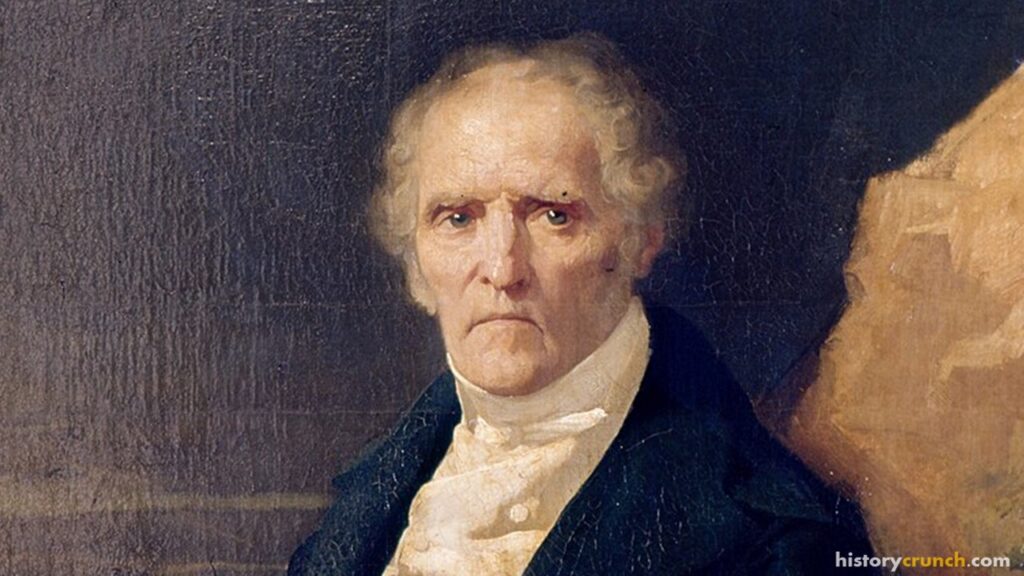
Charles Fourier was a French philosopher born in 1772 who worked as a traveling salesman and witnessed firsthand the contrast between the enormous wealth of merchants and manufacturers and the poverty of the workers around them. He proposed the creation of self-contained cooperative communities called phalansteriesSelf-contained cooperative communities proposed by Fourier where hundreds of families would live and work together., or phalanxes, in which several hundred families would live and work together. In a phalanstery, work would be allocated according to people’s natural interests and inclinations, and workers would be compensated partly based on the desirability of the work. For instance, dangerous or unpleasant jobs would receive higher pay. Fourier believed that such communities would allow people to develop their full potential and live in genuine harmony. His ideas inspired followers in France and the United States who attempted to build actual phalanx communities. In fact, the community of Utopia, Ohio was established in 1844 by Fourier’s followers in the United States, though it lasted only about two years. He died in 1837.
Robert Owen was a British factory owner born in 1771 who became one of the most practically influential of all the Utopian Socialists. As the manager of the large cotton mills at New Lanark in Scotland from 1800 onward, Owen implemented a series of reforms for his workers that were remarkable for their time. He reduced working hours, refused to employ children under the age of ten, built decent housing for workers, provided access to education, and established one of the first infant schools in Britain. The results at New Lanark attracted visitors from across Europe and seemed to prove that treating workers humanely was compatible with running a profitable business. Owen believed that human character was shaped almost entirely by environment, and that if people were given decent conditions they would become decent, productive members of society. He later attempted to establish an ideal cooperative community at New Harmony in Indiana in the United States, beginning in 1825. The experiment failed after about two years due to internal disagreements, but Owen continued to advocate for cooperative principles for the rest of his life. He played an important role in the early development of the cooperative movement and trade unions in Britain. He died in 1858.
FactsthatCrunchCharles Fourier argued that cooperation, not competition, was the key to improving life for all people in society. He proposed small self-contained communities called phalanxes where work was matched to people's interests and unpleasant jobs earned the highest pay, ideas that helped shape socialist thinking in Europe during the Industrial Revolution.
Utopian Socialism – Utopian Socialism versus Marxism
The most important distinction in the history of socialist thought is between Utopian Socialism and Marxism. Karl Marx and Friedrich Engels were deeply critical of the Utopian Socialists, arguing that their ideas were impractical and that they had no understanding of the real forces driving historical change. In their view, socialism could not be achieved by setting up model communities or appealing to the goodwill of the wealthy. It could only be achieved through the organized struggle of the working class against the capitalist class.
In his pamphlet Socialism: Utopian and Scientific, published in 1880, Engels criticized the Utopian Socialists for presenting socialism as an ideal that could appeal to people of all classes, rather than understanding it as the inevitable outcome of class conflict. He argued that their proposals were based on abstract moral principles rather than on a scientific analysis of how society actually worked.
For instance, while Robert Owen believed that factory owners might voluntarily adopt his cooperative model if they could see it working, Marx and Engels argued that the wealthy class would never voluntarily give up their economic advantages and that fundamental social change required revolution. In reality, the debate between utopian and scientific socialism was one of the most important intellectual disputes in the history of the left, and it shaped the development of socialist and communist movements throughout the 19th and 20th centuries.
FactsthatCrunchUtopian Socialism and Marxism both responded to the hardships of industrial capitalism, but they disagreed sharply on how lasting change could be achieved.
Utopian Socialism – Significance
The significance of Utopian Socialism in the history of the Industrial Revolution and the broader development of socialist ideas is considerable. The Utopian Socialists were the first thinkers to systematically criticize industrial capitalism and propose concrete alternatives based on cooperation and shared ownership. Their ideas planted the seeds of the wider socialist movement that followed, and their practical experiments in cooperative living, even when they failed, demonstrated that alternative ways of organizing economic and social life were possible.
The cooperative movement, which spread across Britain, Europe, and North America throughout the 19th and 20th centuries and which gave ordinary people access to collectively owned shops, banks, and housing, was directly inspired by the ideas of Owen and Fourier. Modern trade unions, social programs, and welfare states can all trace part of their intellectual heritage back to the Utopian Socialists and their conviction that the government and society as a whole had a responsibility to ensure the wellbeing of all citizens and not just the wealthy.
As stated above, later socialists including Marx and Engels criticized the Utopian Socialists as impractical and naive. However, their genuine concern for the welfare of working people and their belief that a more cooperative and equal society was achievable made them one of the most important intellectual movements of the 19th century. As such, Utopian Socialism stands as one of the most significant early chapters in the long history of efforts to build a more just and equal world.
FactsthatCrunchIn 1844, 28 weavers and other workers opened a small cooperative shop in Rochdale, England, and its rules became a model for cooperatives around the world.
The Rochdale Society of Equitable Pioneers sold flour, butter, sugar and oatmeal from a shop on Toad Lane and shared the profits among its members. Many of its members had been inspired by Robert Owen's ideas about cooperation.
Key Vocabulary
Laissez-faire capitalism
Collectivism
Phalansteries
Scientific socialism
Utopian
Cooperative
Frequently Asked Questions
What is Utopian Socialism?
Utopian Socialism was an early form of socialism that emerged in the early 19th century in Britain and France. Its supporters believed that the problems of capitalism could be solved by building ideal communities based on cooperation and shared ownership. Unlike later socialists, they did not think that violent revolution was needed to change society.
Who were the main Utopian Socialist thinkers?
The three most important founders were Henri de Saint-Simon, Charles Fourier, and Robert Owen. Saint-Simon wanted society run by scientists and industrialists, while Fourier proposed cooperative communities called phalansteries. Owen was a British factory owner who reformed working conditions at his mills in New Lanark, Scotland.
Why is it called “utopian”?
The label came from Friedrich Engels, who used it to describe these early thinkers as unrealistic or idealistic. He believed they wrongly hoped that people of all classes, including the wealthy, would choose cooperation voluntarily. He contrasted their ideas with what he called scientific socialism, developed by himself and Karl Marx.
How is Utopian Socialism different from Marxism?
Utopian Socialists believed society could change peacefully through model communities and the goodwill of the wealthy. Marx and Engels rejected this, arguing that the rich would never give up their advantages without a struggle. They claimed socialism could only come through the organized fight of the working class against the capitalist class.
What caused Utopian Socialism to develop?
Utopian Socialism grew mainly as a response to the social problems of the Industrial Revolution. Factories brought wealth to owners but exposed workers to low wages, child labor, and crowded slums. These thinkers rejected laissez-faire capitalism and drew on Enlightenment faith in reason and progress.
Why is Utopian Socialism significant?
The Utopian Socialists were the first thinkers to systematically criticize industrial capitalism and propose cooperative alternatives. Their ideas inspired the cooperative movement, which spread collectively owned shops, banks, and housing across Britain and beyond. Modern trade unions, social programs, and welfare states also trace part of their heritage back to these thinkers.
Cite This Article
To cite this article as a source, use one of the formats below.
MLA: Millar, B. “Utopian Socialism: A Detailed Summary.” HistoryCrunch, 27 September 2026, https://historycrunch.com/utopian-socialism/.
APA: Millar, B. (2026). Utopian Socialism: A Detailed Summary. HistoryCrunch. https://historycrunch.com/utopian-socialism/
Chicago: Millar, B. “Utopian Socialism: A Detailed Summary.” HistoryCrunch. September 27, 2026. https://historycrunch.com/utopian-socialism/
Sources
- Emma Griffin, A Short History of the British Industrial Revolution.
- Joel Mokyr, The Enlightened Economy.
- Robert C. Allen, The Industrial Revolution: A Very Short Introduction.
- The Science Museum Group