Coal mining was one of the most important industries of the Industrial Revolution because coal was the fuel that powered nearly every part of the new industrial world. Coal burned in furnaces to make iron and steel, and it heated the water that produced steam inside the steam engines that ran factories, pumps, trains, and ships. Without a steady supply of coal, the machines and factories of the era simply could not have operated. As demand grew, mines were dug deeper and worked harder than ever before, and coal mining became both a driving force of industrial growth and one of its most dangerous jobs.
Coal mining is the process of removing coal, a black rock formed from ancient plant matter, from beneath the ground so that it can be burned as a fuel. During the Industrial Revolution, this meant digging vertical shafts and horizontal tunnels to reach underground layers of coal called seamsUnderground layers of coal that miners dig tunnels to reach and remove., then hauling the coal to the surface. The work was carried out by large numbers of laborers, including men, women, and children, in conditions that were dark, cramped, and often deadly.
 FactsthatCrunch
What Was the Industrial Revolution?
The Industrial Revolution was a period of major industrialization that began in Britain in the 1700s and later spread to the rest of Europe and North America. It transformed societies that had been based mostly on farming into societies based on machine production in factories. During this time, goods that had once been made slowly by hand in homes were now produced quickly and in huge quantities by machines powered by steam.
Historians have identified several reasons why the Industrial Revolution began first in Britain, including the effects of the Agricultural Revolution, a positive political climate, a large colonial empire, and, importantly, large supplies of coal. In fact, the country’s rich coalfields gave Britain a major advantage over other European nations. The rise of factories also caused a mass migration of people from the countryside into growing industrial cities, where they searched for work in the new mills, factories, and mines of the age.
Why Was Coal So Important to Industry?
Coal became the essential fuel of the Industrial Revolution because it produced far more energy than the wood and charcoal that people had relied on for centuries. For a long time, Britain had used wood for heating and small-scale industry, but by the 1600s the forests were shrinking and wood was becoming scarce. As a result, coal grew more valuable as a cheaper and more powerful alternative.
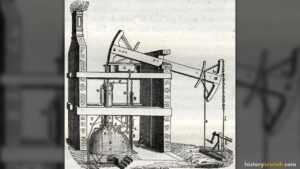
More specifically, coal was needed to power the steam engine, which was the single most important invention of the era. Steam engines burned coal to boil water, and the steam that was created drove machinery in factories and mills. Coal was also burned to make cokeA special fuel made by heating coal with little air, used to smelt iron and later steel., a special fuel used to smelt iron and later steel, and it produced coal gas that was used to light streets and buildings. In reality, almost every major industry of the period depended on a steady flow of coal.
This constant demand caused an enormous boom in coal production. In 1750, Britain produced roughly 5 million tons of coal per year, but by 1850 that figure had climbed to more than 62 million tons, over ten times greater. As stated above, coal was the resource that made the rest of industrialization possible.
FactsthatCrunchHow Did Coal Mines Change During the Industrial Revolution?
Before the Industrial Revolution, coal was taken from small, shallow mines that supplied nearby homes and local industries. The two most common types were bell pits, which were shallow holes widened at the bottom, and drift mines, which were tunnels dug into the side of a hill. Because these mines were near the surface, the coal was fairly easy and safe to reach.
However, as industry expanded and demand soared, this old system was no longer enough. Miners had to dig far deeper to reach new coal seams, and some shafts extended hundreds of feet down into the earth. Once a shaft reached a seam, miners would dig horizontal tunnels outward to remove the coal. As the mines grew deeper, they also became far more dangerous.
Coal was heavy and expensive to move over long distances, so towns, factories, and other industries grew up around the coalfields themselves. For example, very little coal was found in the south of England, but vast amounts existed in the Midlands, the north, the northeast, and parts of Scotland. As a result, these coal-rich regions became crowded centers of industry and population.
FactsthatCrunchWhat Were the Dangers of Coal Mining?
Coal mining during the Industrial Revolution was one of the most hazardous jobs a person could hold. As mines went deeper, workers faced the constant threat of flooding, since water often seeped into the shafts and had to be pumped out. In fact, the need to drain water from mines was one of the main reasons the steam engine was invented in the first place.
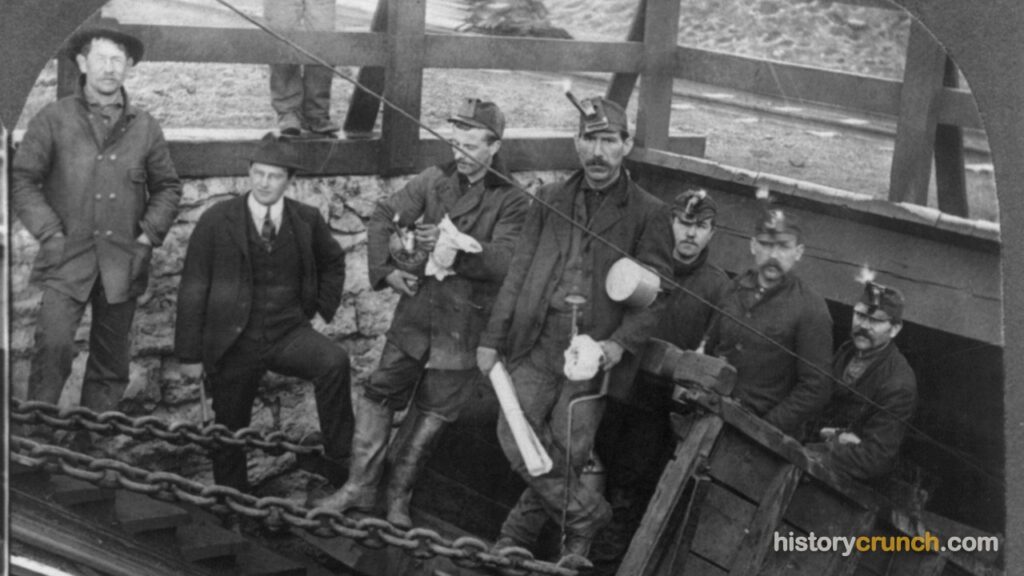
Deep mines were also filled with dangerous gases. An explosive gas known as firedampA highly explosive gas in deep mines that could be ignited by a single spark, causing deadly explosions. could be set off by a single spark from a pickaxe or a candle, causing deadly explosions. Poisonous gases called blackdamp and afterdamp could also fill the tunnels and suffocate workers. In addition, cave-ins were common, because the enormous weight of the ground above a worked seam was held up only by wooden supports called propsWooden supports holding up the ground above a worked seam to prevent cave-ins..
To fight these dangers, inventors developed new mining technology. In 1815, Sir Humphry Davy invented the Davy lamp, a safety lamp designed so that its flame would not ignite firedamp and would change color when gas was present. Air pumps were also introduced to push fresh air through the tunnels. Even so, mines remained deadly, and accidents that killed many workers at once were tragically frequent.
FactsthatCrunchFiredamp, blackdamp, and afterdamp were all explosive gases that could be ignited by a spark in deep coal mines.
Who Worked in the Coal Mines?
Coal mines employed enormous numbers of people, and by 1841 about 216,000 workers were employed in the mines of Britain. Men, women, and children all worked underground, often for twelve hours or more each day in wet, dark, and cramped conditions. The pay was low, and there were almost no laws to protect workers from harm.
Child labor was an especially disturbing feature of coal mining. Children as young as five or six were used because their small size let them fit into narrow spaces that adults could not reach. Some worked as trappersChild workers who sat alone in the dark for hours opening and closing doors that controlled airflow through mine tunnels., sitting alone in the dark for hours to open and close the doors that controlled airflow through the tunnels. Others, sometimes called hurriersChild workers who pushed and pulled heavy carts of coal along low, narrow mine passageways. or putters, pushed and pulled heavy carts of coal along the low, narrow passageways.
These conditions were brutal, and the dangers of the mines fell heavily on the youngest workers. In some mines, dozens of the recorded deaths in a single year involved children under the age of fourteen. Over time, the public became increasingly shocked by reports of what was happening underground.
FactsthatCrunchWhat was the main job of a trapper in British coal mines before 1842?
How Did the Government Respond to Mining Conditions?
As word spread about the suffering of miners, especially women and children, public pressure grew for the government to act. An official investigation in 1842 gathered testimony from mine workers and revealed the harsh reality of life underground. The details of children laboring in the dark for long hours horrified many people across the country.
As a result, the government passed the Mines and Collieries Act of 1842, often called the Mines Act. This law banned all girls and women from working underground in coal mines, and it prohibited boys under the age of ten from doing so as well. Although the law did not end every abuse, it was an important early step toward protecting workers and reducing child labor in the mines.
FactsthatCrunchThe Mines and Collieries Act Becomes Law
On the 10th of August, 1842, the Mines and Collieries Act became law after a government investigation led by Anthony Ashley-Cooper, then known as Lord Ashley, revealed that children as young as five were working underground in Britain's coal mines for up to twelve hours a day. The Children's Employment Commission published its findings in May 1842, and the detailed testimony shocked the public and pushed lawmakers to act quickly. The new law banned all women and girls from working underground and set a minimum age of ten for boys, marking the first time Parliament had placed direct limits on who could be employed in coal mines.
Significance of Coal Mining in the Industrial Revolution
Coal mining was significant because it supplied the fuel that made the entire Industrial Revolution possible. Without vast amounts of coal, steam engines could not have run, iron and steel could not have been produced in large quantities, and factories could not have operated at the scale that transformed the modern world. In this way, coal sat at the very heart of industrial growth.
The industry also reshaped where and how people lived. Because coal was difficult to transport, entire towns and industries developed around the coalfields, drawing huge numbers of workers into these regions. This helped fuel the rapid urbanizationThe rapid growth of cities as large numbers of people moved from the countryside in search of work. that defined the era, as families left the countryside in search of work.
Finally, coal mining had a lasting impact on labor history and government reform. The terrible conditions in the mines helped expose the dangers of unregulated industry and contributed to some of the first laws designed to protect workers, including limits on child labor. In these ways, coal mining shaped not only the economy of the Industrial Revolution but also the movement toward workers’ rights that followed.
FactsthatCrunchKey Vocabulary
Seams
Firedamp
Props
Trappers
Hurriers
Coke
Urbanization
Frequently Asked Questions
Why was coal important during the Industrial Revolution?
Coal was important because it was the main fuel that powered the machines of the Industrial Revolution. It burned hotter and produced more energy than wood, which made it ideal for steam engines, iron furnaces, and gas lighting. Because so many industries depended on it, coal became one of the most valuable resources of the era.
Where was most coal mined in Britain?
Most coal in Britain was mined in the Midlands, the north, the northeast, and parts of Scotland, along with rich coalfields in South Wales. Very little coal was found in the south of England, so industry naturally shifted toward these coal-producing regions. Access to good coal near waterways gave Britain a major head start over other nations.
What jobs did children do in coal mines?
Children in coal mines usually worked as trappers or as haulers of coal carts. Trappers opened and closed the ventilation doors that kept fresh air moving through the tunnels, often sitting alone in total darkness for many hours. Other children pushed or pulled carts of coal through tunnels that were too low and narrow for adults to enter.
What was firedamp in a coal mine?
Firedamp was a highly explosive gas that collected in deep coal mines. A single spark from a tool or a candle could ignite it and trigger a deadly explosion underground. The danger of firedamp is why the Davy lamp was invented, since it was designed to warn miners of gas without setting it off.
What did the Mines Act of 1842 do?
The Mines Act of 1842 banned women and girls from working underground in coal mines and prohibited boys under the age of ten from doing so. It was passed after a government report revealed shocking details about conditions in the mines. While it did not fix every problem, it marked an important early move toward protecting miners and limiting child labor.
Cite This Article
To cite this article as a source, use one of the formats below.
MLA: Millar, B. “Coal Mining in the Industrial Revolution: A Detailed Summary.” HistoryCrunch, 12 August 2026, https://historycrunch.com/coal-mining-in-the-industrial-revolution/.
APA: Millar, B. (2026). Coal Mining in the Industrial Revolution: A Detailed Summary. HistoryCrunch. https://historycrunch.com/coal-mining-in-the-industrial-revolution/
Chicago: Millar, B. “Coal Mining in the Industrial Revolution: A Detailed Summary.” HistoryCrunch. August 12, 2026. https://historycrunch.com/coal-mining-in-the-industrial-revolution/
Sources
- Robert C. Allen, The Industrial Revolution: A Very Short Introduction.
- Joel Mokyr, The Enlightened Economy.
- Emma Griffin, A Short History of the British Industrial Revolution.