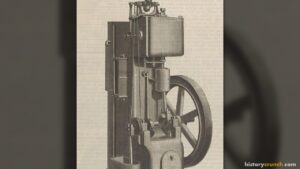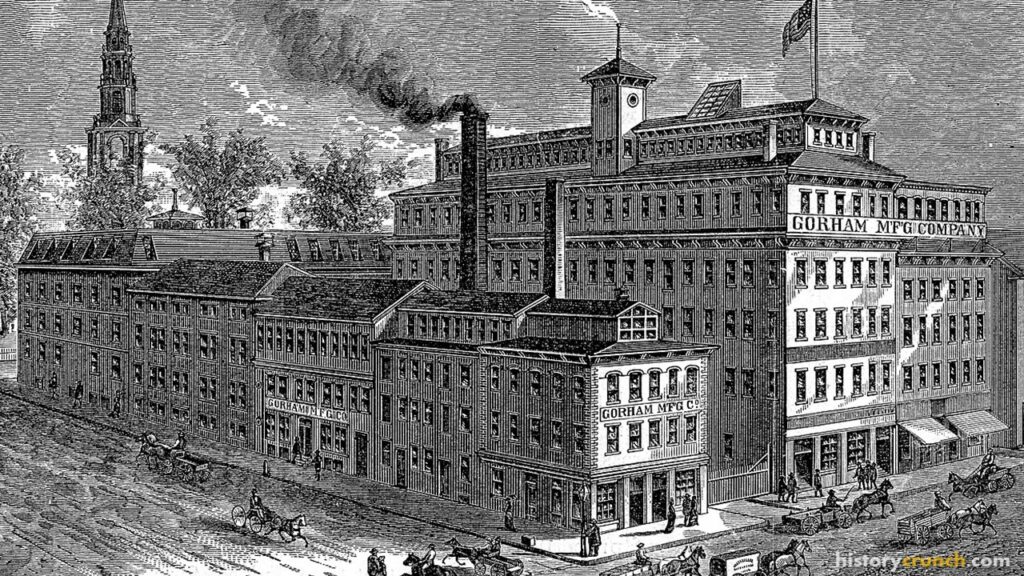
Although the Industrial Revolution first began in the 18th century in Britain, it quickly spread to other areas of Europe and North America and had a profound impact on those regions. For example, the United States advanced dramatically during its own period of industrializationThe shift from hand-made goods to machine-driven factory production that transforms an economy.. At the start of the Industrial Revolution in Britain, the United States was a society based on agriculture and resource production. Most of the work was done by human or animal labor as the country lacked the machine-driven production methods that were emerging in Europe at the time. However, the United States’ wealth of natural resources meant that it was well positioned to undergo its own Industrial Revolution. In fact, historians have identified two stages of industrialization in the history of the United States: the First Industrial Revolution and the Second Industrial Revolution.
 FactsthatCrunch
The First Industrial Revolution replaced hand labor with machines powered by water and steam, while the Second Industrial Revolution built on that foundation by adding electric power, new materials like steel, and organized scientific research to drive further growth.
First Industrial Revolution in the United States
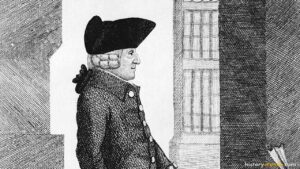
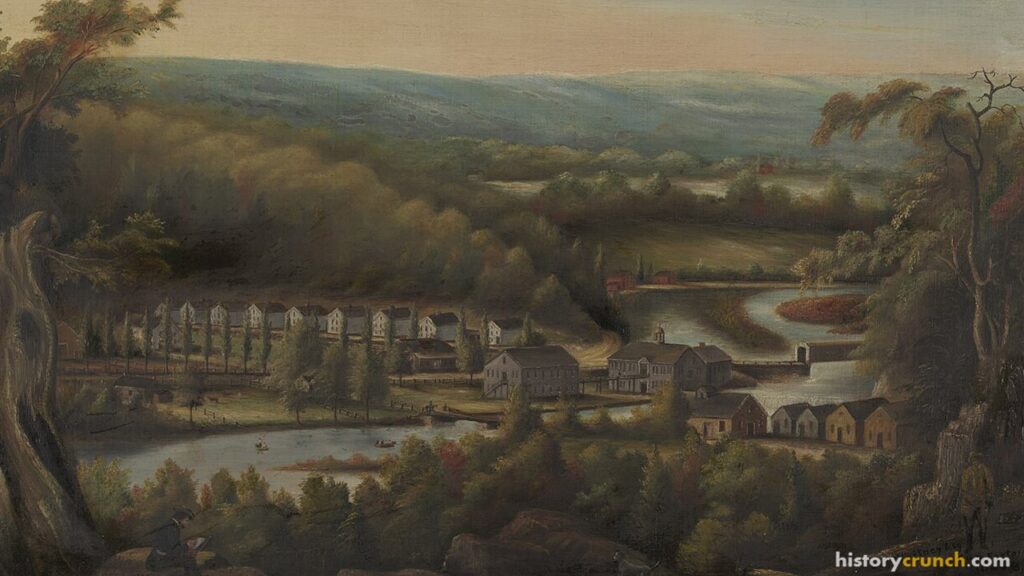
The First Industrial Revolution in the United States began in the 18th century and focused primarily on textile manufacturing and steam power. Samuel Slater is considered to be the “Father of the American Industrial Revolution” when he introduced British industrial techniques into American textile mills in the late 18th century. Slater, who was born in England, arrived in the United States in 1789 and having memorized many of the techniques used in British factories, used his knowledge to develop similar production methods in the United States. For example, in 1790 he built water-powered spinning machines for a mill in Pawtucket, Rhode Island. Soon, Slater’s designs were spreading across the east coast of the United States in numerous other textile operations.
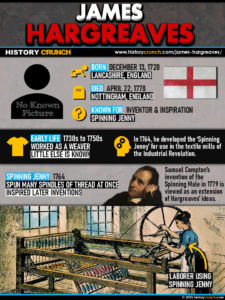
Another important contributor to the First Industrial Revolution in the United States was American businessman and merchant Francis Cabot Lowell. Born in Massachusetts, Lowell set up the Boston Manufacturing Company in 1813 following the War of 1812. The company operated one of the first factories in the United States to both spin and weave cotton under one roof and used elements of earlier textile machines, such as the spinning jenny and water frame. The company was extremely successful and productive due to its use of mechanizationReplacing human or animal labor with machines to do work faster and more efficiently., whereas most other companies at the time used methods that relied heavily on manual labor. Lowell’s impact on industrialization in the United States was massive as his methods were soon replicated in other factories across the country.
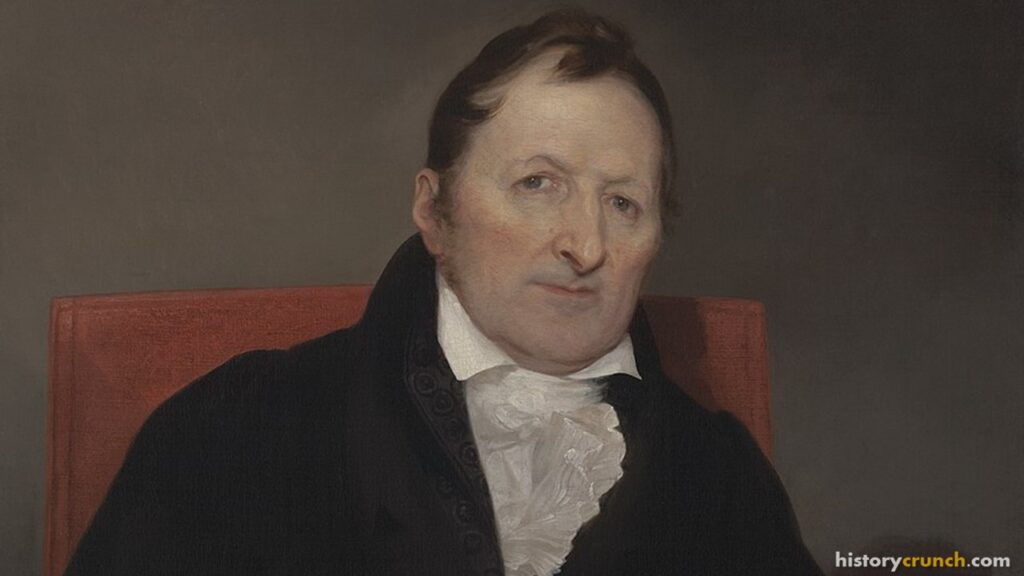
One of the most significant American contributions to the Industrial Revolution was the development of the method of interchangeable parts. In general, the idea of interchangeable partsMachine components built to exact measurements so any broken piece can be swapped out with an identical one. refers to the technique wherein parts of a machine are made to exact specifications and can be easily replaced if broken or worn. The idea was revolutionary because it allowed mass production and repair of machines with relatively unskilled labor. The first important use of interchangeable parts was in the United States with the production of firearms. Eli Whitney, the famous American inventor, first used interchangeable parts when developing firearms of the United States military. For example, in the early 19th century, he designed and produced firearms all made of the same precision parts. This was important because the firearms could easily be repaired in the field. Regardless, the advancement of interchangeable parts had a significant impact on the Industrial Revolution because it improved mechanization and allowed machines to be operated and maintained in a relatively easy manner.
 FactsthatCrunch
Why did some people in Britain call Samuel Slater "Slater the Traitor"?
Britain had laws to stop factory machines, their plans, and skilled mill workers from leaving the country, so it could keep its lead in textiles. Slater had worked in an English cotton mill, and in 1789 he sailed to America with the machine designs memorized instead of written down. In 1790 he built water-powered spinning machines for a mill in Pawtucket, Rhode Island, helping start the American textile industry.
Second Industrial Revolution in the United States
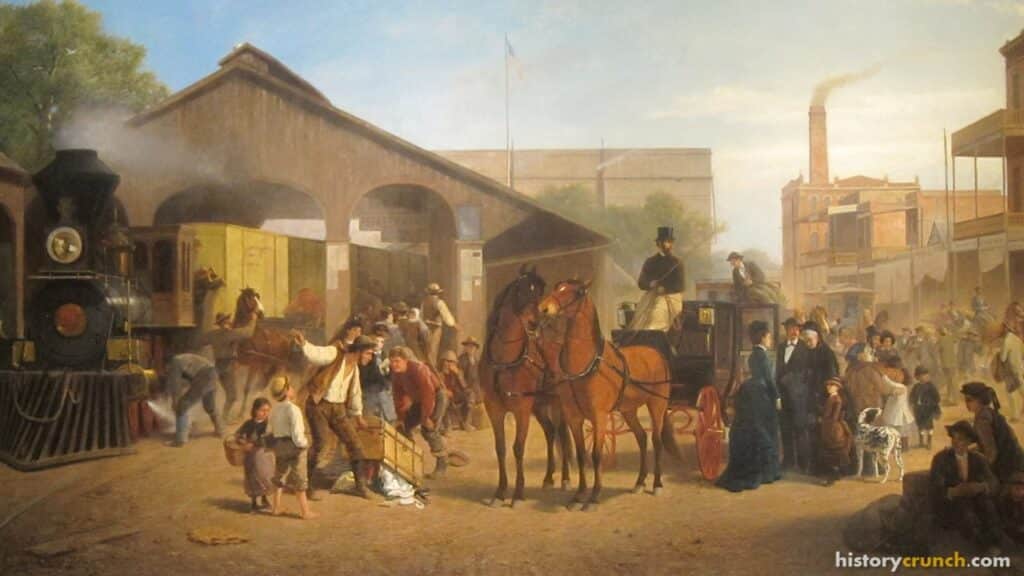
While the First Industrial Revolution was based on advancements in the textile industry and steam power, the Second Industrial Revolution was focused on aspects such as: steel production, railroad construction, and electricity. The Second Industrial Revolution is considered to have occurred from around 1850 until the start of World War I in 1914 and had a profound effect on the United States. During this time, there were several major advancements that impacted life in the United States. For example, the First Transcontinental Railroad opened in 1869 and allowed Americans to travel across the country in just under a week. This was an important development because it involved a massive amount of iron and was a significant transportation route that allowed American merchants to ship goods and resources across the country.
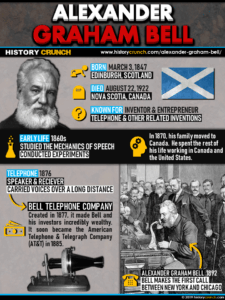
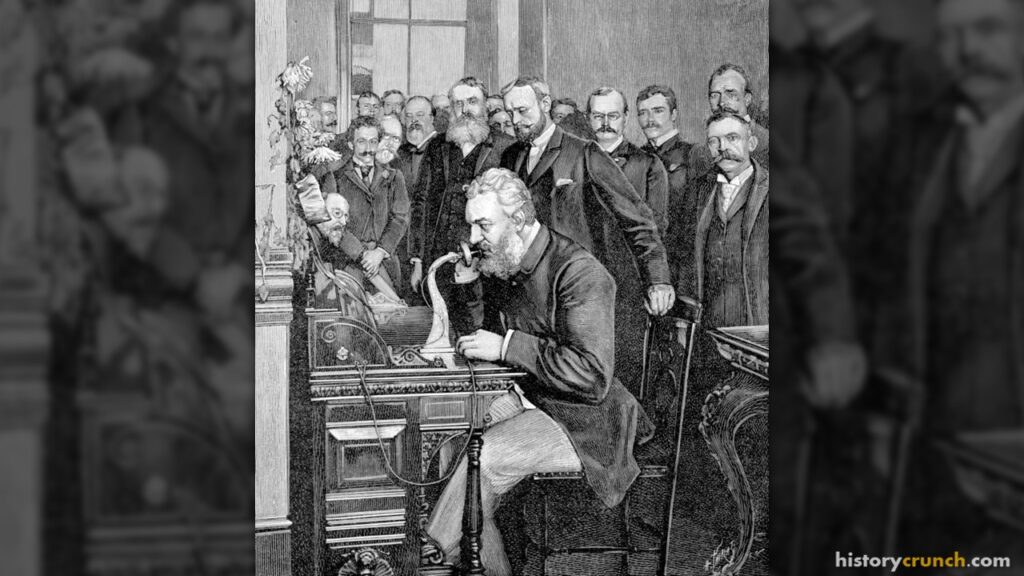
As the Industrial Revolution continued, it led to many other inventions in other areas of society, including: communication technologies, the automobile, and methods of production. Discoveries in the field of electricity improved communication technologies. In 1866, the first underwater telegraph cable across the Atlantic Ocean was successfully installed, and ten years later, Alexander Graham Bell invented the telephone. In the late 1800s American Thomas Edison produced an amazing array of inventions. Among them were the phonograph and the incandescent light bulb. An improvement in production was the introduction of the assembly line by Henry Ford in 1913. On an assembly lineA production method where a complex task is split into small steps, each done by one worker at a fixed station., the complex job of assembling many parts into a finished product was broken down into a series of small tasks. It sped up production and reduced costs as each worker was only required to install one or two parts at their position on the assembly line. Ford would use the assembly line to speed up the production of automobiles in his factory in Highland Park, Michigan.
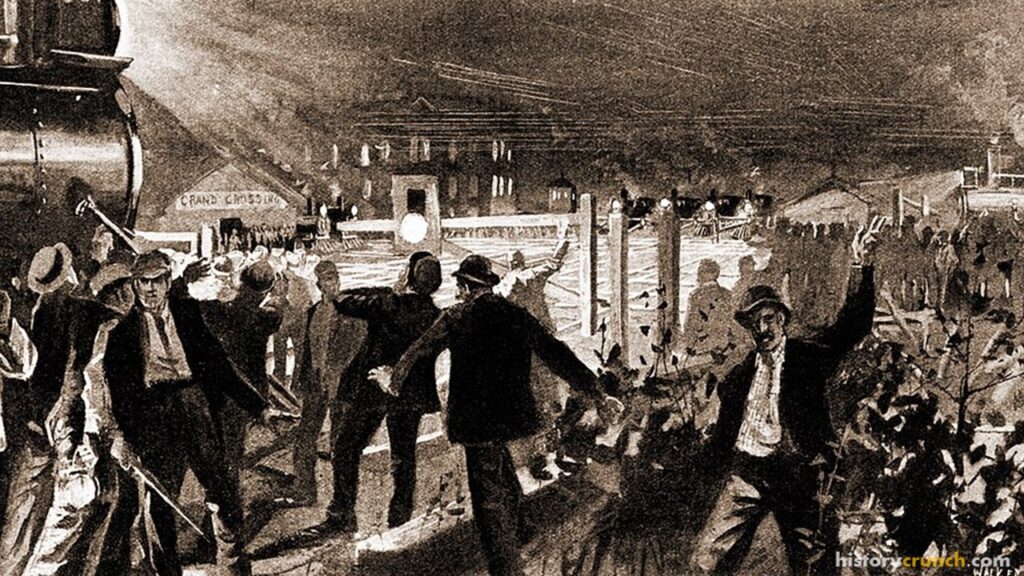
It’s also important to note that this period of industrialization in the United States coincided with the events of the Gilded Age, and other important movements, such as the Progressive Era. This included prominent workers’ rights movements and the overall American Labor Movement and the Women’s Rights Movement.
 FactsthatCrunch
The Transcontinental Railroad was finished on May 10th, 1869, with a ceremonial golden spike at Promontory Summit, Utah.
Two companies built the line from opposite directions: the Central Pacific from California and the Union Pacific from Nebraska. Thousands of Chinese and Irish immigrant workers did much of the dangerous work. When the last spike was tapped in, the news was sent across the country by telegraph.
Industrialization in the United States – Summary
In conclusion, the Industrial Revolution was an incredibly important event for the United States. The country was transformed by the innovations of the revolution, and became an industrial power in its own right. As well, American inventors and businesses impacted the revolution with numerous inventions and advancements.
Industrial Revolution timeline · 1760 – 1840
Key Vocabulary
Mechanization
Interchangeable parts
Spinning jenny
Water frame
Assembly line
Incandescent light bulb
Gilded Age
Frequently Asked Questions
Who was Samuel Slater and why is he important?
Samuel Slater is called the “Father of the American Industrial Revolution” for bringing British textile methods to the United States. Born in England, he memorized factory techniques and arrived in America in 1789. In 1790 he built water-powered spinning machines for a mill in Pawtucket, Rhode Island, and his designs soon spread along the east coast.
What were the two stages of industrialization in the United States?
Historians divide American industrialization into the First and Second Industrial Revolutions. The First began in the 18th century and focused on textile manufacturing and steam power. The Second lasted from around 1850 until 1914 and centered on steel production, railroads, and electricity.
What are interchangeable parts and who developed them?
Interchangeable parts are machine parts made to exact measurements so any one can replace a broken piece. Eli Whitney first used the idea in the early 19th century to build firearms for the United States military. This allowed mass production and easy repair, even with fairly unskilled workers.
Why was the First Transcontinental Railroad significant?
The First Transcontinental Railroad opened in 1869 and let Americans cross the country in just under a week. It used huge amounts of iron rail and helped drive the growth of heavy industry. It also gave merchants a fast route to ship goods and resources across the nation.
How did the assembly line change American production?
Henry Ford introduced the moving assembly line in 1913 to speed up building automobiles at his factory in Highland Park, Michigan. The line broke a complex job into small tasks, with each worker installing only one or two parts. This sped up production and lowered costs at the same time.
What inventions came from the Second Industrial Revolution?
Electricity drove many new inventions during the Second Industrial Revolution. The first underwater telegraph cable across the Atlantic was installed in 1866, and Alexander Graham Bell invented the telephone in 1876. Thomas Edison later created the phonograph and the incandescent light bulb.
Cite This Article
To cite this article as a source, use one of the formats below.
MLA: Beck, Elias. “Industrialization in the United States: A Detailed Summary.” HistoryCrunch, 26 September 2026, https://historycrunch.com/industrialization-in-the-united-states/.
APA: Beck, E. (2026). Industrialization in the United States: A Detailed Summary. HistoryCrunch. https://historycrunch.com/industrialization-in-the-united-states/
Chicago: Beck, Elias. “Industrialization in the United States: A Detailed Summary.” HistoryCrunch. September 26, 2026. https://historycrunch.com/industrialization-in-the-united-states/
Sources
- Robert C. Allen, The Industrial Revolution: A Very Short Introduction.
- Fordham Modern History Sourcebook
- Joel Mokyr, The Enlightened Economy.