Education in the Industrial Revolution: A Detailed Summary

Education in the Industrial Revolution
Education in the Industrial Revolution played a significant role in transforming society for working-class people.

Table of Contents

Education during the Industrial Revolution transitioned from limited access for the wealthy to more widespread, compulsory schooling aimed at meeting the demands of an industrialized workforce.

Education in the Industrial Revolution underwent a transformation from that of pre-industrial societies to the modern education systems that are common today. The Industrial Revolution, a period of rapid industrializationThe process by which a society shifts from farming to factory-based production using machines. and technological innovation from the late 18th to the mid-19th century, brought about significant changes in many aspects of society. One of the areas profoundly impacted was education. Before this period, formal schooling was largely limited to the wealthy, with most children receiving little to no education. However, the demands of an industrialized society necessitated a more educated workforce, leading to significant reforms in schooling.

Industrial RevolutionNotebook Cause and Effect
Facts that CrunchFactsthatCrunch
Why Industrial Society Pushed for Education Reform
Causes
Factories needed workers who could read instructions and do basic math.
Most working-class children had no access to formal education before industrialization.
Child labor kept children in mines and factories, leaving no time for schooling.
Charity schools and Sunday schools reached too few children to meet growing needs.
Industrial workforce demands schooling reforms
Effects
Britain's Factory Act of 1833 required factory owners to give child workers two hours of education per day.
England passed the Elementary Education Act of 1870, making schooling available to children aged 5 to 13.
Robert Owen built model schools at New Lanark that combined academic lessons, vocational training, and physical education.
Compulsory education laws spread across Germany, France, and the United States by the late 19th century.
Source: British Library© factsthatcrunch.comMore Industrial Revolution Facts →

Education Before the Industrial Revolution

Before the Industrial Revolution, education was primarily reserved for the wealthy. For instance, wealthy families could afford private tutors or to send their children to exclusive schools, while the majority of children, especially those from working-class families, had little or no access to formal education. In fact, most education for the working-class was informal, taking place at home or through apprenticeshipsArrangements where young people learn a trade by working under a skilled adult instead of attending school. that focused on practical skills rather than academic knowledge.

With that said, some children from the working-class attended charity schools or Sunday schools established by religious organizations. These institutions provided basic literacy and religious instruction, but their reach was limited, and they often lacked resources and qualified teachers. The primary goal of these schools was to teach moral values and basic reading skills, rather than to offer a complete education.
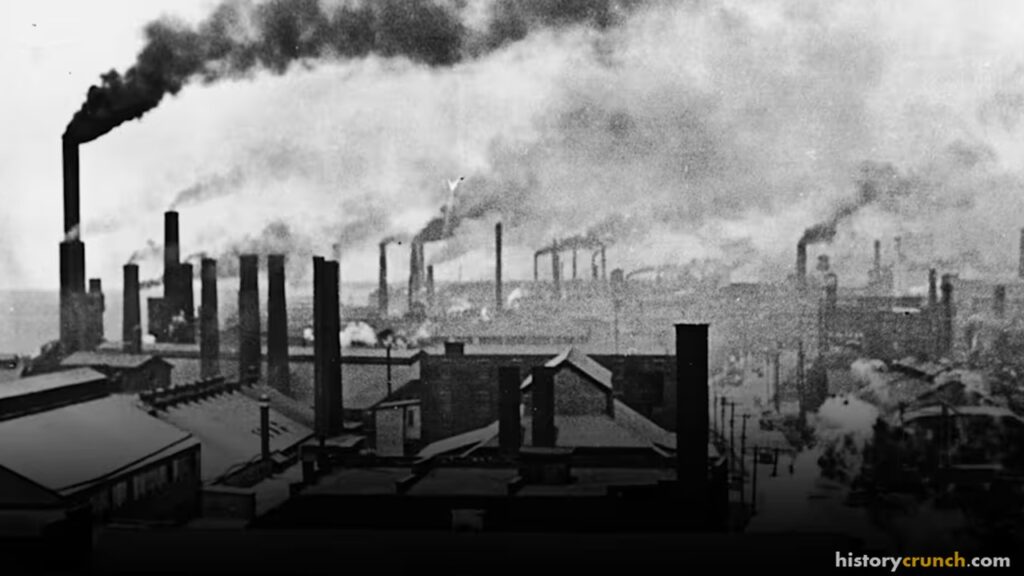
Factory chimneys pouring thick smoke into the sky over an industrial town
The Industrial Revolution is a significant event in world history because it transformed European and North American societies from being based on agriculture production to industrial production.

Industrial RevolutionNotebook Definition
Facts that CrunchFactsthatCrunch
Charity Schools
(noun)
Charity schools were church-run institutions that provided basic literacy and religious instruction to children from poor and working-class families who could not afford private schooling. Their main goals were to teach moral values and simple reading skills, not to offer a full academic education.
in a sentence: A working-class child in 18th-century England might attend a charity school run by a local parish to learn to read the Bible.
Source: British Library© factsthatcrunch.comMore Industrial Revolution Facts →

How Did the Industrial Revolution Impact Education?

As industrialization progressed, the nature of work changed dramatically. Factories and new technologies required workers who could read instructions, perform basic math, and understand technical concepts. This shift created a demand for a more educated workforce, prompting a reevaluation of the importance of education for all social classes. For instance, the working-class were often the ones completing the work in the factories and mines of the Industrial Revolution. As such, the need for them to have a basic education grew as the era progressed.

One of the major social issues during the Industrial Revolution was child labor. Many children worked long hours in factories, mines, and other industrial settings, which left little time for schooling. The harsh realities of child labor and its impact on children’s health and development eventually led to social reform movements advocating for mandatory educationSchooling that governments require all children to attend by law. and restrictions on child labor. In fact, as the movement to end or limit child labor grew, so too did the calls for education. It was viewed as a positive for society because schooling would allow for the children to be taken care of while the parents were working.
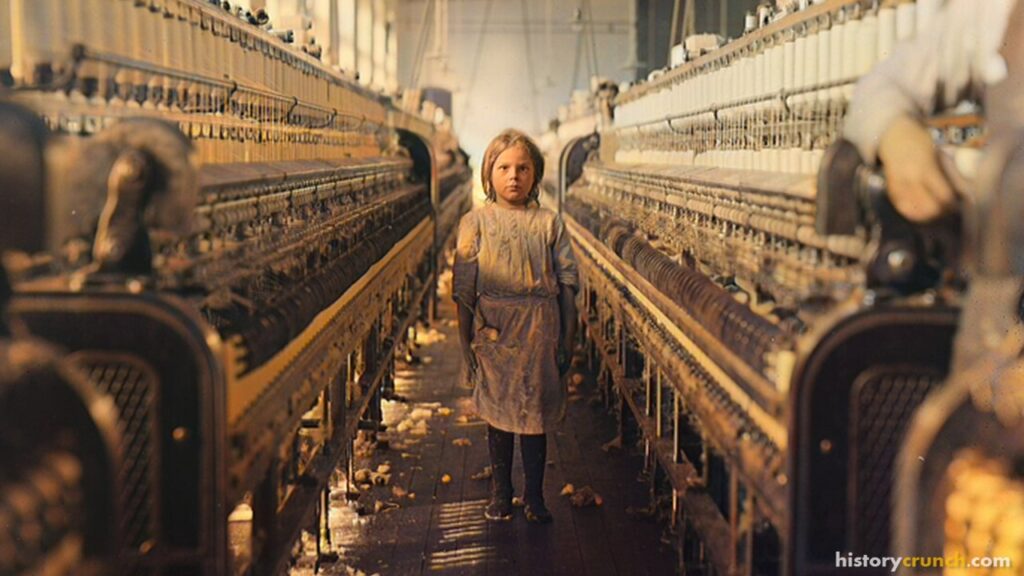
Young children working machinery inside a factory, colorized photo by Lewis Hine, 1908
‘Child Labor in the Industrial Revolution’ Image by Lewis Hine. (1908) (Colorized by historycrunch.com)

In response to the changing social and economic landscape, various countries began implementing educational reforms. For example, in Britain, the Factory Acts of the early 19th century included provisions to limit child labor and ensure that children received some form of education. More specifically, the Factory Act of 1833 required factory owners to provide two hours of education per day for child workers.
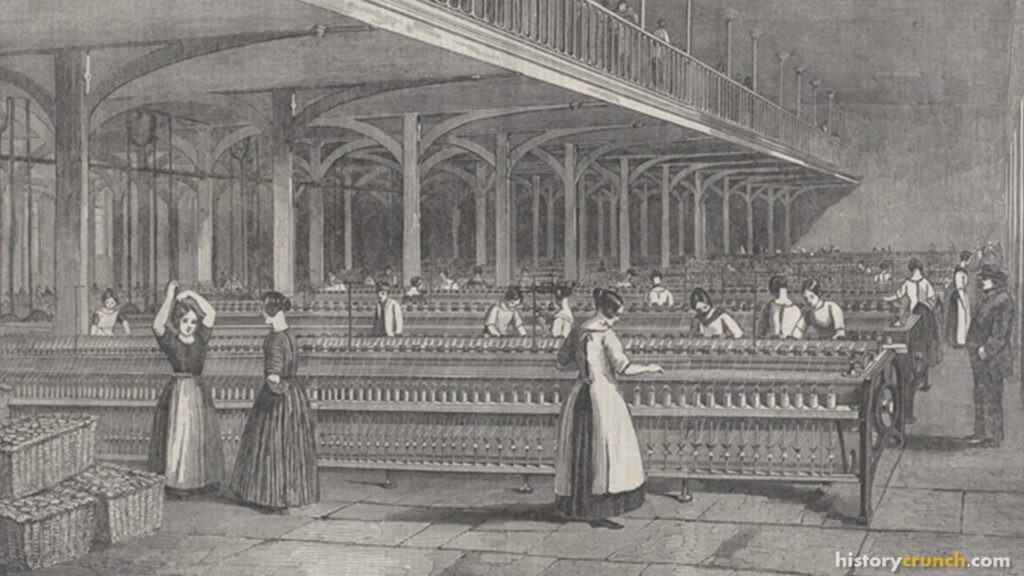
Engraving of textile workers in the doubling room at Dean Mills, a Lancashire cotton factory, 1851
‘Doubling Room, Dean Mills’ (1851) The Factory Acts in the Industrial Revolution were developed in response to the dire working conditions that emerged in industrial cities of the time.

Industrial RevolutionImpactsInteractive
Facts that CrunchFactsthatCrunch
The eventChild labor during the Industrial Revolution drove the push for mandatory schooling

Tap each impact to read what it led to.

Factory Acts and SchoolingThe British Factory Act of 1833 required factory owners to provide child workers with two hours of education each day. This was one of the first times a government law linked limits on child labor directly to a right to schooling.
Public Education SystemsAs reformers pushed to pull children out of factories and mines, governments built formal public school systems. England's Elementary Education Act of 1870 made elementary schooling available to children aged 5 to 13.
Robert Owen's Model SchoolsIndustrialist Robert Owen opened schools at his New Lanark mills in Scotland that combined academic lessons, job skills training, and physical education. His approach showed that factory communities could support full schooling for children, not just basic reading.
Workforce Literacy DemandFactories and new machines needed workers who could read instructions and do basic math. This practical need pushed employers and governments alike to treat schooling as a necessity rather than a privilege.
Spread of Compulsory Education LawsBy the late 19th century, countries including Germany, France, and the United States passed laws making school attendance required by law. These laws built directly on earlier arguments that children kept out of dangerous jobs needed a safe, structured place to go instead.
Step 1 of 5
Source: British Library© factsthatcrunch.comMore Industrial Revolution Facts →

Establishment of Public Education Systems

The mid-19th century saw the establishment of more formal public education systems. Governments recognized the need for a standardized approach to education to ensure that all children had access to basic literacy and numeracyThe ability to understand and work with basic numbers and math. skills. In 1870, the Elementary Education Act (also known as the Forster Act) was passed in England, making elementary education available for children aged 5 to 13, with attendance made compulsory in 1880. Similar reforms occurred in other industrializing nations, such as the United States and parts of Europe.

The curriculum during the Industrial Revolution initially focused on basic skills such as reading, writing, and arithmetic. As education systems developed, subjects like history, geography, and science were gradually introduced. Schools during this time were typically characterized by large class sizes, limited resources, and strict discipline.

Despite the progress made in establishing public education systems, access to schooling remained unequal. Rural areas often lacked sufficient schools and teachers, and children from poorer families continued to face barriers to education. Additionally, girls were frequently given fewer educational opportunities than boys, as societal norms prioritized domestic roles for women.

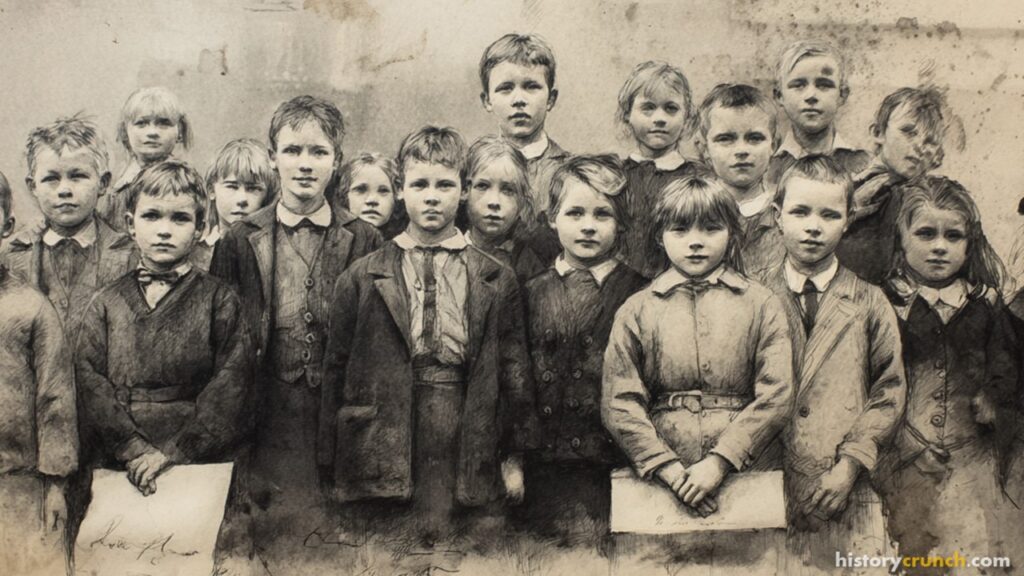
Schoolchildren standing with slates in a classroom during the Industrial Revolution.
August 9th, 1870
Elementary Education Act (Forster Act) becomes law in England and Wales
The Act, drafted by Liberal MP William Edward Forster and introduced in Parliament on February 17th, 1870, was the first law in England and Wales to set up a national system of elementary schools for children aged 5 to 13. It created elected local school boards with power to build and manage schools in areas where none existed, giving working-class children access to basic reading, writing, and arithmetic on a national scale for the first time.
Source: UK Parliamentary Archives© factsthatcrunch.comFacts that Crunch

Robert Owen and Education in the Industrial Revolution

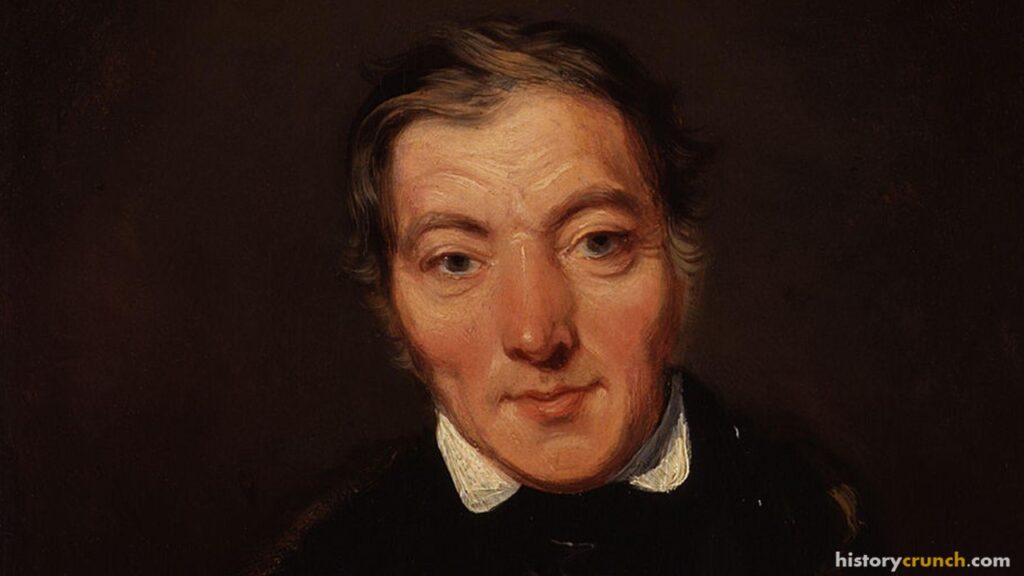
Robert Owen, a social reformer and industrialist, also made significant contributions to education during the Industrial Revolution. He established model schools at his New Lanark mills in Scotland, where children received a balanced education that included academic instruction, vocational trainingEducation that teaches specific practical skills needed for a particular job or trade., and physical education. Owen’s approach emphasized the well-being and development of the whole child, and his ideas influenced later educational reforms.

Industrial RevolutionBulletin Board BioInteractive
Facts that CrunchFactsthatCrunch
'Robert Owen' by William Henry Brooke (1834)
Robert Owen
At a Glance
BornMay 14th, 1771, in Newtown, Wales
DiedNovember 17th, 1858, in Newtown, Wales
RoleBritish industrialist and utopian socialist
Tap a heading to open the note.
Early Start
Owen left home at about age ten and worked for drapers in Stamford, London, and Manchester, where he saw the harsh conditions of factory life.
New Lanark Mills
In 1800, Owen became manager and part-owner of the New Lanark Mills in Scotland, where he introduced fairer working conditions than most factory owners of his time.
Eight-Hour Workday
Owen believed workers should labor only eight hours a day, far less than the twelve to sixteen hours common at the time, and coined the slogan "Eight hours labour, eight hours recreation and eight hours rest."
Fair Company Store
Owen kept a company store at New Lanark but stocked it with high-quality goods and charged workers reasonable prices, unlike most owners who used such stores to take extra money from employees.
School for Workers' Children
In 1816, Owen opened the Institute for the Formation of Character at New Lanark, where children learned reading, writing, mathematics, history, art, and dance.
Lasting Legacy
Historians remember Owen as an early utopian socialist whose ideas helped spread socialist thinking in England during the Industrial Revolution.
Source: British Library© factsthatcrunch.comMore Industrial Revolution Facts →

The Spread of Educational Reforms

Throughout the late 19th and early 20th centuries, compulsoryRequired by law, leaving no choice about whether to comply. education laws spread across Europe and North America. Countries like Germany, France, and the United States implemented mandatory schooling, often inspired by the successes and challenges observed in earlier reforms. These laws helped to standardize education and ensure that all children received at least a basic level of schooling. This trend continues still today, with the modern education systems we see across Europe and North America.
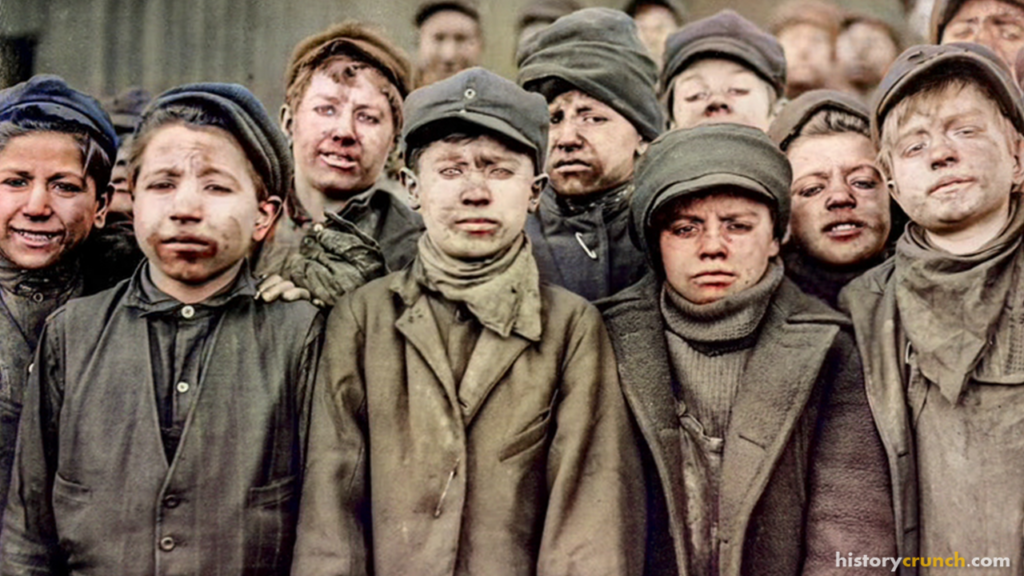
Colorized January 1911 photo of breaker boys working for the Pennsylvania Coal Company
‘Breaker Boys, Child Coal Miners for the Pennsylvania Coal Company in January 1911. (Colorized by historycrunch.com)

Industrial RevolutionDid You Know
Facts that CrunchFactsthatCrunch
Surprising Fact

In 1852, Massachusetts passed the first compulsory school attendance law in the United States.

The law required children aged 8 to 14 to attend school for at least 12 weeks a year. Other states slowly followed, and by 1918 every state in the country had a law requiring children to go to school.

Source: Library of Congress© factsthatcrunch.comMore Industrial Revolution Facts →

Industrial Revolution timeline · 1760 – 1840

Eighty years in which machines, coal and factories moved work out of the home and people into the cities. The timeline follows the inventions and the laws that eventually answered them.
View Timeline →

Key Vocabulary

Apprenticeships
Arrangements where young people learn a trade by working under a skilled adult instead of attending school.
Industrialization
The process by which a society shifts from farming to factory-based production using machines.
Mandatory education
Schooling that governments require all children to attend by law.
Factory Acts
British laws passed in the early 19th century that limited child labor and set basic rules for workers in factories.
Numeracy
The ability to understand and work with basic numbers and math.
Vocational training
Education that teaches specific practical skills needed for a particular job or trade.
Compulsory
Required by law, leaving no choice about whether to comply.

Frequently Asked Questions

What was education like before the Industrial Revolution?

Before the Industrial Revolution, formal schooling was mostly limited to wealthy families. They could afford private tutors or exclusive schools, while most working-class children got little or no education. Learning for poorer children was often informal, taking place at home or through apprenticeships that taught practical skills.

How did the Industrial Revolution change education?

The Industrial Revolution created a demand for a more educated workforce. Factories and new machines needed workers who could read instructions, do basic math, and grasp technical ideas. This shift pushed societies to value schooling for all social classes, not just the wealthy.

How was child labor connected to education reform?

Child labor left many children with no time for schooling during the Industrial Revolution. Kids worked long hours in factories and mines, which harmed their health and development. As reform movements fought to limit child labor, calls for mandatory education grew alongside them.

What was the Elementary Education Act of 1870?

The Elementary Education Act, also called the Forster Act, was passed in England in 1870. It made elementary schooling available to children aged 5 to 13. Similar reforms took place in other industrializing nations, including the United States and parts of Europe.

What did Robert Owen do for education?

Robert Owen was a social reformer and industrialist who built model schools at his New Lanark mills in Scotland. His schools mixed academic lessons, vocational training, and physical education. Owen focused on the well-being of the whole child, and his ideas shaped later education reforms.

Was education equal for all children during this period?

No, access to schooling stayed unequal even as public education systems grew. Rural areas often lacked enough schools and teachers, and poorer families still faced barriers. Girls also received fewer chances than boys, since society pushed women toward domestic roles.

Cite This Article

To cite this article as a source, use one of the formats below.

MLA: Woida, K.L. “Education in the Industrial Revolution: A Detailed Summary.” HistoryCrunch, 27 September 2026, https://historycrunch.com/education-in-the-industrial-revolution/.

APA: Woida, K. L. (2026). Education in the Industrial Revolution: A Detailed Summary. HistoryCrunch. https://historycrunch.com/education-in-the-industrial-revolution/

Chicago: Woida, K.L. “Education in the Industrial Revolution: A Detailed Summary.” HistoryCrunch. September 27, 2026. https://historycrunch.com/education-in-the-industrial-revolution/

Sources

  • Joel Mokyr, The Enlightened Economy.
  • Robert C. Allen, The Industrial Revolution: A Very Short Introduction.
  • The Science Museum Group
Facebook
X
Reddit
Pinterest
LinkedIn

We strive to produce educational content that is accurate, engaging and appropriate for all learners. If you notice any issues with our content, please contact us and let us know!

AUTHOR INFORMATION
Picture of K.L Woida

K.L Woida

K.L. is a content writer for History Crunch. She is a fantastic history and geography teacher that has been helping students learn about the past in new and meaningful ways since the mid-2000s. Her primary interest is Ancient History, but she is also driven by other topics, such as economics and political systems.
Utopian Socialism
Industrial Revolution

Utopian Socialism: A Detailed Summary

Utopian Socialism was an early form of socialist thought that emerged in the early 19th century and called for the creation of ideal cooperative communities to solve the problems caused by industrial capitalism. This article details the history, main principles, and significance of Utopian Socialism.

A 1929 Soviet May Day propaganda poster depicting a worker breaking free from chains beneath a red flag, illustrating the core ideas of Marxism and the revolutionary promise of a society led by the working class.
Political Systems

Marxism: A Detailed Summary

In the early 20th century, Marxism inspired revolutions, most notably the Russian Revolution of 1917, which established the world’s first communist state under Vladimir Lenin. This article details the history, main principles and significance of Marxism.

Enclosure Movement
Industrial Revolution

Enclosure Movement: A Detailed Summary

The Enclosure Movement was a complex process that had important consequences for industrial Britain. It played a crucial role in the development of modern agriculture and contributed significantly to the social and economic transformations of the Industrial Revolution.

Gilded Age in the United States
Industrial Revolution

Gilded Age in the United States: A Detailed Overview

The Gilded Age in the United States, spanning the late 19th century, was characterized by rapid economic growth, industrialization, and stark social inequality. As a historical period, it is closely linked with the events of the Industrial Revolution.

Richard Arkwright
Industrial Revolution

Richard Arkwright: A Detailed Biography

Richard Arkwright was an English inventor and entrepreneur who revolutionized the textile industry by developing the water frame in 1769, leading to the establishment of the factory system and significant advancements in industrial production. As such, historians consider him important in the development of the Industrial Revolution.